
 4 months ago
85
4 months ago
85
ARTICLE AD BOX
Irving Vincent to Daytona project
Beau Beaton Interview
The legendary Irving Vincent is heading to Daytona. The men behind the machine, Ken and Barry Horner, are entering Beau Beaton in the 2026 Super Hooligans category.
Beaton has ridden almost every version of the Irving Vincent since 2009, and now he’ll put the latest two-valve, air-cooled creation to the test on America’s most intimidating banking. We caught up with Beau to understand what this ambitious project means from the rider’s seat.
What was your first reaction when Ken asked if you might want to ride the Irving Vincent at Daytona?
“I don’t think there was a particular time Ken or Barry asked me. The Super Hooligans bike has been a project in the background for a fair while now. Obviously, I always feel privileged that I’m at the forefront of Ken and Barry’s decisions when these projects are even a thought. The original plan was to consider Laguna 2025. I was really excited about that, and Daytona is just as high on the list for me. I don’t think I’ll truly appreciate the banking until I’m there.”
 Ken and Barry Horner are entering Beau Beaton in the Super Hooligans class for Daytona 2026 on their bespoke Irving Vincent
Before you threw a leg over it, what did you expect the bike to feel like?
“I kind of knew what to expect. I’ve ridden every variant of IV (Irving Vincent) since starting to ride for Ken and Barry in 2009. I’ve experienced every engine and chassis they have produced. All of them have had the clutch on the left and throttle on the right 😊. The boys have thrown a couple of spanners in the works by changing the gear shift to the right foot every now and then, but other than that, I knew roughly what the bike would be like.
“The new experience was going to be the lack of aerodynamics and the upright bars. Dirt bikes being my background, the upright bars weren’t going to be an issue for me, but adjusting my road-riding style to suit is a different matter. We haven’t turned many laps yet. So there are still some changes in the making.”
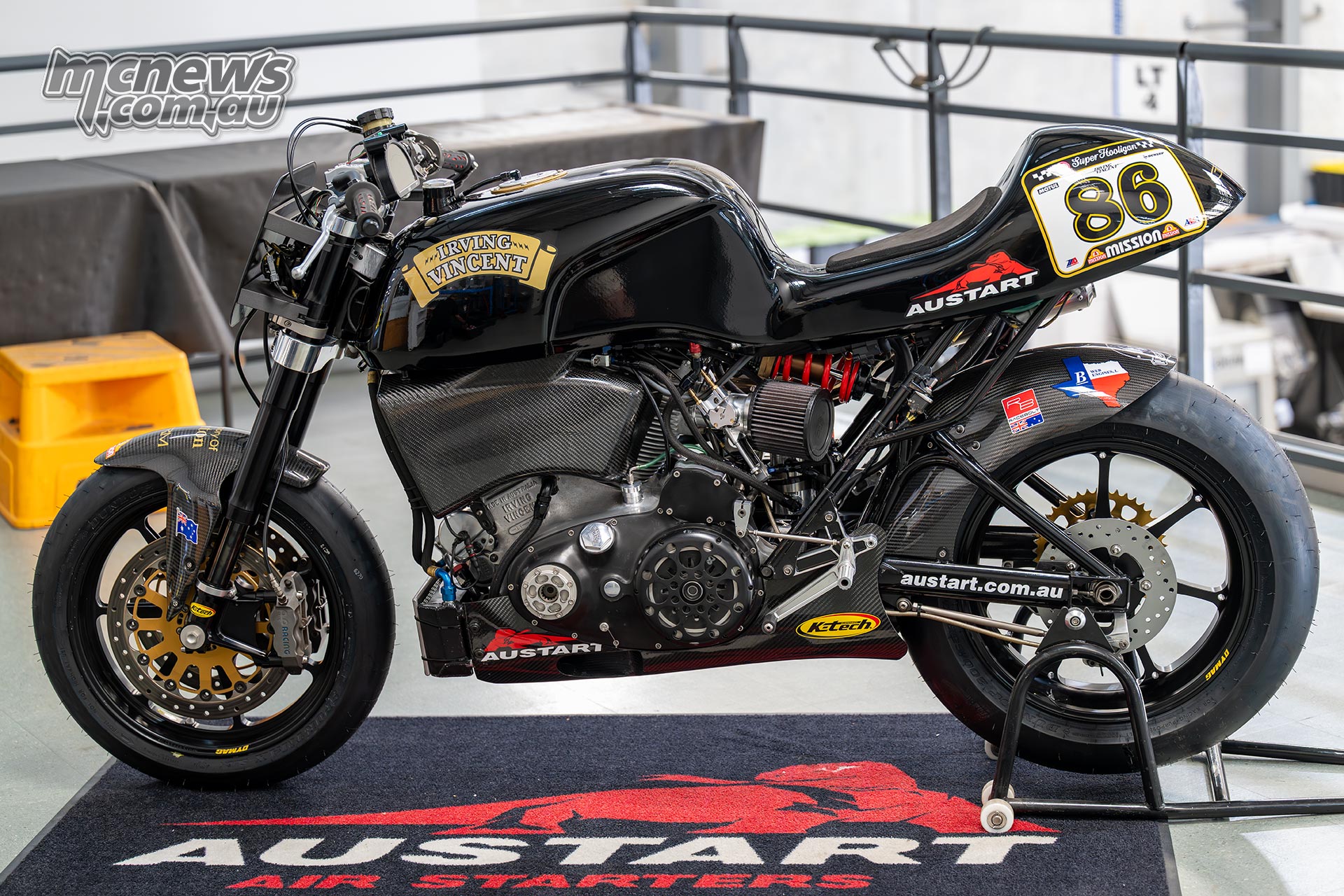 Cooling ducts recently added ready for 35-seconds per lap wide open on the banking
Did the reality match those expectations, or what most surprised you?
“All we could ask for on that first weekend was consistency from the engine and minor changes to the chassis. So yes, reality was matched as the engine ran perfectly. No surprises really, maybe a little on sitting up that little bit higher changes how the bike acts under you. But it didn’t take me long to adjust.”
 Irving Vincent – 1620 cc air-cooled V-Twin
How does the bike’s character strike you on the first ride?
Brutal? Smooth? Something else?
“Similar to the other engines, I have ridden every variant of engine Ken and Barry have built. This engine is for sure on the smoother side compared to other IVs. This is a 2-valve, electronically injected petrol engine, so it’s not as revvy as their four-valve motors. Having electronic injection compared to some other fuel metering systems we have tried over the years makes it easier to have a smooth translation with the throttle.”
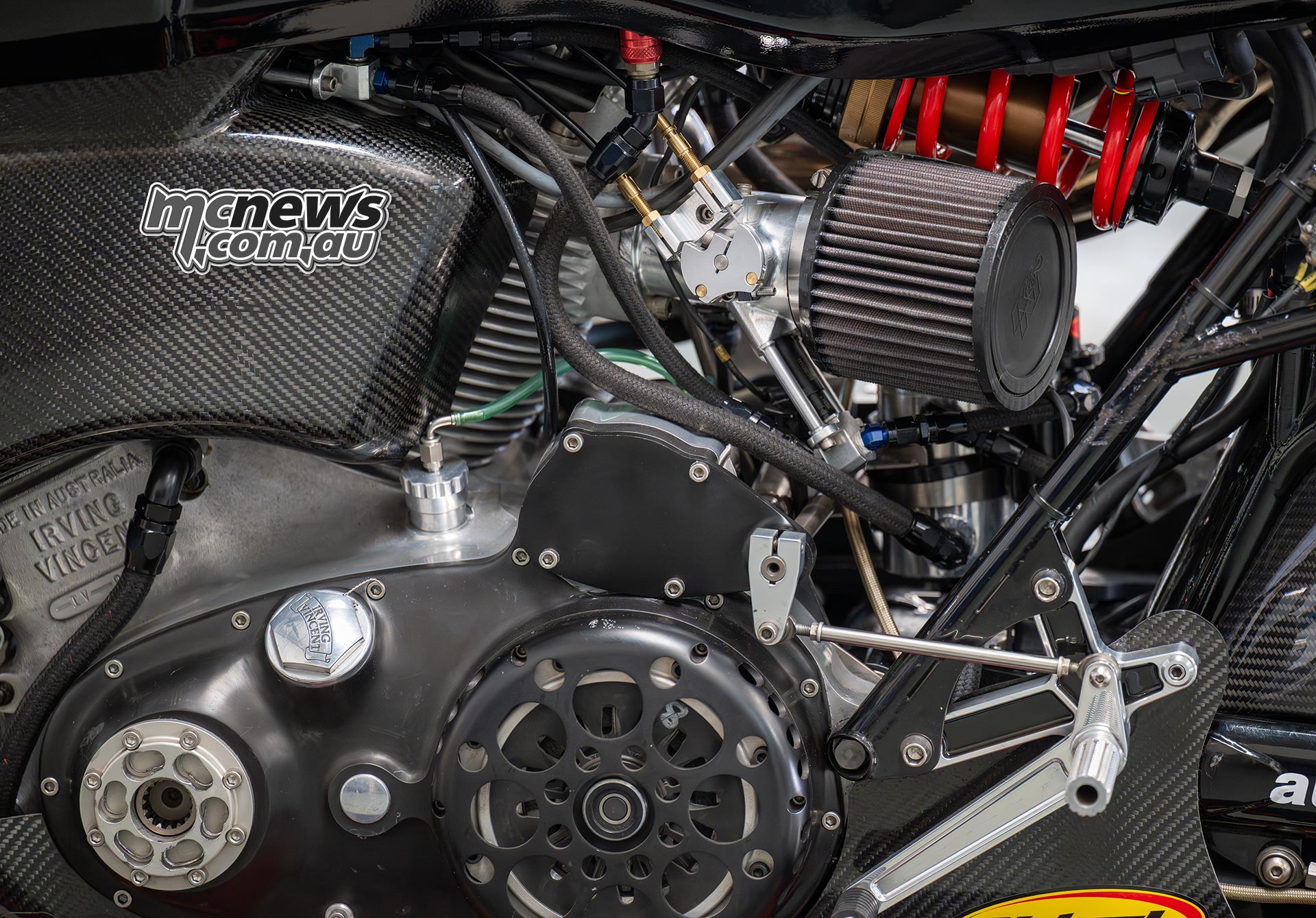 Irving Vincent Super Hooligan
How would you describe the engine’s delivery compared to a modern superbike?
“There isn’t a comparison. I have been privileged to ride lots of different race bikes and road bikes, the IV stands out. It’s high torque, low-revving, no electronics, good old-fashioned throttle cables. Your wrist is directing what’s happening, unlike current superbikes, where electronics take over percentages of what is being transferred to the engine. So it’s a very raw engine, if you would like to explain it that way.”
 Irving Vincent Super Hooligan
What stands out the most about the chassis feel: stability, flex, feedback, weight transfer?
“The chassis is the same as the ones I have ridden previously. The IV being unique to the majority of motorbikes, it runs a monocoque chassis. This was ingrained in HRD Vincent’s history; Ken and Barry have done a fantastic job of keeping this feature and bringing it into the modern era.
“We have the beauty of modern K-Tech suspension, which offers plenty of adjustability and feedback. The IV also has no rear linkage for the rear suspension. Again, something that is from the original HRD Vincent 1930s design carried through to now. There are areas around this that sure aren’t perfect, but we have always made ways to improve.
“The bike is very stable, that’s something Craig McMartin worked on with the motorbike in the early days of development. It’s not something I’ve ever really had an issue with in the last 16 years.”
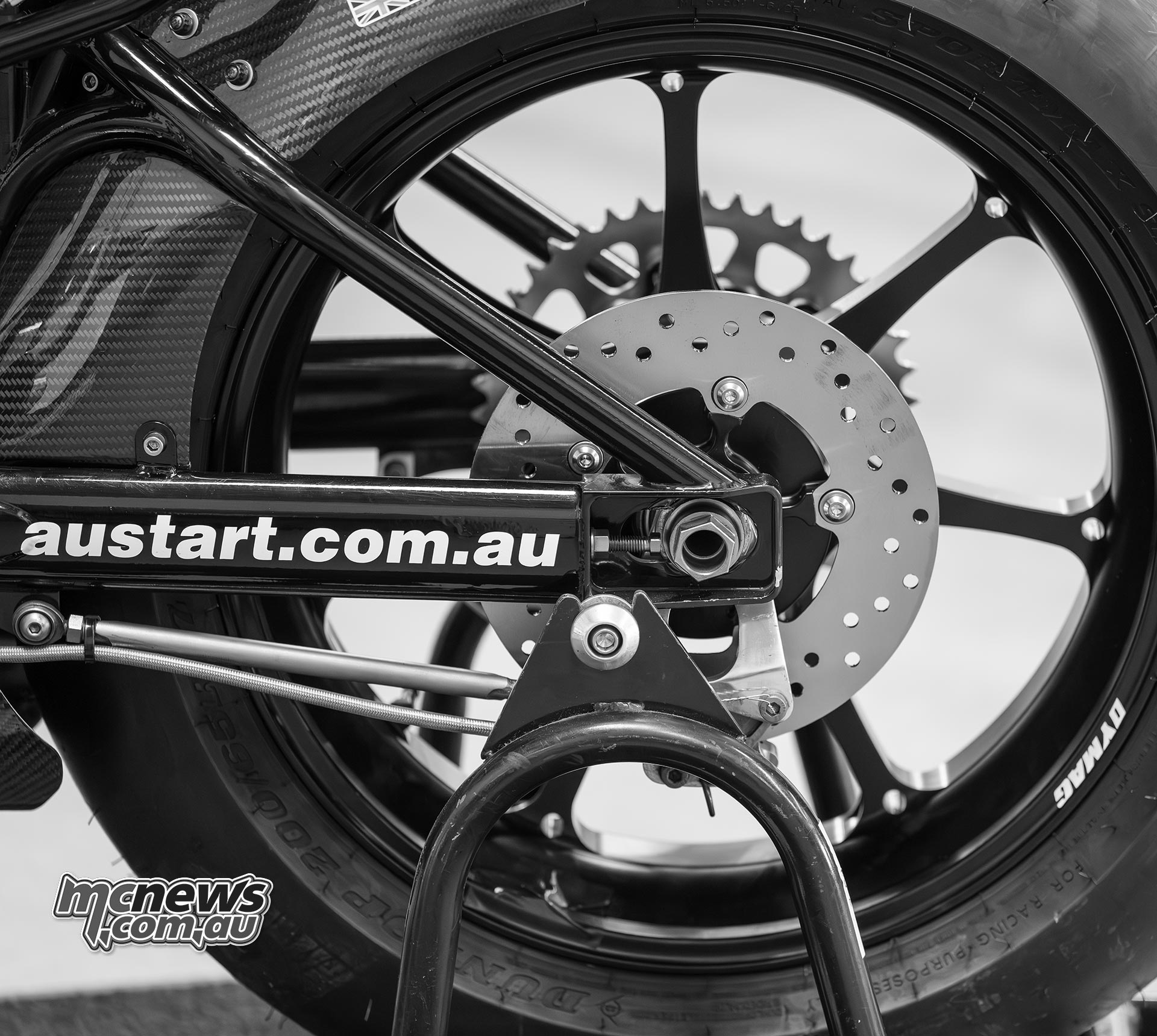 While everything has been made in-house the Horner brothers did follow a lot of the signature engineering principles of the original Irving Vincent
Does the Irving Vincent reward a particular riding style?
“Hopefully mine… Between myself, Craig McMartin, and Cameron Donald I think we have given the feedback for Ken and Barry to make what the bike is today.
“I have said this in the past in discussions with Craig and Ken. Probably the biggest thing is using the torque to its advantage and standing the bike quickly enough that your hand can get that torque to the ground as quickly as possible. We have never been a powerhouse in a straight line, so we have to use our advantage where the bike is strong.”
Is there an aspect of the bike that instantly filled you with confidence?
“I think having the history with the team and the IV for so long, having trust in the team, Ken, Barry, who built everything by hand, confidence is just having that trust that they do their job, and let me go do my thing on the bike.”
What’s the biggest adjustment you’ve had to make coming from modern machinery once again, and how does it compare to the 888 Ducati you have recently campaigned in the Superbike Masters ranks?
“I think it may be more comparable to the 888 in Superbike Masters. Regarding early Ducati engine characteristics. You don’t get a lot more revs out of the 888, so utilising the torque again, in riding style.
“Probably jumping off modern to old again like the other weekend at The Bend, once you get used to the different riding positions, it’s remembering to use the clutch. And vice versa – when I get on a modern bike, not to use the clutch.
“We are so spoilt these days, once you launch from the start line on a modern bike, you don’t generally touch the clutch. Speed shifters and auto blippers take control. The IV having no electronic aids, no auto blip and quick-shift, my left hand can get busy under deceleration as well, keeping the back wheel from locking.”
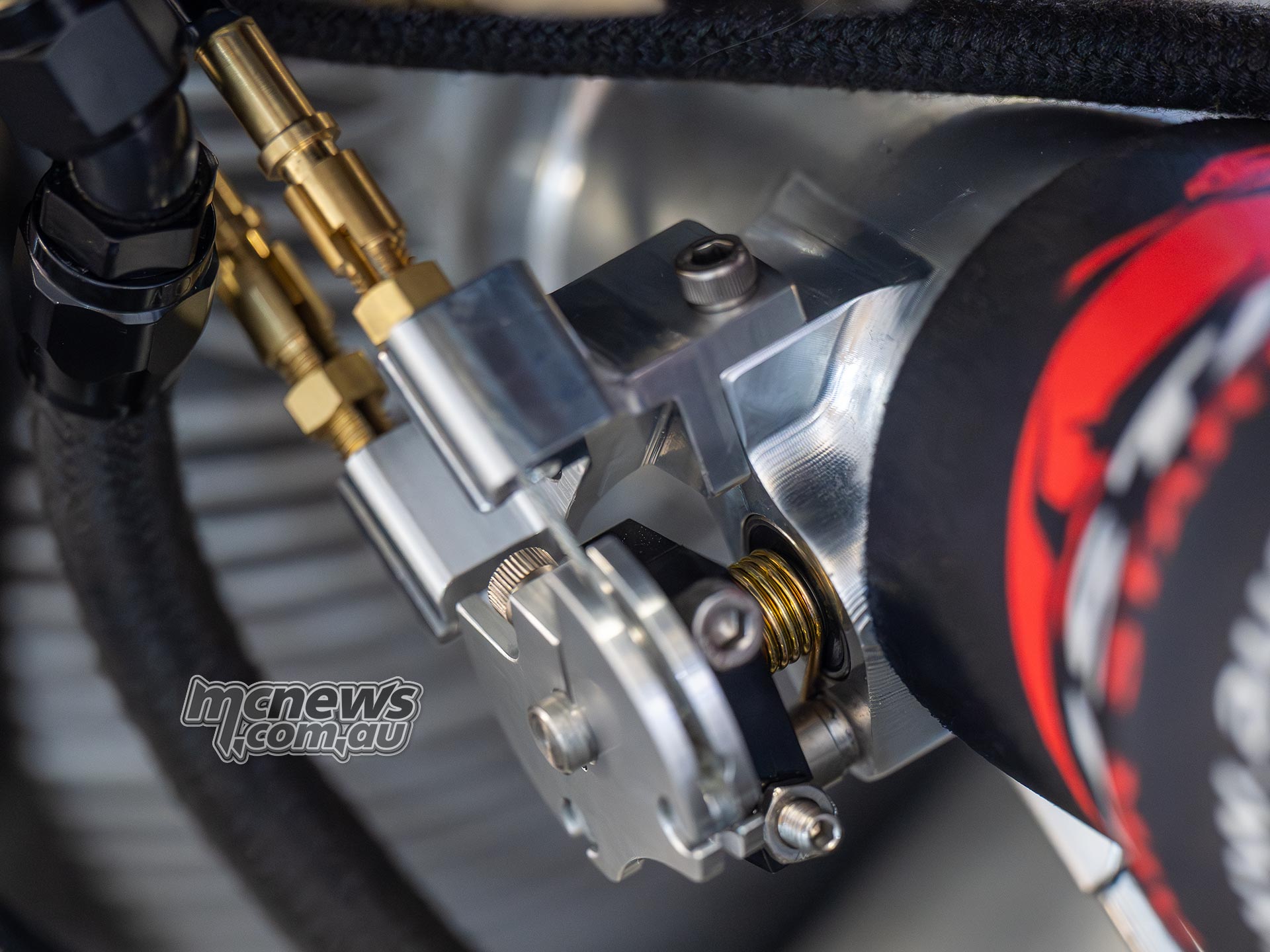 Irving Vincent Super Hooligan
Are there any quirks or personality traits the bike has that only a rider would notice?
“Zero electronics. Engine braking and throttle translation are what they are, and you make do with what you have.”
What’s one area where the Irving Vincent surprisingly holds its own against modern superbikes?
“That’s a tricky question to answer. I feel modern superbikes in the last 10 years have come so far with electronic aids. If you were to compare our lap time with a modern superbike, there isn’t a comparison. If I were to say anything, I believe the mid corner speed of the IV has always been high, but it’s comparative to what I’ve raced against.”
Where is the biggest technological difference felt from the rider’s seat?
“There’s no tech on the IV, just precise engineering. If you’re comparing it to previous IVs. Nothing, I’ve ridden some that have a shift light only, some have an analogue tacho, some have a digital tacho, but I always seem to shift off feel. I mentioned to Ken and Barry on this one, don’t even bother with the dash. But I think we are running one at this stage.”
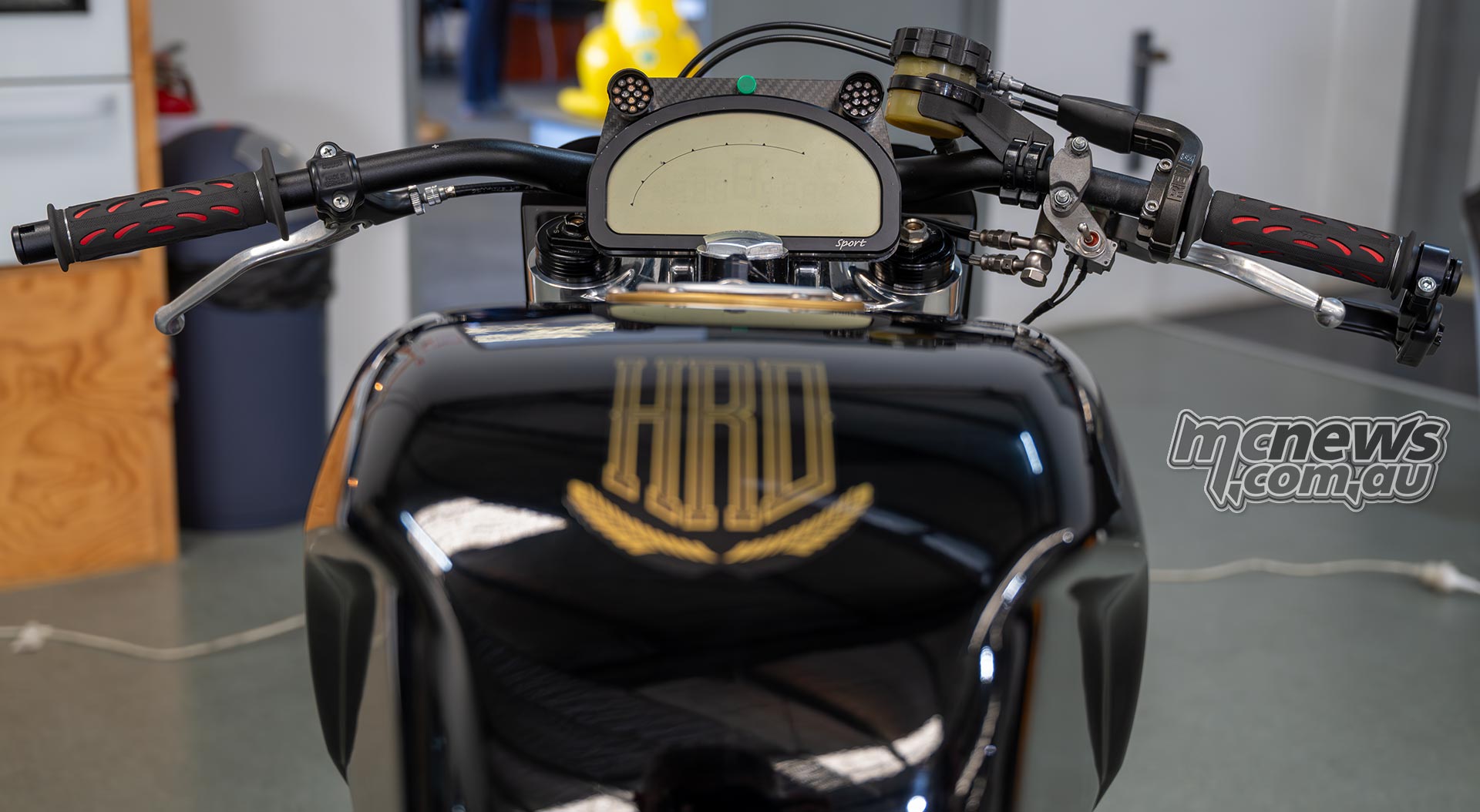 The cockpit of the two-valve air-cooled Irving Vincent Beau will race at Daytona
Given the lack (or minimal use) of rider aids, how much more “hands-on” is the riding experience?
“With no rider aids, yes, the clutch is probably a tool I use on the IV more than when I ride a modern bike. I never really spent much time on superbikes with proper traction control, so I don’t really rely on it when I ride anyway.”
Do you think today’s younger riders would appreciate or struggle with something so raw and mechanical?
“I hope they would appreciate it. I know some of the younger generation race at the historic titles on older bikes. So I feel they would adapt and appreciate it. At the end of the day, we race bikes because we love doing it. Whether that bike has electronic rider aids or a fancy electronic dash, I don’t think a true rider would be disheartened to jump on it and race it. It’s been ridden by many big names of the motorcycle industry, Troy Corser, Shawn Giles, just to mention a couple, and I can tell you they all got off the bike with a huge smile.
“Appreciating the IV as a raw bike, as you put it, is one thing, but whether it can be seen and appreciated for what Ken and Barry have achieved with building these motorbikes is another thing. The engineering behind building a push-rod air-cooled V-twin to its absolute limits is something that I, for one, will always be in awe of. And I’m lucky enough to have been involved for the majority of its journey.
“It was only by chance that I ended up on the bike in October 2009. I was 23 and still very new to road racing. Craig McMartin was meant to be racing the bike that weekend, but couldn’t due to work commitments. Craig had been helping me with my first year in Australian Superstock 1000, and convinced Ken to put me on the bike. I’m still not sure if Ken is crazy or just had a lot of trust in Craig, letting a 23 year old fresh road racer out on a bike that doesn’t really have a value in this world. As we might say, the rest is history.
“More to your point, I was young when I first hopped on the IV, and I did, and always will appreciate it for more than it’s just a raw motorcycle, I do appreciate the engineering marvel it is.
“It was less of a step or a conversion back than Superbikes were, with throttle cables, no TC, and few rider aids.”
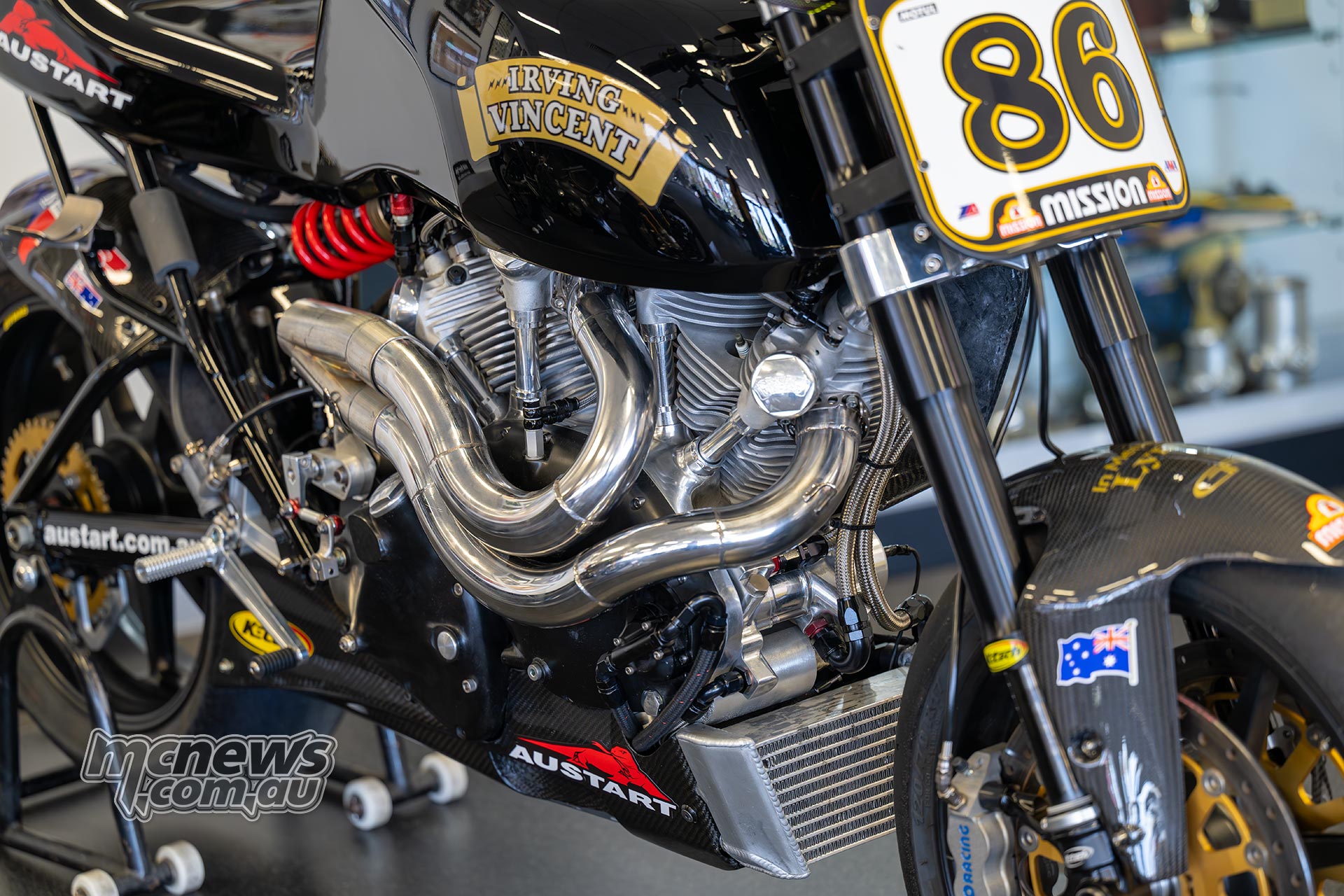 Irving Vincent Super Hooligan
Do you feel a sense of responsibility riding a bike with this much history behind it?
“Yes. I always feel privileged and have a sense of responsibility whenever I ride the IV. Not that Ken and Barry have ever put any expectations on me or put any pressure on me. They know I’m doing everything I can out there, and I know they are putting way more effort in than I ever have to. I have always said I get the easy job. 15 min race on the bike, but these blokes have put in years of effort for that 15 mins.”
Is there pressure knowing the Horner family poured so much into this machine?
“They have never placed pressure on me whatsoever. I only expect it from myself.”
What does it mean to you personally to be part of the Irving Vincent story?
“Small inside story, when I was born, my Dad wanted to name me Vincent. When my Mum found out it was after a motorcycle, it got gonged… Somehow, through Dad being shut down about the name, I got Beau. The Vincent Motorcycle was my grandfather’s favourite bike of all time. And that’s how it came about.
“Somehow, in a weird twist of events, I end up racing a Vincent. Dad got his way, sort of. My name is sort of associated with a Vincent race bike. So personally, for me, I have love for all motorbikes, and being a part of Ken and Barry’s Irving Vincent story has been unbelievable. They keep asking me back, so I must be doing something right.”
 Irving Vincent Super Hooligan
No place really compares to Daytona; you haven’t raced there, or anywhere else in America, for that matter. What can you do to try to prepare yourself for the challenge ahead best?
“I can’t really prepare myself for Daytona. I’ve had a chat to Craig (McMartin) about it. He raced there in 2008, he told me to let the brake off if I’m not quick enough. I had a good chat with Peter Doyle down at The Bend who has plenty of experience over there with Mat Mladin. Some unreal stories from there.
“Yes, I know it will be challenging, and everyone there will have track experience, etc, but I’m up for it. I’m as excited as I ever have been to race.”
What would a successful Daytona look like from your perspective?
“This will be our first AMA event. I’m sure there will be a list of jobs after this that we can improve on. We don’t really know where we sit in terms of competitiveness because we don’t have a class like it in Australia to compare against. Successful to me would obviously be towards the more pointed end of the field, but just being in amongst the race will be amazing.”
 Irving Vincent Super Hooligan
For Beau Beaton, riding the Irving Vincent has never been just another race gig, it’s a responsibility handed down through friendship, trust and decades of craftsmanship.
For Ken and Barry Horner, Daytona is a chance to showcase their life’s work on the biggest stage. Whether they land at the pointy end or fight tooth-and-nail in the pack, the result will matter far less than the significance of an Australian-built air-cooled V-Twin taking on America at full noise.
Whatever unfolds at Daytona in 2026, it will be another remarkable chapter in one of motorcycling’s most unlikely and unforgettable journeys.
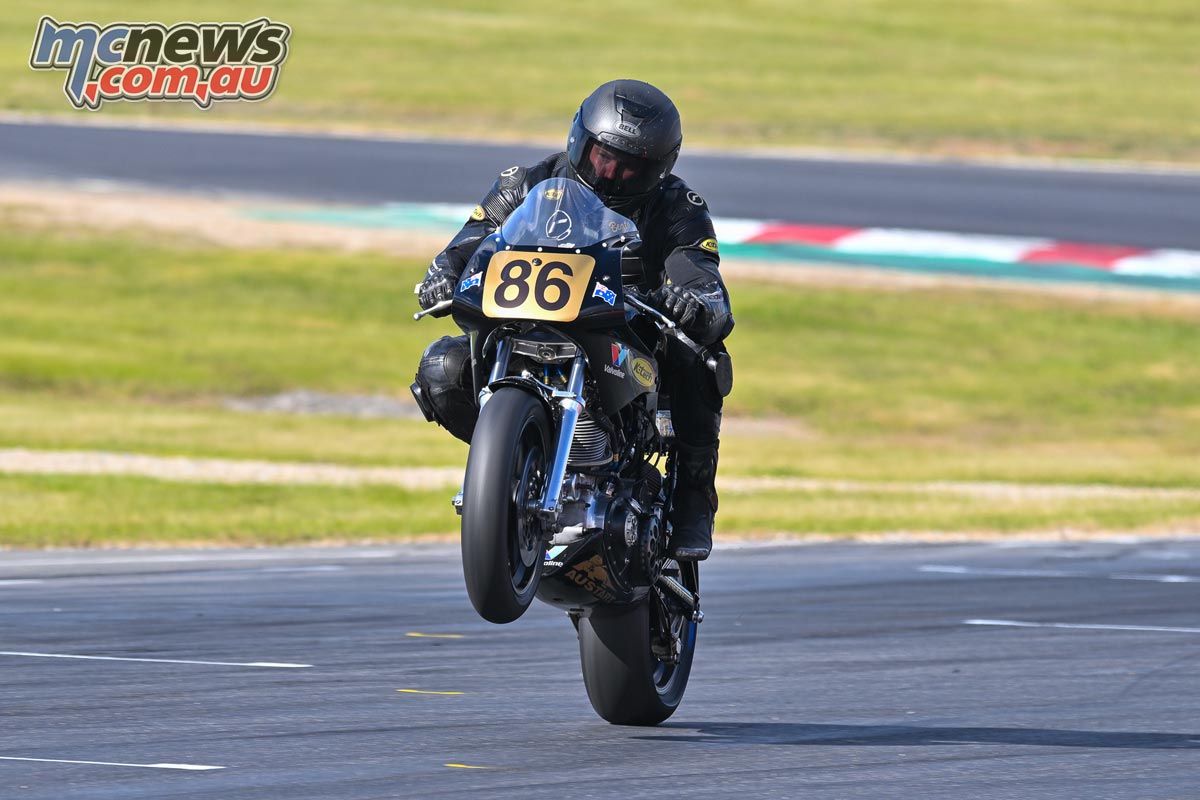 Beau Beaton on the Irving Vincent at Winton in 2023 – Image by Colin Rosewarne



 English (US) ·