
 2 weeks ago
16
2 weeks ago
16
ARTICLE AD BOX
Archie McDonald’s opening weekend in the new FIM Harley-Davidson Bagger World Cup did more than deliver an Australian win in the category’s inaugural race. It also offered the clearest indication yet that these motorcycles are not novelty acts.
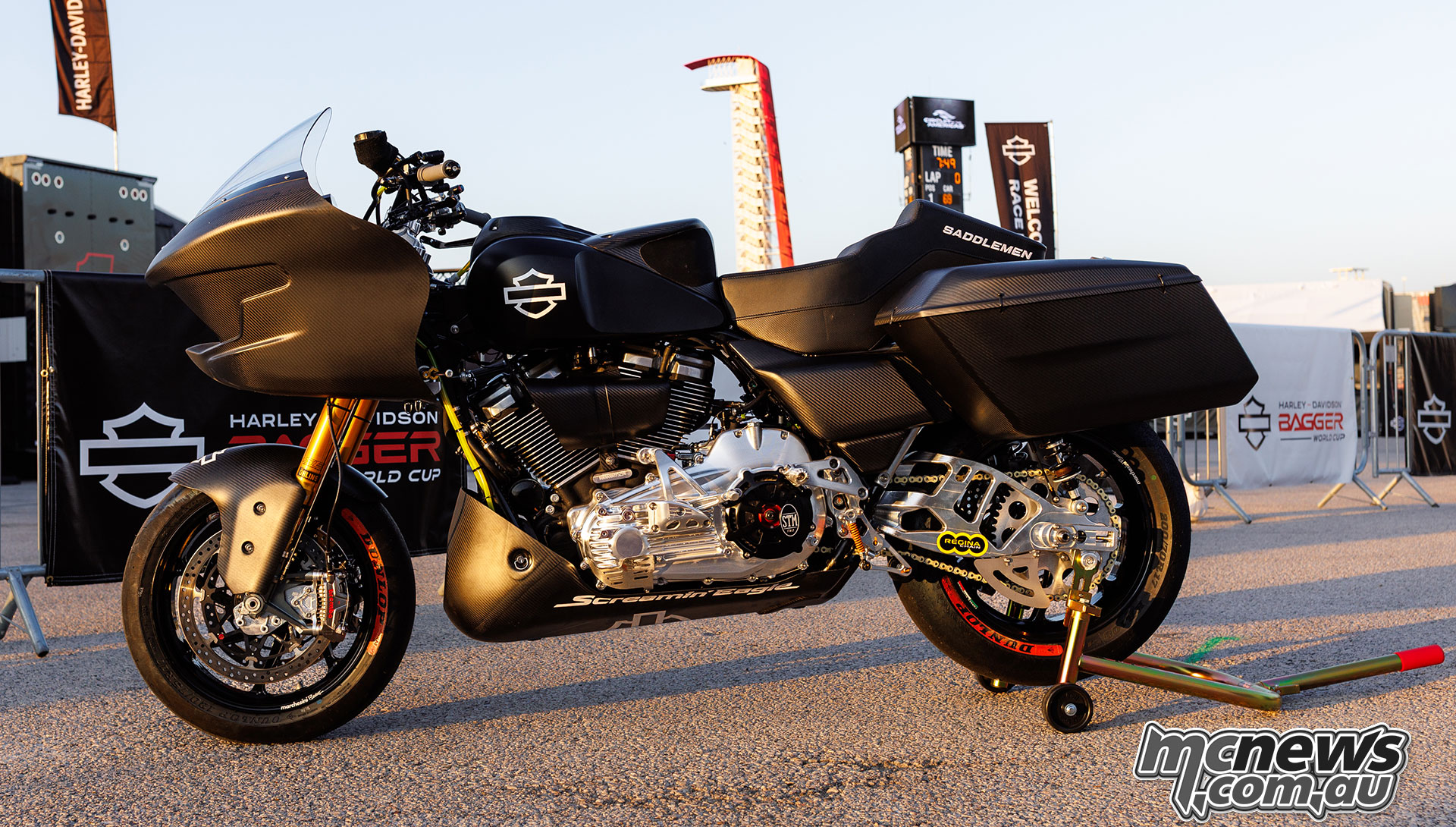 Harley-Davidson Bagger World Cup bikes explained
The Bagger World Cup lap times were faster than the quickest Moto3 lap on Sunday, less than six seconds off racing-winning pace in Moto2, and ten seconds off MotoGP race winner Marco Bezzecchi’s quickest lap on Sunday.
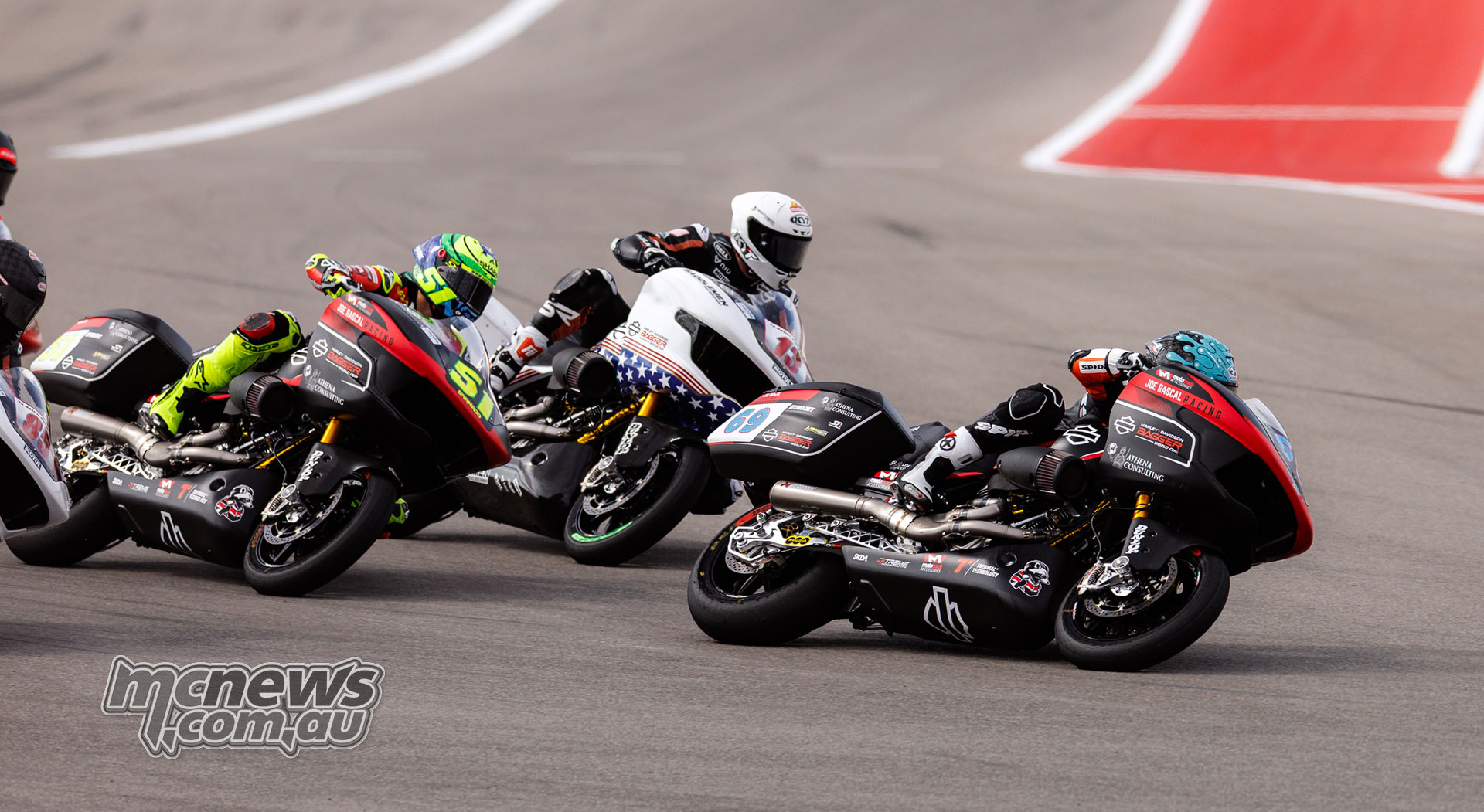 The opening COTA round showed the new Bagger World Cup bikes are far more than a novelty act.
The opening round also underlined the category’s core premise. These are equal-spec motorcycles supplied by Harley-Davidson, with teams effectively leasing the machinery rather than developing bespoke packages of their own. That keeps the focus on setup, tyre management and rider execution rather than ongoing engineering spend, while also ensuring that the look and identity of the series remain unmistakably Harley-Davidson.
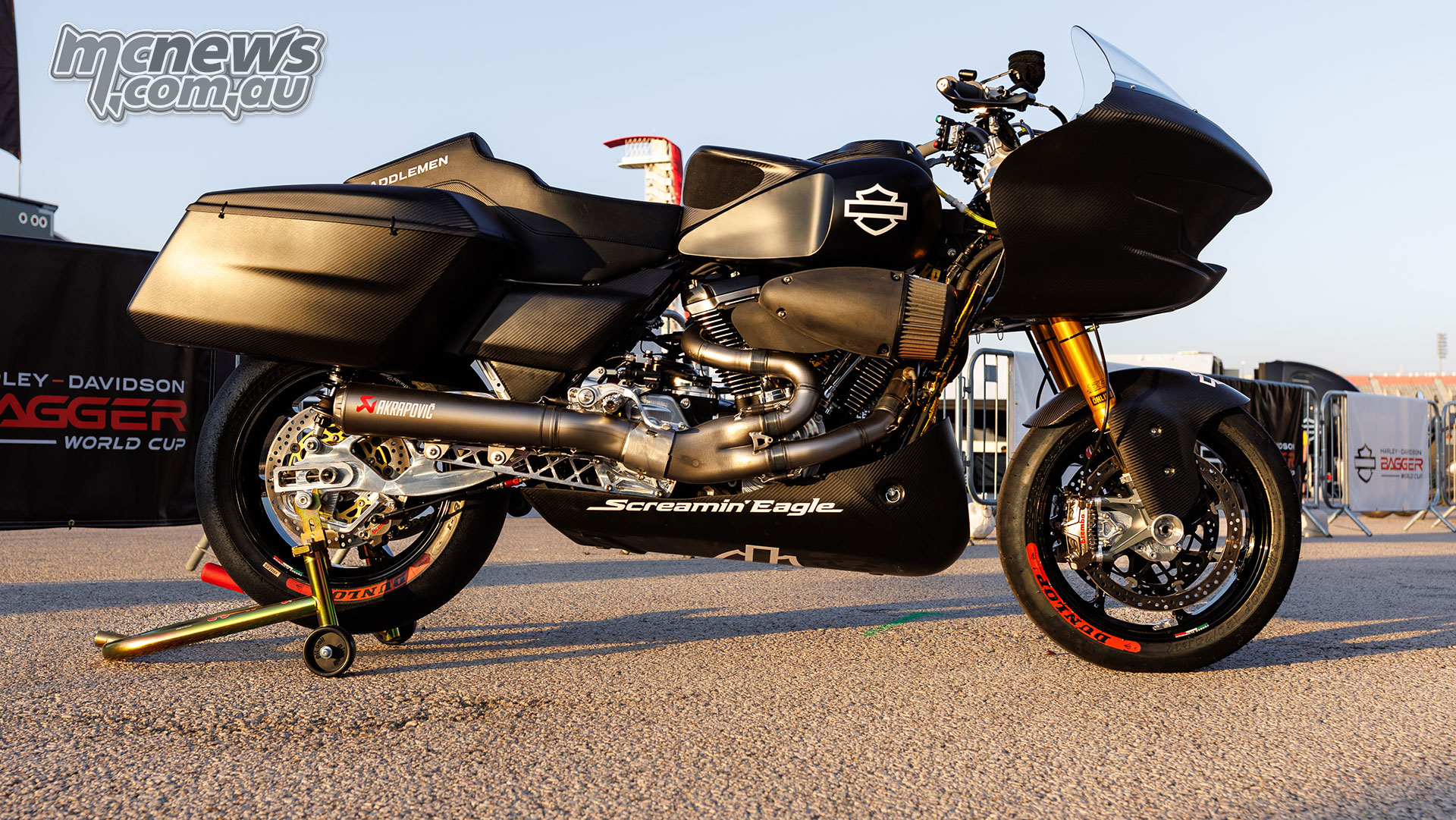 A Harley, but not as you know it, captain…
Harley-Davidson Bagger World Cup bike
Key numbers
- 2152 cc Screamin’ Eagle Milwaukee-Eight 131R V-twin
- More than 200 horsepower
- More than 220 Nm
- Around 280 kg race-ready
- Top speed over 300 km/h
- Equal-spec Harley-supplied race-prepared Road Glide
- Around US$500,000 to lease per bike
 The Bagger World Cup machines are Harley-Davidson Factory Racing-prepared Road Glides.
What exactly are they?
The bikes are Harley-Davidson Factory Racing race-prepared Road Glides, designed and built in Milwaukee around the Harley-Davidson Road Glide production steel frame.
 Harley-Davidson Factory Racing Road Glide prepared for Bagger World Cup competition
Power comes from Harley’s Screamin’ Eagle Milwaukee-Eight 131R V-twin in race specification, displacing 131 cubic inches or 2152 cc. Harley quotes an output exceeding 200 horsepower and more than 220 Nm, with a top speed of up to 310 km/h.
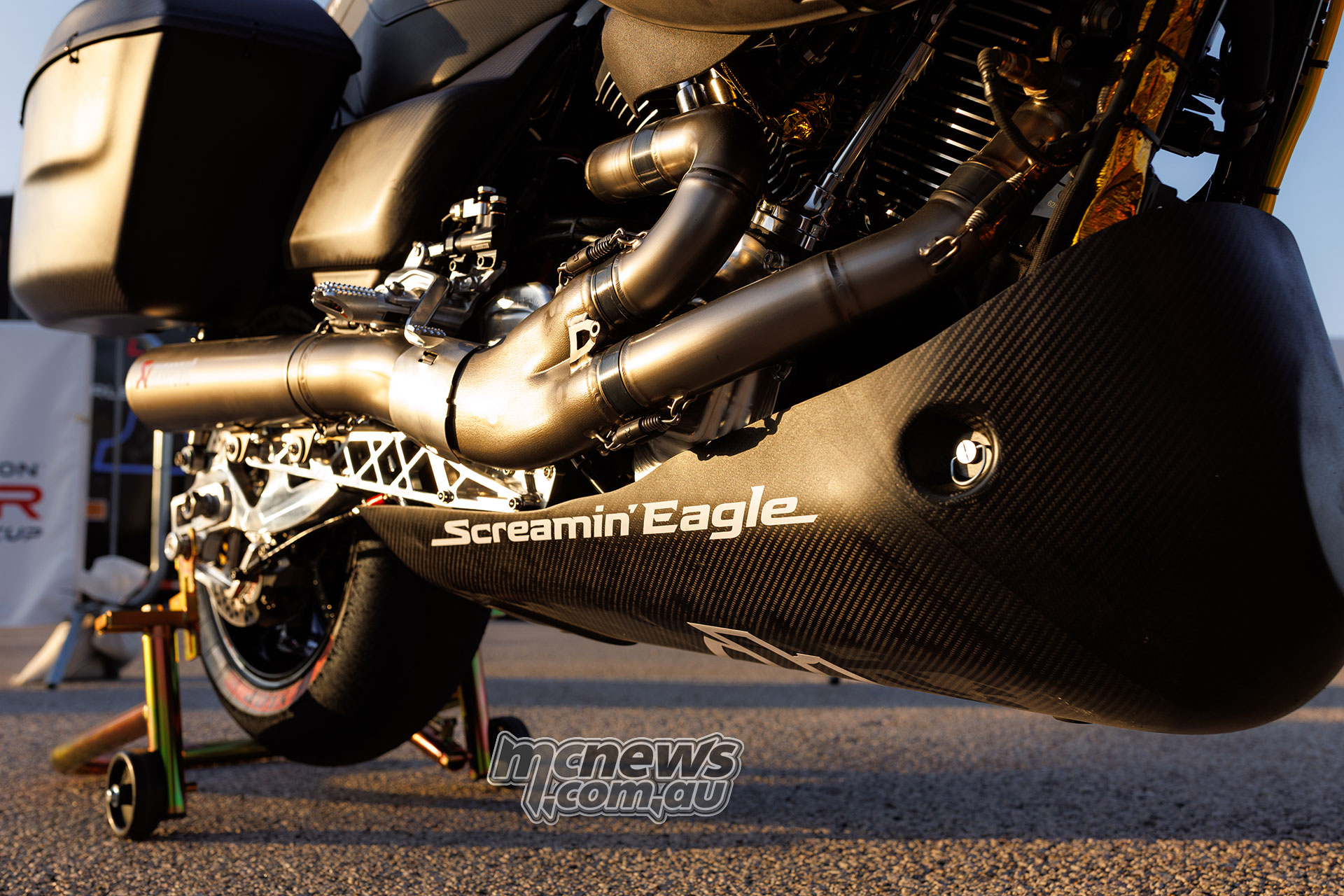 Power comes from Harley’s 2152 cc Screamin’ Eagle Milwaukee-Eight 131R V-twin in race trim.
That absurdity is part of the appeal, but it is also what makes the bikes technically interesting.
2152 cc and 200 hp-plus
The heart of the package is the big Milwaukee-Eight 131R. More than 220 Nm is an enormous amount of twisting force to ask a rear tyre to cope with, especially when the bike weighs 280 kg.
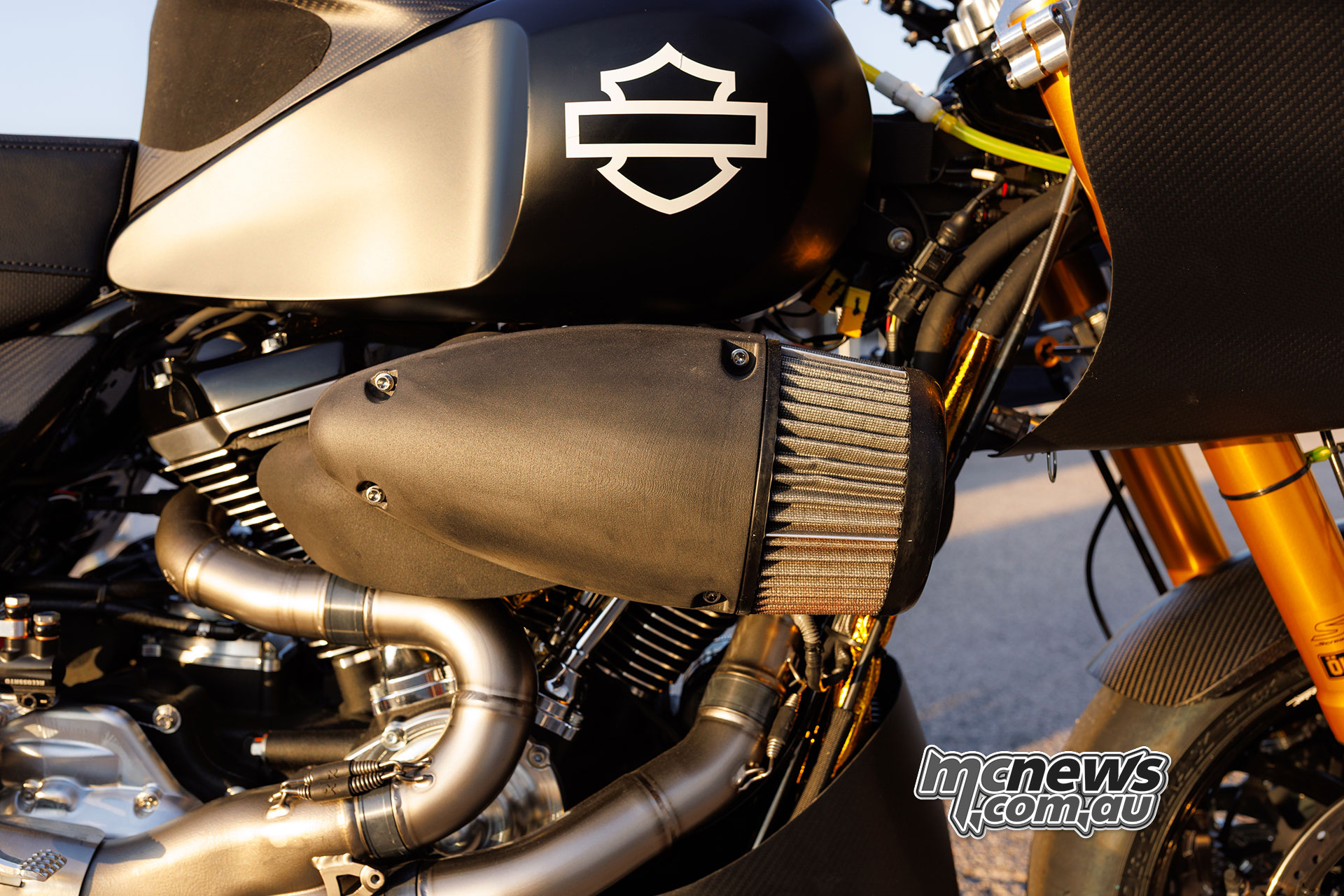 Screamin’ Eagle Milwaukee-Eight 131R V-twin engine used in the Harley Bagger World Cup race bike
At COTA, that was obvious from both the lap times and the race format. The races were only seven laps long, and even within that distance, tyre preservation remained central to the story as riders struggled to get a 280 kg motorcycle with over 220 Nm and 200 horsepower to hook up through a tall 200/70-17 Dunlop rear slick.
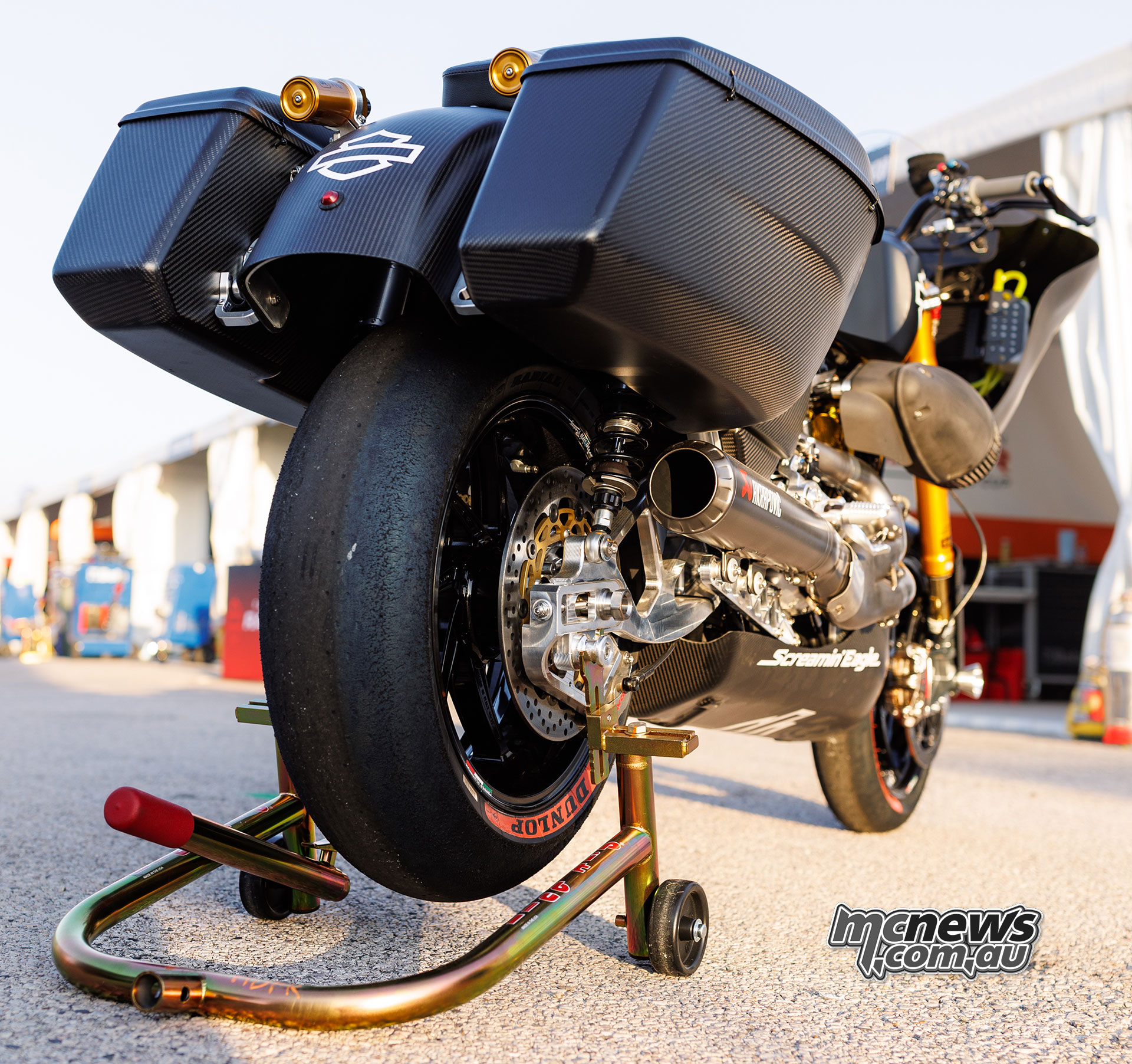 Cruelty to rear tyres is a big part of the Bagger game…
The exhaust is a full titanium Akrapovič system, and the engine is controlled by a racing ECU with dedicated mapping and data-acquisition capability. However, there is no wheel-speed-based traction control.
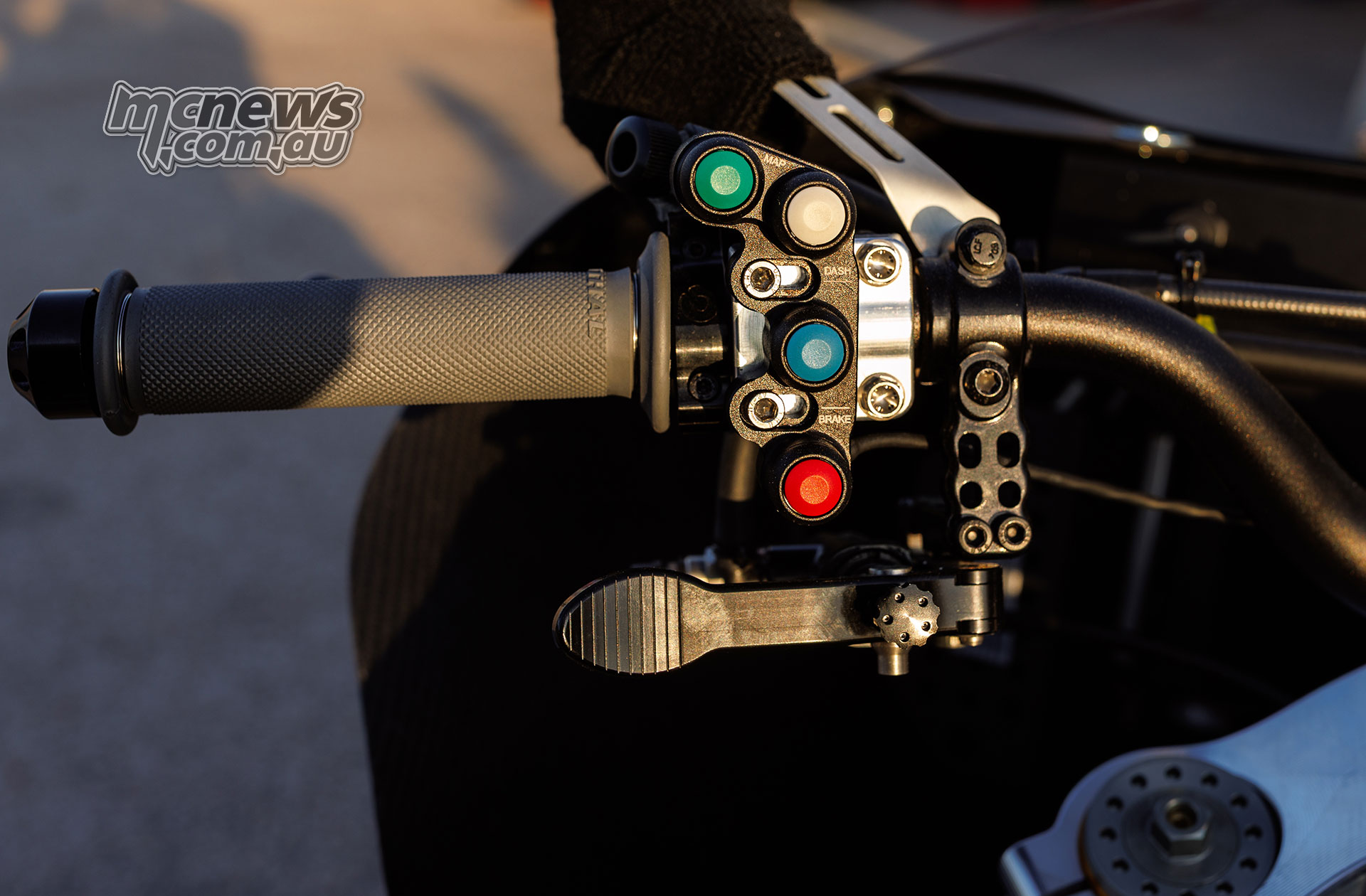 Bit going on, but no traction control…
What electronics…?
In modern racing, electronics often do the invisible polishing. They trim wheelspin, regulate launch, tidy entries and exits with corner-by-corner engine braking and torque maps that can disguise mistakes. In the Bagger World Cup, the electronics can help teams understand what is happening, but the traction control is down to the rider.
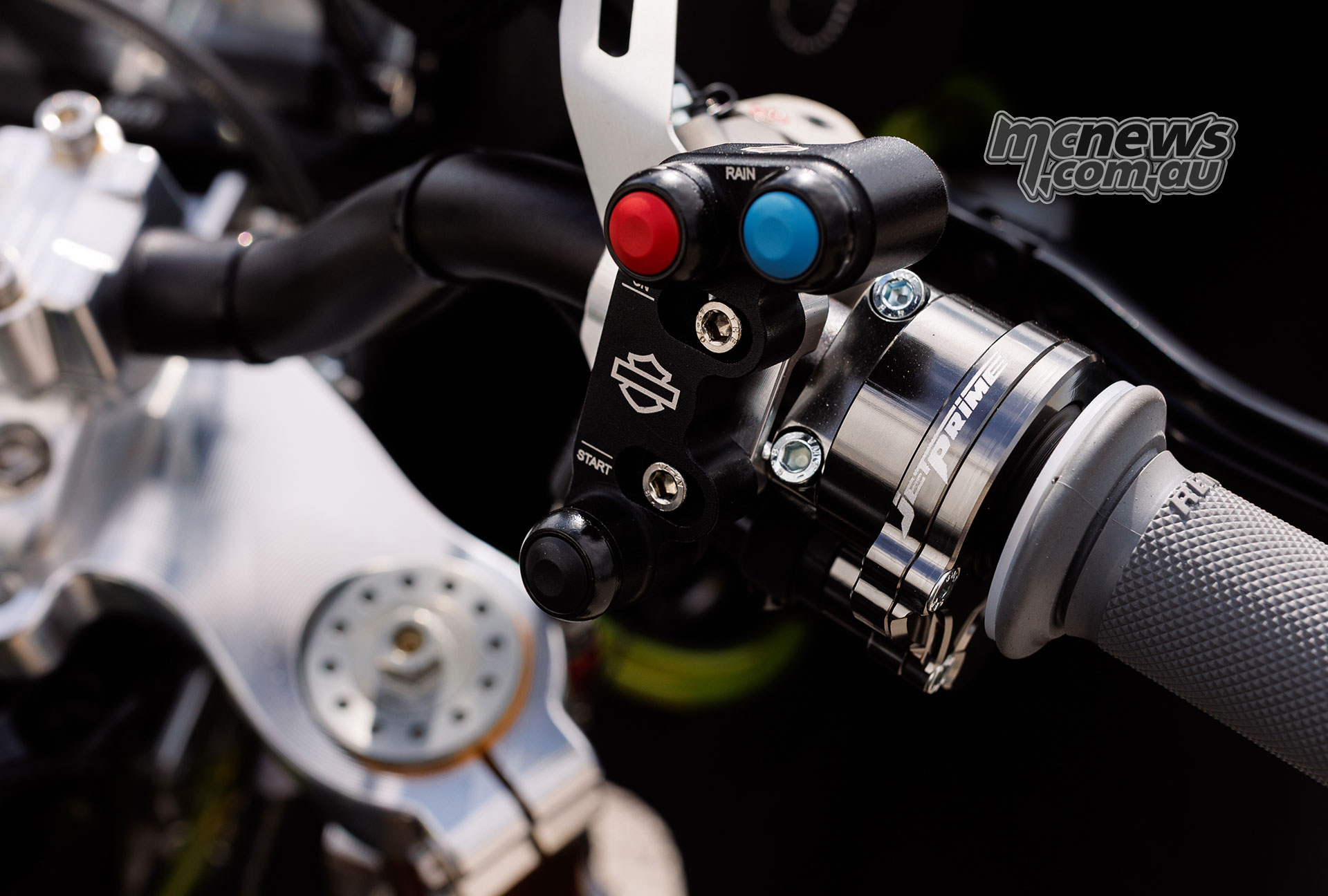 Harley-Davidson Bagger World Cup Bikes
That matters because it helps explain the shape of the racing we saw at COTA. McDonald led most of Race One and much of Race Two through clean, controlled execution rather than through brute-force domination.
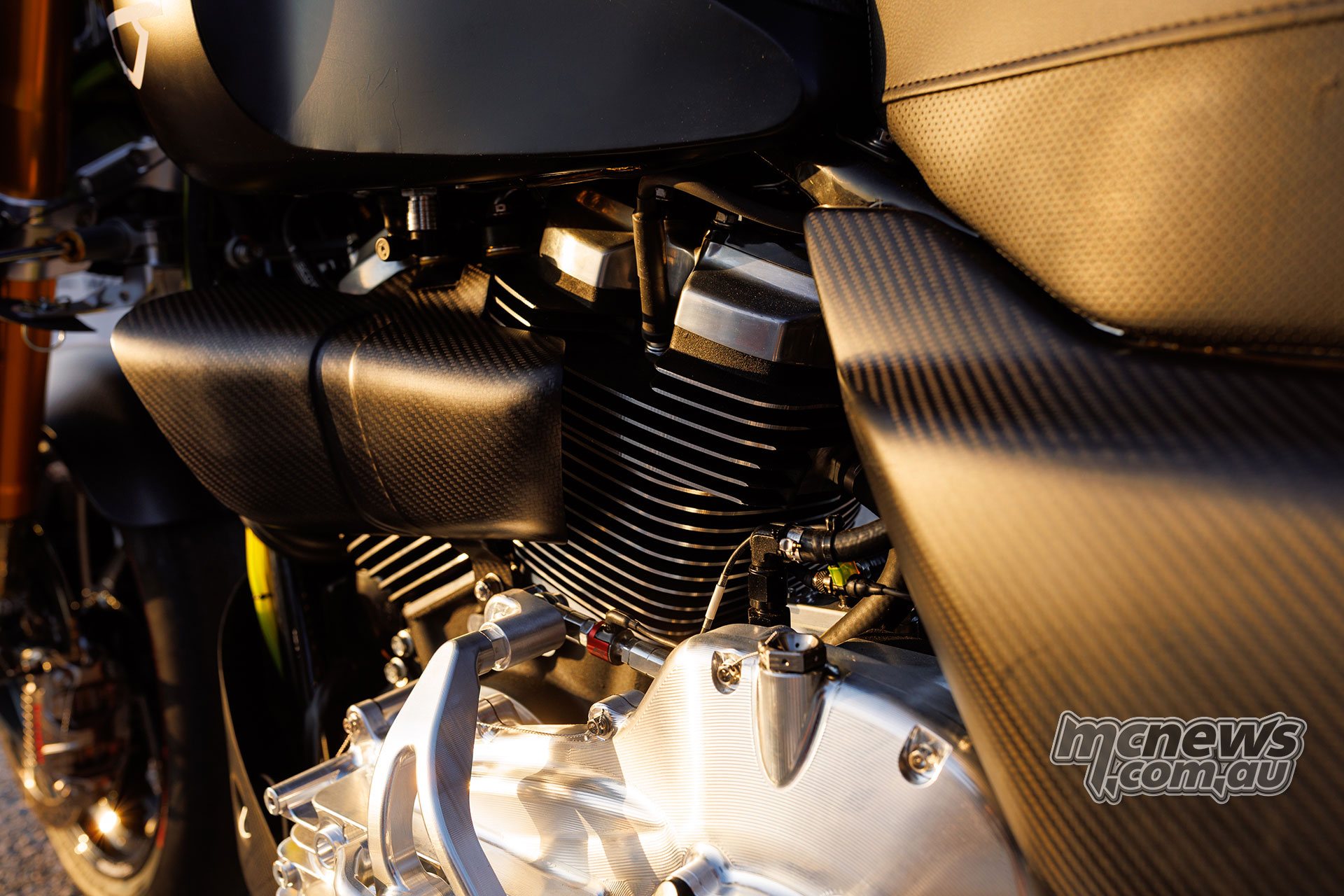 Harley-Davidson Screamin’ Eagle Milwaukee-Eight 131R V-Twin in race spec
Granado’s crash in the first race, McDonald’s moment with track limits and penalty exposure in the second, and Gutierrez’s ability to capitalise all reinforced the same point: these bikes reward precision and strictly controlled aggression, while punishing overreach.
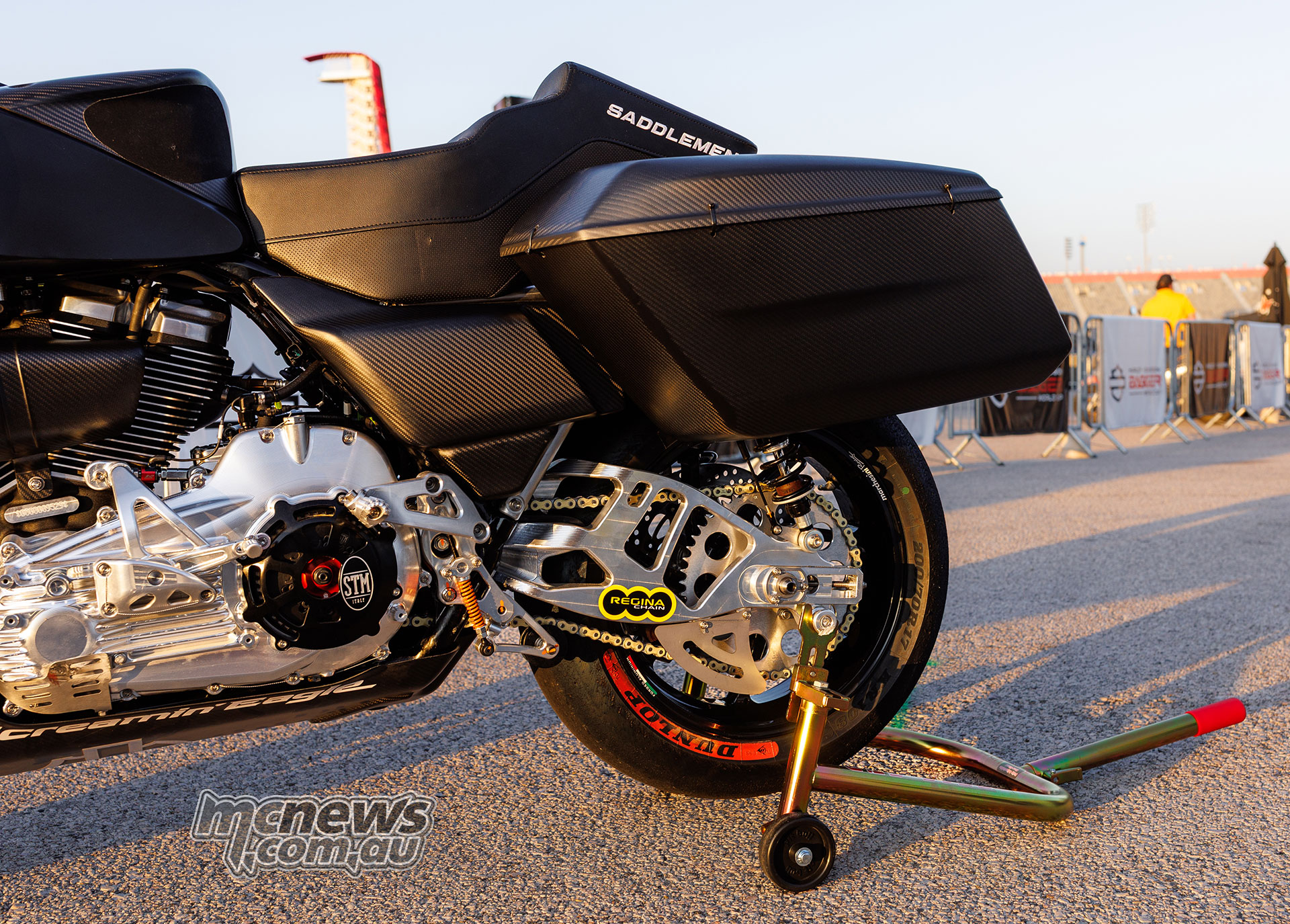
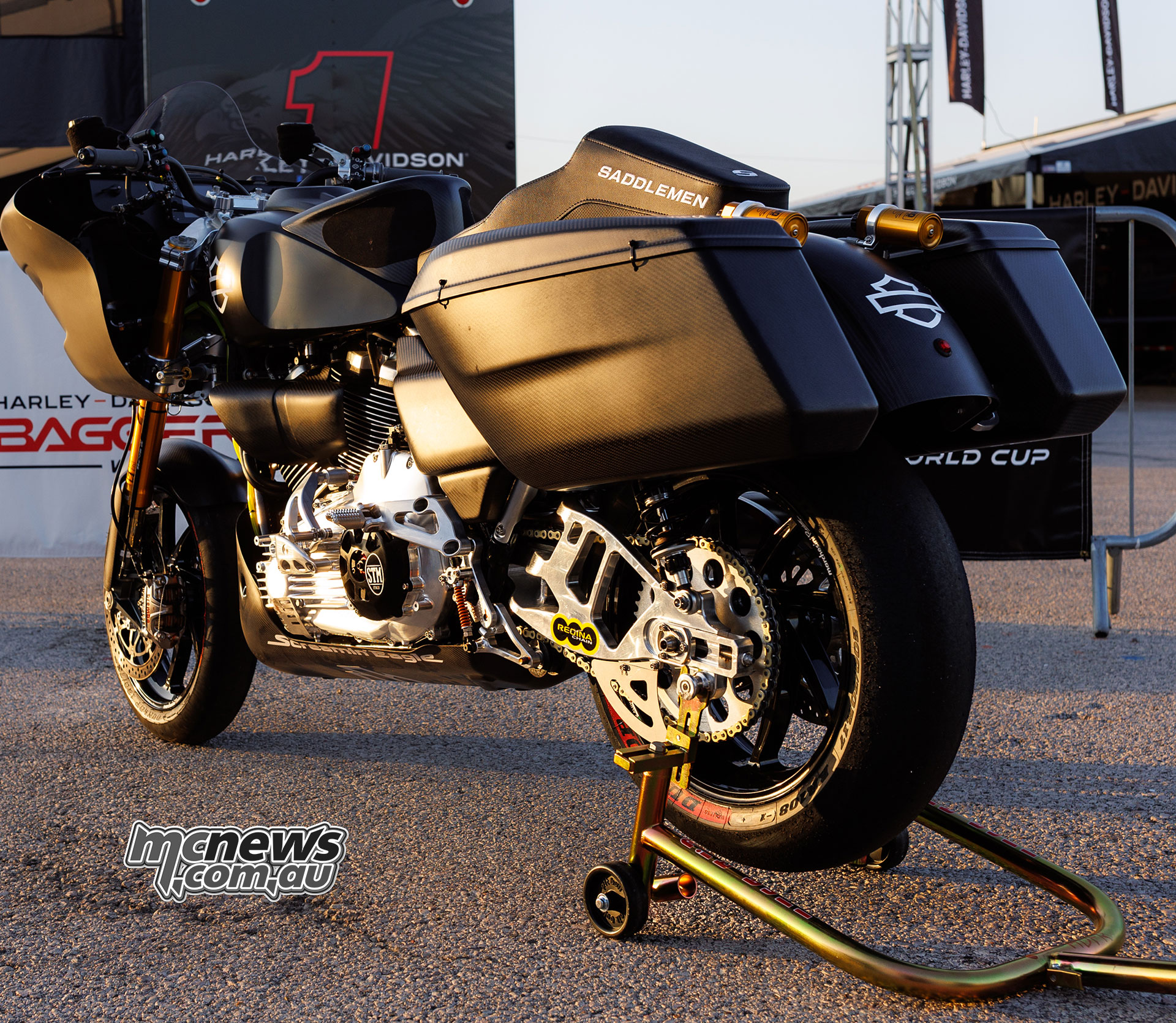 The rear tyre is a Dunlop KR108 200/70R17, manufactured in France
Gearbox, clutch and final drive
Harley fits the bikes with its Screamin’ Eagle Racing King 6 racing transmission, plus a quickshifter and blipper.
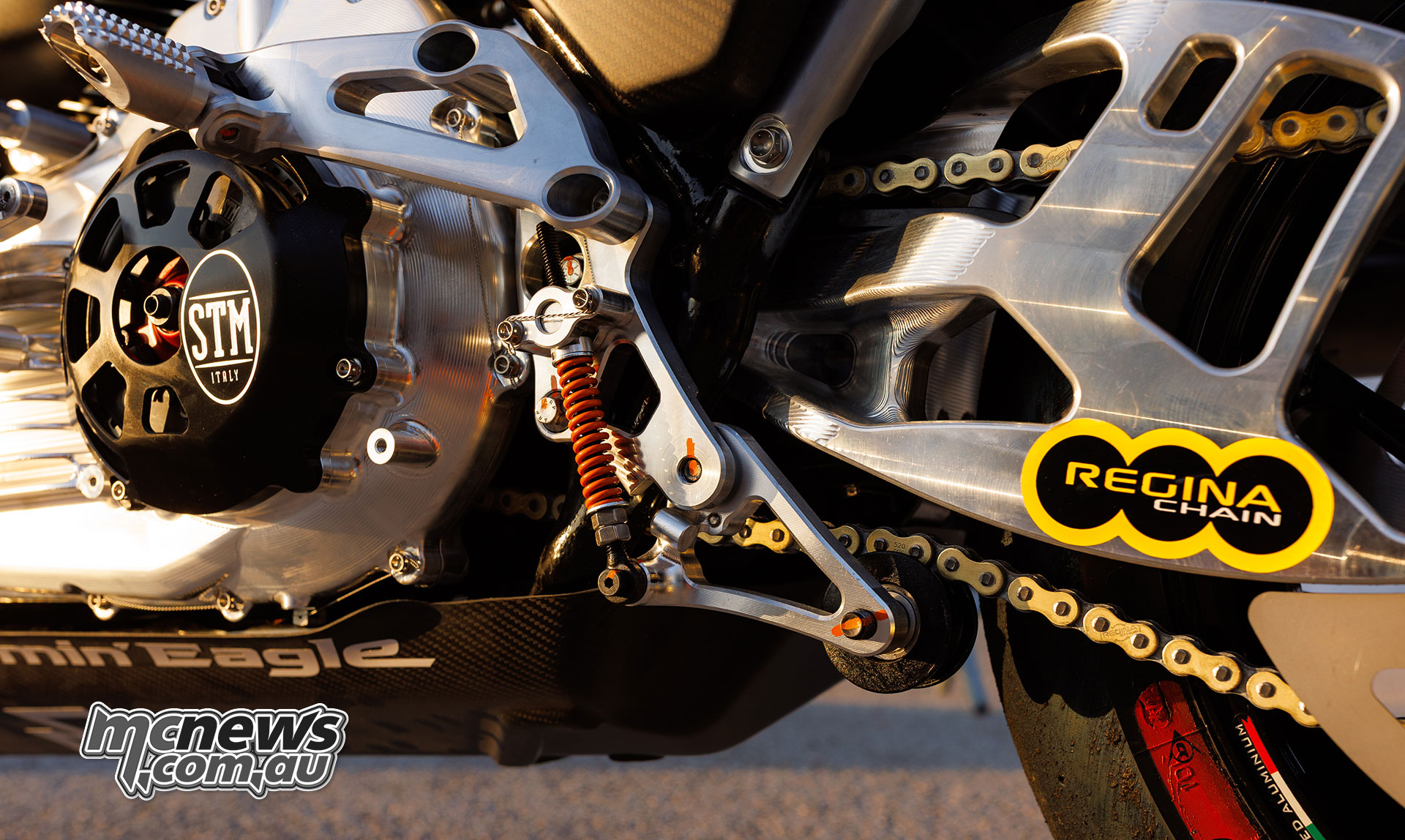
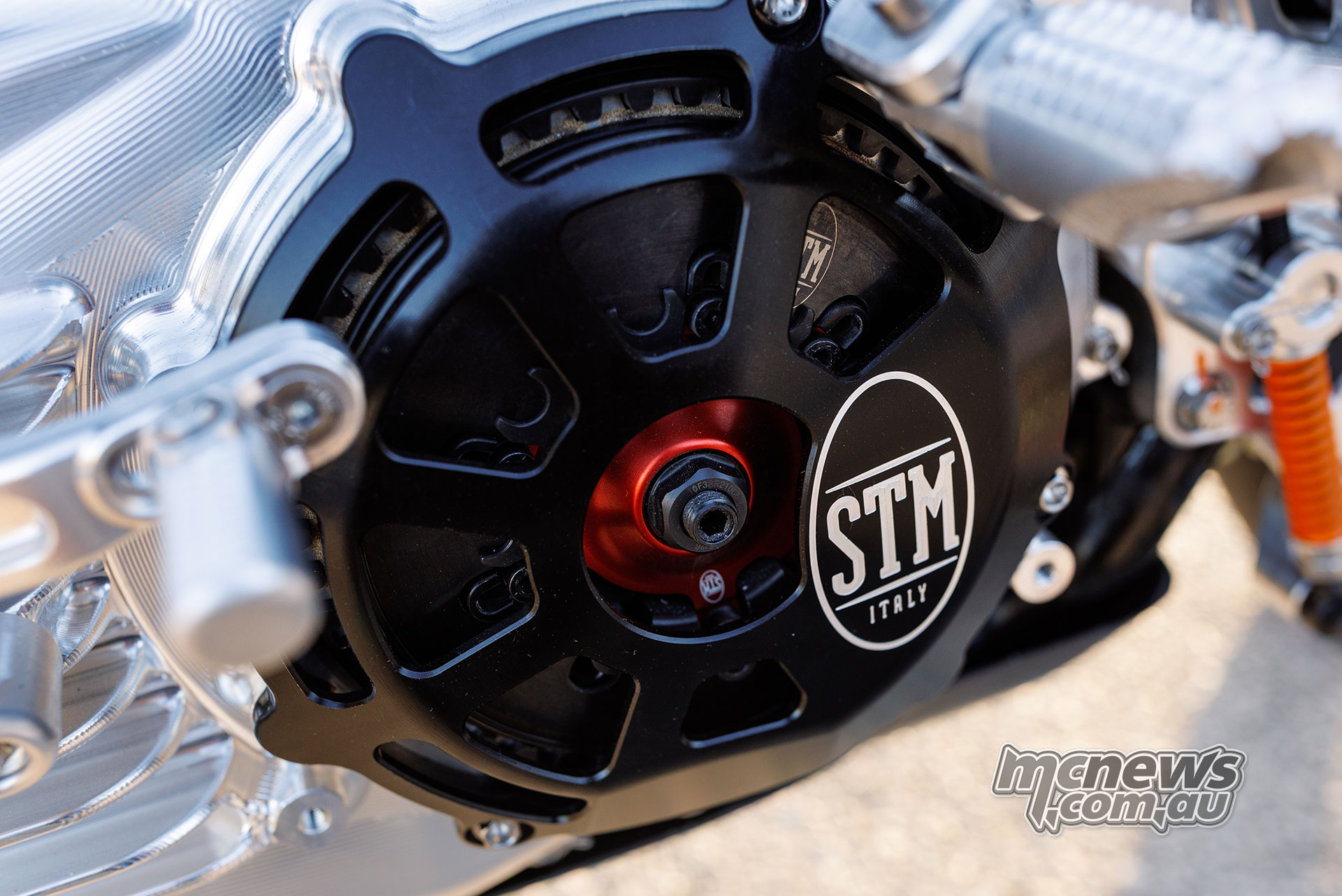 The STM dry slipper clutch is part of a drivetrain built to handle huge torque.
The clutch is an STM dry anti-hop racing unit, while Regina provides a chain that must handle the Baggers’ high torque and considerable weight.
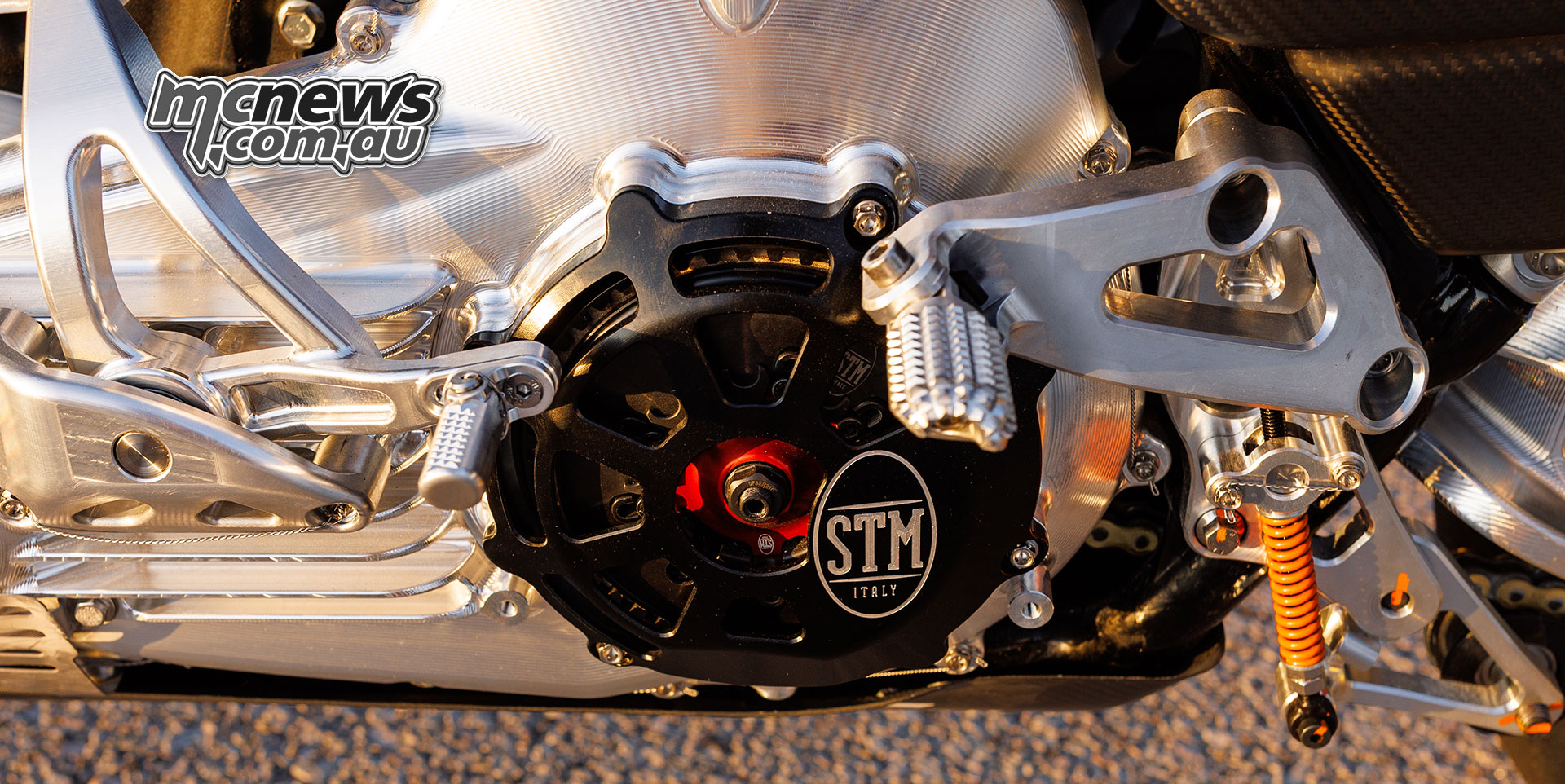 STM dry slipper clutch
Chassis and suspension
The production Road Glide steel frame remains the foundation, but the suspension package is full race-spec Öhlins. At the front, there is an Öhlins FGR 253 pressurised racing fork with full adjustability for compression, rebound and ride height.
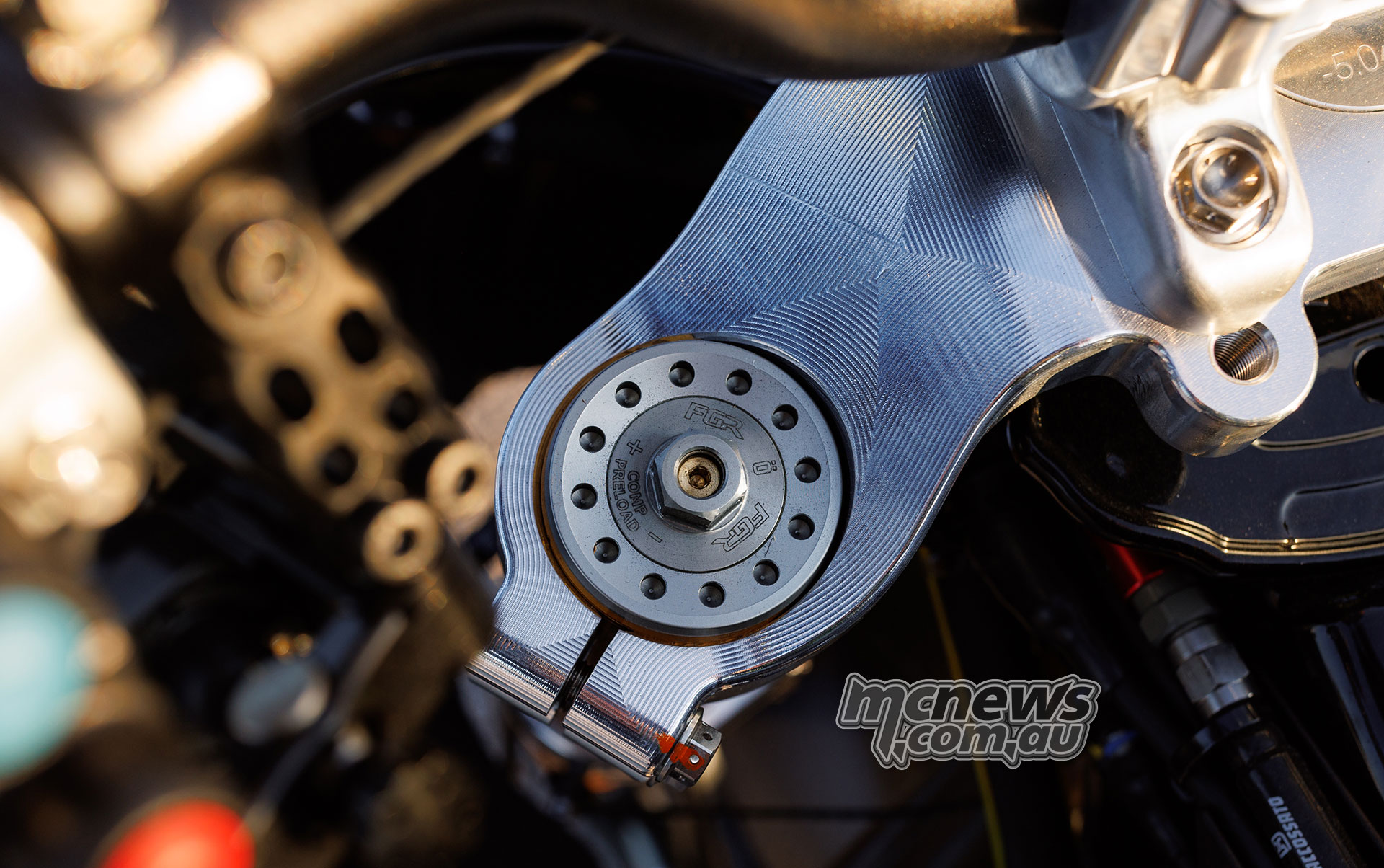 Öhlins FGR 253 pressurised race forks handle front-end duties.
At the rear, Harley uses Öhlins twin nitrogen-charged racing shocks with external piggyback reservoirs and full adjustability for compression, rebound and ride height. Wheels are Marchesini forged aluminium 17-inch race items.
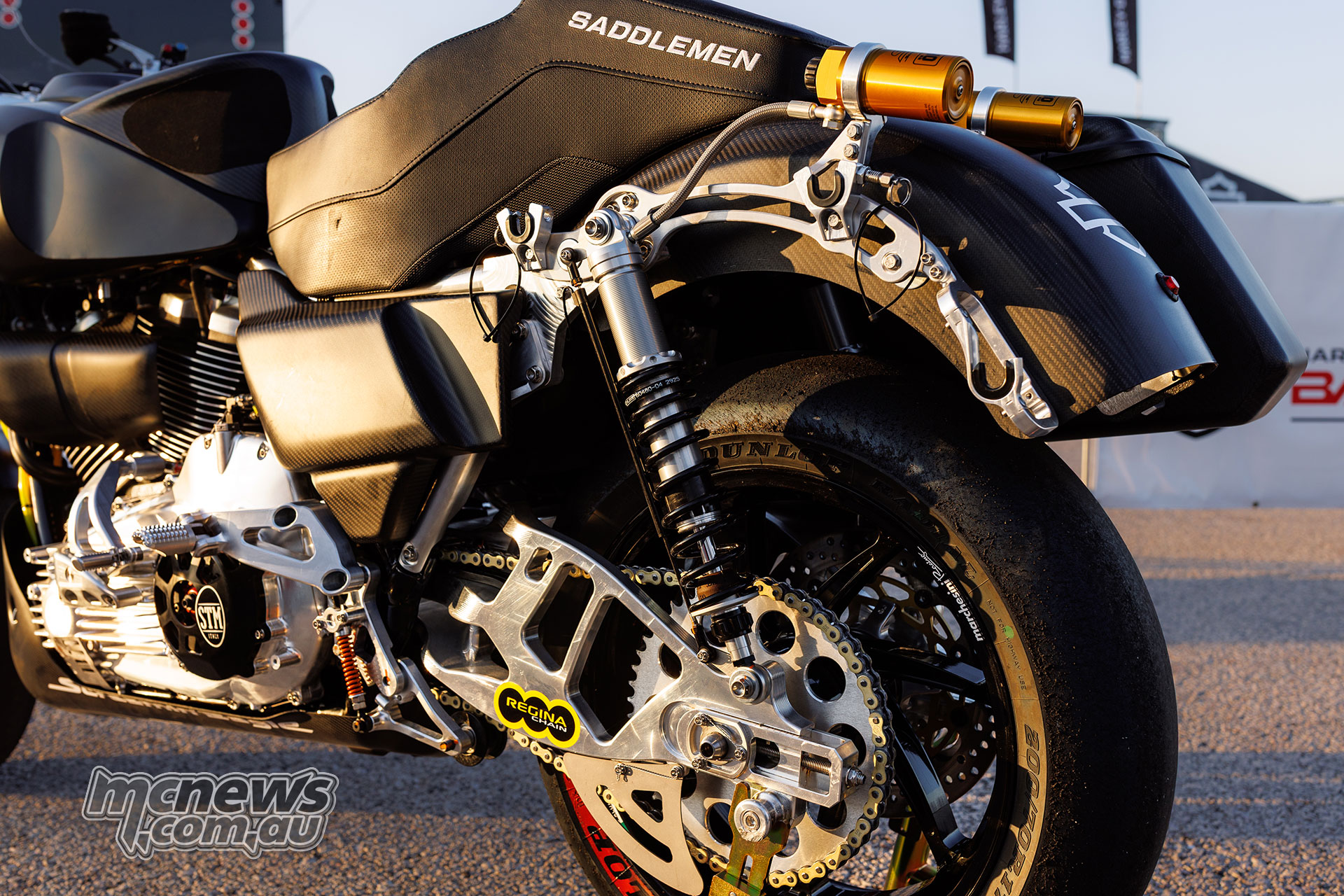 Twin Öhlins shocks with piggyback reservoirs feature full race adjustability.
The riders were carrying some serious lean angle through long, loaded corners at COTA.
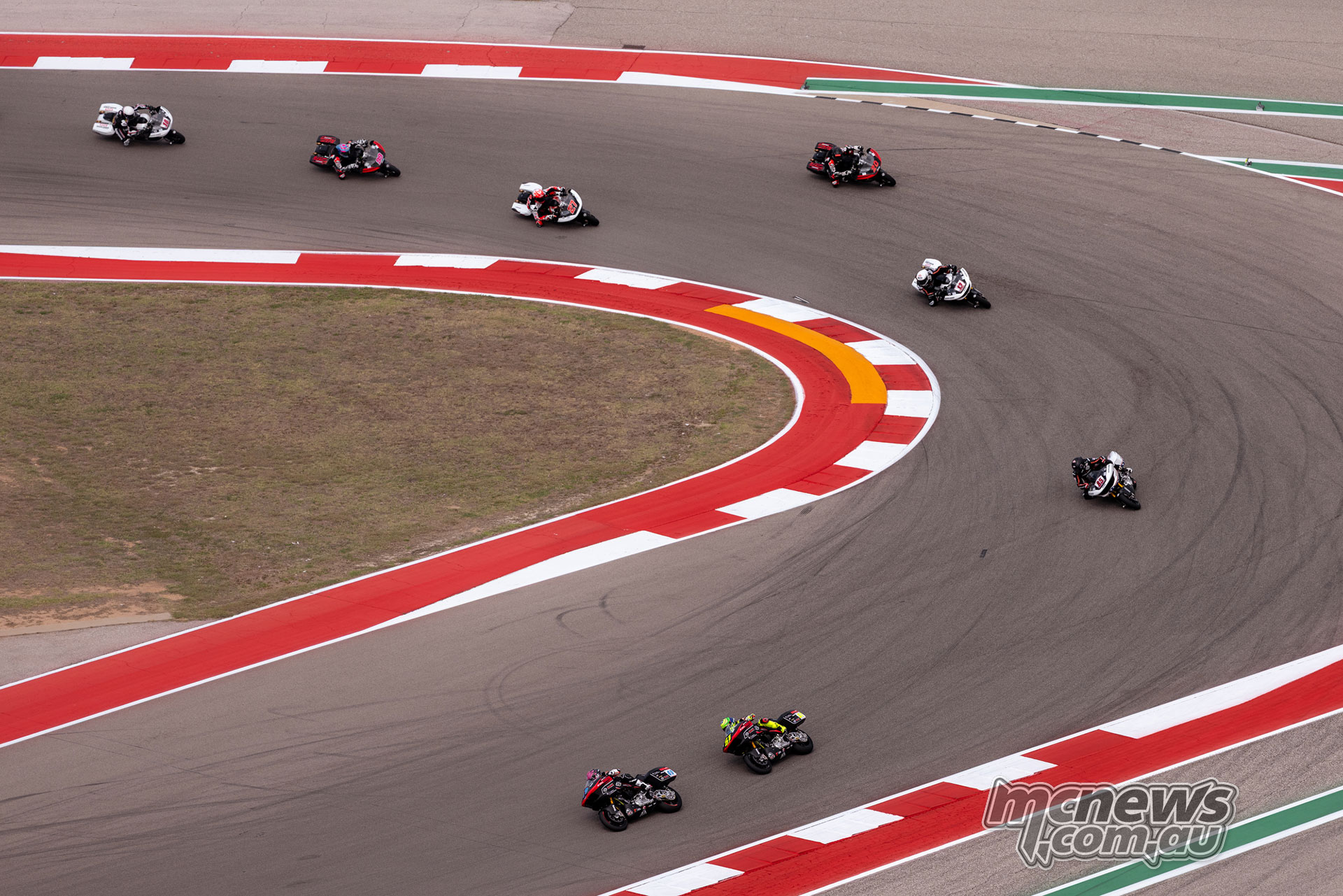 FIM Harley-Davidson Bagger World Cup
The tyre part of the equation
The front tyre is a Dunlop Sportmax Slick 120/75R17 available in R5 medium and R7 medium-hard compounds.
 Dunlop supplies the spec slick and wet-weather tyre packages for the championship.
The rear is a Dunlop KR108 200/70R17, made in France and offered in MS1 soft and MS2 medium compounds.
Cruelty to rear tyres is a big part of the Bagger game…Wet-weather tyres are a separate Dunlop package, with KR189 front and KR405 rear specifications manufactured in Japan.
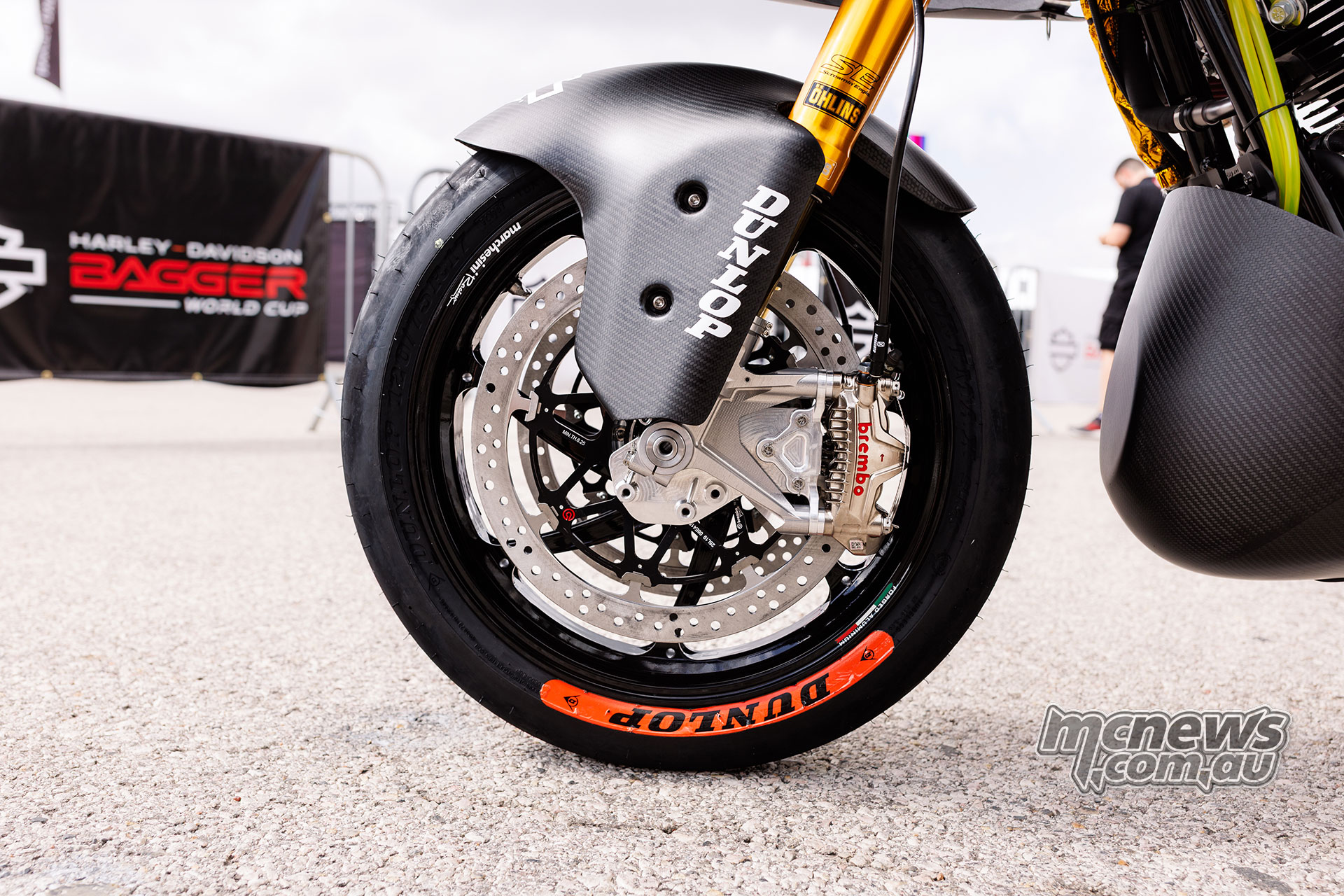 Front tyre is a Dunlop Sportmax Slick 120/75R17 available in R5 medium and R7 medium-hard compounds.
Brakes built for a heavy, fast motorcycle
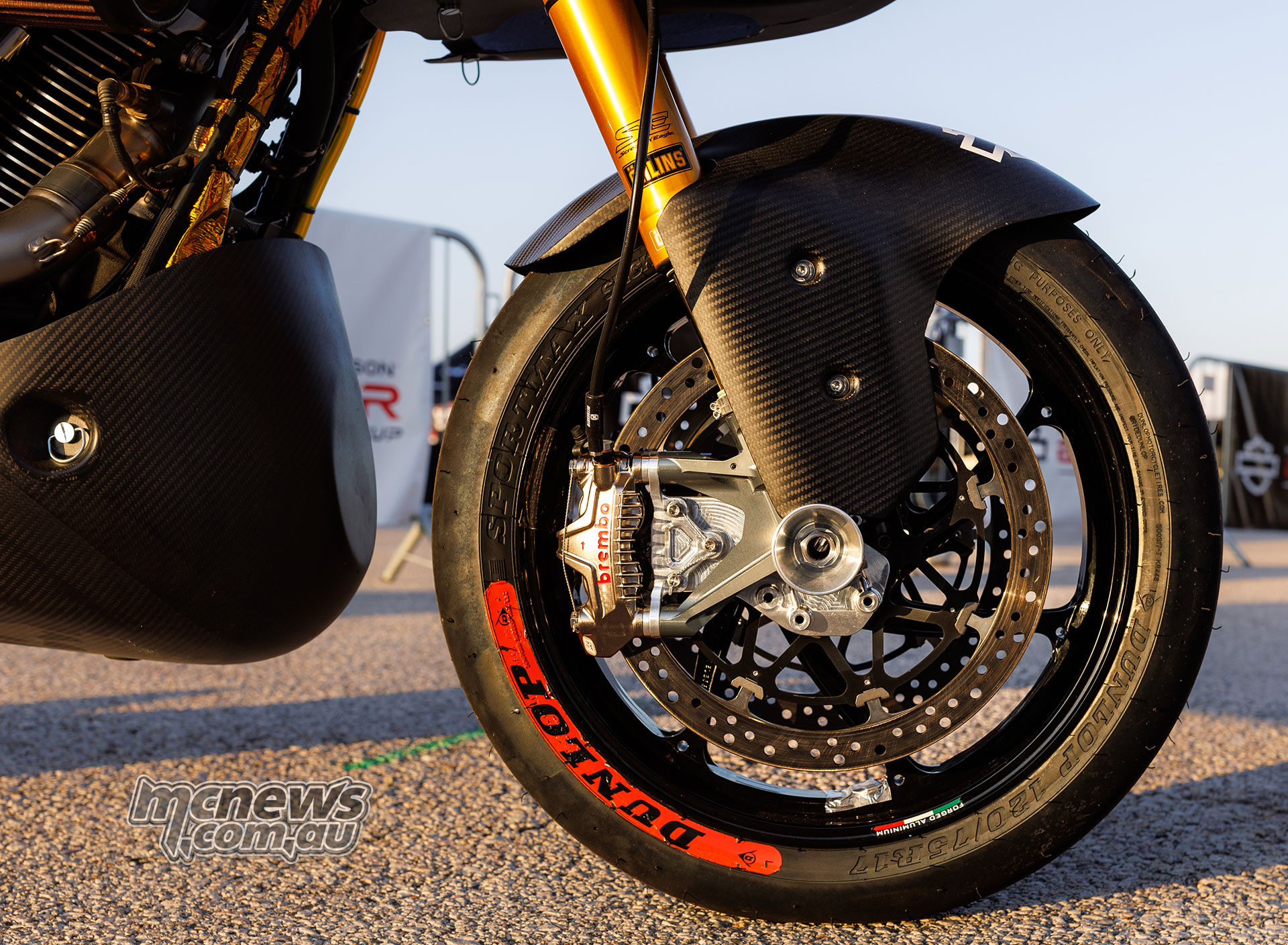 Brembo twin 330 mm T-Drive discs
Stopping a 280 kg motorcycle from speed repeatedly is not a minor engineering challenge, so Harley has gone with a Brembo racing package headed by twin 330 mm T-Drive front discs, nickel-plated billet Moto2 four-piston calipers, Z04 racing pads and a radial master cylinder.
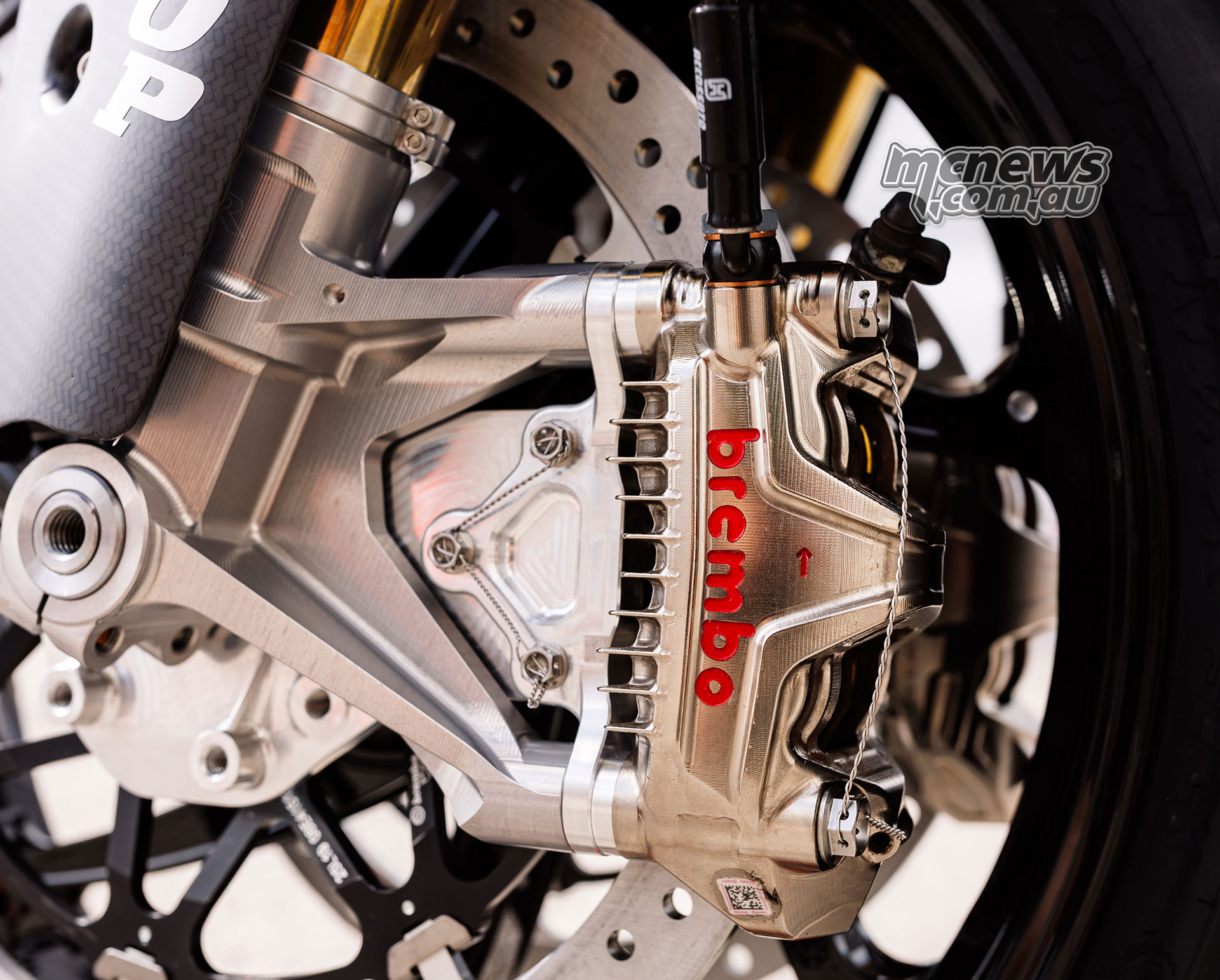 Brembo nickel-plated
billet Moto2 four-piston calipers
At the rear, there is a 320 mm dedicated racing disc and Brembo calliper, with both foot and thumb brake actuation. Rear brake control is critical in controlling these bikes and plays a much bigger part than just helping to stop the machine in a straight line.
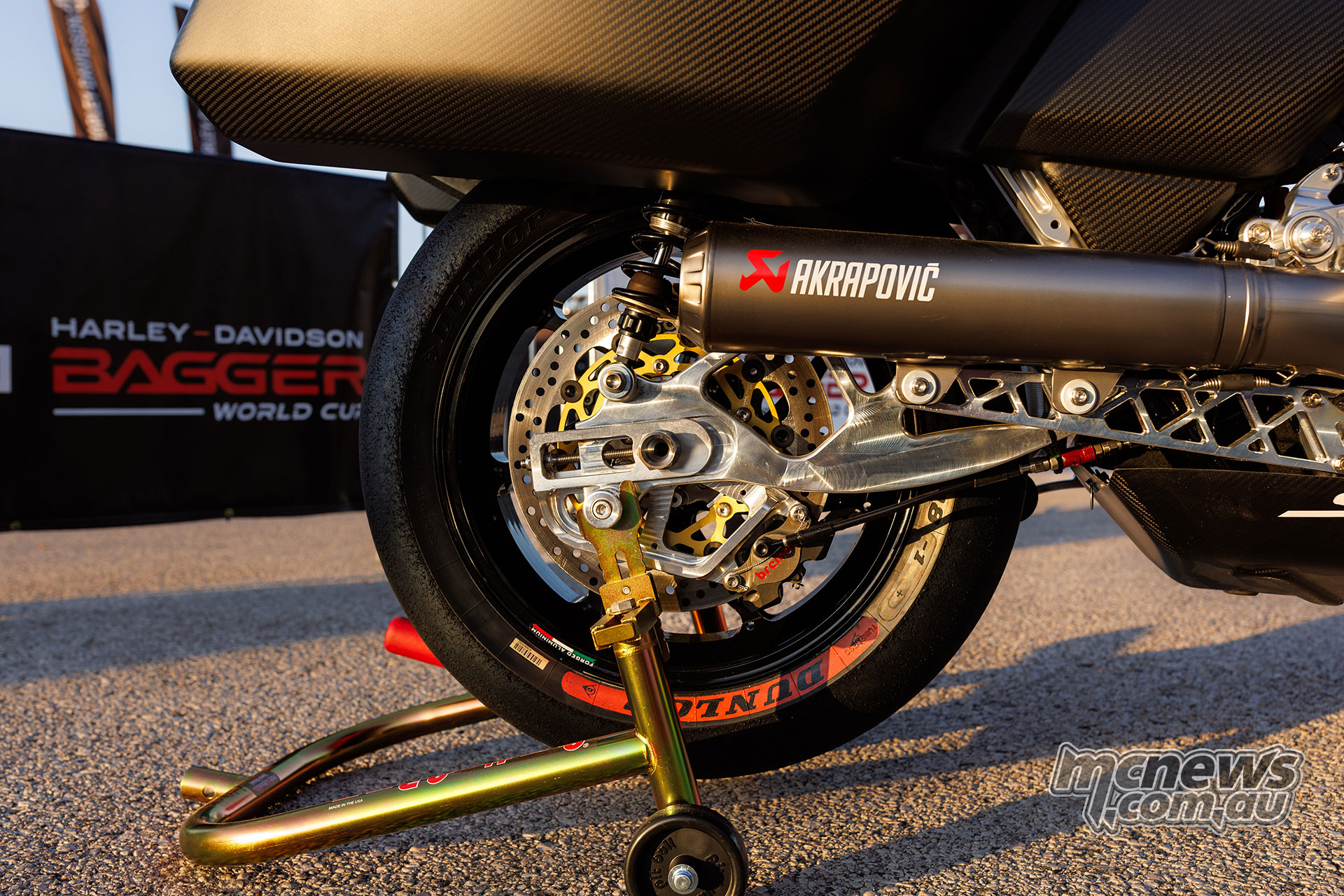 Rear brake control is a major part of making these heavyweight racers turn and stop.
So what are these bikes, really?
They are very special Harley-Davidson Road Glides engineered around a tightly controlled equal-spec concept, using serious suspension, serious brakes, serious tyres and a very serious engine.
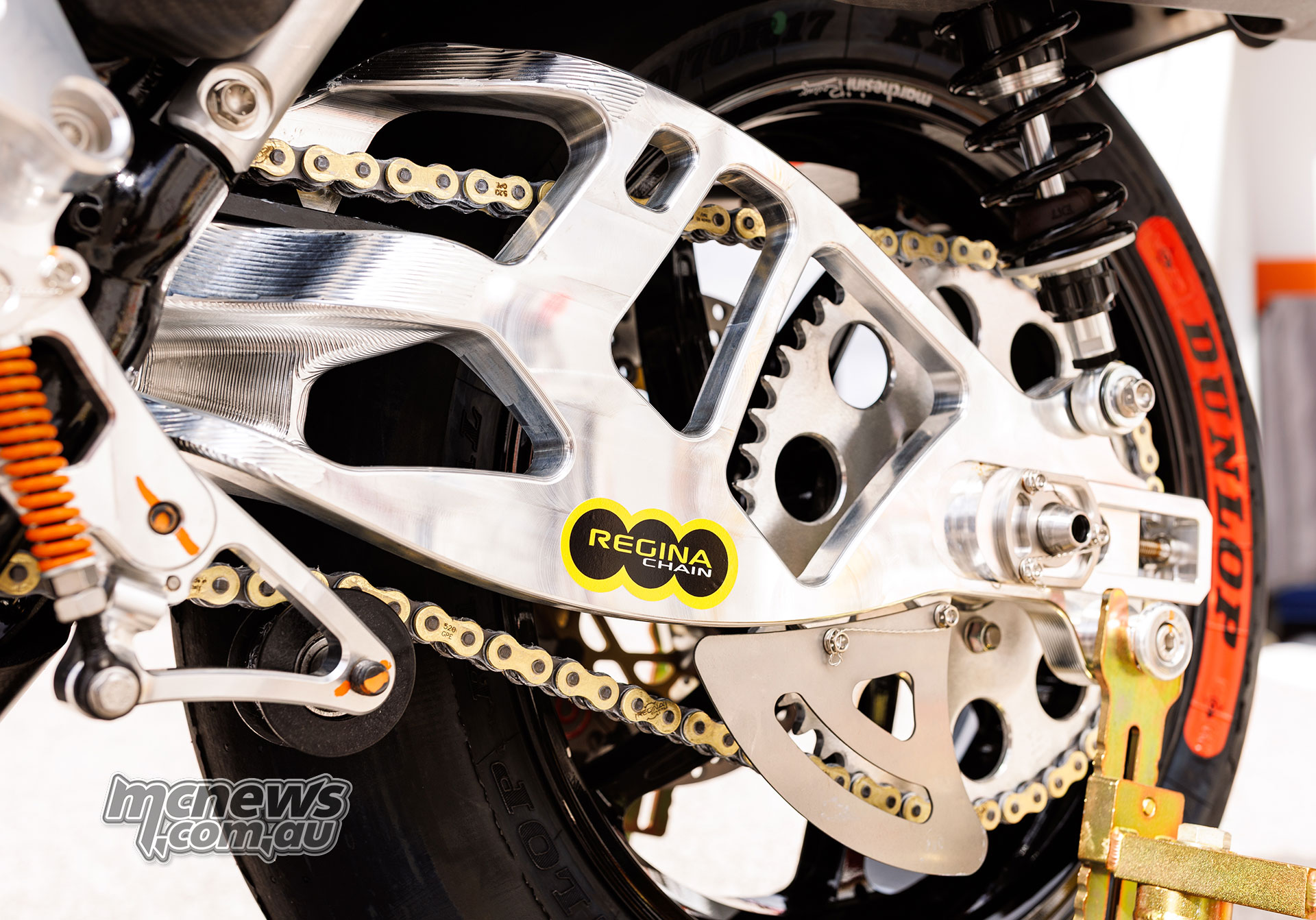 That swingarm looks a bit special…
They weigh about 280 kilograms, make more than 200 horsepower, generate more than 220 Nm, run slicks, quickshifters and anti-hop clutches, and ask riders to do much of the work without traction control. And at the COTA season opener, it was an Aussie teenager who showed them how to do it!
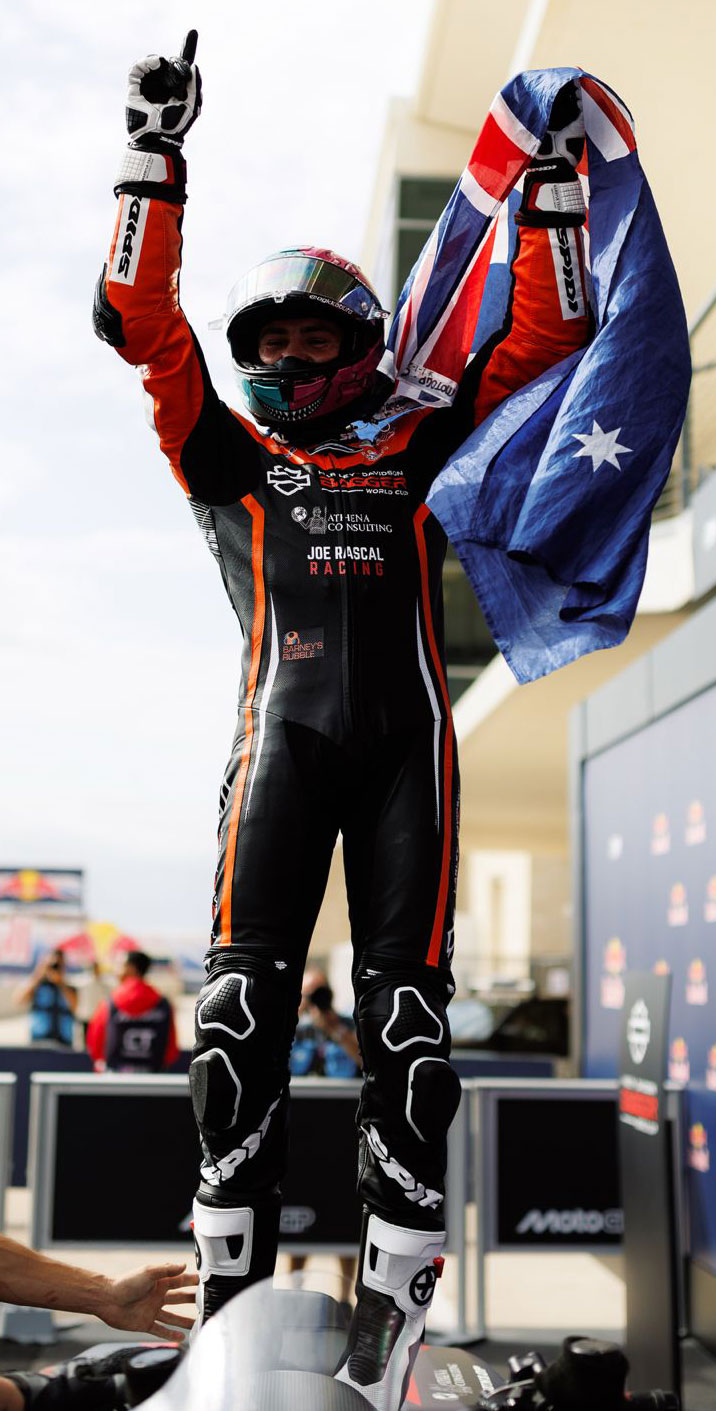 Archie McDonald celebrates victory in the inaugural FIM Bagger World Cup race with the Australian flag.
Bagger World Cup Harley Specifications
| Model | Harley-Davidson Factory Racing race-prepared Road Glide, designed and built in Milwaukee, Wisconsin, USA |
| Engine | Harley-Davidson Screamin’ Eagle Milwaukee-Eight 131R V-Twin, race specification |
| Displacement | 131 cubic inches / 2152 cc |
| Bore x Stroke | 109.5 mm x 114.3 mm |
| Maximum Power | Over 200 hp |
| Maximum Torque | Over 220 Nm (162 lb-ft) |
| Top Speed | Up to 310 km/h (191 mph) |
| Engine Management & Electronics | Racing ECU with dedicated engine mapping and data acquisition capability to optimise performance, consistency and tyre management across race conditions; no wheel speed and traction control |
| Exhaust System | Full titanium Akrapovič racing exhaust |
| Fuel | High-performance racing Panta fuel |
| Frame | Harley-Davidson Road Glide production frame, steel weldment |
| Weight | Approximately 280 kg in race-ready configuration |
| Front Suspension | Öhlins FGR 253 pressurised racing fork with full adjustability for compression, rebound and ride height |
| Rear Suspension | Öhlins twin nitrogen-charged racing shock absorbers with external piggyback reservoirs and full adjustability for compression, rebound and ride height |
| Gearbox | Screamin’ Eagle Racing King 6 racing transmission with six-speed production gear ratios, quickshifter and blipper |
| Clutch | STM dry anti-hop racing clutch system |
| Final Drive | Regina high-strength GP racing chain drive system |
| Wheels | Marchesini forged aluminium racing wheels, 17-inch, 7-spoke design |
| Front Tyre (Dry) | Dunlop Sportmax Slick 120/75R17, produced in the USA, available in R5 (medium) and R7 (medium-hard) compounds |
| Rear Tyre (Dry) | Dunlop KR108 200/70R17, manufactured in France, available in MS1 (soft) and MS2 (medium) compounds |
| Wet-weather Tyres | Dunlop KR189 120/70R17 front and KR405 190/60R17 rear, manufactured in Japan |
| Front Brakes | Brembo racing system with twin 330 mm T-Drive discs, nickel-plated billet Moto2 four-piston calipers, Z04 racing pads and high-precision radial master cylinder |
| Rear Brake | Single racing disc with Brembo caliper and dedicated racing master cylinder; foot and thumb brake actuation |
Bagger World Cup Technical Regulations Here
Harley-Davidson Bagger World Cup Calendar
- Austin, USA: March 27–29
- Mugello, Italy: May 29–31
- Assen, Netherlands: June 26–28
- Silverstone, Great Britain: August 7–9
- Aragon, Spain: August 28–30
- Red Bull Ring, Austria: September 18–20



 English (US) ·