
.png) 1 month ago
40
1 month ago
40
ARTICLE AD BOX
Yamafest 2026 at Sydney Motorsport Park was supposed to be an R9 day for me. Instead, it became an XSR900 GP day.
The bike I didn’t expect to write about
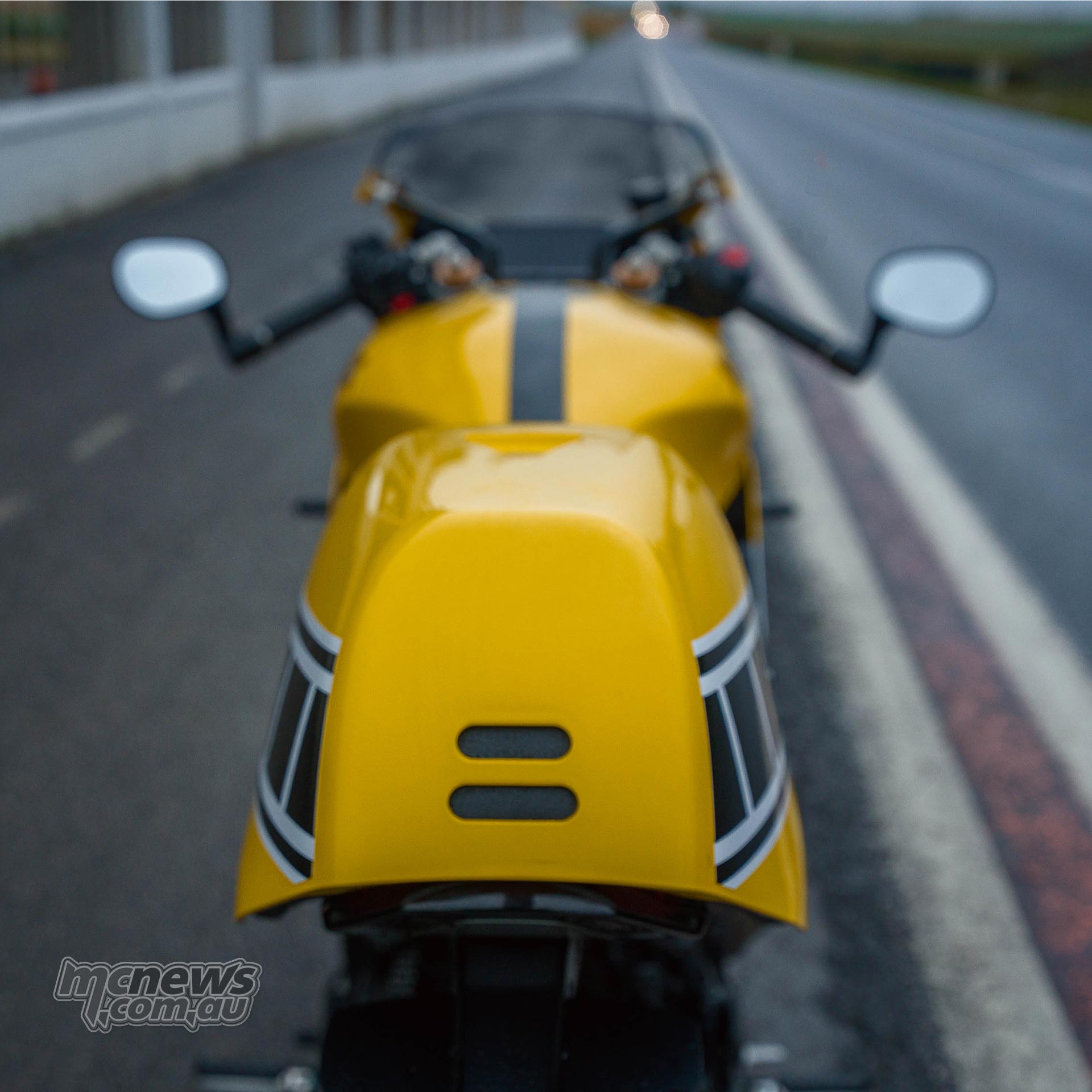 2026 Yamaha XSR900 GP
I’d only had a brief taste of Yamaha’s new R9 earlier in the week at the Dunlop Sportmax Q5 launch on SMSP’s short Amaroo circuit, and I was keen to get properly acquainted with it on the full layout.
Having ridden the full SMSP circuit the previous day at the KTM Duke R and RCR launch, the track was starting to make more sense, so I arrived at Yamafest and went straight out on the R9. It was exactly what I expected: fast, capable, smooth and much happier on the big circuit than it had felt on Amaroo.
Then Yamaha Marketing Manager Sean Goldhawk suggested I jump on the yellow Kenny Roberts tribute XSR900 GP. I figured I’d do a session on it for context against the R9. One session became two. Then four.
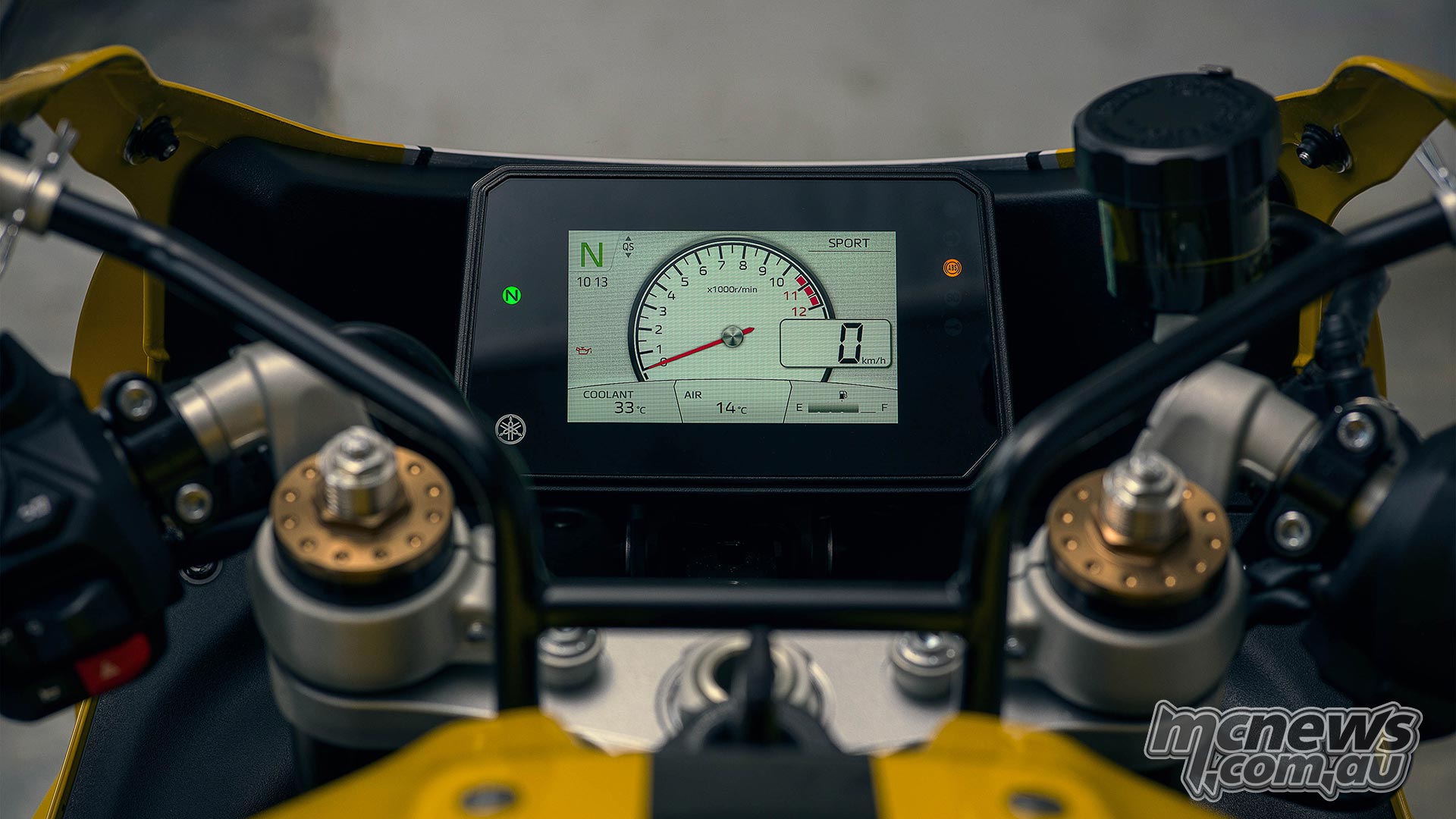 2026 Yamaha XSR900 GP
That was the pivot point. Most riders already have a fair idea what the R9 is about, but I’m not sure nearly enough people appreciate just how good the XSR900 GP actually is. So the focus of the day shifted, and this became an XSR900 GP review instead.
Yamaha calls it a Sport Heritage model, and visually it nails that brief. The Kenny Roberts – hallowed be thy name – inspired yellow livery looks fantastic in photos and even better in the flesh, but underneath the nostalgia sits a genuinely well-sorted modern sportsbike.
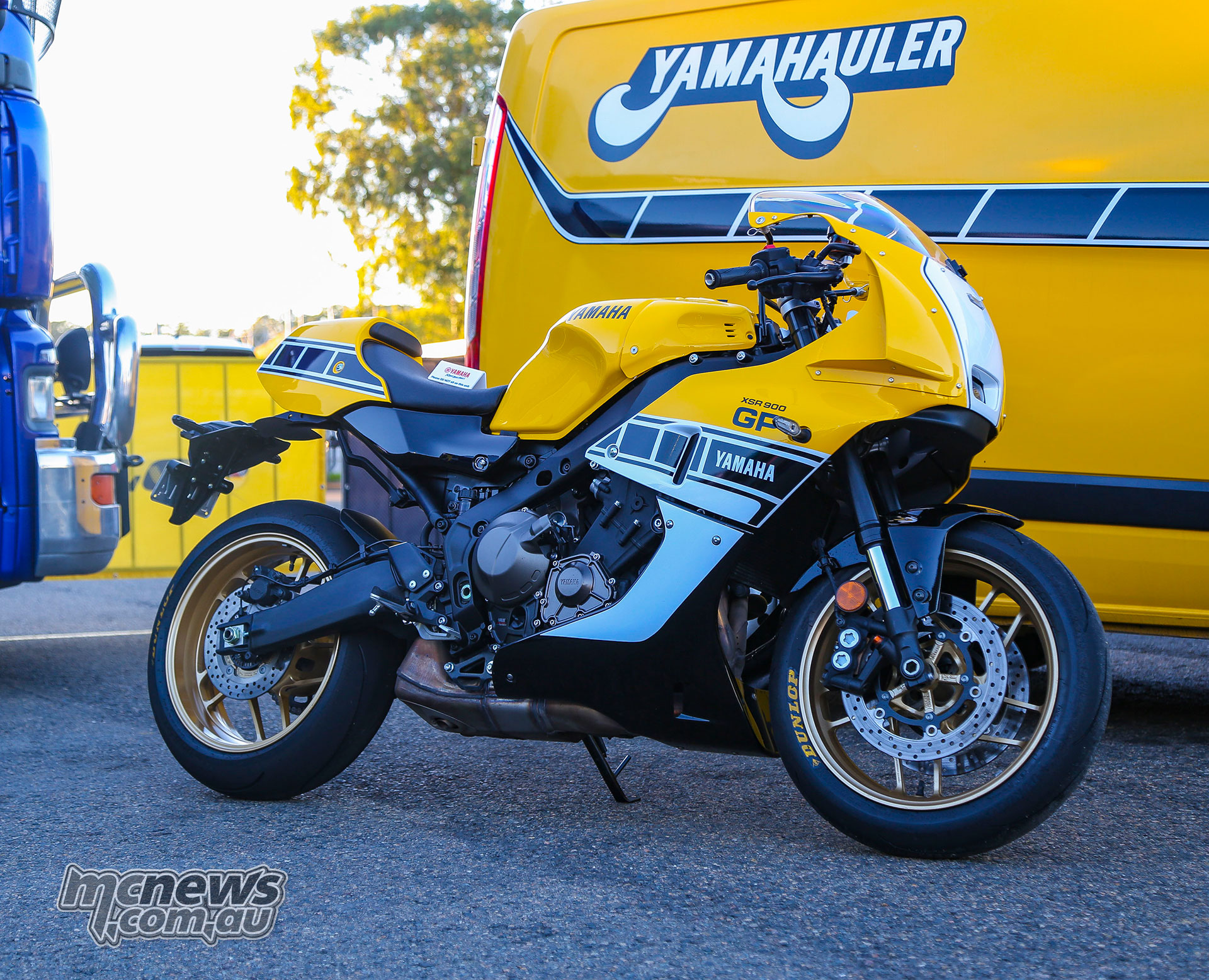
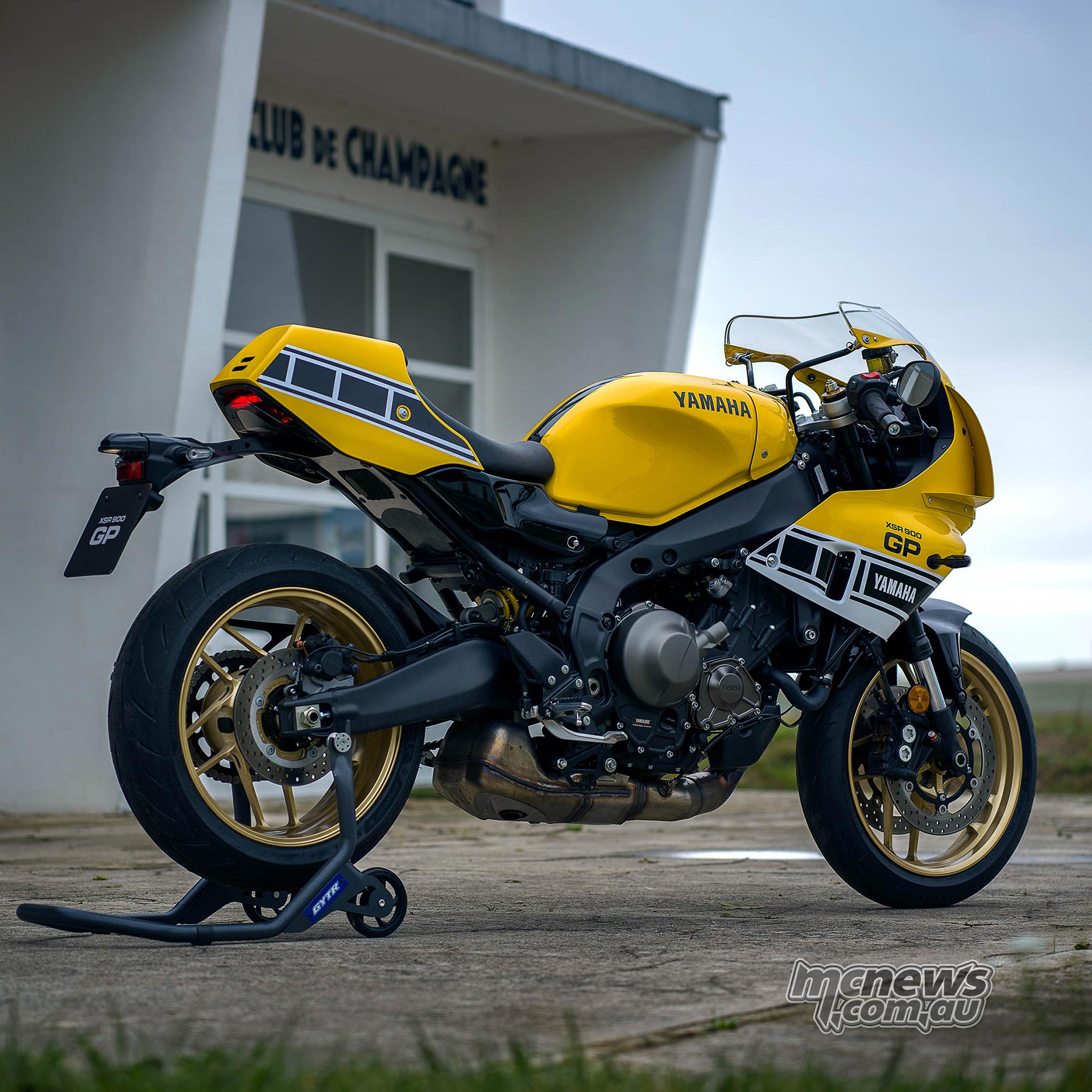 Yamaha’s XSR900 GP sits between the XSR900 and R9 in riding focus
I’ve always loved that scheme. In fact, the 2016, 60th Anniversary edition of the crossplane R1 in that livery almost tempted me to part with some hard-earned… I wonder what they go for second-hand now… Hmm, stay on topic, Wayno!
Where the XSR900 GP sits in Yamaha’s CP3 family
Let’s talk about where the XSR900 GP sits amongst the sister bikes that share the same terrific CP3 890 cc engine: the MT-09, the XSR900, and the YZF-R9, specifically. I’m deliberately not including the Tracer in this comparison because it’s a noticeably different Sport-Touring proposition. In terms of riding position, the four closest sister bikes progress from everyday upright (MT-09) to the sportiest (R9), roughly evenly spaced between them.
 The XSR900 GP’s cockpit and upper fairing lean heavily on Yamaha’s Grand Prix heritage
If you start with the MT-09, the standard XSR900 moves the grips 14 mm forward and 35 mm lower. The XSR900 GP moves them an additional 93 mm further forward and 114 mm lower. Still not as big a reach as the R9. But closer to the R9 than the MT-09. Pegs and seat height are likewise more focused, while a swingarm roughly 60 mm longer than the MT-09’s helps give the GP its more planted, stable feel.
Why the longer swingarm makes such a difference
That longer swingarm is shared with the standard XSR900 and the Tracer, which I currently have on long-term loan and will review soon. I suspect it plays a significant role in why the GP works so well. On track — and no doubt on the road too — it doesn’t feel like a bike you have to wrestle performance from. It is more intuitive, more playful, slightly less serious, and deceptively quick.
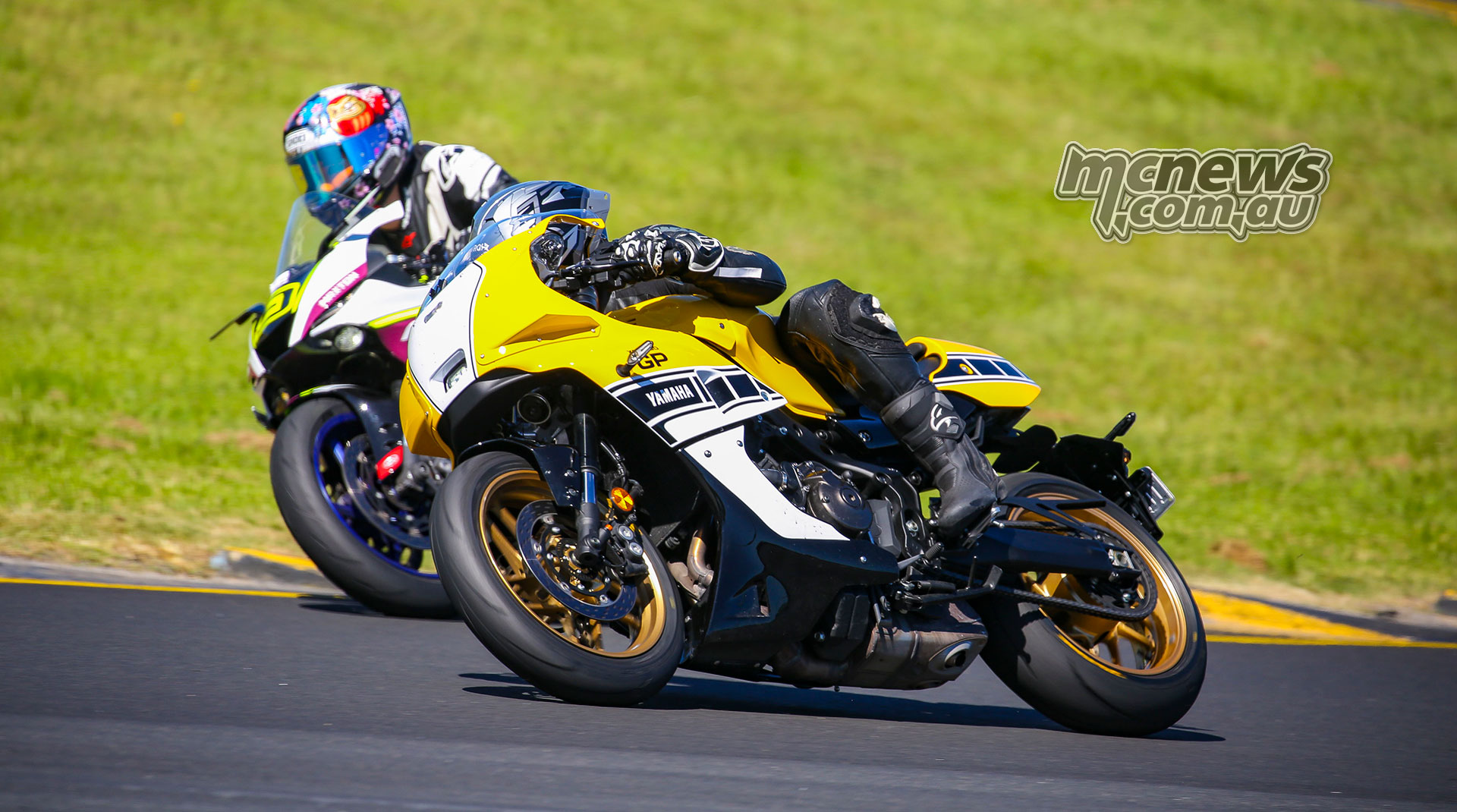 On track, the XSR900 GP proved planted, predictable and deceptively quick
Despite the longer swingarm, steering doesn’t really feel like it requires more effort. It’s just easier to pedal. More composed. And that ever-so-slightly less-aggressive riding position makes the bike simpler to live with.
CP3 engine, brakes and KYB suspension on track
The CP3 engine comes with three modes – Sport, Street and Rain (and two custom modes). All with quite distinct maps. These maps appear to be effectively identical to the MT-09 and are very well sorted. The R9 maps are slightly more tuned towards a more linear delivery for track work, but I had no issue at all enjoying the GP tune.
That CP3 punches out around 117 horsepower and 93 Nm of torque and is Euro 5+ compliant. It’s a great engine. Terrific fuelling, smooth off the bottom with a deceptive midrange and top end. Quite linear – even in MT-09/GP tune.
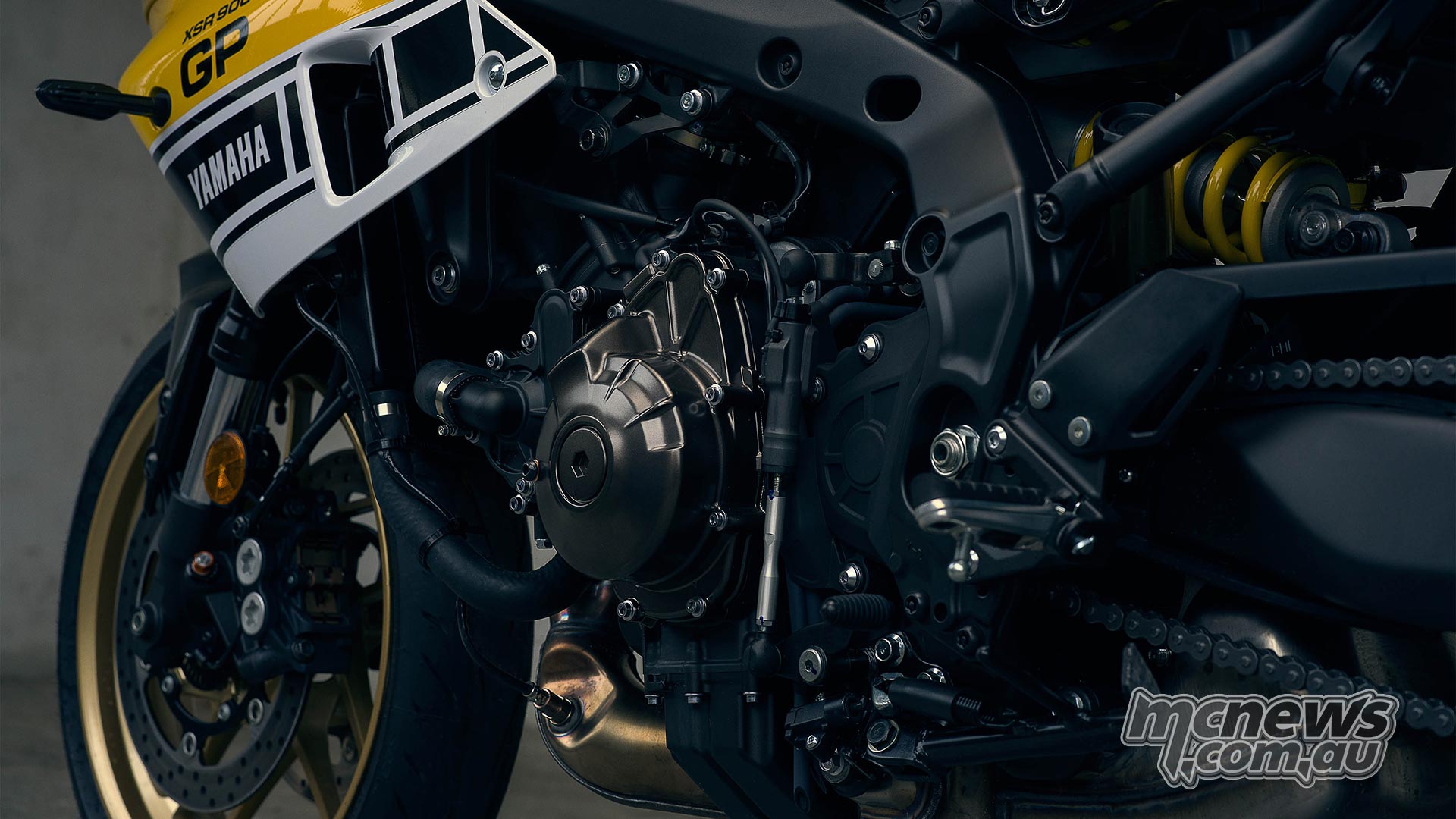 Yamaha’s 890 cc CP3 triple gives the XSR900 GP its broad, usable performance
The brakes have also copped a little tweak over the standard XSR, with the addition of a Brembo radial front master cylinder on the twin 298 mm discs, which use four-piston calipers up front. I had no issue with the stoppers at all. And combined with the Dunlop Q5 tyres, I was able to practise trail braking into SMSPs multiple late-apex corners.
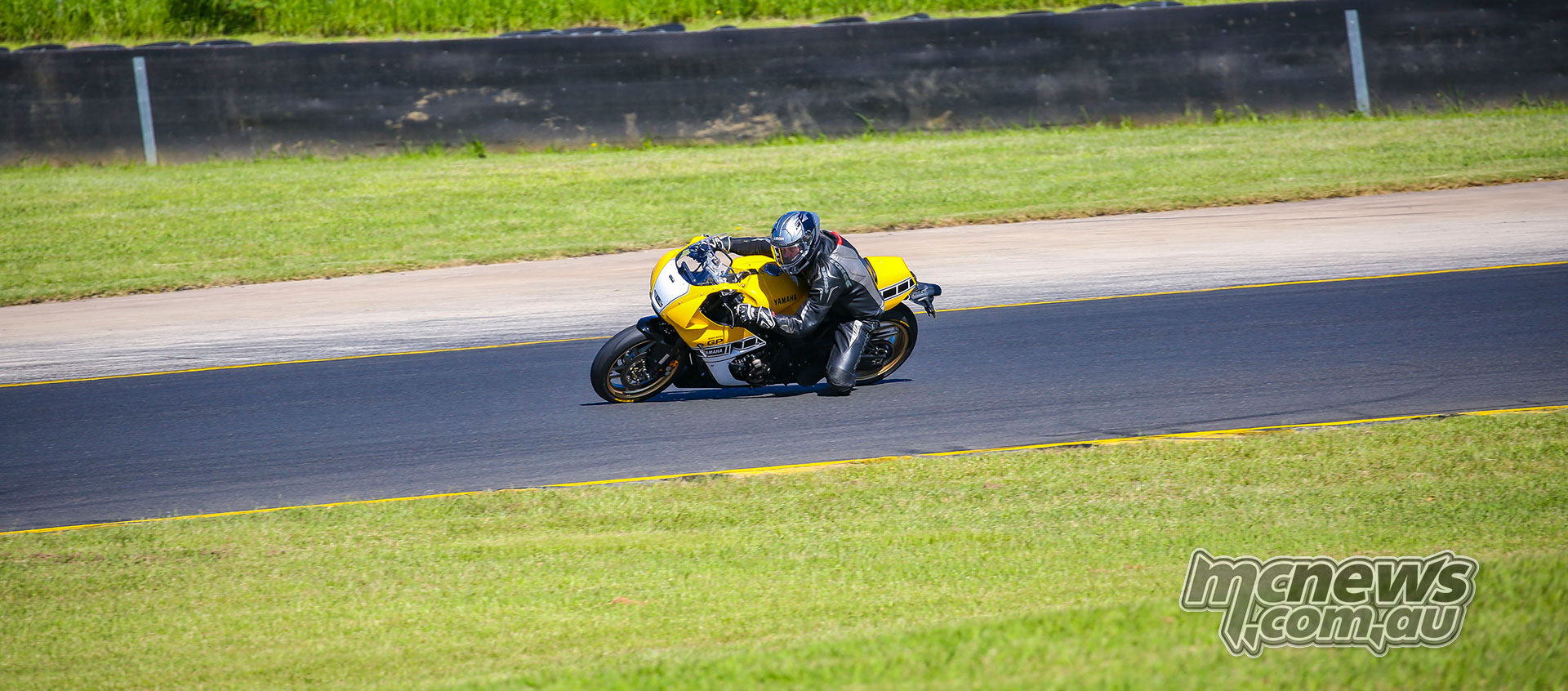 Clip-ons, revised ergonomics and the longer swingarm help define the GP’s road-track sweet spot
Suspension is handled by KYB and performs very well. Up front are fully adjustable 41 mm forks with 130 mm of travel, while the rear gets a 131 mm shock with remote preload adjustment. Both ends also offer separate high- and low-speed compression adjustment, a level of tuneability the standard XSR does not have.
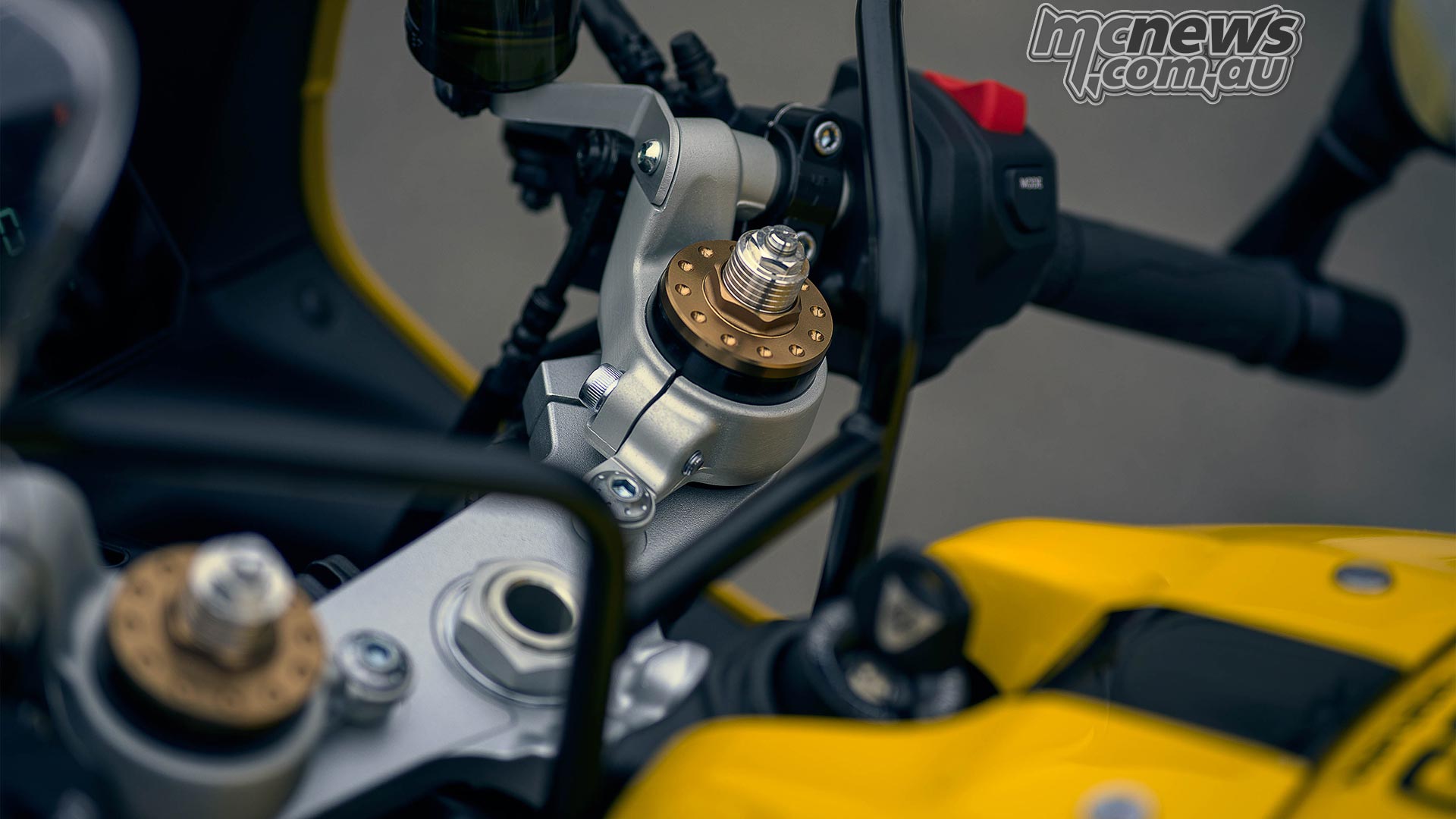 Fully adjustable 41 mm KYB forks give the XSR900 GP a more serious front end than the standard XSR
The suspension tune is tweaked according to the ride position, so it is slightly firmer up front and actually a little softer in the shock – to suit a more weight-forward riding position. I’m just under 90 kilos and had no need to touch the clickers. Just get on and enjoy.
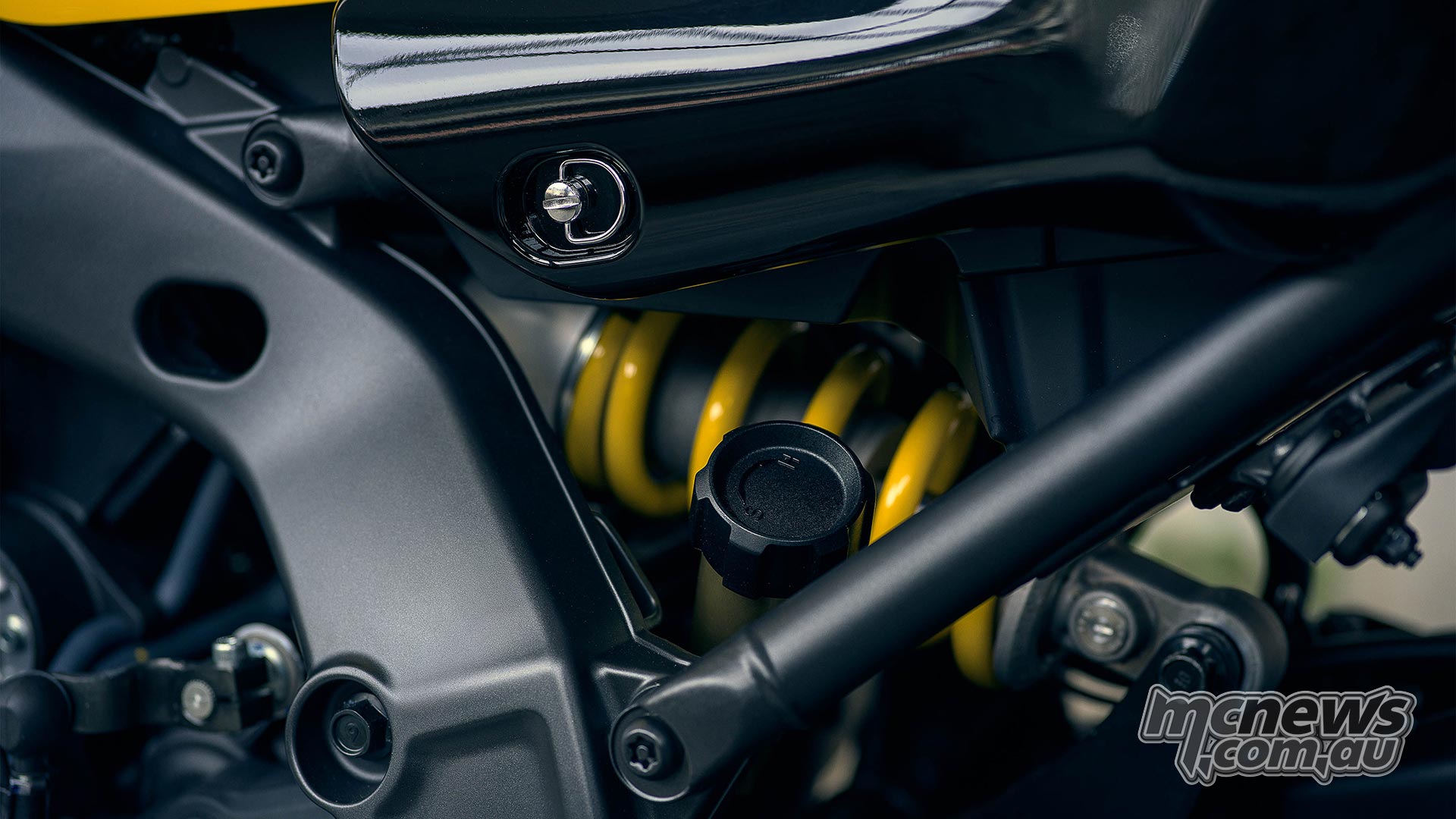 The KYB rear shock features remote preload adjustment and adds to the GP’s planted feel
Not as extreme as the R9, but easier to enjoy
And that’s exactly what I did. I’m a big fan of FUN bikes. And fun doesn’t always mean they need to be the fastest. The XSR900 GP has fun covered. There is a certain charm in the way it goes about its business. No doubt it’s also about the way the bike looks. That retro styling is properly authentic and has a genuine history to draw on.
Which is not to say that the bike can’t be hustled around at speed. Because it certainly can. I’d say my lap times would probably be within a second or so of the R9. And even at my level, I was able to round up plenty of riders on dedicated track bikes on the day. It’s fast enough for me to see 245 down the main straight before rolling off at the 150-metre mark…
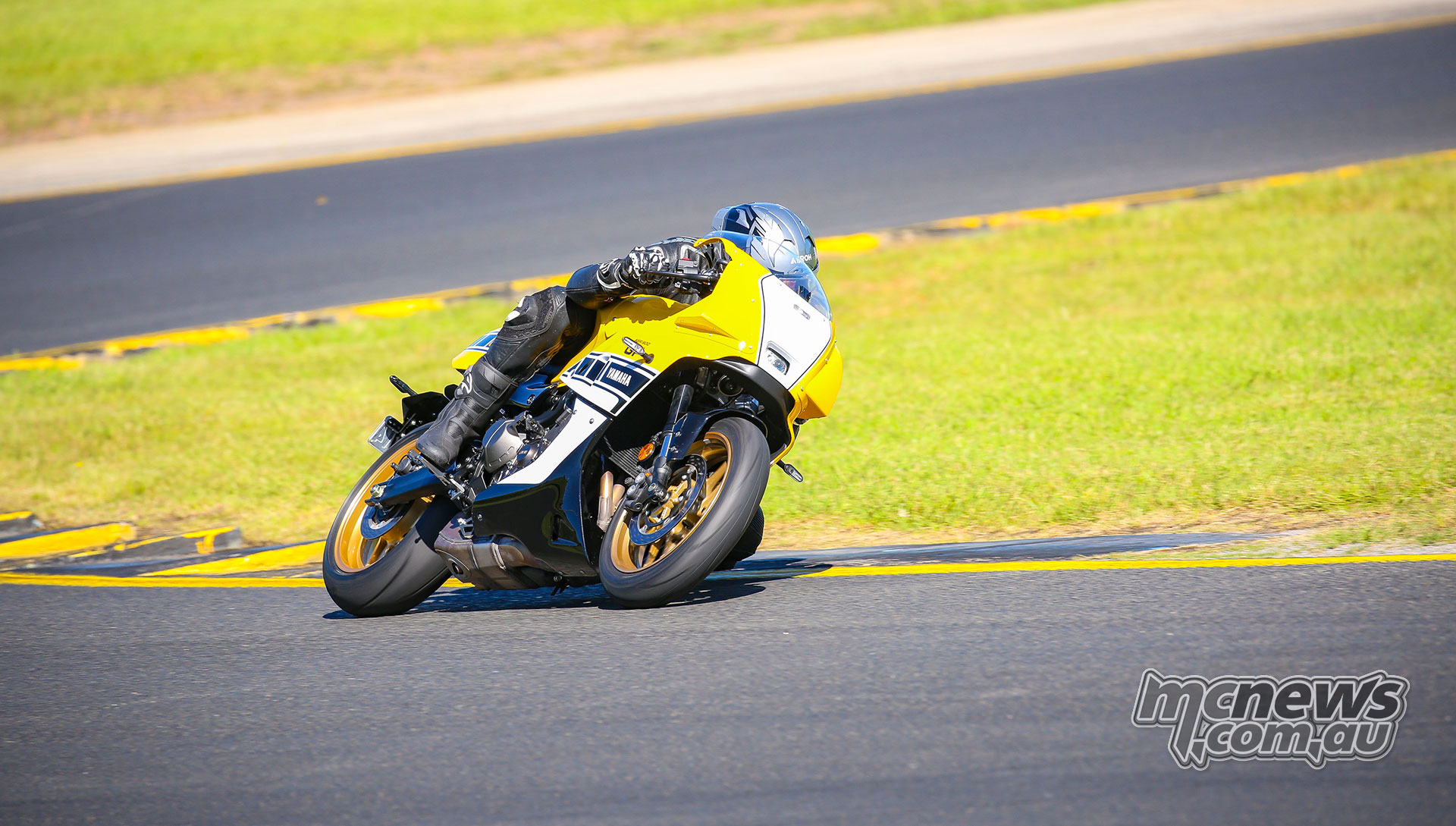 The XSR900 GP blends Yamaha GP-inspired styling with modern CP3 performance
After four sessions and getting my fill of the little bumblebee, I couldn’t resist having a crack at the mighty R1 to finish the day off. There is just something about that crossplane engine that lights my fire. The way it builds power. The soundtrack. The physical size of the bike. But the thing that blew me away, though, was how well it turned. Granted, it was on slicks compared to the XSR900 GP. But holy mother of god did it like to corner. And what had been 245 at the end of the main straight on the XSR900 GP was suddenly 285 and change on the R1. Things started happening a whole lot more quickly… If only I lived closer to a track…
Why the XSR900 GP might be the best Yamaha triple of the lot
By the end of the day, I came away thinking the XSR900 GP is my pick of Yamaha’s CP3-powered road bikes. It has real heritage appeal, plenty of character and more than enough performance, but it also feels slightly friendlier and less serious than the R9 in a way that makes it deeply enjoyable.
About my only real criticism is the switchgear, which still feels a little clunky and not especially intuitive. It is not a deal-breaker, but it remains one of the few areas where the bike doesn’t feel quite as polished as the rest of the package.
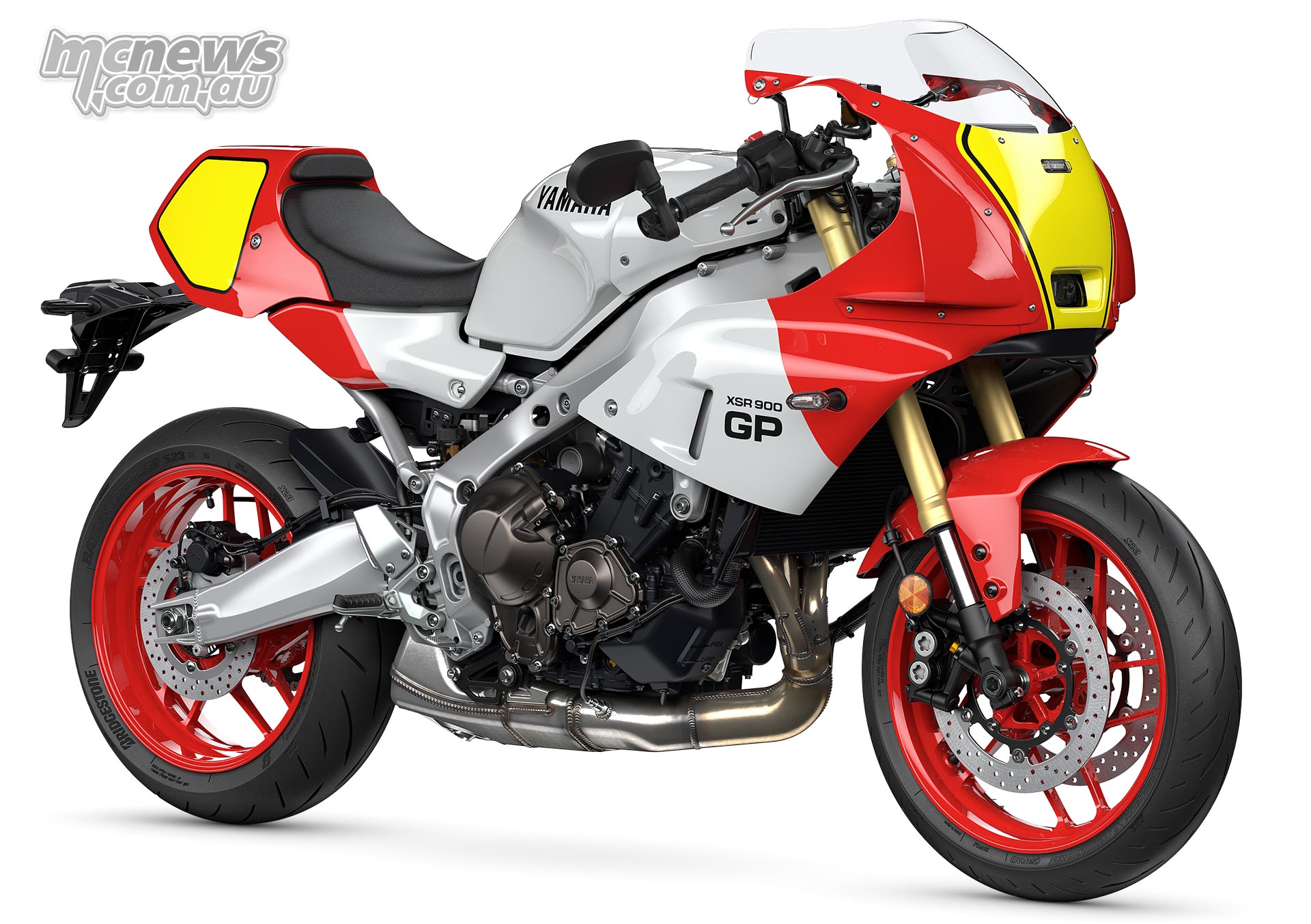 Legend Red remains in the 2026 XSR900 GP range alongside the new Legend Yellow
Overall, Yamaha has judged the XSR900 GP beautifully. It looks special, goes properly well and strikes a smart balance between style, speed and usability. Available now in Legend Yellow or Legend Red, and listed by Yamaha Australia for a tick over 22k ride away, it is one of those rare bikes that feels both nostalgic and genuinely relevant.
Yamaha XSR900GP hits:
- Classic heritage/retro looks with serious capability
- Finds the right sporty balance between the MT09 and the R9
- Great ‘planted’ feel with that slightly longer swingarm. Easy to get on and just ride
Yamaha XSR900GP misses…
- I’d throw on a slightly more rorty muffler for a bit more of a ‘special’ feel
- Some of the switchgear isn’t my favourite, but they’re not alone in the Yamaha family there
- Not really a miss, but it’s quite a noticeable step up in reach from the standard XSR. Choose that one if you want something slightly more comfortable
A customiser’s delight
Check out some of the customised XSR900 machines Trev saw in Japan at the My Yamaha Motorcycle Day event.
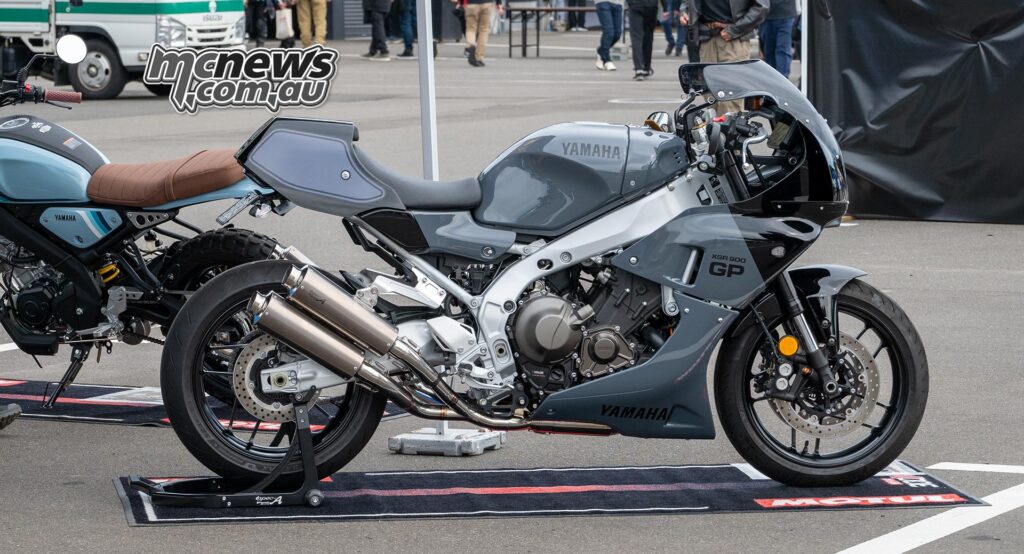 A customised current-model Yamaha XSR900 GP seen at Sugo
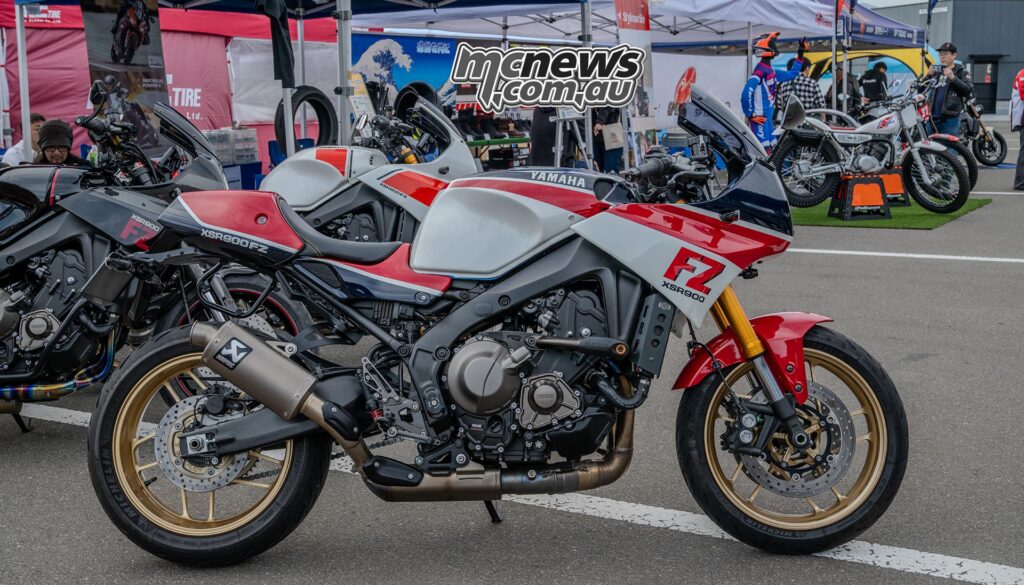 An FZ-inspired custom interpretation of Yamaha’s XSR900
|
Engine Type |
Liquid-cooled, 4-stroke, DOHC, 4-valve, 3-cylinder |
|
Displacement |
890 cc |
|
Bore x Stroke |
78.0 mm x 62.1 mm |
|
Power (claimed) |
87.5kW @ 10,000rpm |
|
Torque (claimed) |
93Nm @ 7000rpm |
|
Compression Ratio |
11.5:1 |
|
Lubrication System |
Wet sump |
|
Fuel Management |
Fuel Injection |
|
Ignition |
TCI |
|
Starter System |
Electric |
|
Fuel Tank Capacity |
14.0 L |
|
Final Transmission |
Chain |
|
Transmission |
Constant mesh six-speed, Quickshift |
|
Frame Type |
Aluminium Deltabox frame |
|
Suspension Front |
KYB 41 mm USD fork, fully adjustable, 130 mm travel |
|
Suspension Rear |
KYB monoshock, fully adjustable, external preload adjuster, 131 mm travel |
|
Brakes Front |
Dual 289mm rotors, four-piston radial-mount calipers, Brembo M/C, ABS |
|
Brakes Rear |
245 mm rotor, single-piston caliper, ABS |
|
Tyres Front |
120/70 ZR17M/C (58W) Tubeless |
|
Tyres Rear |
180/55 ZR17M/C (73W) Tubeless |
|
Length |
2160 mm |
|
Width |
810 mm |
|
Height |
1180 mm |
|
Seat Height |
835 mm |
|
Wheelbase |
1500 mm |
|
Ground Clearance |
145 mm |
|
Wet Weight |
200 kg |
Head to the Yamaha Motor Australia website for more information:
https://www.yamaha-motor.com.au/




 English (US) ·