
.png) 11 hours ago
3
11 hours ago
3
ARTICLE AD BOX
2026 Yamaha YZF-R7 Review
The Yamaha YZF-R7 has always occupied an interesting space in the modern sportbike landscape. Its MT-07-derived CP2 engine and light, agile chassis have made it approachable for newer riders, while still offering enough involvement for experienced riders to enjoy.
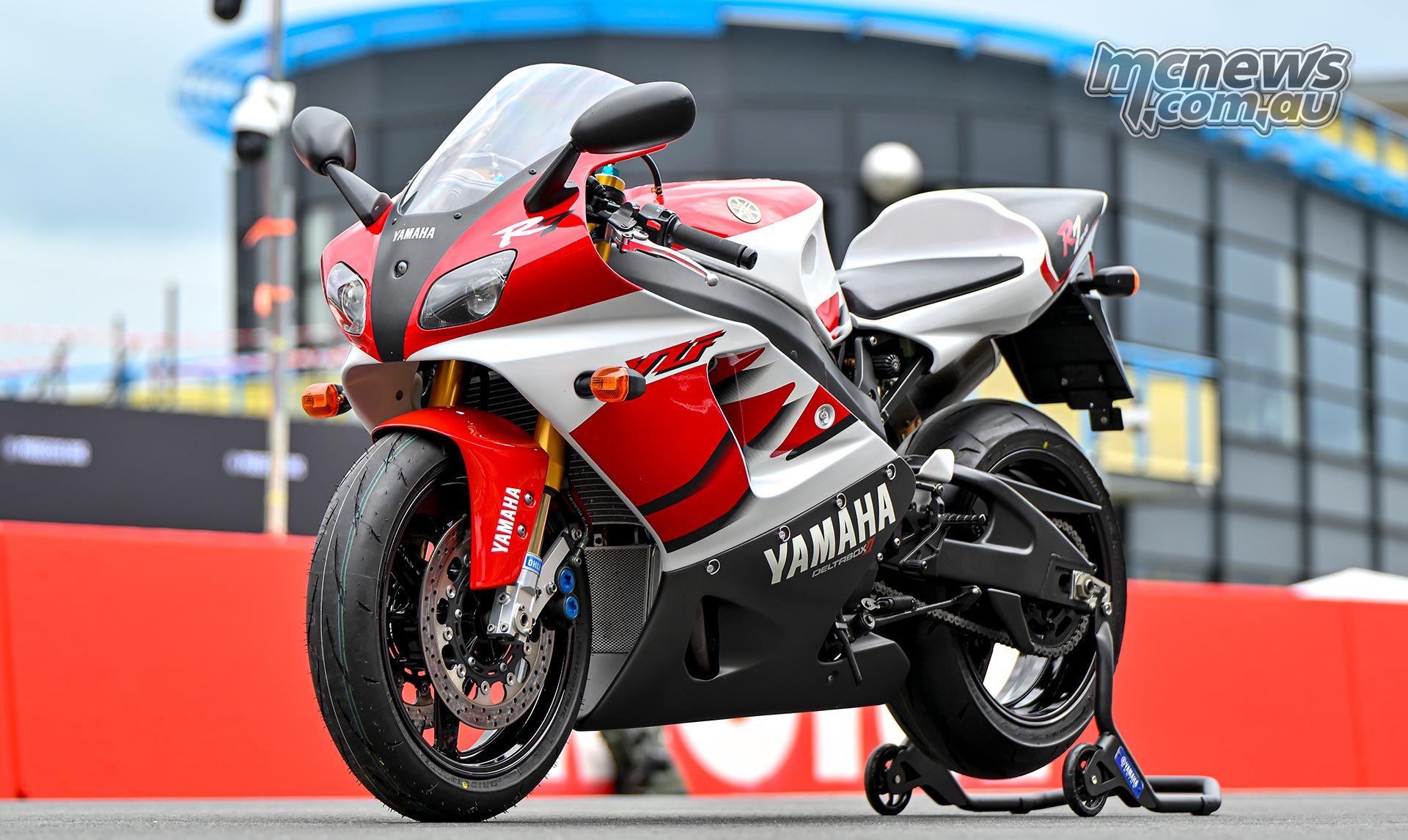 The original 1999 Yamaha YZF-R7 remains one of the most evocative machines in Yamaha superbike history.
For 2026, Yamaha has taken a significant step forward with the YZF-R7. With ride-by-wire throttle, a six-axis IMU, revised chassis settings and updated ergonomics, this is far more than a light refresh. Essentially, it’s a fundamental evolution in the face of competition from both Japan and Europe.
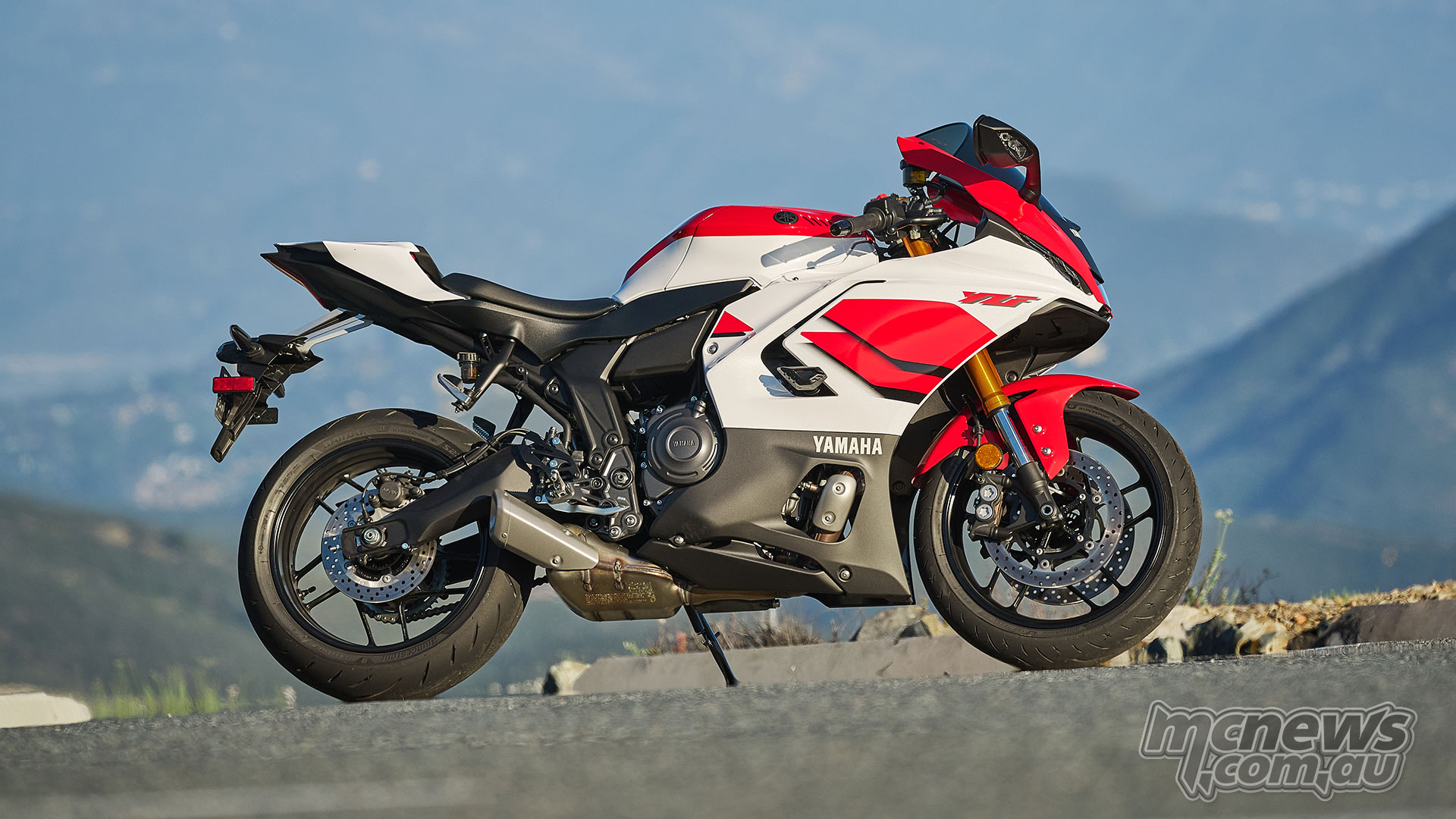 The 2026 Yamaha YZF-R7 gets its biggest technical update yet, with ride-by-wire, IMU electronics and chassis revisions.
The 2026 Yamaha YZF-R7 gets its biggest technical update yet, adding ride-by-wire, IMU-based electronics and chassis revisions
At the heart of the R7 remains Yamaha’s familiar 689 cc CP2 parallel twin, complete with its signature 270-degree crank. Claimed outputs (73 hp at 8750 rpm and 58 Nm of torque at 6500 rpm) remain unchanged, but the character that has made this engine such a success across multiple Yamaha models is still very much intact.
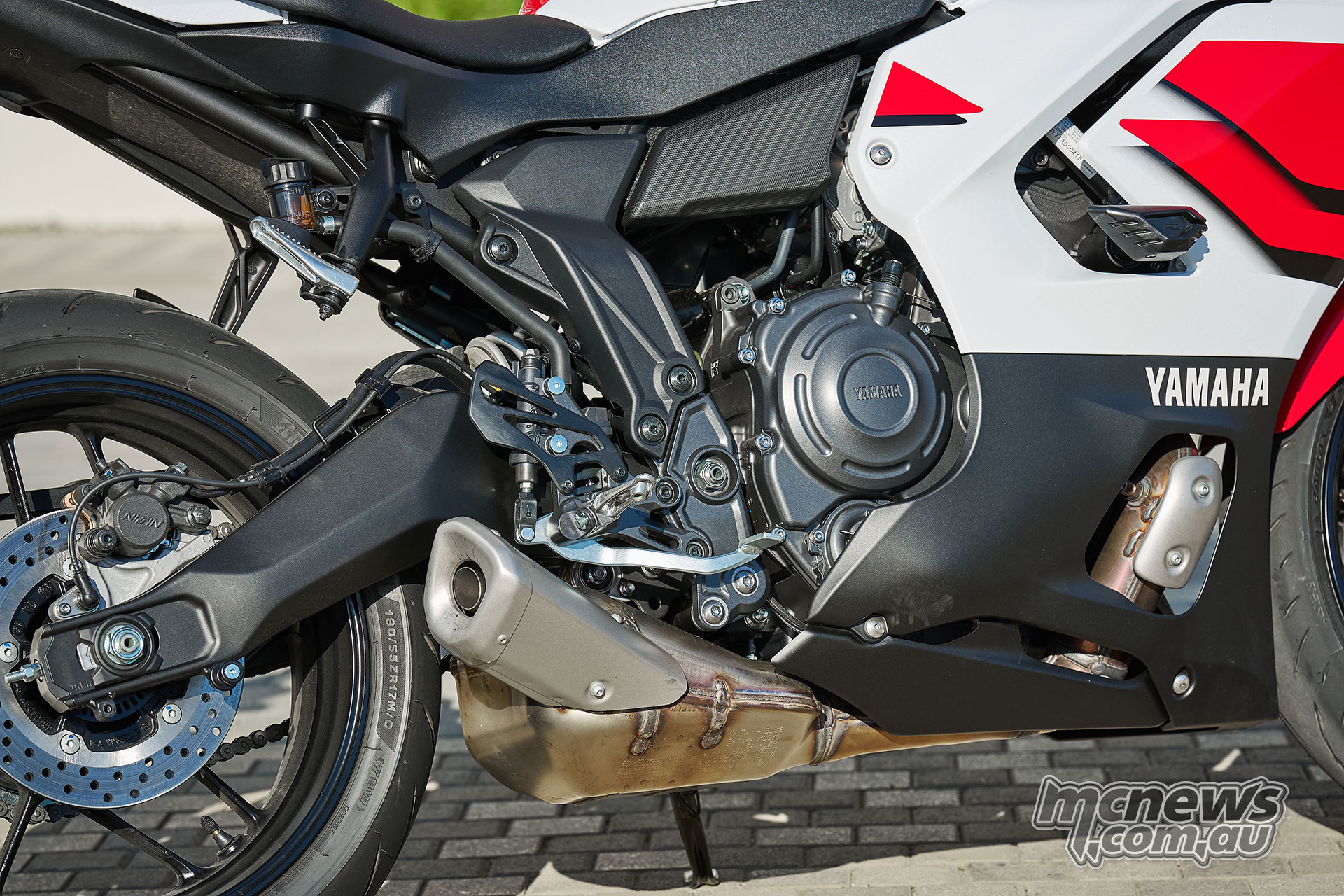 Yamaha’s 689 cc CP2 parallel twin remains at the heart of the R7 package.
Internal changes are subtle but worthwhile. A reshaped airbox with a straighter downdraft duct aims to improve throttle feel and add a little more intake character, while the ride-by-wire system smooths closed-throttle transitions.
Riders now also get access to Rain, Street and Sport modes, plus multiple custom road and track settings, giving the R7 a much broader tuning envelope than before.
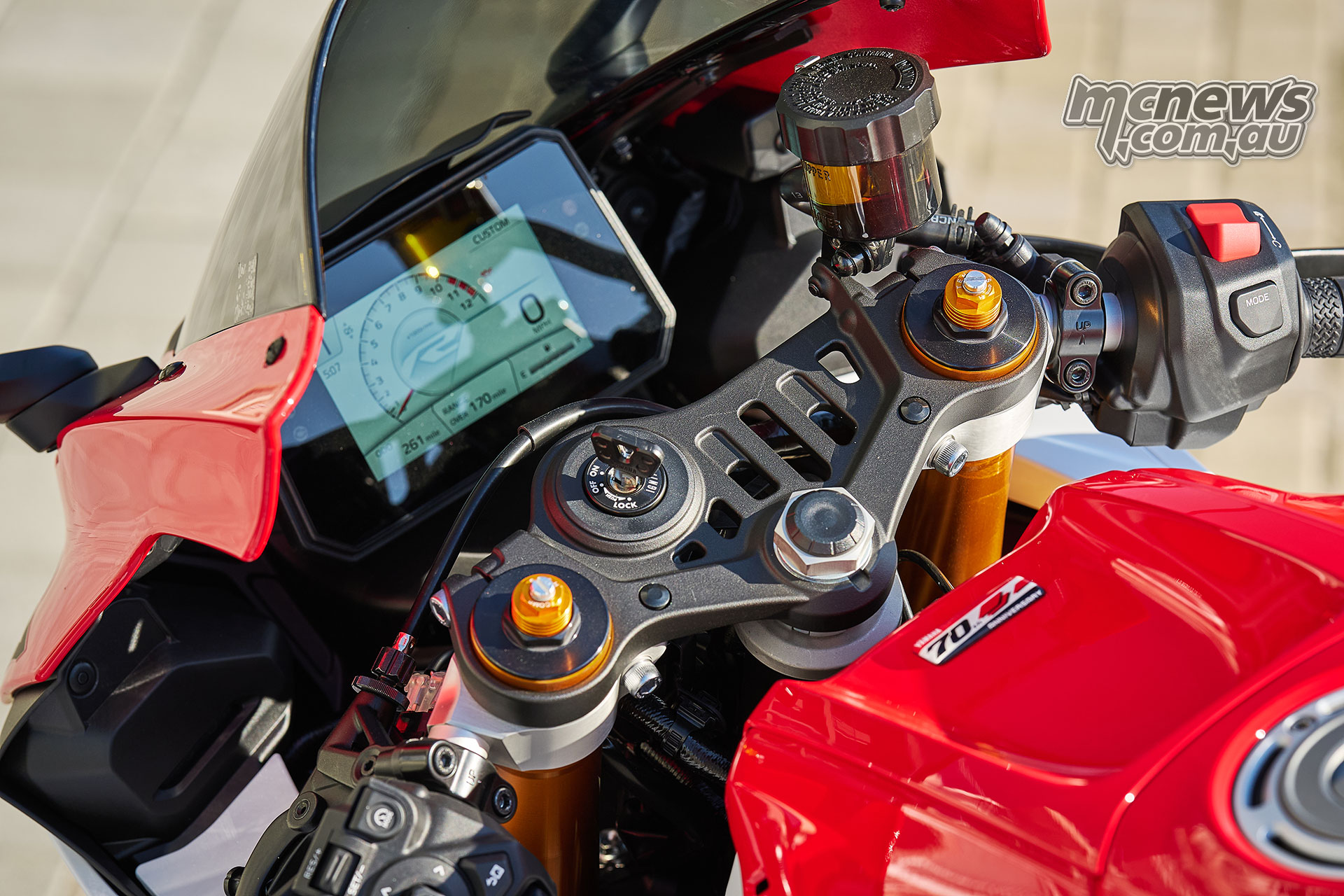 A new five-inch TFT dash brings connectivity and access to the R7’s expanded electronics suite.
The move to ride-by-wire is the biggest single leap forward for the R7, unlocking an electronics package that brings the bike much closer to Yamaha’s larger supersport models. Riders now have access to multiple riding modes, adjustable cornering traction control and ABS, slide control, and engine brake management, all working in harmony through a six-axis IMU.
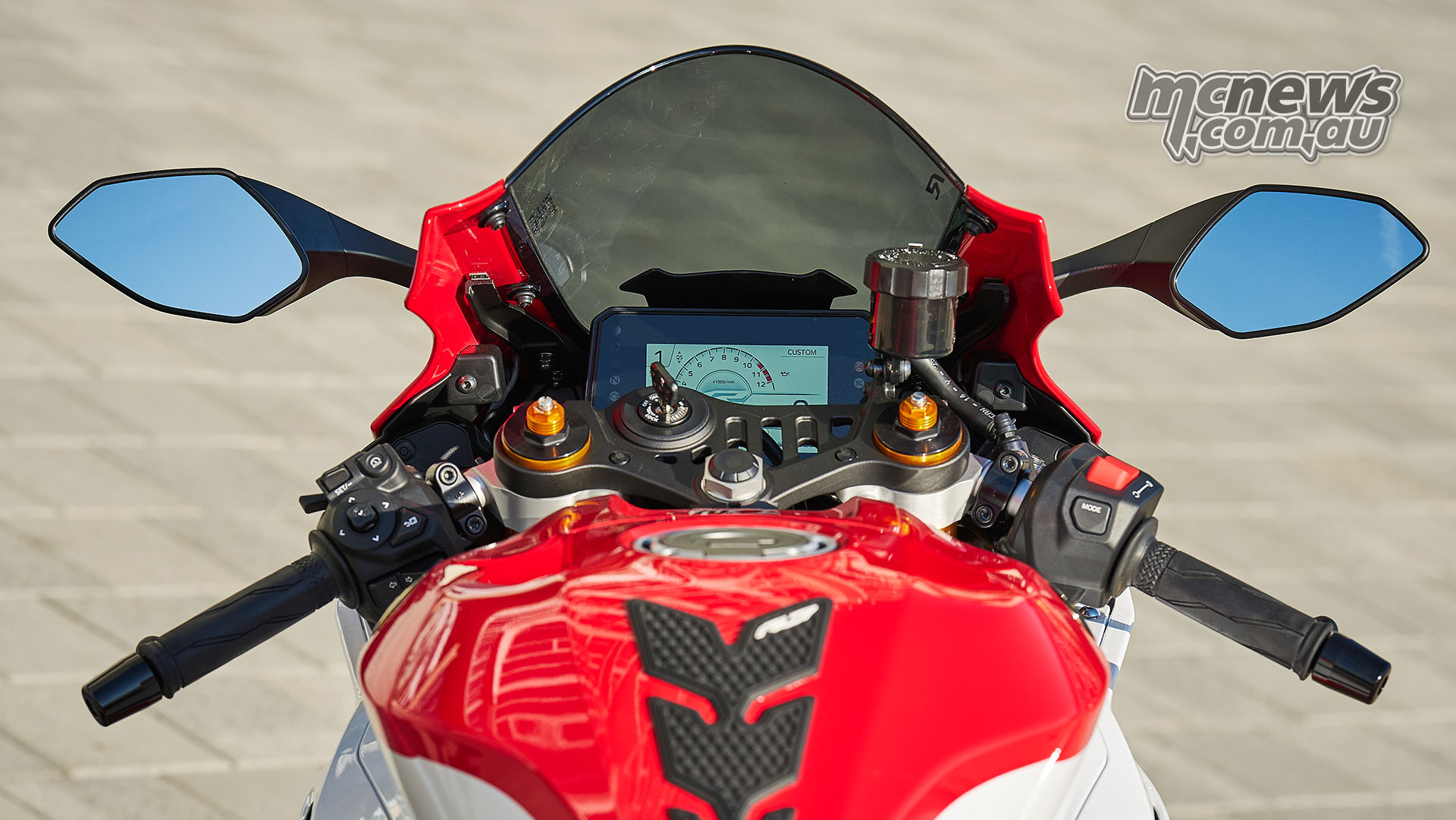 The updated cockpit gives the R7 a much more sophisticated interface than before.
This unquestionably changes the R7’s personality. Where the previous model relied almost entirely on the rider, the 2026 bike adds a significant electronic layer designed to broaden both performance and confidence.
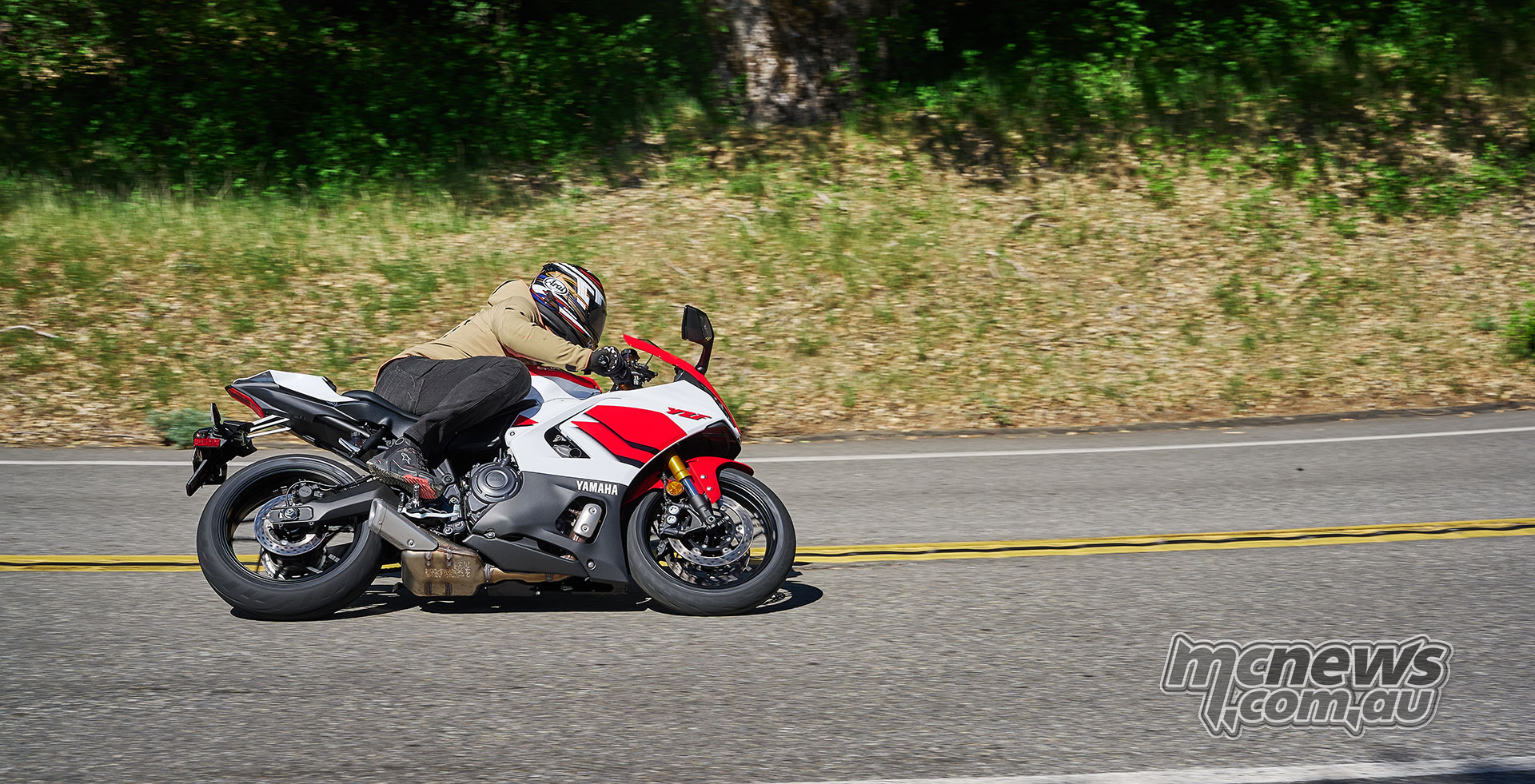 The updated R7 still rewards corner speed and rider precision over outright horsepower.
I’ve never been especially convinced by heavy electronics on bikes with modest power, and part of the original R7’s appeal was exactly that simplicity. It gave the rider plenty of control without putting too much interference between the throttle hand and the rear tyre.
 Yamaha revised frame stiffness and swingarm setup to improve feel and consistency.
Out on the road, the new R7’s different personalities are immediately obvious. In gentler modes such as Rain and Road, throttle response is softer and traction control is more intrusive, although those settings can also be tailored within each mode.
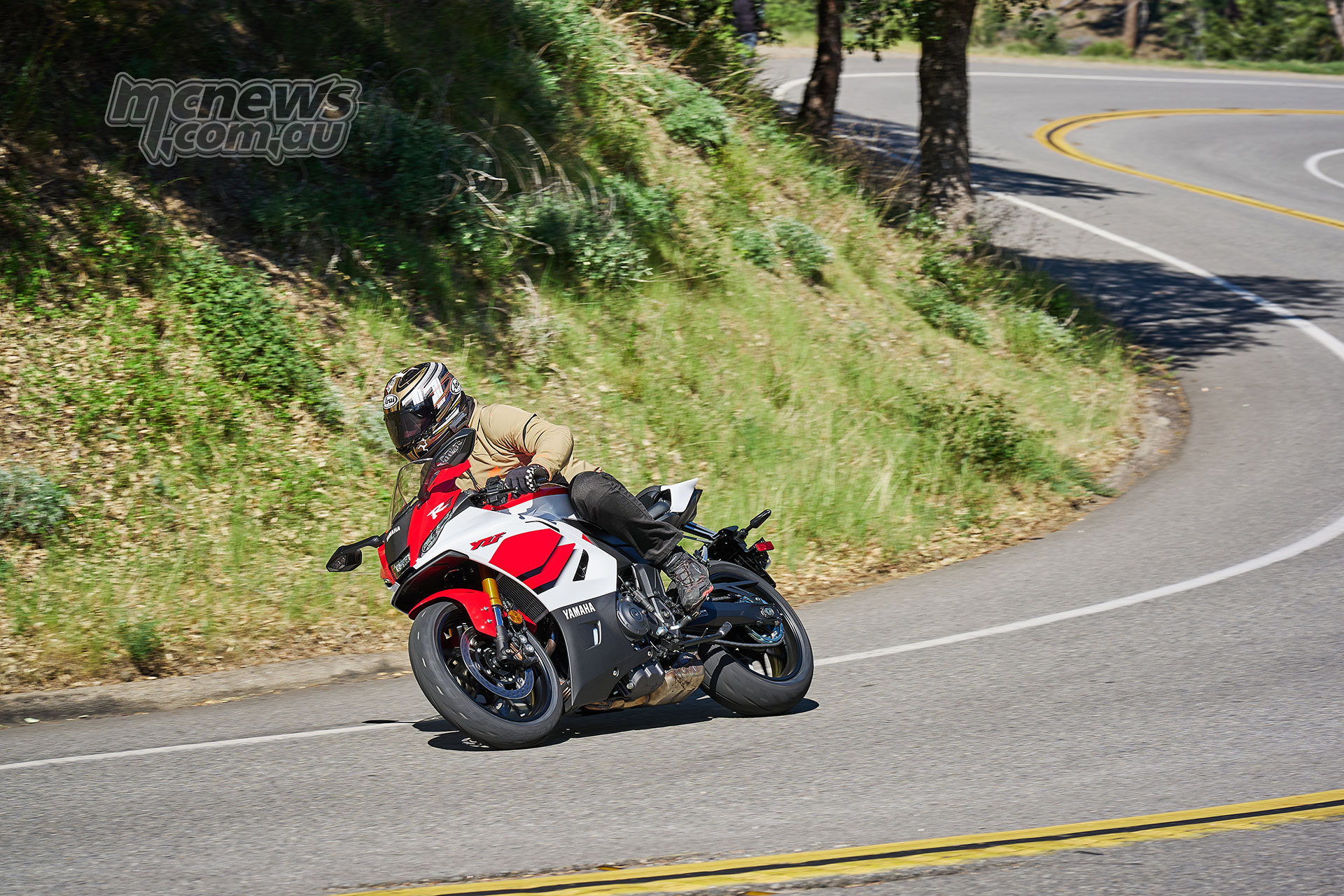 Handlebar, tank and seat revisions slightly refine the 2026 R7’s riding position.
Switch into the more aggressive modes and the R7 sharpens up considerably. Throttle response becomes more immediate, traction control can be relaxed, and the bike starts to feel much more alive. It is not about outright power so much as precision and commitment.
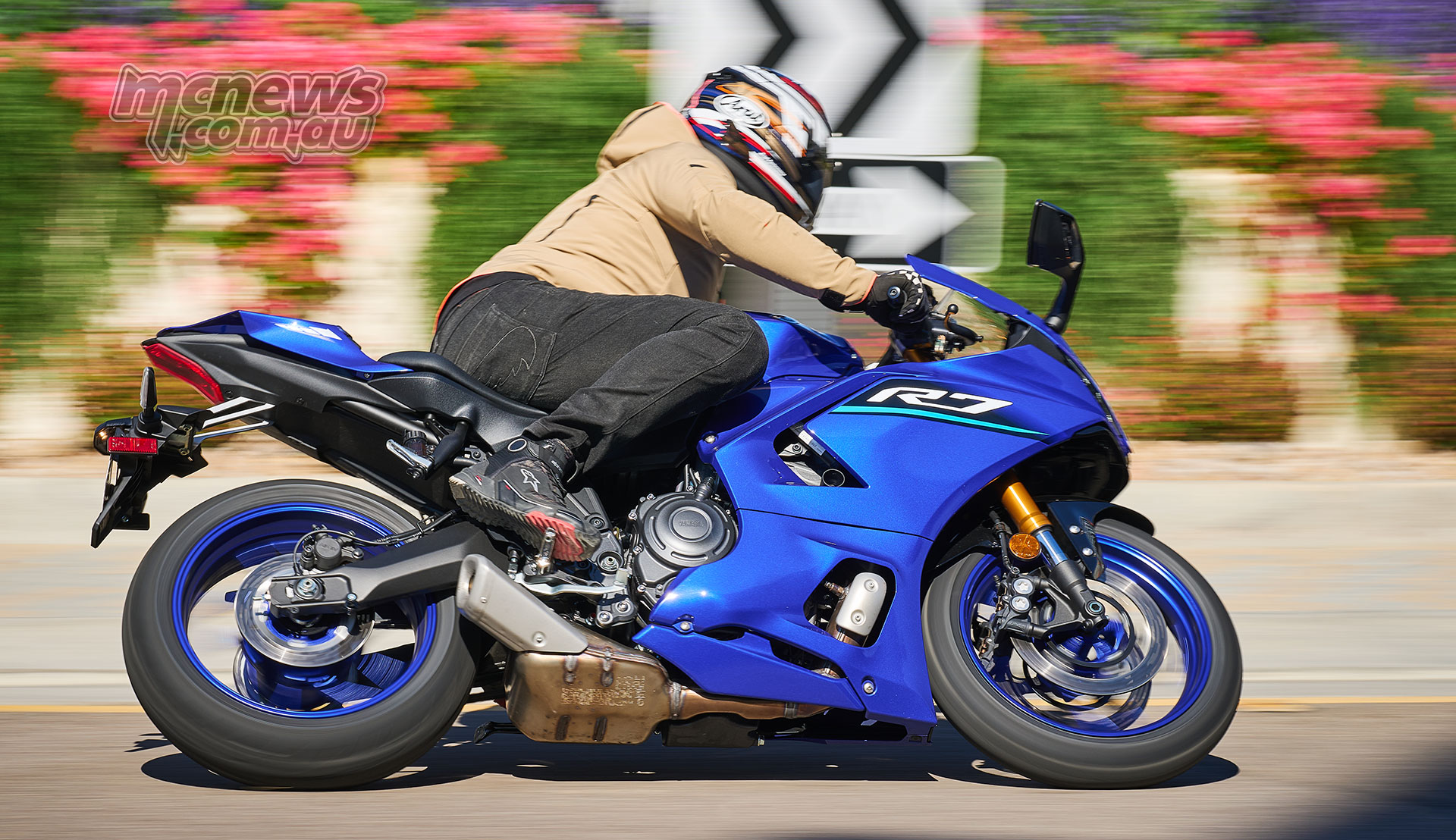 In its sharper modes, the R7 feels more immediate and alive on the road.
The IMU also brings cornering ABS, which will be a meaningful addition for less experienced riders. It is not something you consciously feel working, but it adds another layer of reassurance when braking while leaned over.
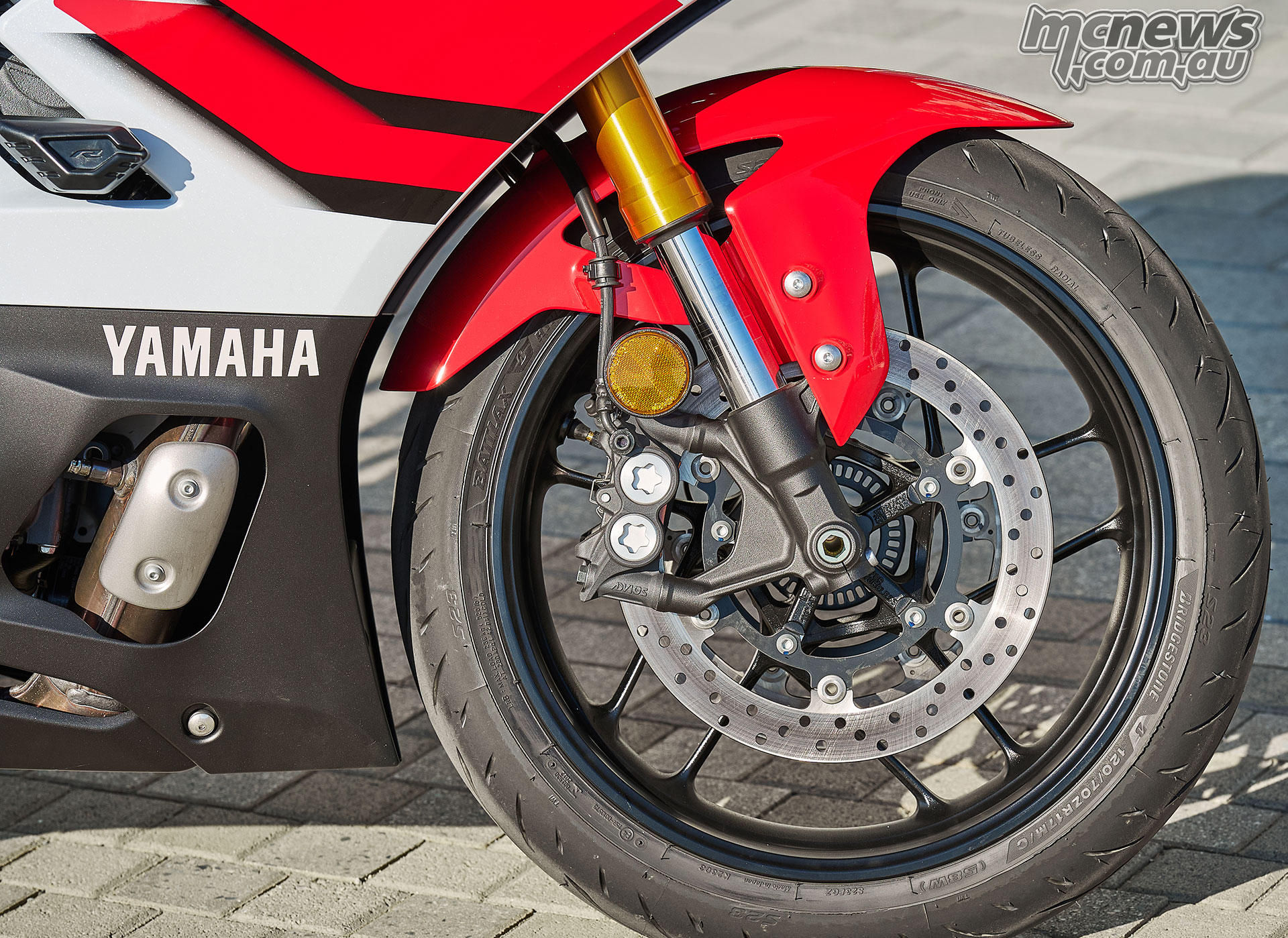 Dual 298 mm front discs remain, now backed by cornering ABS through the new IMU.
Mechanically, the braking package remains familiar, with four-piston calipers and 298 mm discs up front and a single-piston caliper with a 245 mm disc at the rear. Feel is respectable for the 17k price point, and with cornering ABS now in the background, there is a little more security as riders build confidence with harder braking and trail braking.
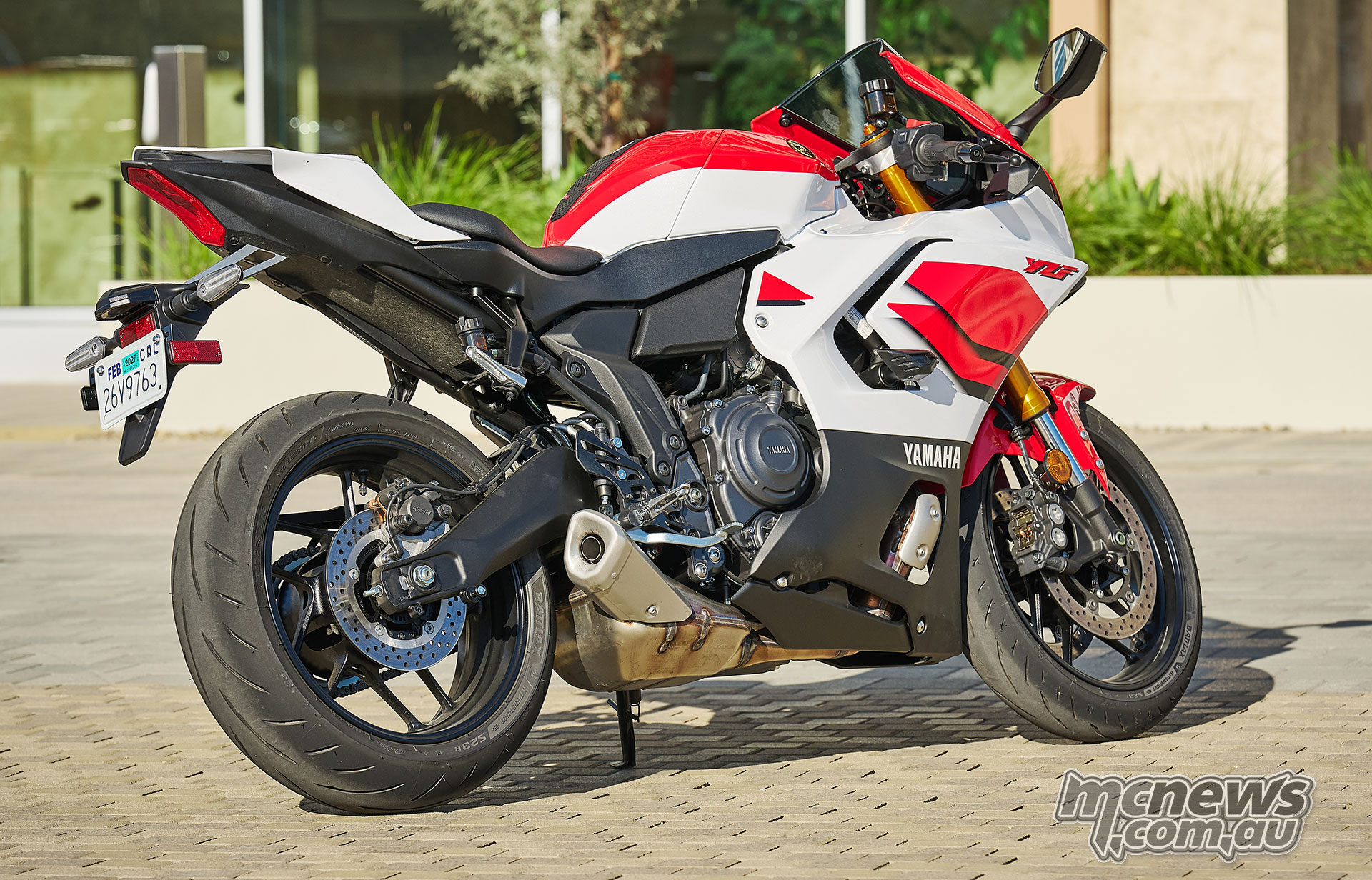 Chassis and electronics changes aim to make the new R7 broader in ability without losing its focus.
Chassis-wise, the steel frame has had a significant rework, with Yamaha chasing gains in torsional, longitudinal and lateral stiffness.
There is also a new swingarm and revised linkage ratio, with less leverage and a higher pivot intended to improve feel and grip when the bike is loaded up on its side.
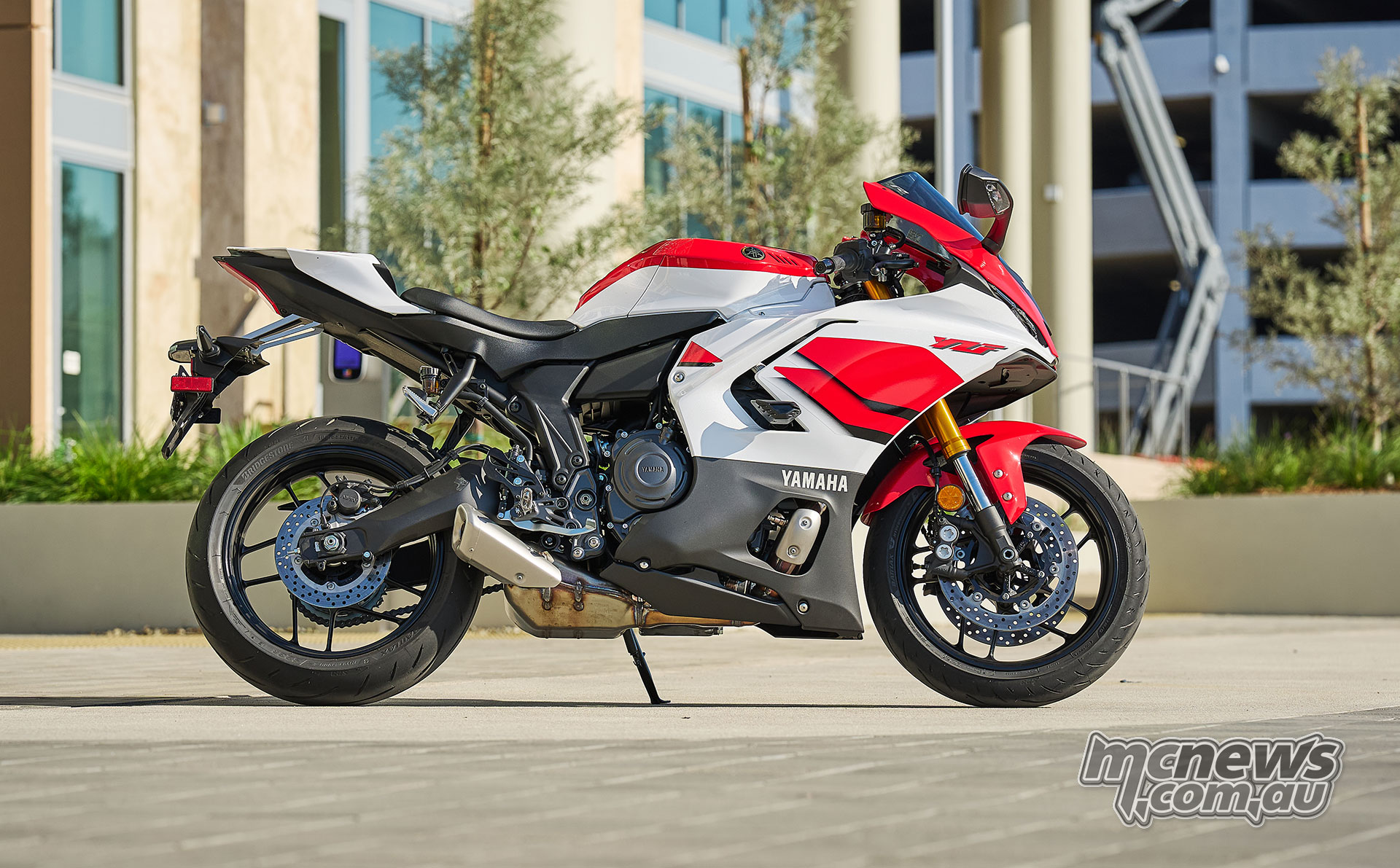 The 2026 R7 remains a compact, sharply proportioned supersport despite its deeper electronics package.
KYB has also revised the fully adjustable fork in detail. Aluminium rods replace steel items to save 350 grams, while the spring rate has been reduced slightly and low to mid-speed damping increased.
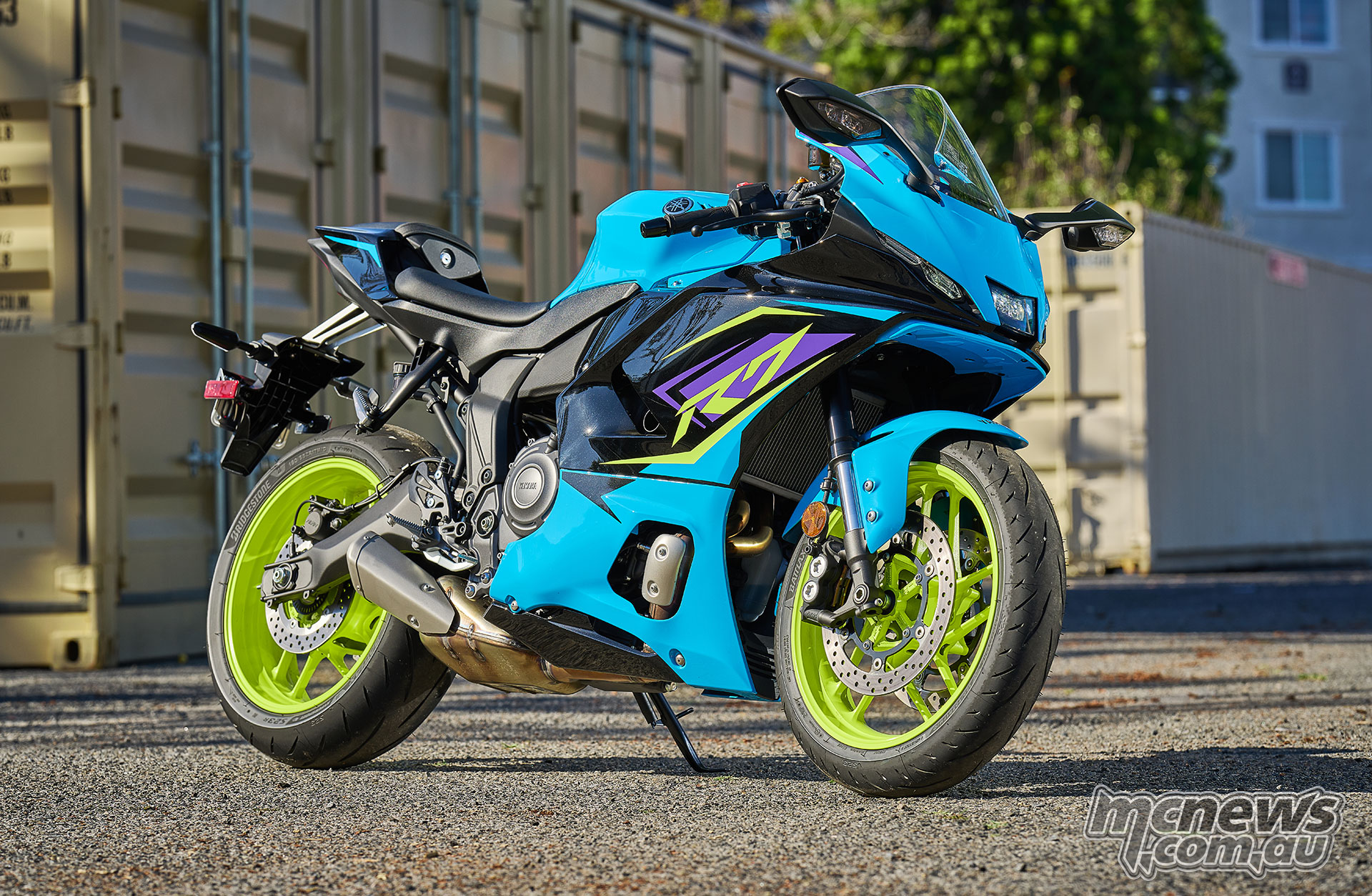 The 2026 Yamaha YZF-R7 keeps its compact supersport stance with only subtle visual refinements.
It’d been five years since I last rode an R7, so I would be cautious about making back-to-back claims from memory alone. Taken on its own merits, though, the 2026 bike is a sharp little tool on a good road.
The R7 turns very quickly, helped by Bridgestone’s excellent Battlax Hypersport S23 tyres and new, lighter 10-spoke wheels. But even with that eagerness, it retains a stability that belies its claimed 198 kg wet weight.
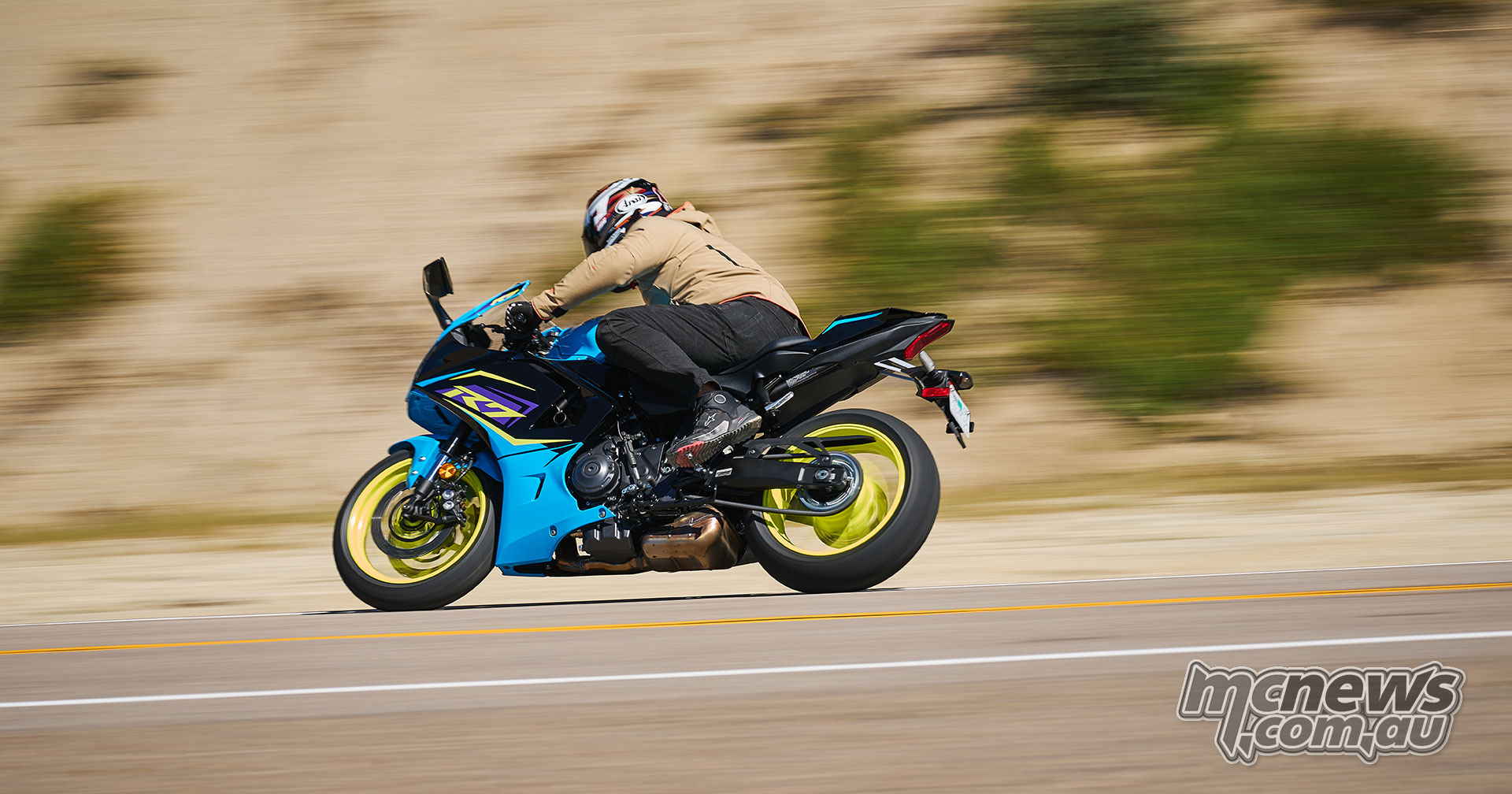 The lighter wheels and sharp geometry help the R7 turn quickly while still feeling stable.
On smooth tarmac, it is precise and predictable, encouraging corner speed and line choice rather than brute-force acceleration. In that sense, it has something of the old lightweight two-stroke spirit about it, recalling bikes like the Suzuki RGV250 and Yamaha TZR250 that rewarded commitment and momentum over outright power.
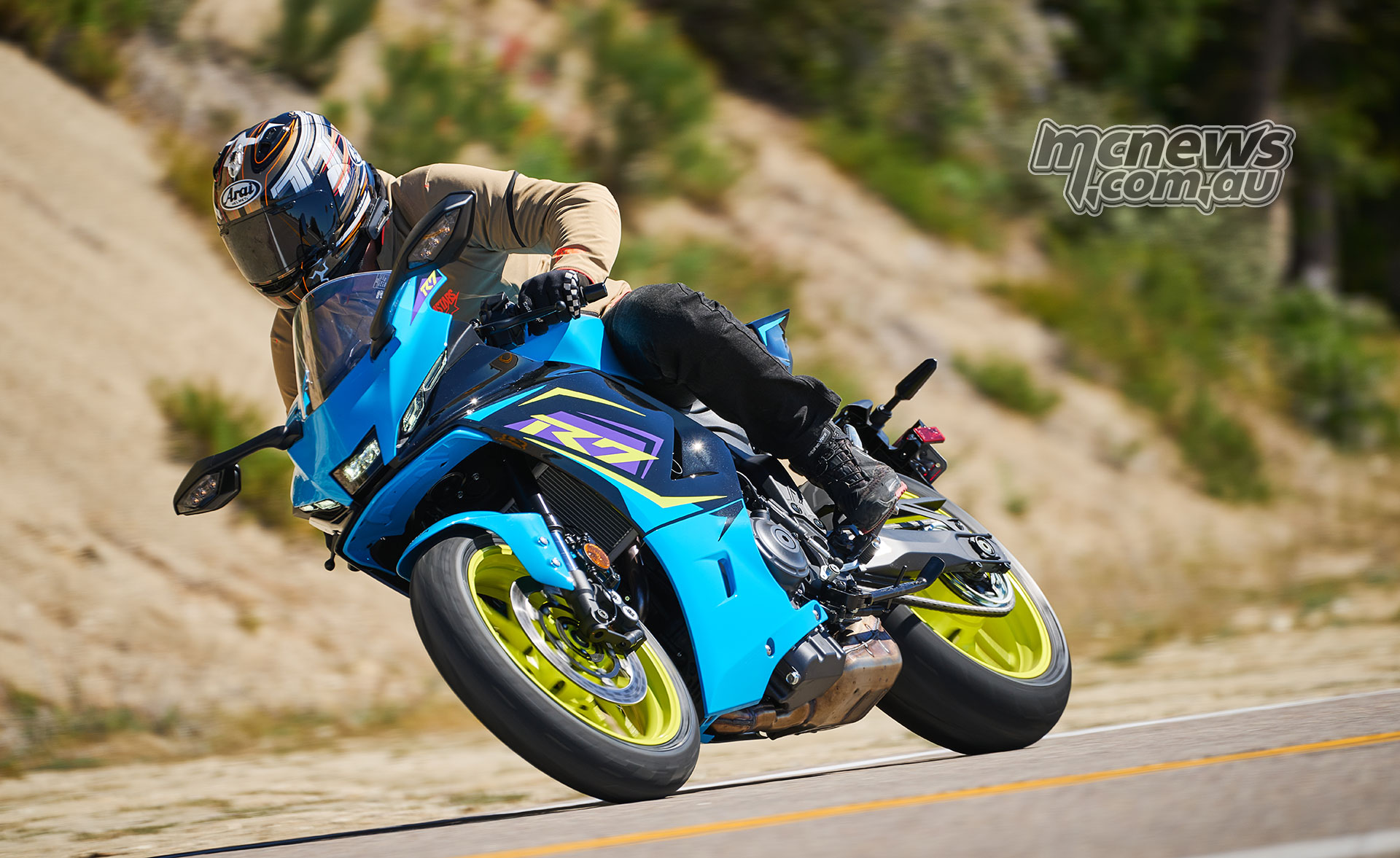 On smooth tarmac, the R7 encourages line choice and corner speed over brute-force acceleration.
On rougher roads, the bike keeps its composure well and absorbs bumps without really upsetting the chassis. But comfort is not a major part of the brief. This is still very much a sportbike, and you will feel weight on your wrists not far into the ride.
That is despite Yamaha revising the rider triangle by moving the bars back and slightly higher, using longer clip-ons, a shorter but broader tank, and a lower, wider seat. The changes help, but the R7 remains a committed supersport in riding position rather than anything remotely relaxed.
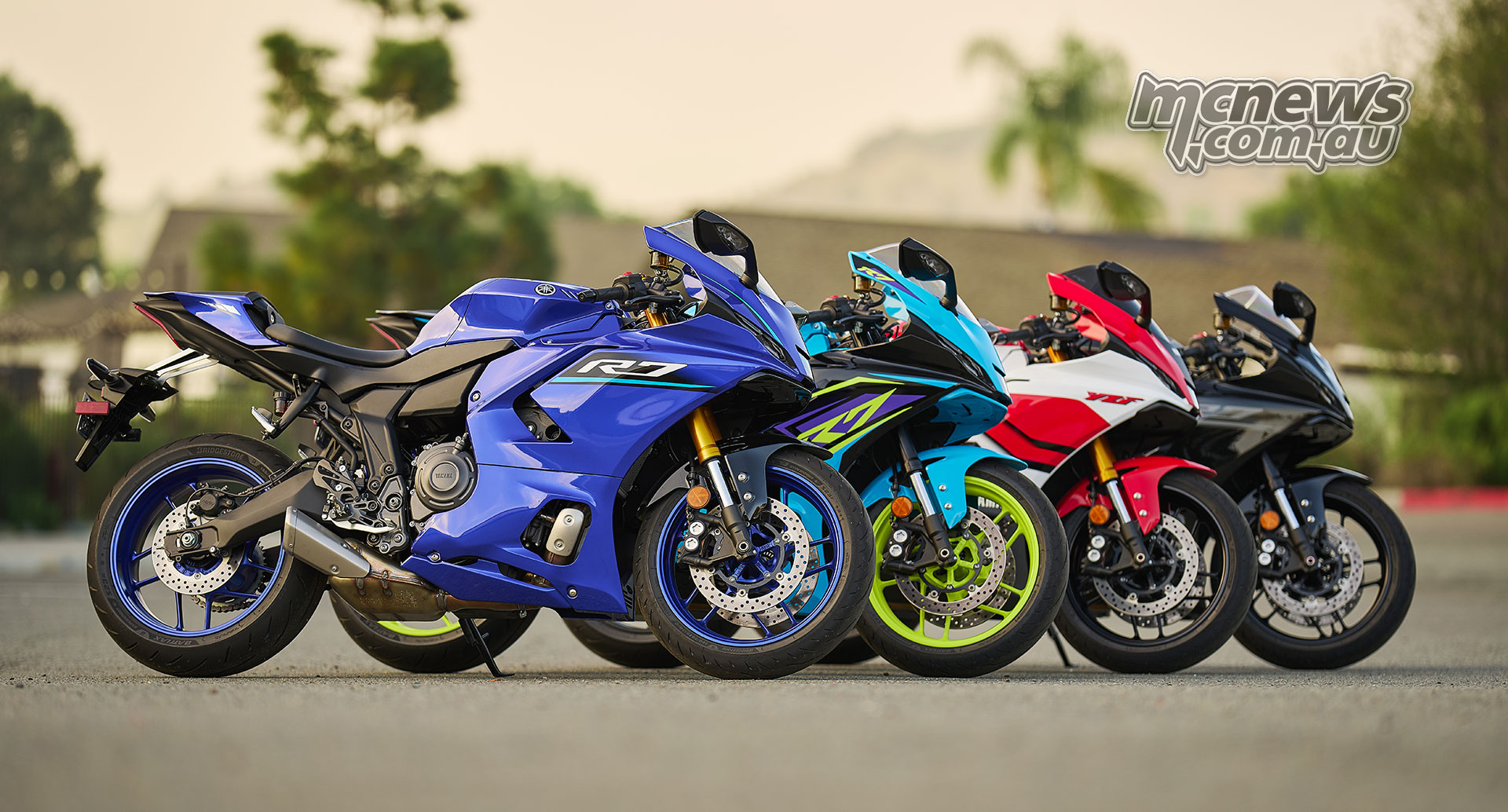
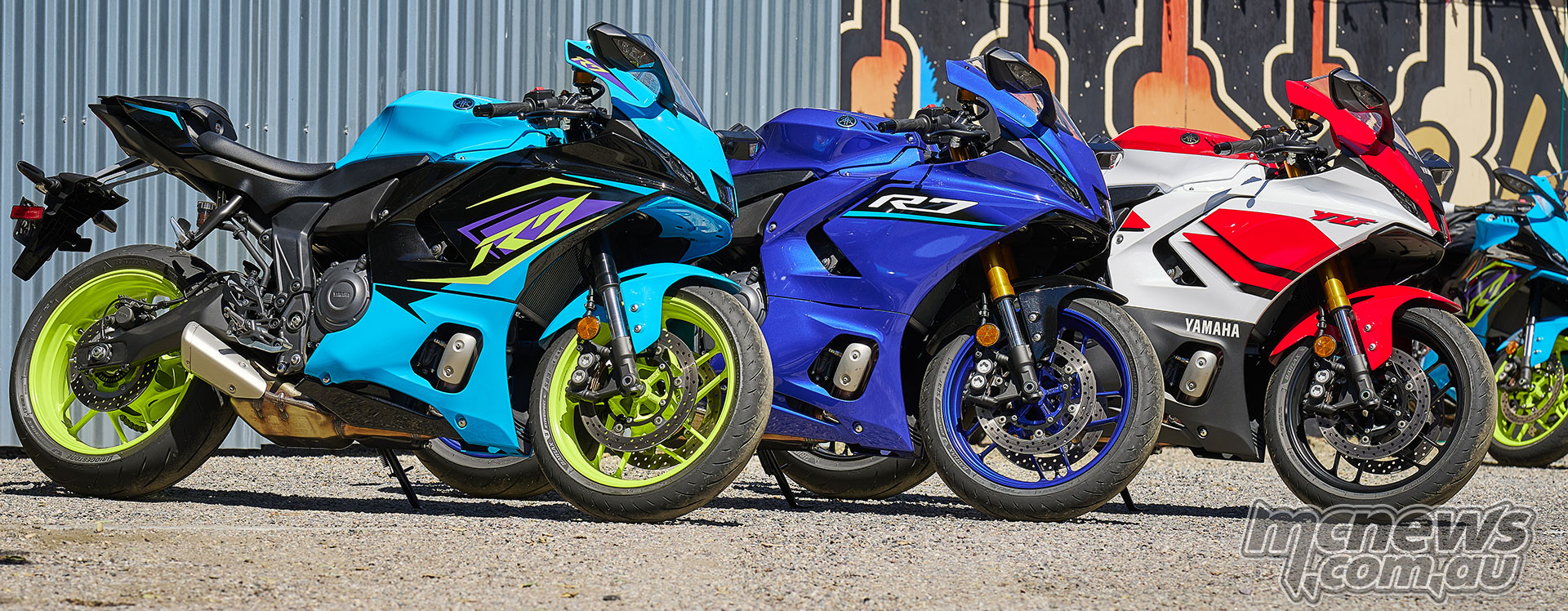 Yamaha’s 2026 R7 colour range gives the updated middleweight a broader showroom appeal.
Visually, the 2026 R7 does not stray far from its predecessor, but there is enough here to freshen the look. Integrated mirror indicators tidy the bike’s flanks, and the overall design still clearly sits within Yamaha’s supersport family.
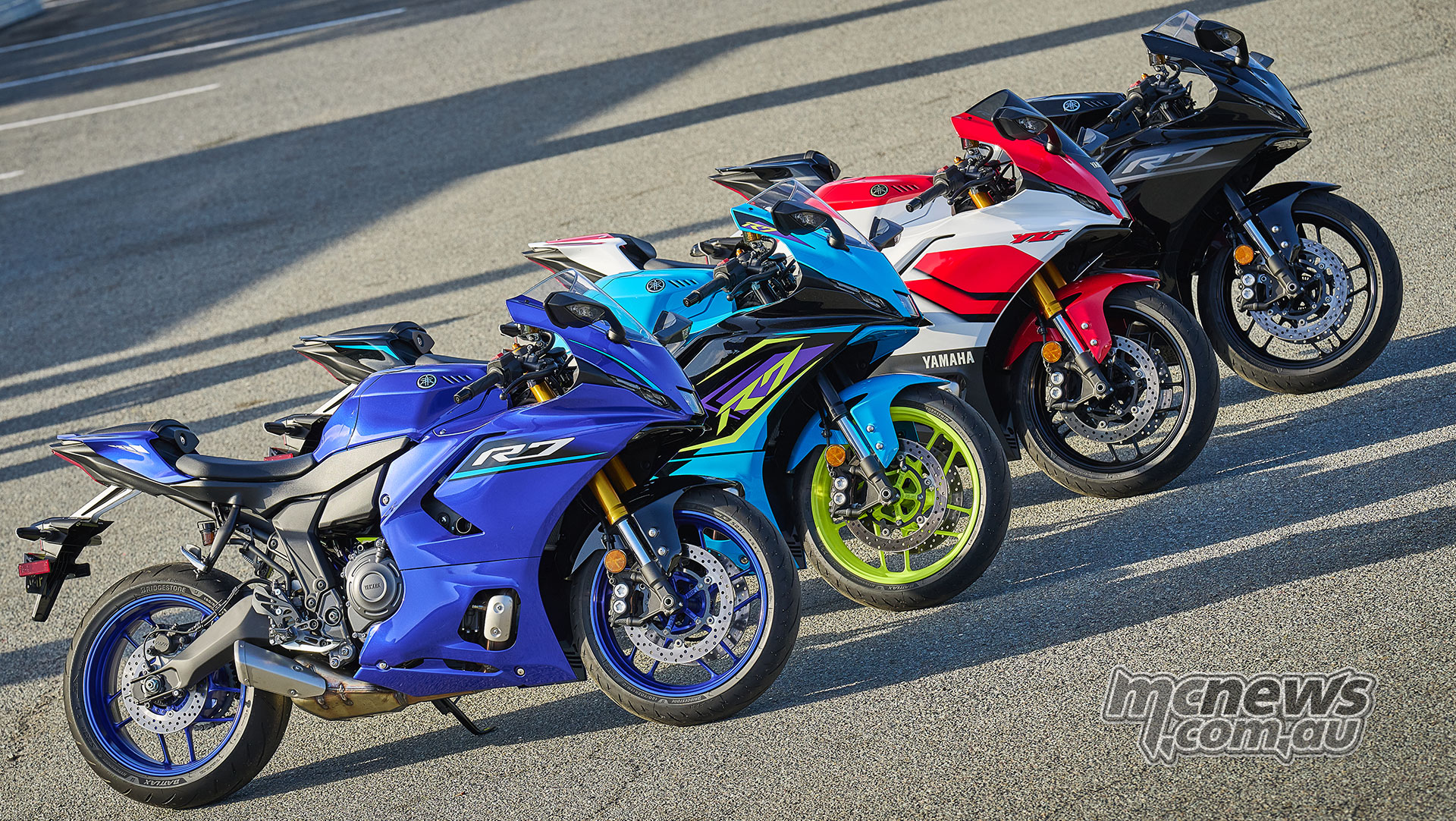 The 2026 Yamaha YZF-R7 range shown across multiple colour options.
The cockpit sees a much bigger update than the bodywork. The R7 now carries a genuinely substantial electronics package, including multiple ride modes, cornering traction control and ABS, wheelie control, engine-brake management, back-slip regulation, launch control and an up/down quickshifter.
Beyond that, there is cruise control, a traffic speed limiter, phone connectivity, turn-by-turn navigation and Yamaha’s Y-TRAC app for data logging and track analysis. That is an impressive amount of technology for what remains an entry-level supersport, and a level of adjustability that would once have been the preserve of much more serious machinery.
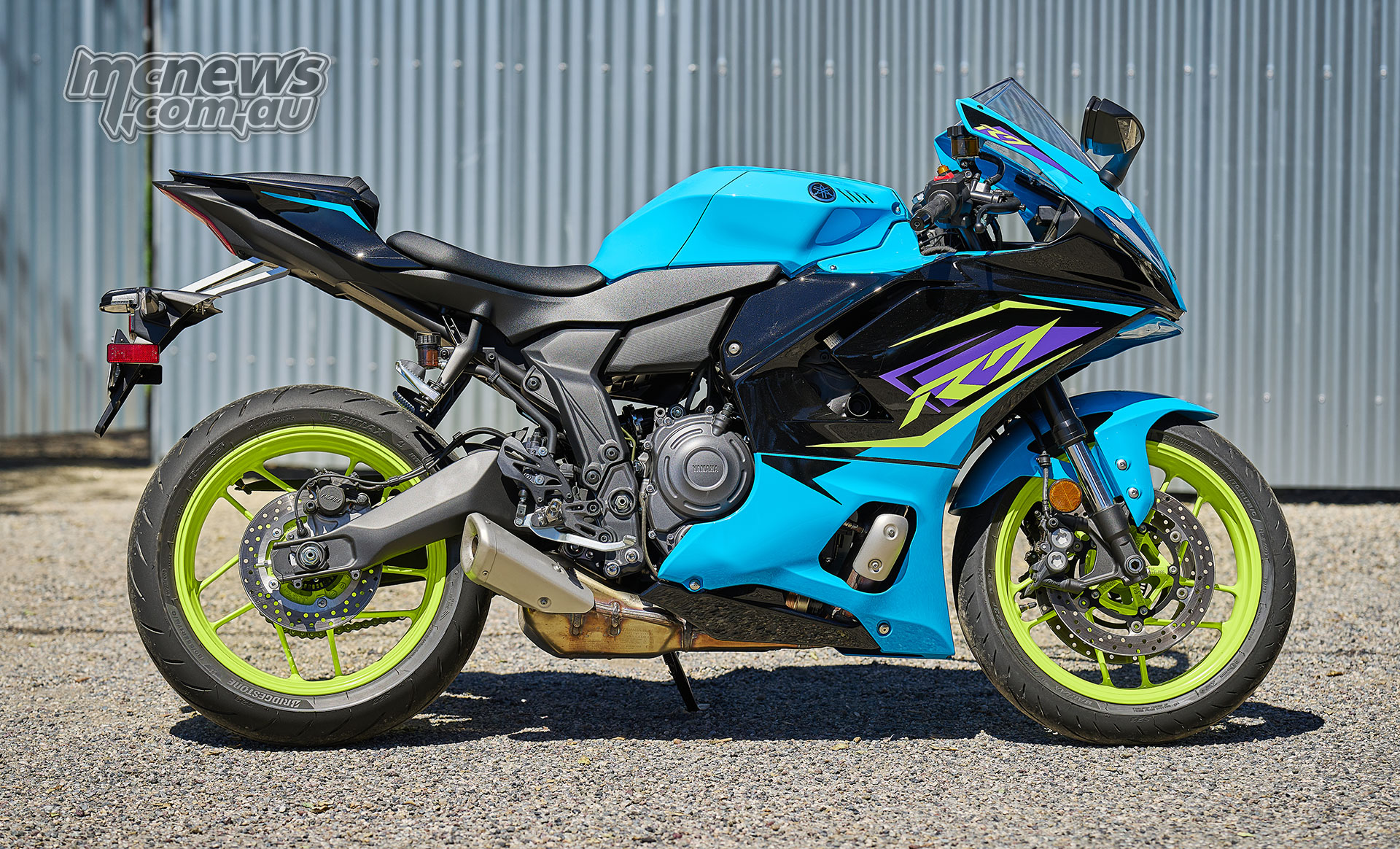 Integrated mirror indicators and small styling tweaks freshen the R7 without changing its overall identity.
What is most impressive is how cohesive the package feels. The added electronics could easily have undermined the bike’s simplicity, but instead they broaden its ability without stripping away the core R7 character.
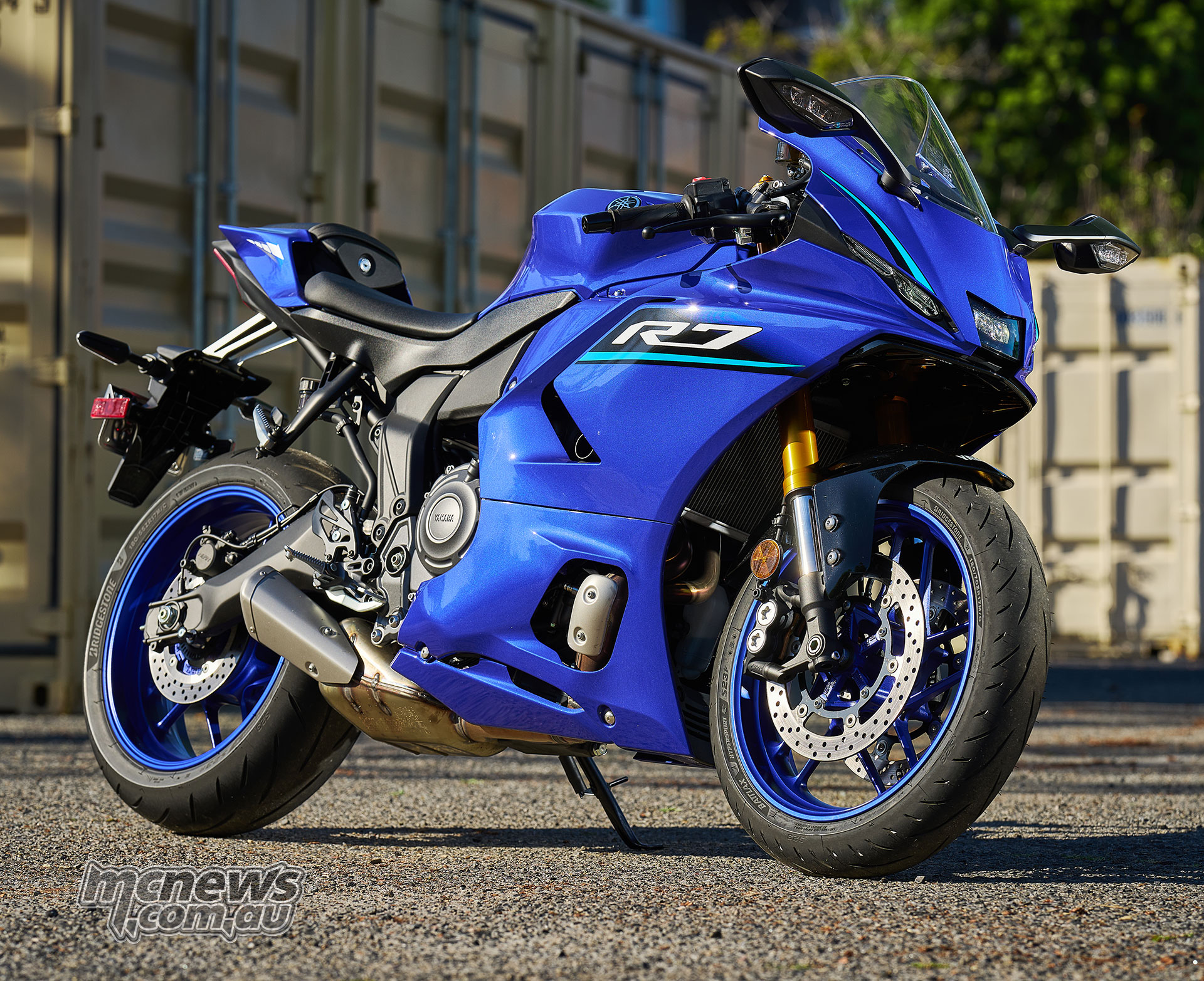 Visually, the 2026 R7 remains very close to its predecessor, with detail updates rather than a wholesale redesign.
Track riders will appreciate this level of tech, even if it takes some effort to understand and exploit properly. Systems like this can feel overwhelming at first, but they become valuable once you start using the data to improve consistency and lap time.
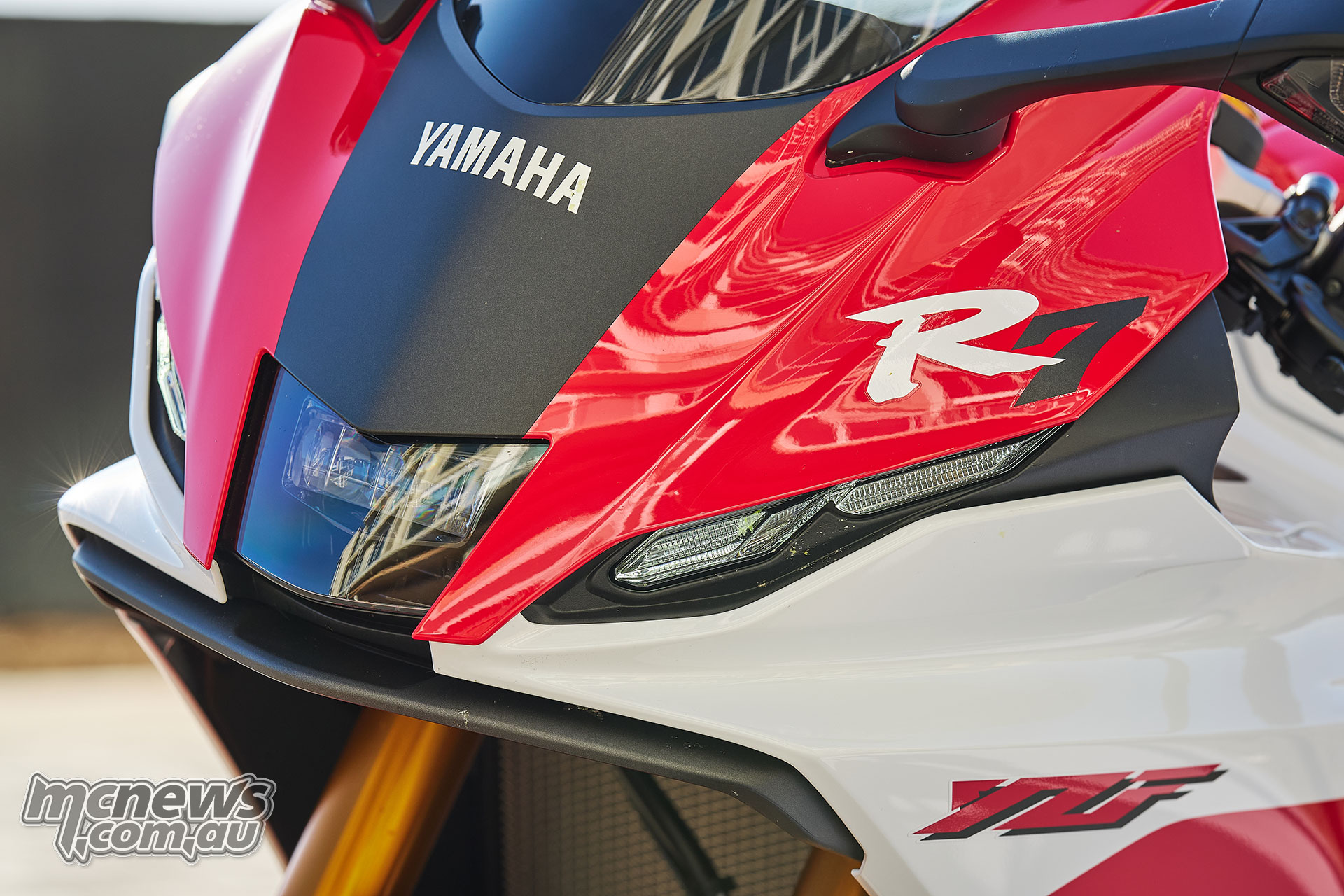 Mirror-mounted indicators and updated front-end detailing subtly sharpen the 2026 bike’s appearance.
There is also something very appealing about the R7’s accessibility. In an era of ever-climbing outputs, it is refreshing to ride a bike that still prioritises connection over sheer speed and encourages you to improve rather than simply lean on horsepower.
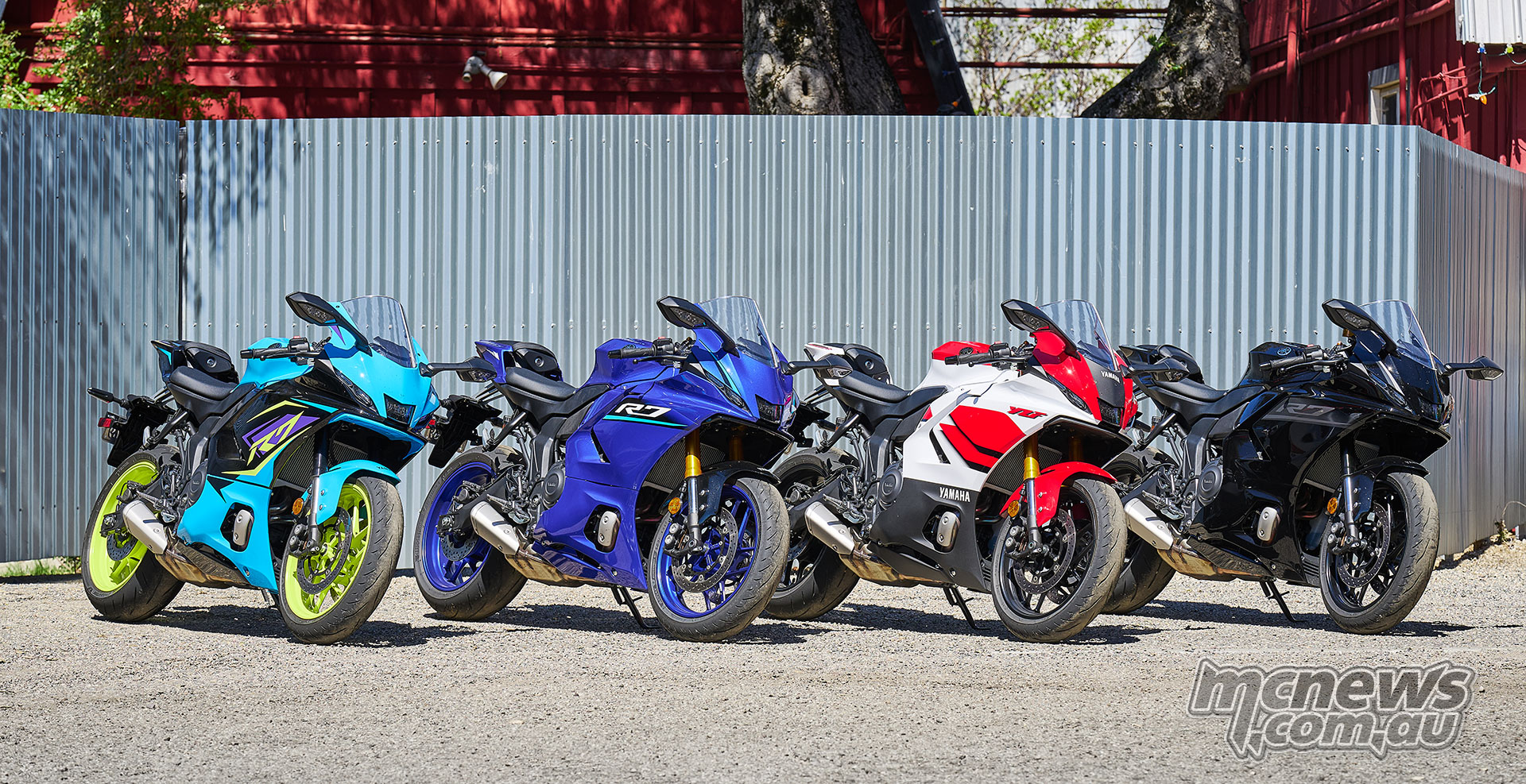 The R7’s broader electronics package is backed by a full model range for 2026.
Of course, the bike is not without limits. Riders chasing big top-end speed will find the engine lacking compared with inline-four alternatives, because the parallel twin’s real strengths remain its midrange, usability and drive off corners.
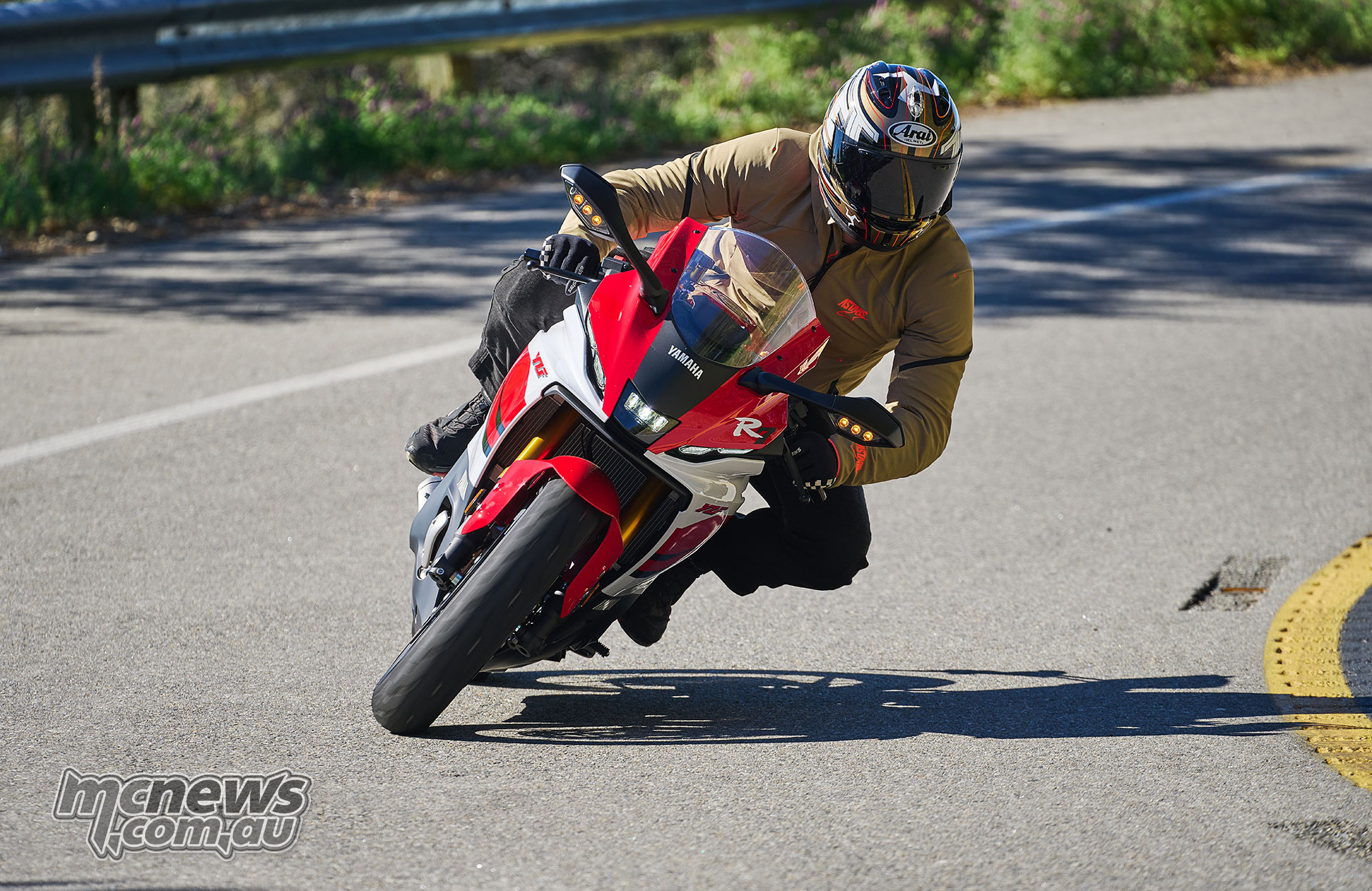 Even with the extra rider aids, the R7 still feels like an engaging, direct middleweight sportbike.
The 2026 YZF-R7 is a meaningful step forward. Ride-by-wire, IMU-based rider aids, chassis revisions and updated ergonomics combine to make the bike feel broader in ability and more polished than before, without losing the directness that made it appealing in the first place.
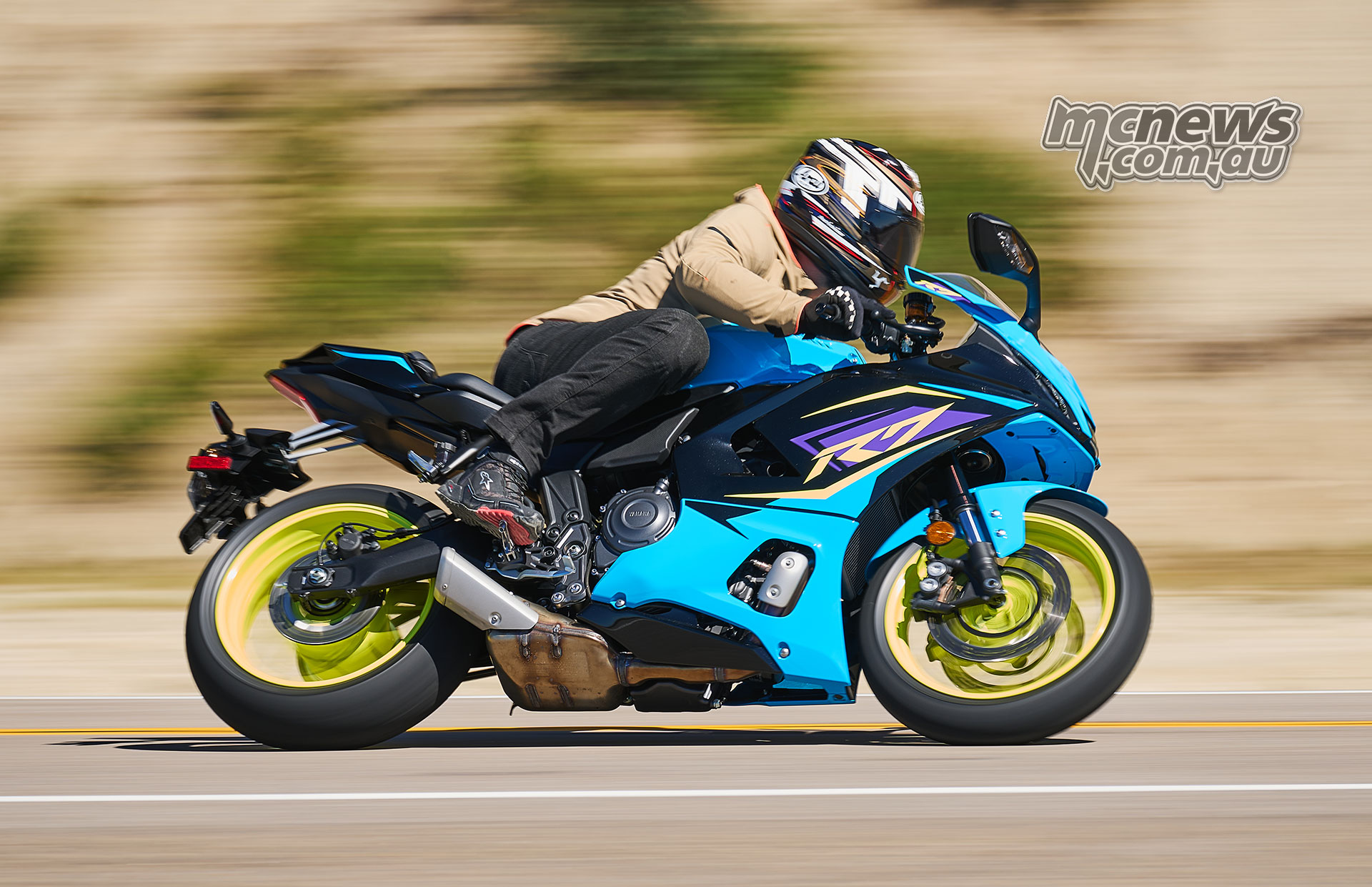 Track-minded electronics broaden the R7’s capability without overwhelming its core character.
The YZF-R7 does not try to be everything to everyone, but as a focused middleweight sportbike it does its job extremely well. It remains approachable enough for newer riders while still offering enough involvement to satisfy more experienced ones. The 2026 YZF-R7 lands in Australia in July, priced from $16,549.
Head to the Yamaha Motor Australia website for more information:
https://www.yamaha-motor.com.au/
2026 Yamaha YZF-R7 Specifications
|
Yamaha YZF-R7 Specifications (LA) |
|
|
Engine Type |
Liquid-cooled, 4-stroke, DOHC inline twin-cylinder, 4-valve |
|
Displacement |
689.0 cc (655 cc) |
|
Bore x Stroke |
80.0 x 68.6 mm (78.0 x 68.6 mm) |
|
Power (claimed) |
54 kW (73 hp) @ 8750 rpm (38.3 kW – 51 hp- @ 8000 rpm) |
|
Torque (claimed) |
58 Nm @ 6500 rpm (57.5Nm @ 4000 rpm) |
|
Compression Ratio |
11.5 : 1 |
|
Lubrication System |
Wet sump |
|
Fuel Management |
Fuel Injection |
|
Ignition |
TCI |
|
Starter System |
Electric |
|
Fuel Tank Capacity |
14.0 L |
|
Final Transmission |
Chain |
|
Transmission |
Constant mesh six-speed |
|
Frame Type |
High-tensile steel tubular frame |
|
Suspension Front |
KYB 41 mm USD fork, fully adjustable, 120 mm travel |
|
Suspension Rear |
Swingarm (link suspension), rebound, preload adjustable, 121 mm travel |
|
Brakes Front |
Hydraulic dual discs, 298 mm, four-piston calipers – ABS |
|
Brakes Rear |
Hydraulic single disc, 245 mm, single-piston caliper – ABS |
|
Tyres Front |
120/70ZR17M/C (58W) Tubeless, Bridgestone Battlax S23 |
|
Tyres Rear |
180/55ZR17M/C (73W) Tubeless, Bridgestone Battlax S23 |
|
Length |
2070 mm |
|
Width |
725 mm |
|
Height |
1160 mm |
|
Seat Height |
830 mm |
|
Wheelbase |
1395 mm |
|
Ground Clearance |
135 mm |
|
Wet Weight (Fuelled) |
189 kg |
|
Available |
July 2026 |
|
Pricing |
$16,549 for standard colours, $17,049 for SP model |
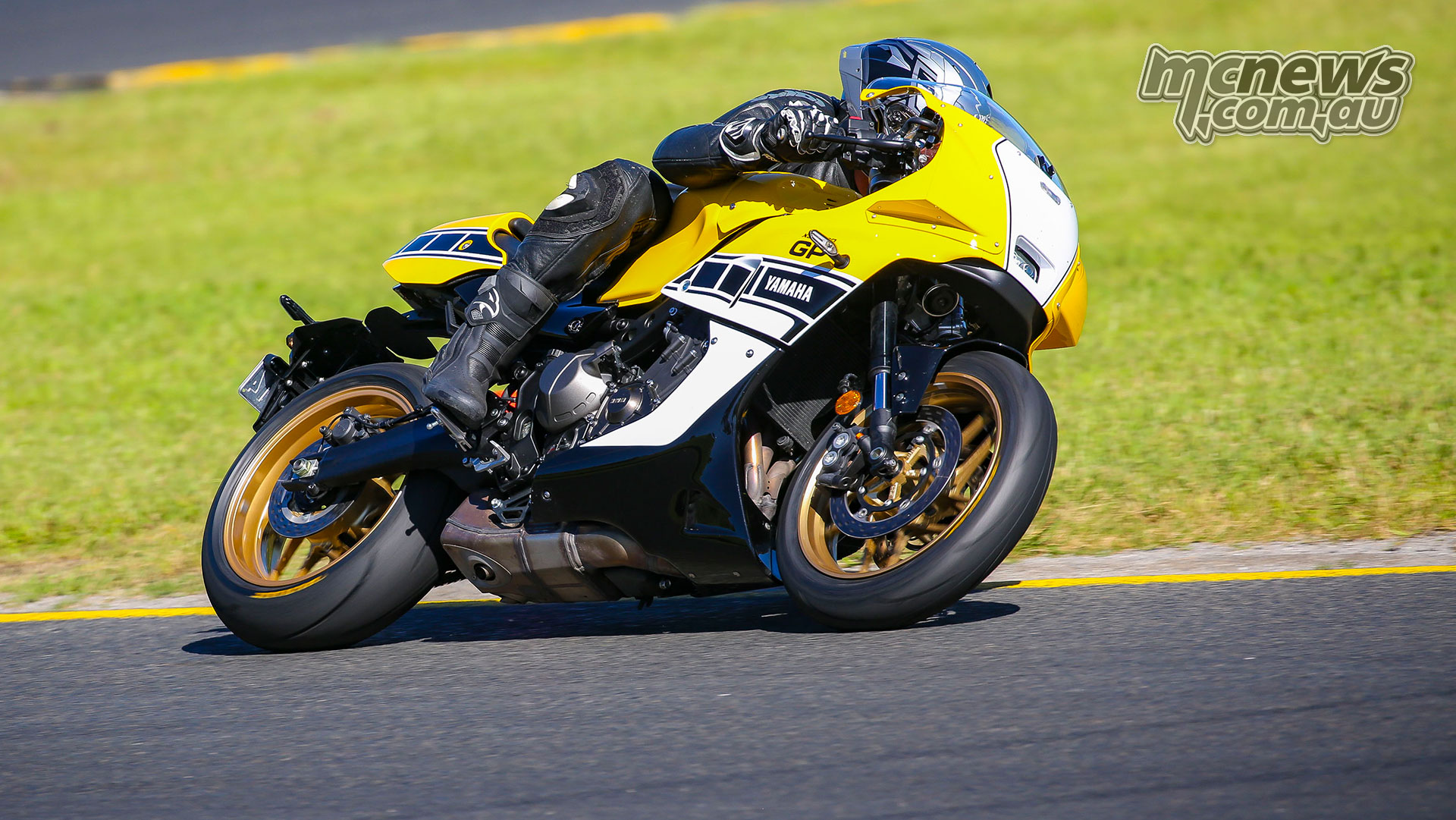



 English (US) ·