
.png) 7 months ago
70
7 months ago
70
ARTICLE AD BOX
2025 BMW S 1000 R Race Review
If my recent string of test bikes is anything to go by, then black is most definitely the new black. I think that’s four in a row. Hey, it’s winter in Melbourne, after all. I shouldn’t be surprised.
I’m also not surprised by how capable the BMW S 1000 R is. I mean, I gave its big brother, the outrageously good M 1000 R, my personal BOTY gong in 2023. And as much as I wanted to get back on the updated M this year, I figured I should try the ‘standard’ model instead of the racey one with all the farkles.
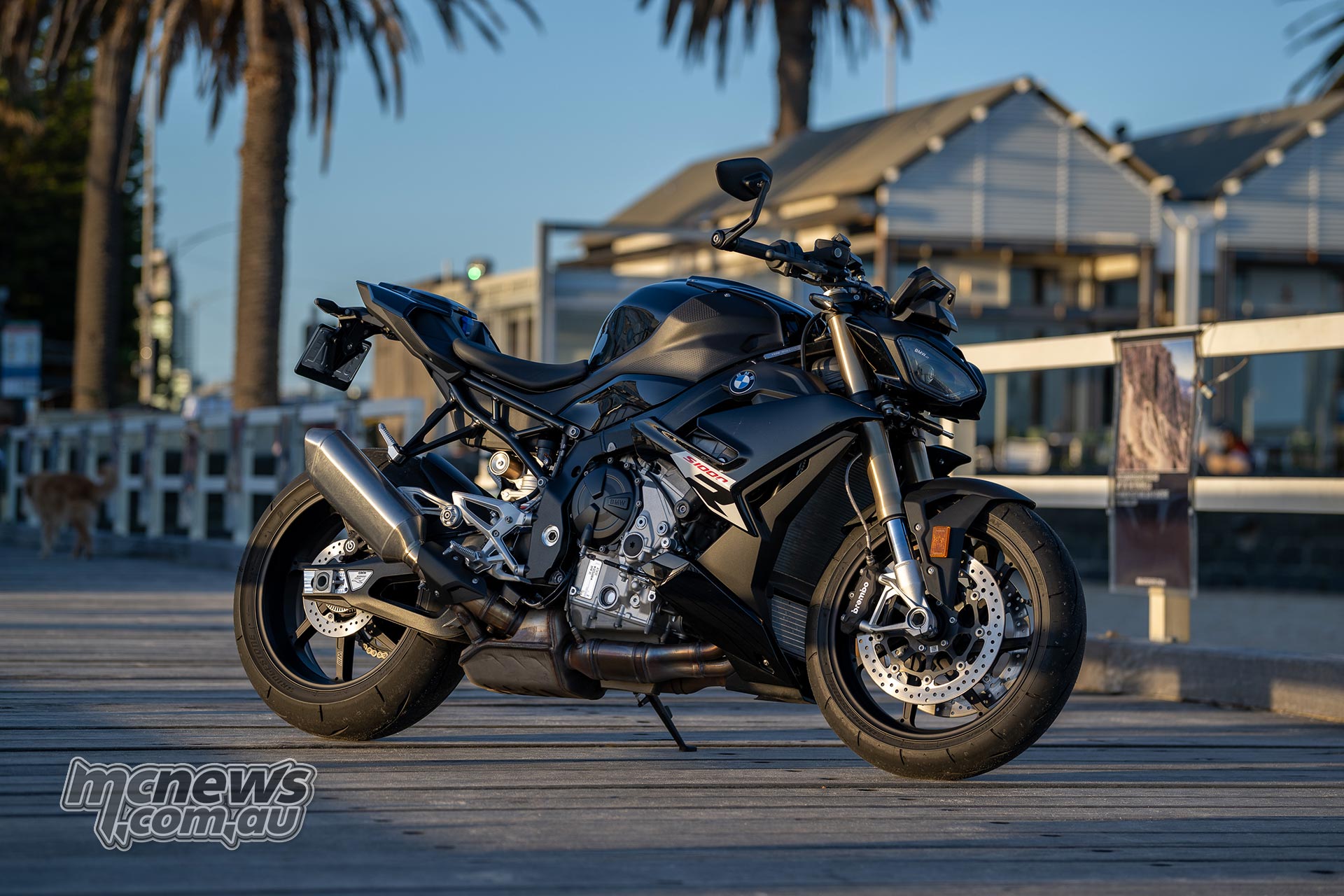
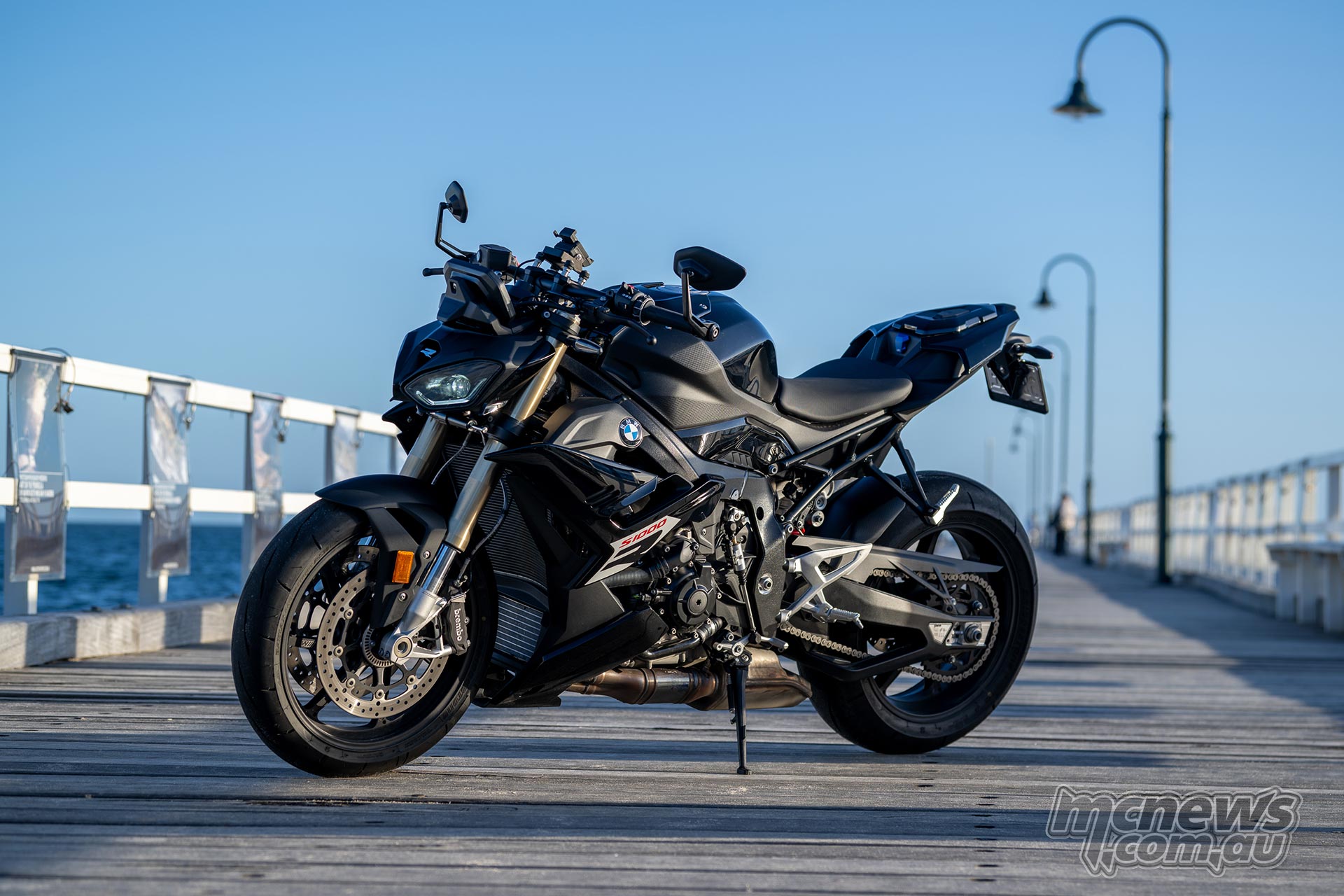 BMW S 1000 R Race looking suitably pretty on the bay.
Don’t think that this one goes without in the farkle department, however. Just not the absolute top-end goodies and extra mumbo from the RR’s shift cam engine. So let’s dive into what the ’25 model does get.
What’s changed?
The first thing you’ll notice is a fresh restyle. Up front, there’s a new headlight and radiator cowl, while the tail section has also been reworked. A few new colour options add to the update – not just in the plastics, but in subtler touches too, like revised finishes on the clutch and generator covers, the rear subframe, and the swingarm. It’s the little details that make the difference.
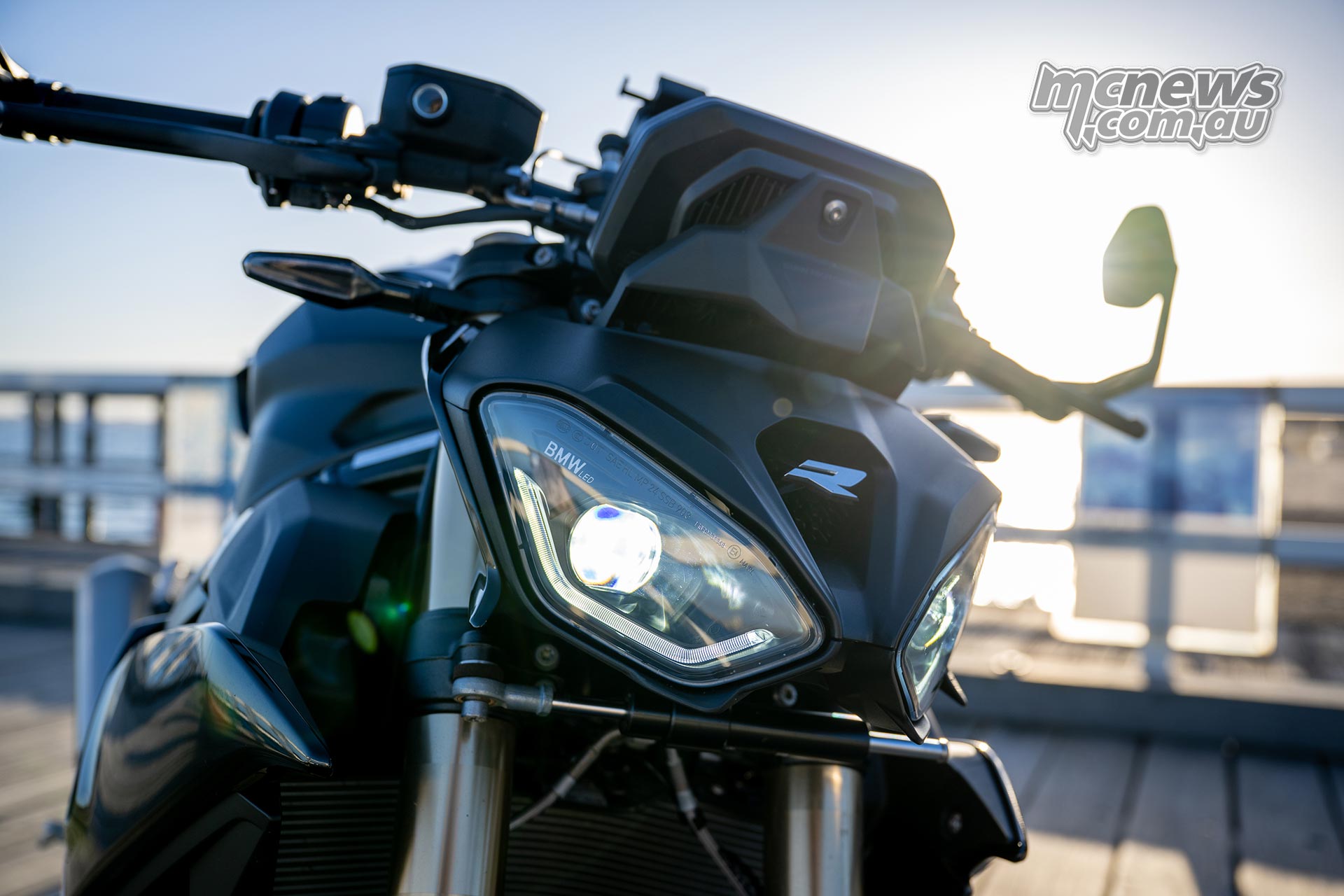 The new frontal styling is quite well-executed. Tasty.
To my designer’s eye, this new headlight cluster might be the nicest yet. Creating a signature headlight design that balances function with style is no easy task, but credit where it’s due, the BMW crew have done well here.
It’s a suitably aggressive, scowling front end without tipping over into full Transformer territory like some designs have in the past. The headlights back it up too, with a solid high-beam throw that actually does the job.
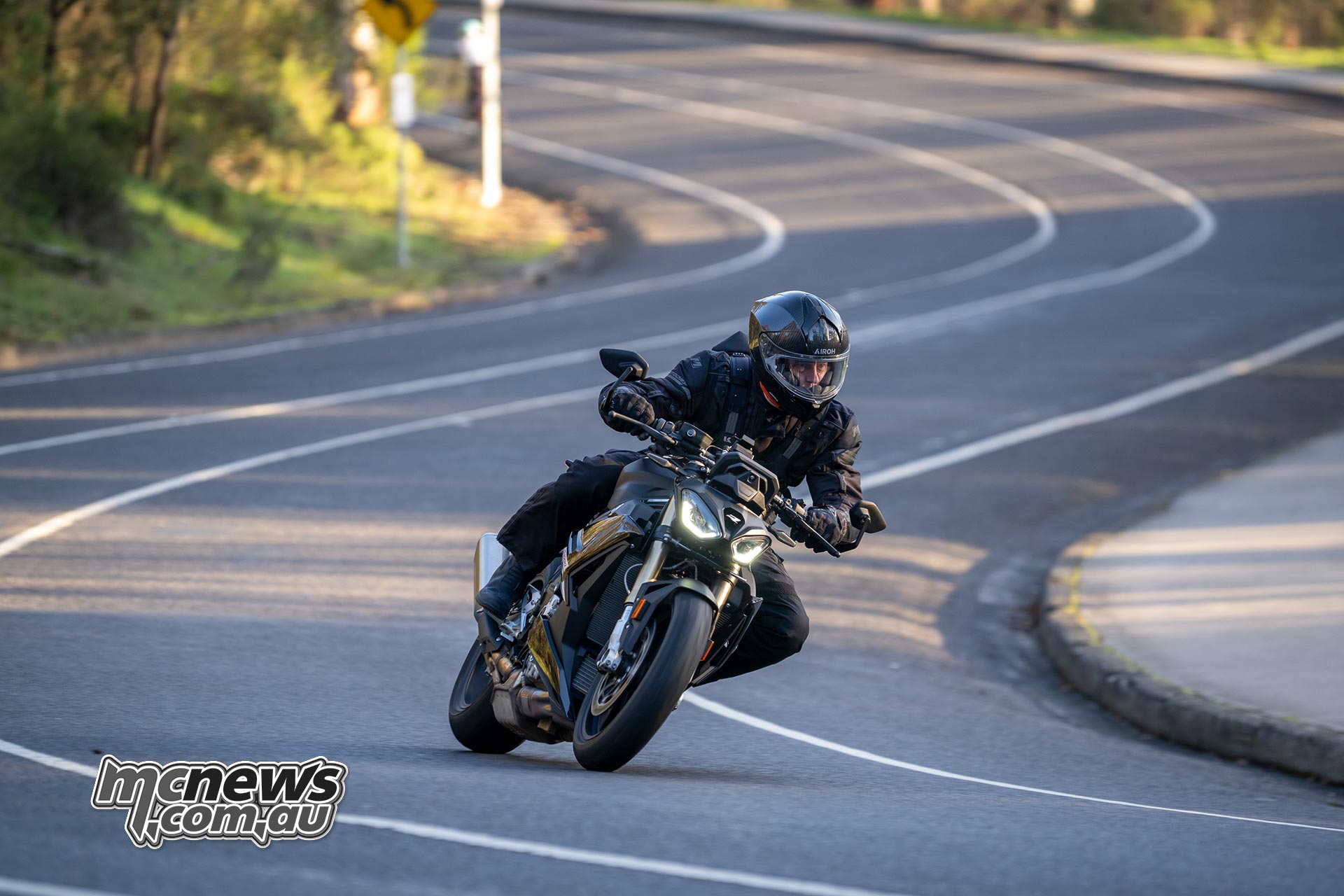 Daytime running lights are a nice look, too.
Less obvious at first glance are the performance tweaks. The 999 cc inline four now gets a 5 hp bump, taking it to 170 hp (127 kW), courtesy of some intake port work and fresh mapping. On paper, that’s a nice upgrade, though in the real world, it’s probably not something you’ll feel all that much normally.
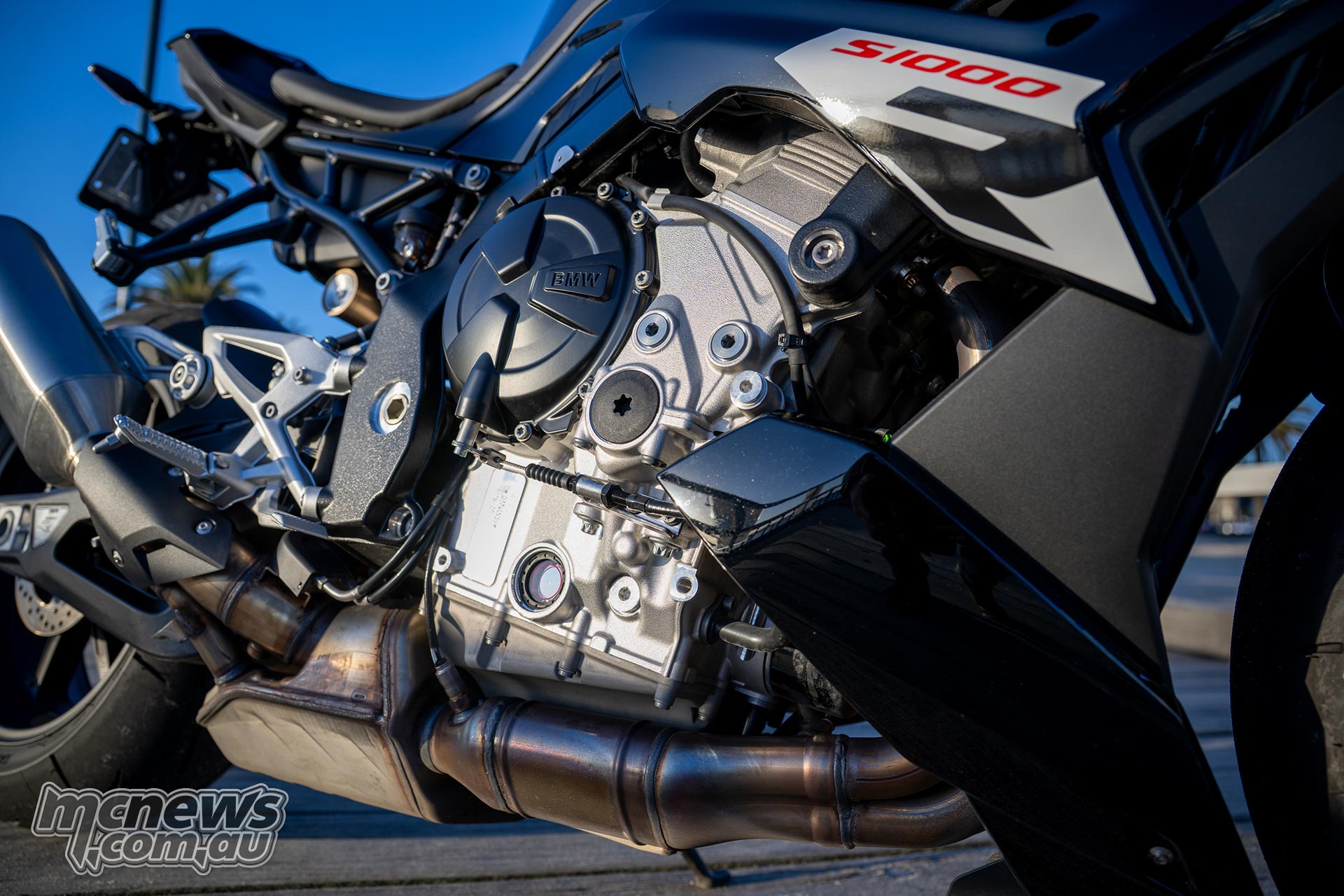 The step-up in power brings it a little closer to the M model.
Most of us would be hard-pressed to feel what amounts to a three per cent power change. But because it’s combined with a slightly shorter final drive ratio (by means of a one tooth larger rear sprocket) and a quick action throttle nabbed from the M, this provides a touch sharper ride compared to the 24 model.
That quick-action throttle reduces the full rotation from 72 degrees to 58, so it’s a decent step up. Personally, I’m not that big a fan of quick action throttle on road bikes, but it’s not overly quick. And certainly the fuelling is close enough to spot on that you get used to it very quickly.
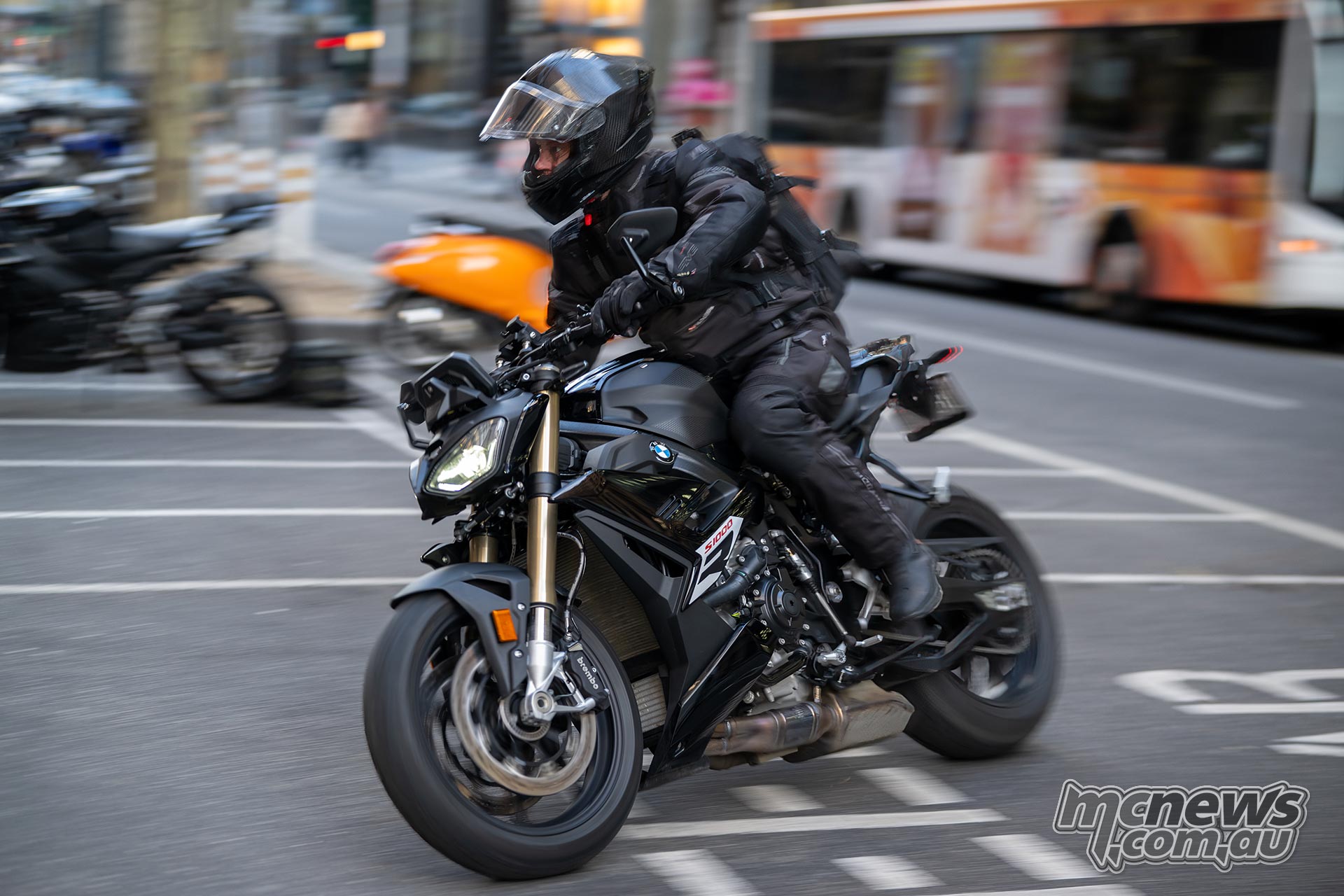 Despite being a little taller and roomier than the Hornet SP I was just on, it’s still friendly and agile.
The driveline really is a smooth operator.
It’s a terrific engine, and while the horsepower figures always seem to get the glory, it’s the 114 Nm of torque here that seems most important. Lovely power curve, super smooth, even right off the bottom. Even though this is not the big dog engine, this donk is more than worthy.
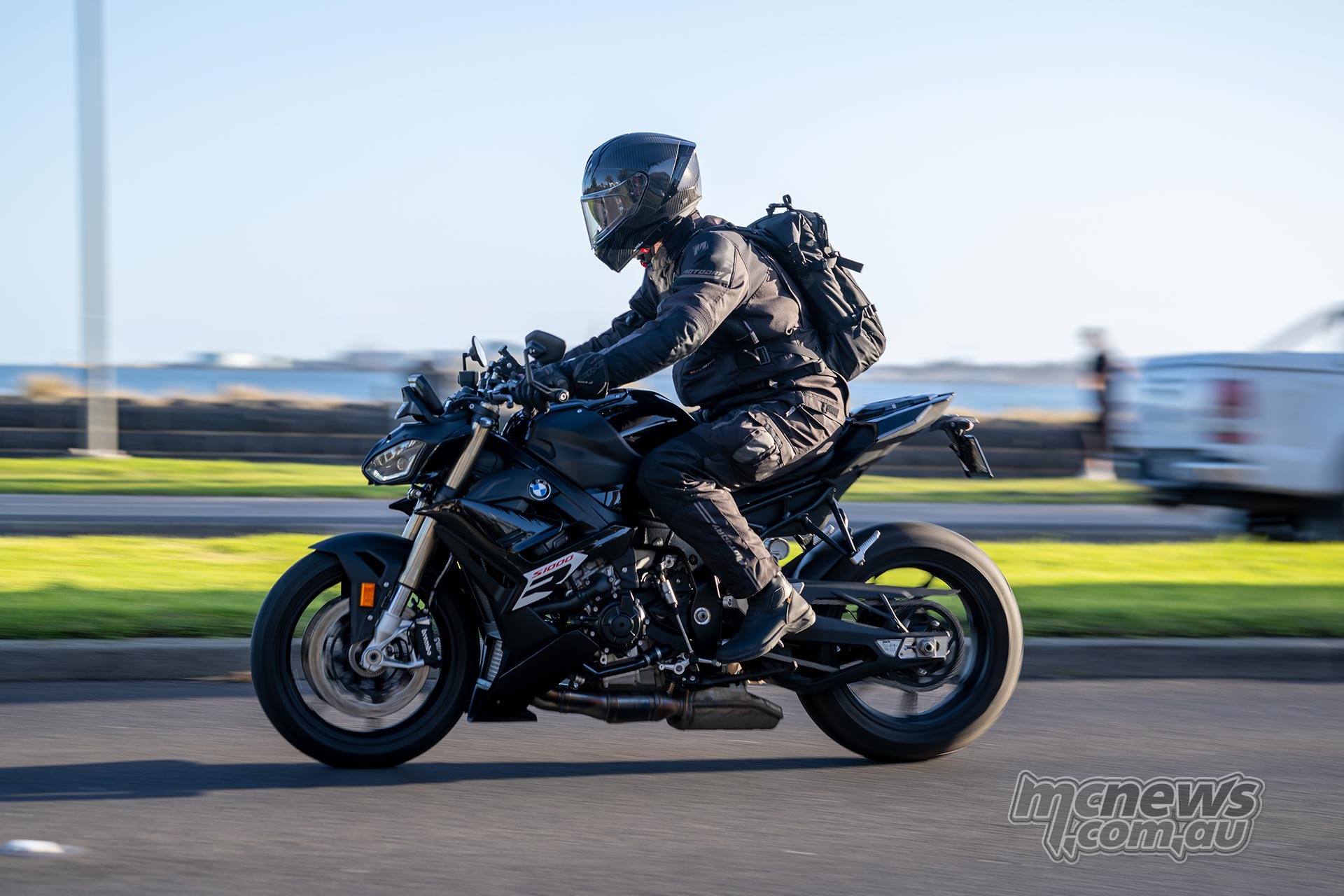 Totally at home in almost all environments. Commuting on it was an enjoyable thing.
When dropped into Dynamic Pro mode, which alters the mapping for a little extra urgency, it emits the most delicious pops and burbles on deceleration, even from the stock muffler. Ray-Cee. Me likey.
Now, there are some who say it still needs more power to compete with other hypernaked motorcycles that are pushing out over 200 horsepower. Bikes like the Ducati Streetfighter or Aprilia Tuono V4. But I’m here to tell you that’s rubbish. It has more than enough. Besides, that’s what the full-fat M model is for if you think that’s what you need.
 No shortage of power on the S 1000 R. Certainly not for everyday needs.
In fact, and this will really upset some folks… judging by the amount of fun I had on Honda’s CB1000 Hornet SP recently, which comes with ‘only’ 155 ponies. I reckon BMW could differentiate the models even further in the power stakes.
Surely I’m not the only one who would be just as happy with the S 1000 R having 140-150 hp? I can hear the spec sheet warriors frothing already, but hear me out. If BMW lopped a cylinder off the shift cam engine, they’d have a mighty 750 punching out those numbers that they could also use for World Supersport racing. Just a thought…
 But I do quietly wonder what a three-cylinder S 750 R might be like…
The gearbox and quick shift are interesting in that while the upshift is damn near faultless (as I found on the M when I tested it), I found my test bike to be a little reluctant on the downshift at around town speeds and revs; and I didn’t really like the gear lever feel when down shifting either. It felt like it was flexing under my boot, not unlike the last couple of Speed Triples I’ve ridden. That said, a little clutch use easily rectified it.
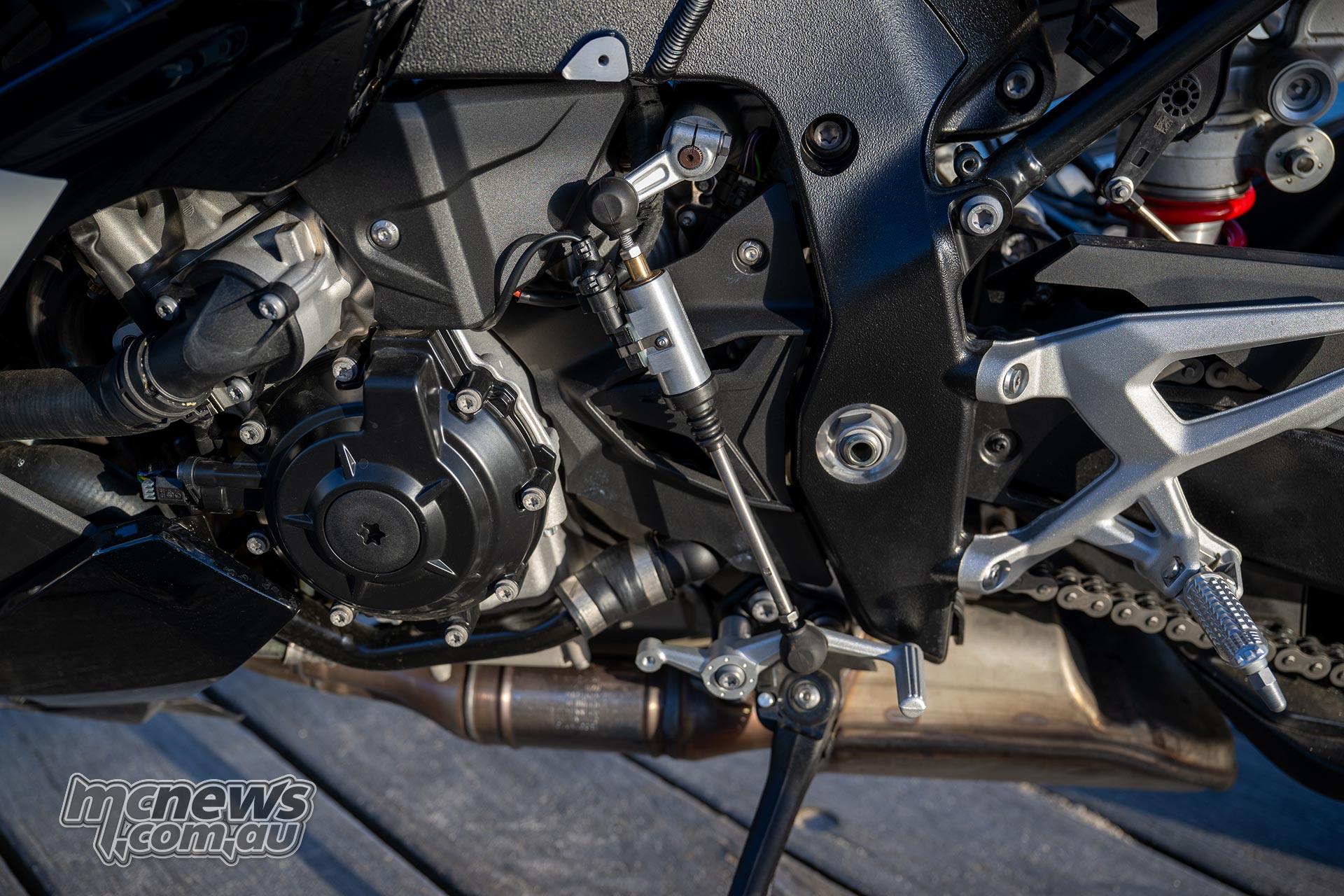 That quickshifter didn’t seem as amazing on this bike compared to the one on either the S 1000 RR or M 1000 R.
The Electronics have also copped an update.
Sporting the latest generation of the BMW electronics suite, the R gets the latest addition of engine braking control, as well as the standard array of rider modes and aids.
For those unfamiliar with BMW’s standard dash and menu setup, the dash is one of the cleaner and easier to read ones available – I rate it. I’m not overly enamoured with the scroll wheel setup, but it is functional enough.
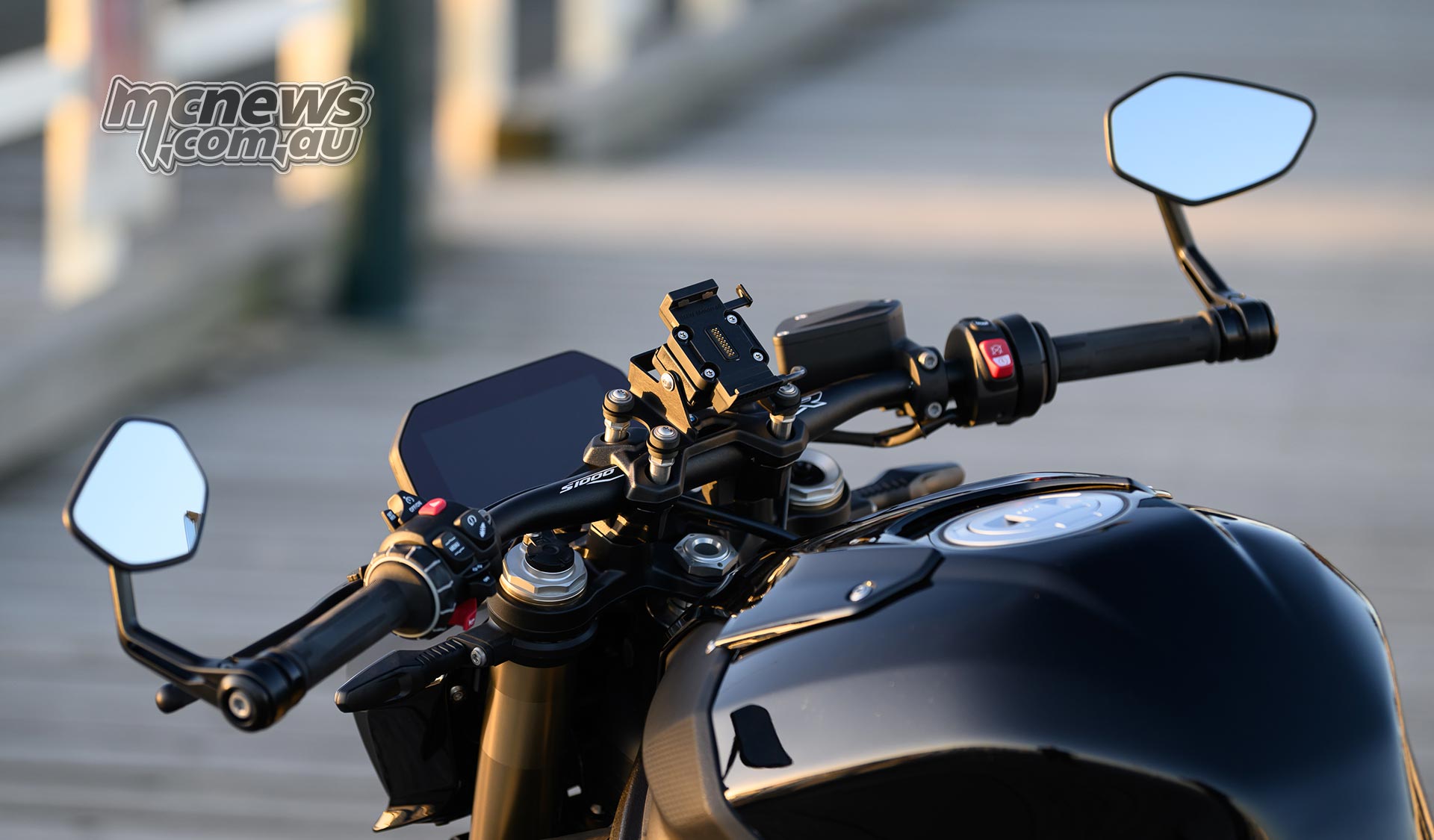 BMW cockpits are about as good as they come.
The S 1000 R comes with a bevy of ride modes available to be ‘shortlisted’ from within the menu and then switched quickly via the mode button on the right-hand switch block. While I found plain old Road mode to be just fine for cruising around and during chilled commuting, Dynamic Pro is the one you want if you’re feeling frisky.
That mode allows you to fully customise your Throttle Response, Engine Braking, TC and Wheelie control settings to your liking and remembers them as you switch in and out of the mode, which is always going to get a tick from me. I personally preferred the throttle response dialled down a little from maximum in that mode.
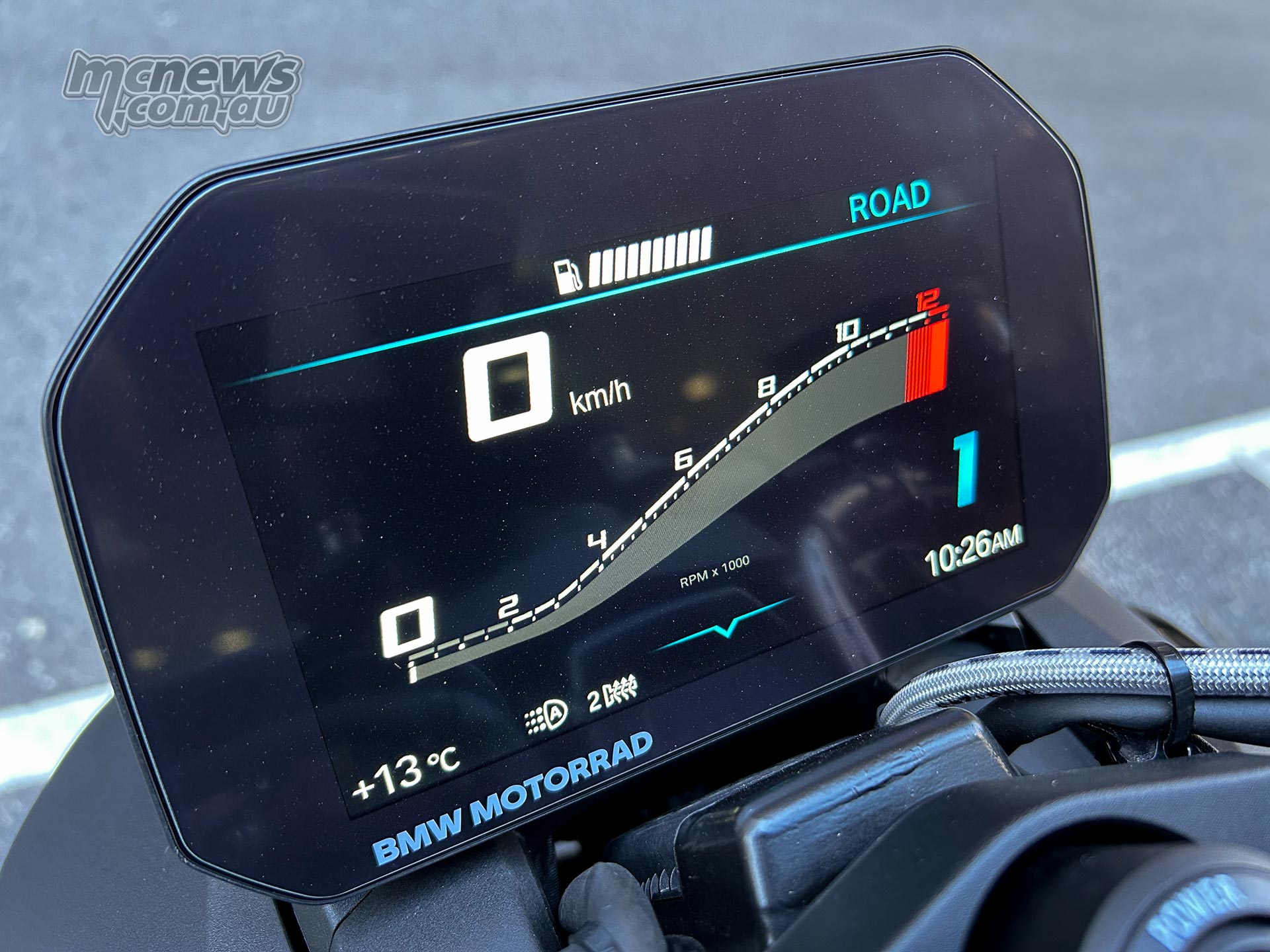 Really clean TFT layout, with adjustable ride mode settings for the ‘Pro’ modes.
Dynamic Suspension and Handling.
The electronics also make their presence felt from a suspension perspective, with the ability to adjust the Semi-Active Suspension within each of the Riding modes to a tune that suits you and your mood.
I found the range of adjustment to be more than adequate for everyday road riding, and I actually preferred the softer Road Setting over Dynamic, which was overly harsh on rough roads.
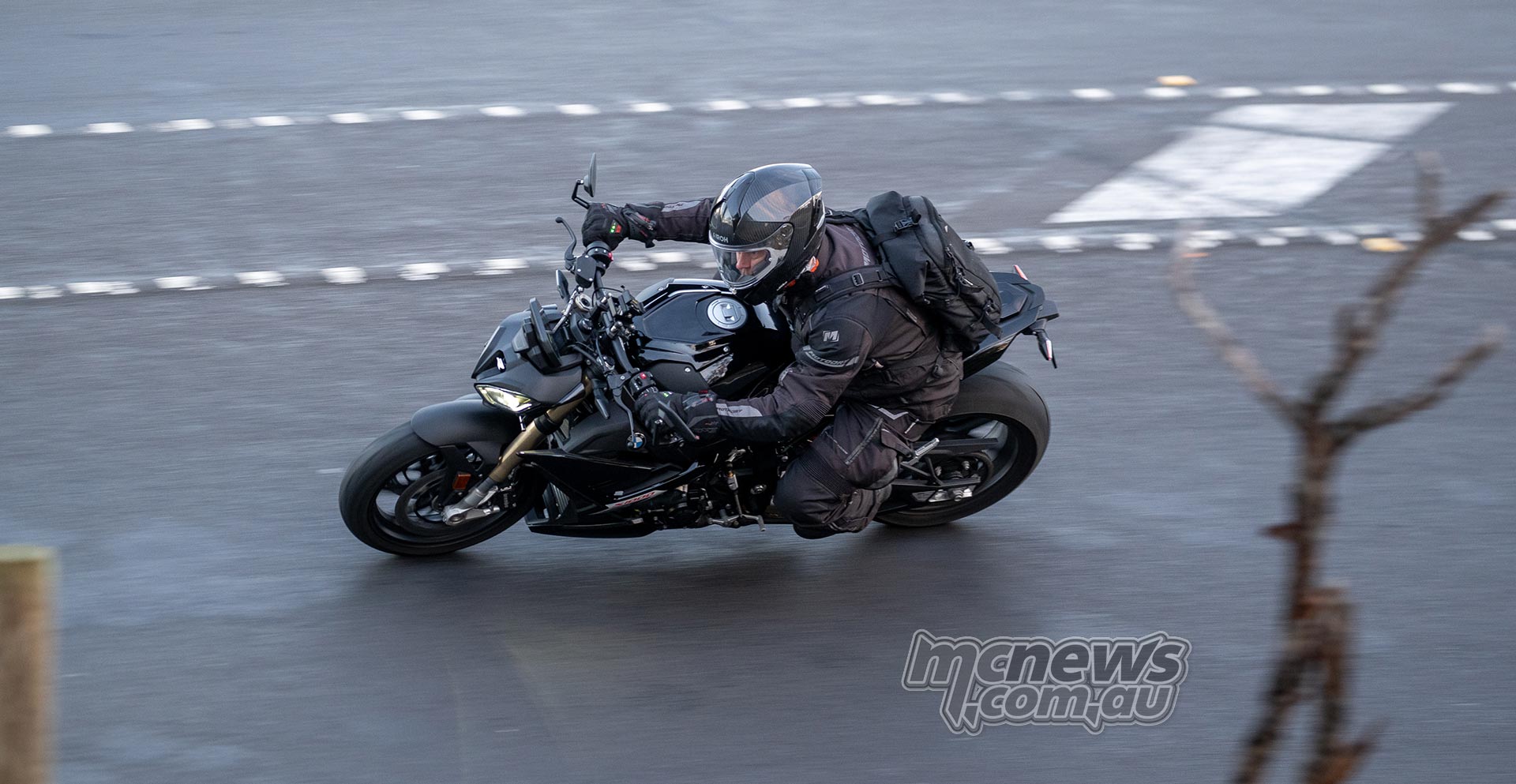
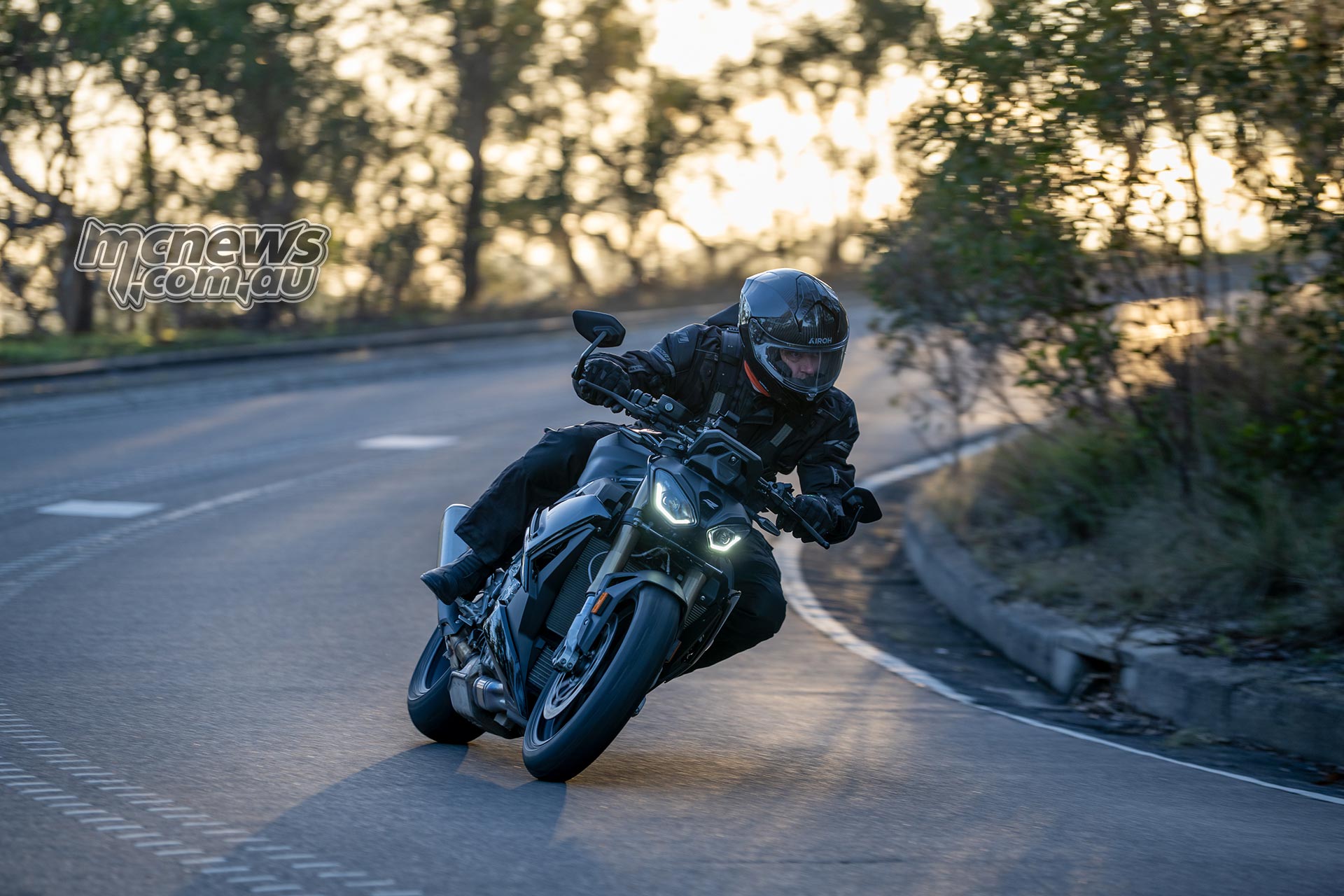 Cold, damp-ish morning and a 170 hp engine with a quick action throttle makes for a cautious Wayno…
I’ve no doubt that if I were to do a track day, though, I’d be flicking to that Dynamic setting for sure… Worth noting that the preload adjustment is still manual. I didn’t feel the need to change anything there.
What I was a little surprised at was the overall ergonomics and feel of the bike on the road. The seat height of 830 mm, combined with a relatively tall footpeg position, gives it a more pronounced sporty ride position than I was expecting for the standard model.
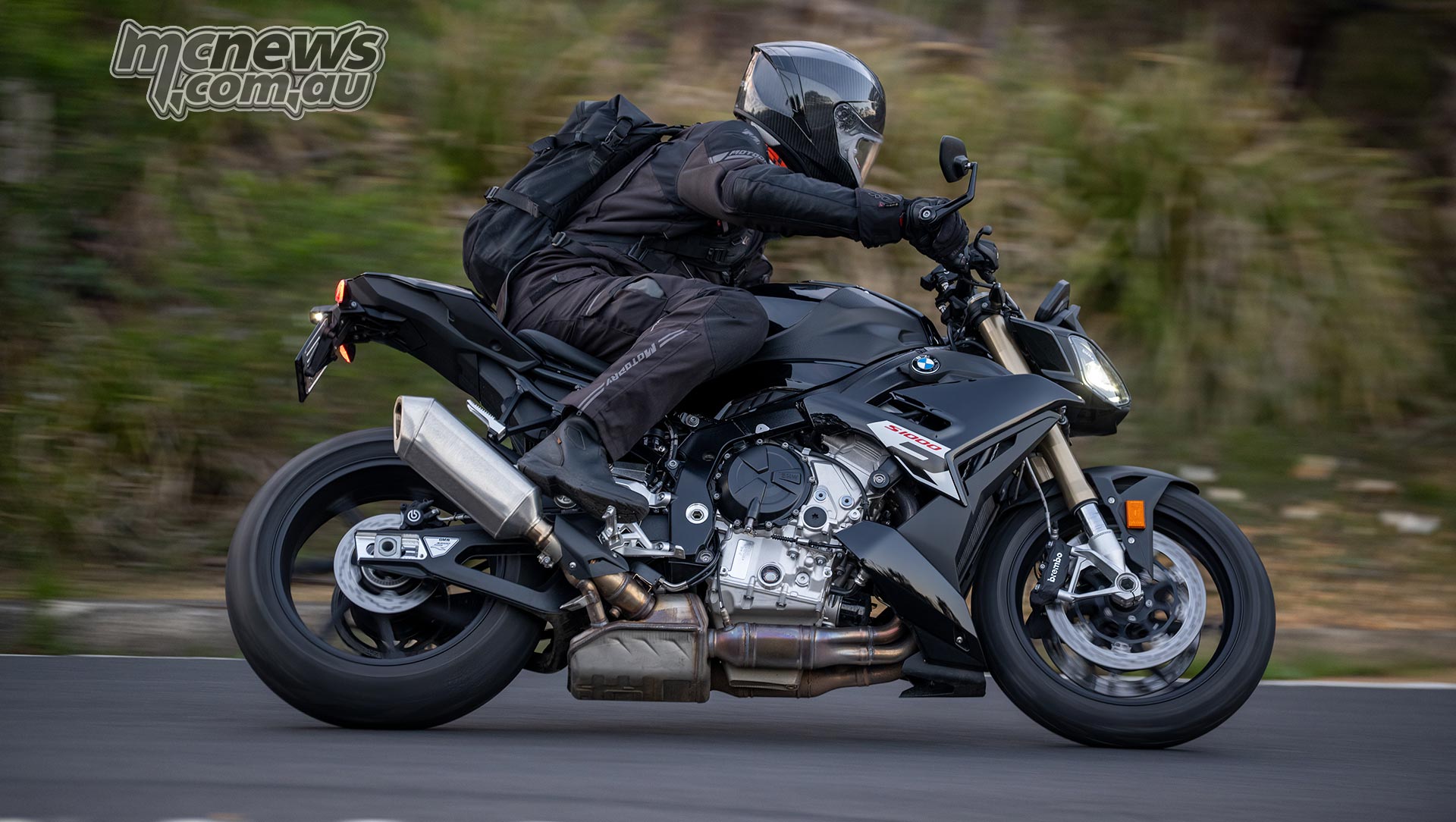 Ride position is a little taller and sportier than I expected.
You definitely feel as though you’re sitting up high. The seat is also not one that I’d be looking forward to doing big days on – 90 minutes was about the point I was happy to get off and stretch my legs out.
On the road, that ride position gives the bike a somewhat ‘serious’ feeling. You definitely engage the grey matter when setting off. This is, of course, reinforced by the 170 hp engine, the quickish-acting throttle and the agile chassis.
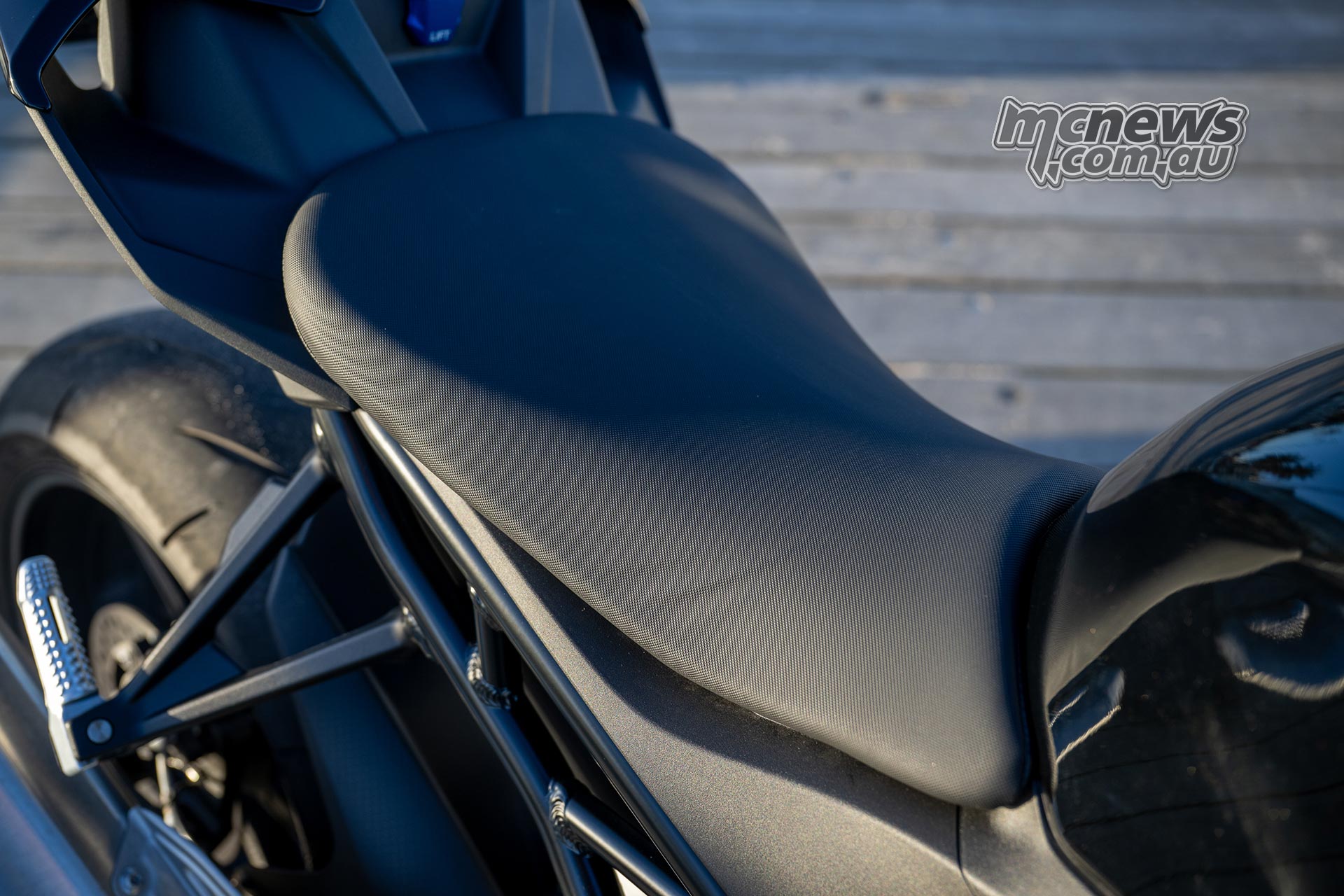 The seat shape was fine, but my legs and butt were glad to have a stretch after 90 minutes.
For reference, it was noticeably different even when stepping off the Hornet SP with 155 hp, that this wasn’t as instantly user-friendly and accessible. The increase of 15 hp at that bracket really can be felt.
But once in the corners, I found the bike more than comfortable to hustle along at decent speeds. Initial change of direction and tip-in is good, and the stock Bridgestone Battlax RS11 tyre profile seems to suit the bike nicely across all riding types. Mid corner especially at normal road speeds I found solid feedback and an easy bike to change lines on if needed.
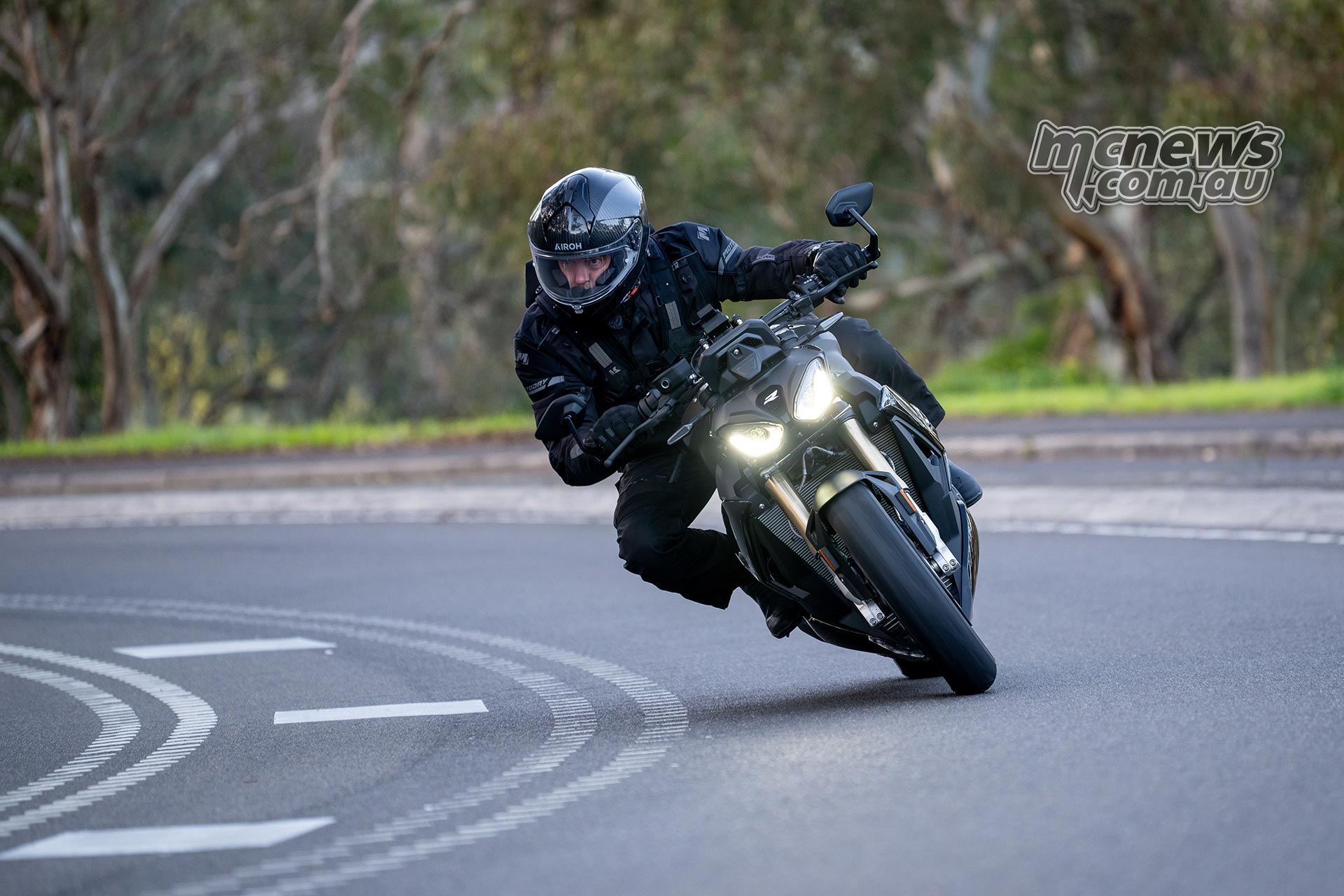 Pretty happy on its side, corner entry as shown here gave plenty of feedback.
In fact, the more I rode the S 1000 R, the happier and more confident I felt. There is definitely something to be said for nice, wide bars and not having as much weight on your wrists compared to race rep sports bikes.
So wassitcostmista?
While the base model S 1000 R starts from $25,155 ride away, and as always, there is a list of options and packages from BMW that’s as long as your arm.
The ‘Race’ spec S 1000 R, as tested here, steps that up to thirty-two and a half thousand big ones and comes pre-loaded with:
- The ‘Comfort Package’ (keyless ride, heated grips, tyre pressure monitoring and cruise control)
- The ‘Dynamic Package’ (quickshifter, semi-active suspension, access to all riding modes and an engine spoiler)
- M Forged wheels, Lightweight battery and Bar end mirrors
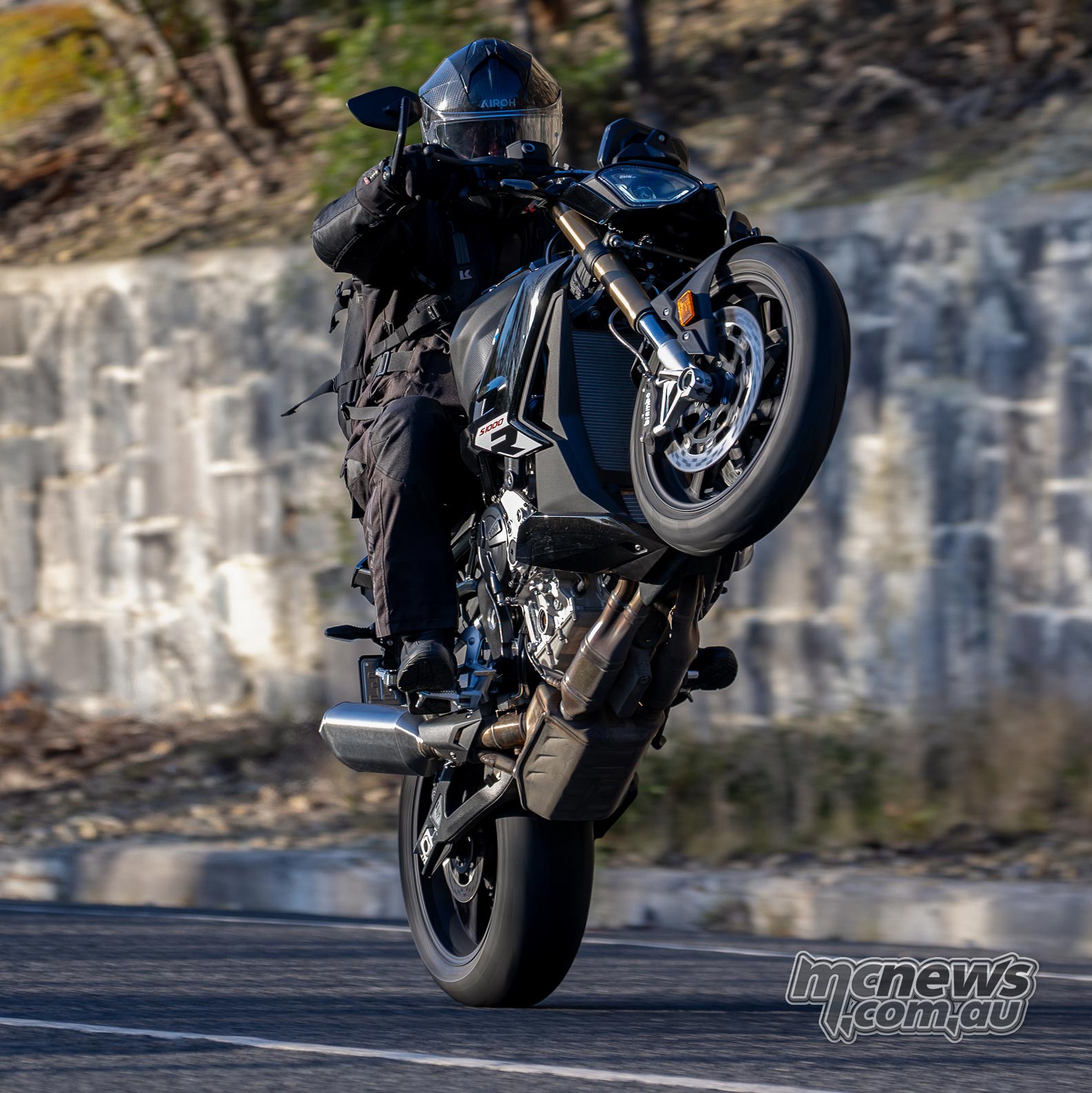 TC and Wheelie Control can be independently adjusted in Dynamic Pro mode for this sort of stuff.
At that price, expectations are obviously very high, and it’s getting into territory that’s awfully close to the full fruit M 1000 R. That’s only an extra four thousand bucks, and of course comes with 210 hp of delirious cam shift engine goodness…
I’m not sure if that makes the S (Race) spec seem expensive by comparison or the M seem like a bargain! Either way, they’re both seriously good bikes.
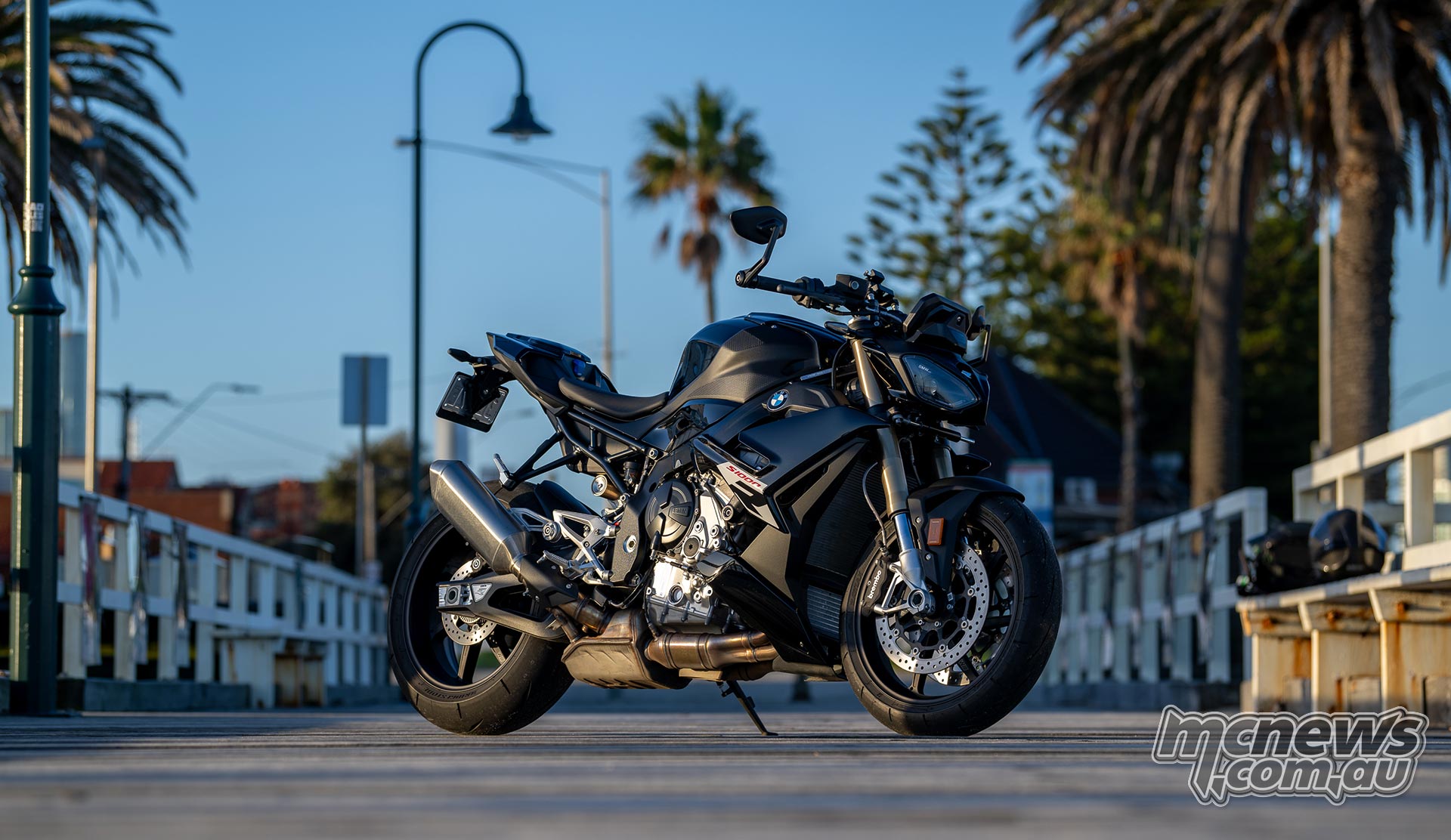 This or the M? The Race package puts it pretty close dollar-wise…
BMW S 1000 R (Race) hits
- Particularly well executed styling update.
- Sharper engine performance than the outgoing model.
- A good blend of sporty capability and real-world rideability.
- Quality BMW build and tech.
BMW S 1000 R (Race) misses
- Seat comfort isn’t amazing after 90 minutes.
- Quickshifter is not awesome for downshifting around town.
- Ride position might be too sporty on the legs for some.
- It’s now very close to the M1000Rs in this spec, isn’t it…
For more information, head to the BMW Motorrad Australia website.
2025 BMW S 1000 R Specifications
| 2025 BMW S 1000 R Specifications | |
| Engine | Water/oil-cooled inline-4-cylinder, four-stroke engine |
| Capacity | 999 cc |
| Bore/Stroke | 80/49.7 mm |
| Power | 125 kW/170 hp @ 11000 rpm |
| Torque | 114 Nm @ 9250 rpm |
| Compression/fuel | 12.5:1 / Premium unleaded (max. 5 % ethanol, E5) 93-98 ROZ/RON |
| Valve control | DOHC (double overhead camshaft), |
| Valve actuation | Single rocker arm |
| Valves per cylinder | 4 |
| Intake/outlet | 33.5/27.2 mm |
| Throttle valve | 48 mm |
| Engine control | BMS-O |
| Emission control | Regulated three-way catalytic converter |
| Generator | 330 W |
| Clutch | Multiplate clutch in oil bath, anti-hopping clutch, with self-reinforcement, mechanically activated |
| Gearbox | Claw-shifted 6-speed gearbox |
| Primary ration | 1.652 |
| Transmission ratios | I 2.647; II 2.091; III 1.727; IV 1.476; V 1.304; VI 1.167; |
| Secondary drive/ratio | 525/2.706 |
| Frame | Bridge-type frame, cast aluminium, load-bearing engine |
| Front Suspension | Upside-Down-telescopic fork, diameter 45 mm, spring preload, rebound and compression stages adjustable, SA DDC: damping electronically adjustable |
| Rear Suspension | Aluminium swing arm, full-floater pro, central spring strut, spring, preload, rebound and compression stages adjustable, SA DDC: damping electronically adjustable |
| Suspension travel | 120/117 mm F/R |
| Brakes front | Twin disc brake, Ø 320 mm, 4-piston fixed caliper |
| Brakes rear | Single disc brake, Ø 220 mm, 1-piston floating caliper |
| ABS | BMW Motorrad ABS Pro, partial integral |
| Wheels | Aluminium cast wheels, 3.50 x 17″, 6.00 x 17″ |
| Tyres | F/R 120/70 ZR17, 190/55 ZR17 |
| Wheel castor | 97.6 mm |
| Wheel base | 1447 mm |
| Steering head angle | 65.8° |
| Total length | 2085 mm |
| Total width | 812 mm |
| Seat height | 830 mm |
| Weight, road ready | 199 kg |
| Tank capacity | 16.5 L |
| Fuel consumption (WMTC) | 6.2 L/100 km |
| CO2 g/km | 144 |
| Acceleration | 3.2 s 0–100 km/h |
| Top speed | >250 km/h |
2025 BMW S 1000 R Race Images
Images by RbMotoLens

2025-BMW-S-1000-R-Race-Review-59

2025-BMW-S-1000-R-Race-Review-57

2025-BMW-S-1000-R-Race-Review-76

2025-BMW-S-1000-R-Race-Review-45

2025-BMW-S-1000-R-Race-Review-75

2025-BMW-S-1000-R-Race-Review-74

2025-BMW-S-1000-R-Race-Review-73

2025-BMW-S-1000-R-Race-Review-72

2025-BMW-S-1000-R-Race-Review-71

2025-BMW-S-1000-R-Race-Review-70

2025-BMW-S-1000-R-Race-Review-69

2025-BMW-S-1000-R-Race-Review-68

2025-BMW-S-1000-R-Race-Review-67

2025-BMW-S-1000-R-Race-Review-66

2025-BMW-S-1000-R-Race-Review-65

2025-BMW-S-1000-R-Race-Review-64

2025-BMW-S-1000-R-Race-Review-63

2025-BMW-S-1000-R-Race-Review-62

2025-BMW-S-1000-R-Race-Review-61

2025-BMW-S-1000-R-Race-Review-60

2025-BMW-S-1000-R-Race-Review-58

2025-BMW-S-1000-R-Race-Review-56

2025-BMW-S-1000-R-Race-Review-55

2025-BMW-S-1000-R-Race-Review-54

2025-BMW-S-1000-R-Race-Review-53

2025-BMW-S-1000-R-Race-Review-52

2025-BMW-S-1000-R-Race-Review-51

2025-BMW-S-1000-R-Race-Review-50

2025-BMW-S-1000-R-Race-Review-49

2025-BMW-S-1000-R-Race-Review-48

2025-BMW-S-1000-R-Race-Review-47

2025-BMW-S-1000-R-Race-Review-46

2025-BMW-S-1000-R-Race-Review-44

2025-BMW-S-1000-R-Race-Review-43

2025-BMW-S-1000-R-Race-Review-42

2025-BMW-S-1000-R-Race-Review-41

2025-BMW-S-1000-R-Race-Review-40

2025-BMW-S-1000-R-Race-Review-39

2025-BMW-S-1000-R-Race-Review-38

2025-BMW-S-1000-R-Race-Review-37

2025-BMW-S-1000-R-Race-Review-36

2025-BMW-S-1000-R-Race-Review-35

2025-BMW-S-1000-R-Race-Review-34

2025-BMW-S-1000-R-Race-Review-33

2025-BMW-S-1000-R-Race-Review-32

2025-BMW-S-1000-R-Race-Review-31

2025-BMW-S-1000-R-Race-Review-30

2025-BMW-S-1000-R-Race-Review-29

2025-BMW-S-1000-R-Race-Review-28

2025-BMW-S-1000-R-Race-Review-27

2025-BMW-S-1000-R-Race-Review-26

2025-BMW-S-1000-R-Race-Review-25

2025-BMW-S-1000-R-Race-Review-24

2025-BMW-S-1000-R-Race-Review-23

2025-BMW-S-1000-R-Race-Review-22

2025-BMW-S-1000-R-Race-Review-21

2025-BMW-S-1000-R-Race-Review-20

2025-BMW-S-1000-R-Race-Review-19

2025-BMW-S-1000-R-Race-Review-18

2025-BMW-S-1000-R-Race-Review-17

2025-BMW-S-1000-R-Race-Review-16

2025-BMW-S-1000-R-Race-Review-15

2025-BMW-S-1000-R-Race-Review-14

2025-BMW-S-1000-R-Race-Review-13

2025-BMW-S-1000-R-Race-Review-12

2025-BMW-S-1000-R-Race-Review-11

2025-BMW-S-1000-R-Race-Review-10

2025-BMW-S-1000-R-Race-Review-9

2025-BMW-S-1000-R-Race-Review-8

2025-BMW-S-1000-R-Race-Review-7

2025-BMW-S-1000-R-Race-Review-6

2025-BMW-S-1000-R-Race-Review-5

2025-BMW-S-1000-R-Race-Review-4

2025-BMW-S-1000-R-Race-Review-3

2025-BMW-S-1000-R-Race-Review-2

2025-BMW-S-1000-R-Race-Review-1

2025-BMW-S-1000-R-Race-Review-1



 English (US) ·