
.png) 6 months ago
129
6 months ago
129
ARTICLE AD BOX
BMW R 1300 R / RS / RT Review
BMW’s heavily overhauled 1300 cc boxer engine has now been rolled out to its three more road-oriented models after first appearing in the all-important GS and GSA Adventure models last year.
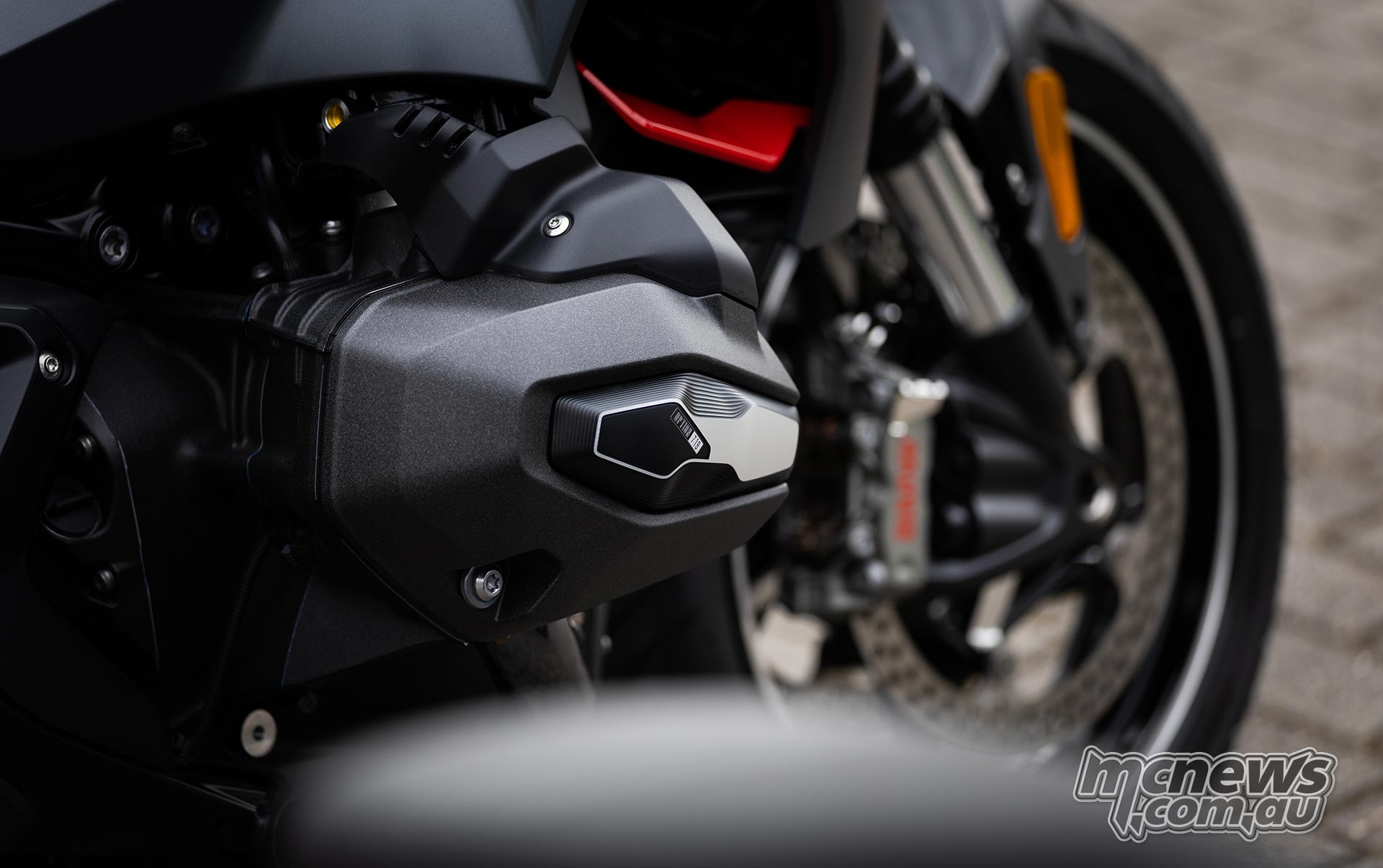 The latest generation Boxer makes a strong 145 hp at 7750 rpm and a huge 149 Nm of torque by 6500 rpm
The 1300 is far and away the Munich brand’s most important engine, with over 50 per cent of BMW Motorrad sales coming from the two Adventure bikes, and a further 15 per cent coming from these road models. So this engine alone powers two-thirds of all the bikes BMW sells in Australia.
 The R is the Roadster of the trio and at $22,200 +ORC is the affordable starting point into Boxer goodness
MCNews.com.au was invited to the Australian launch of the R 1300 R, RS and RT variants in Victoria, to compare and contrast the three road-going models and see just how well the new 1300 donk performs in the tarmac-only role.
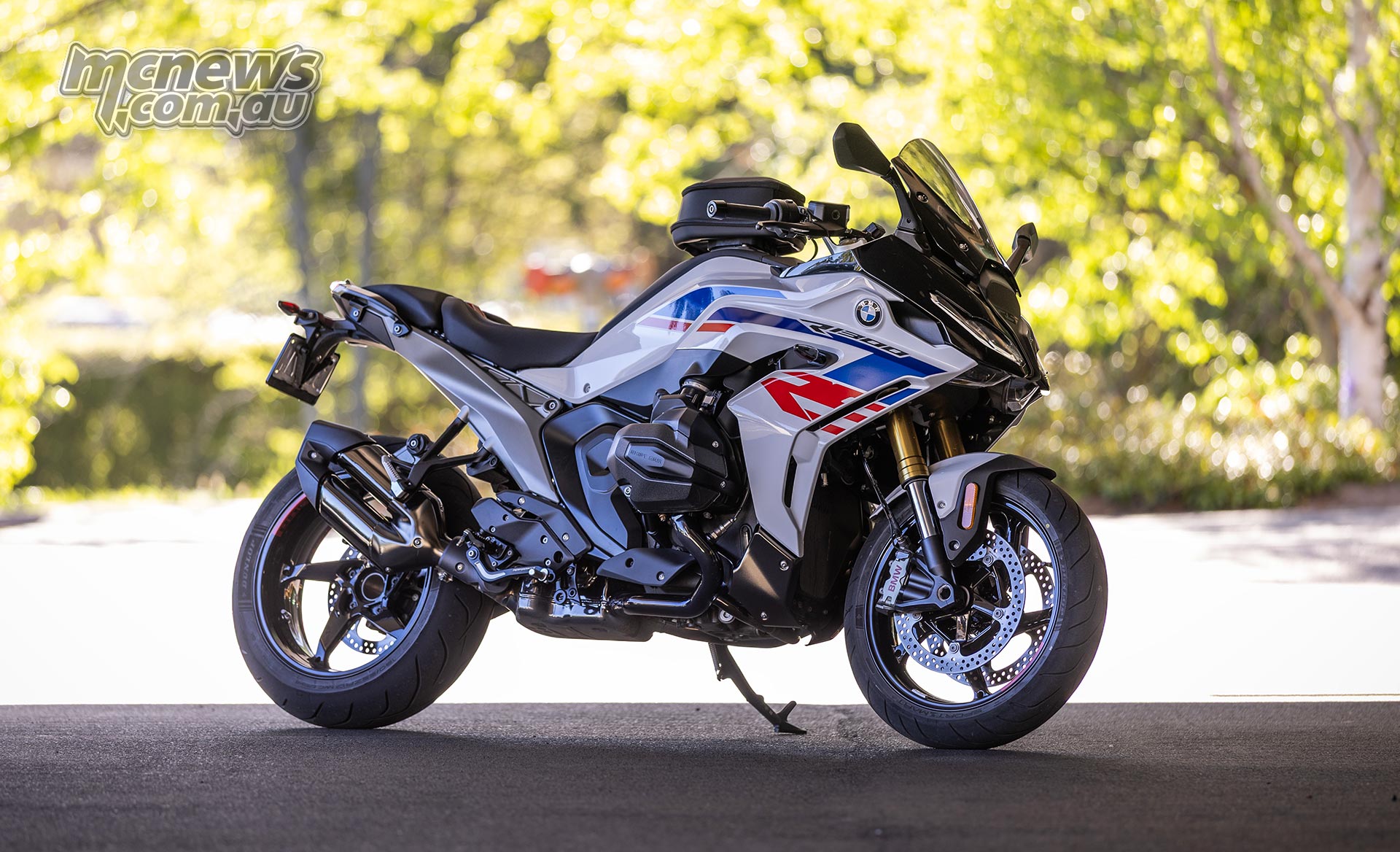 The RS is the sporty sports-touring option
I came away not just impressed with each bike in their own right, but with a new appreciation of just how much difference can be felt from what can seem like relatively minor changes to ride position and chassis geometry.
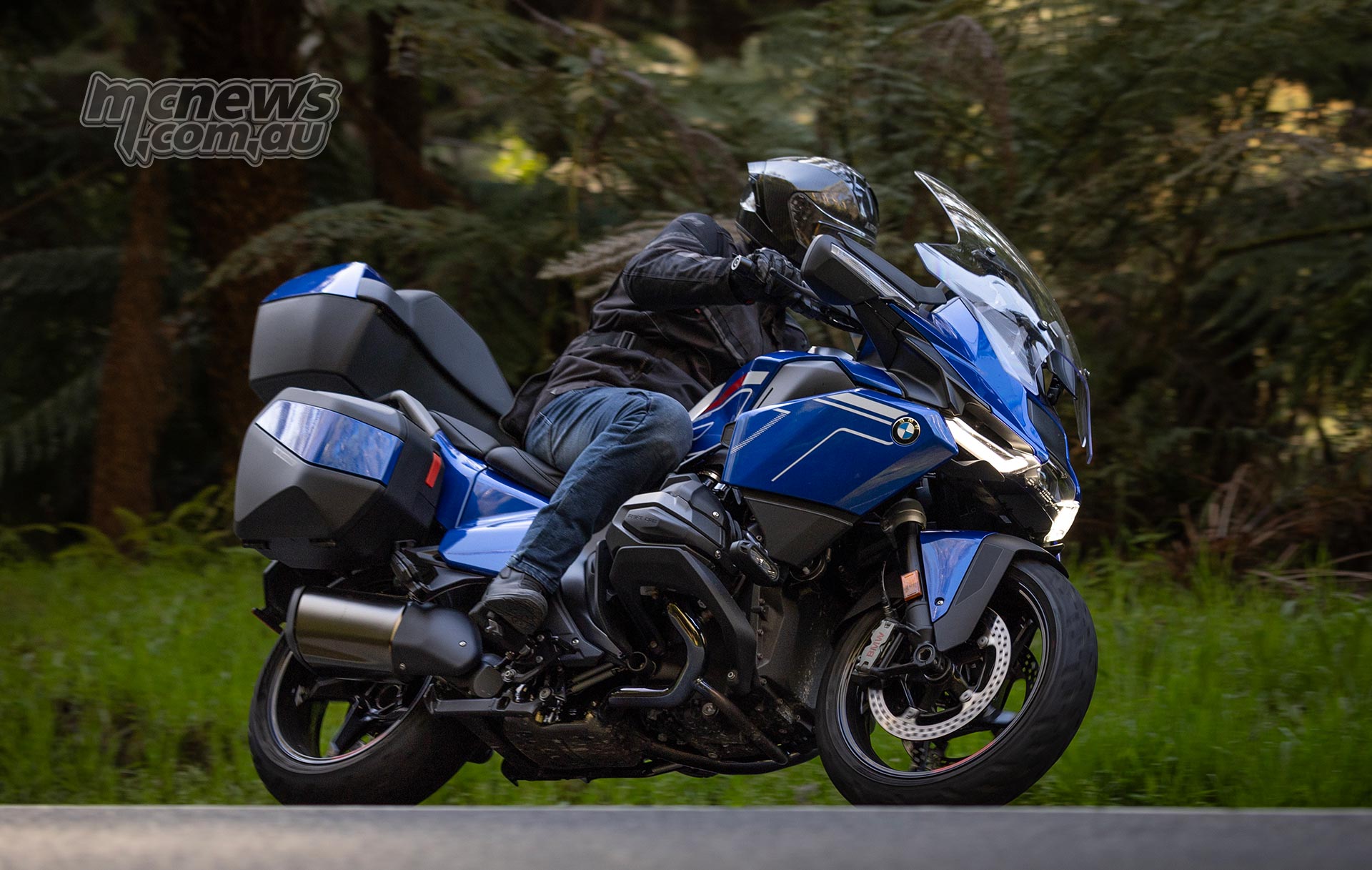 The R 1300 RT is the full tourer but retains a sporting bent
I also now have a new personal favourite boxer-engined BMW. And based on what I know, it will be a highly controversial opinion that a substantial number of GS owners are missing out on what is arguably a better road bike. More on that later…
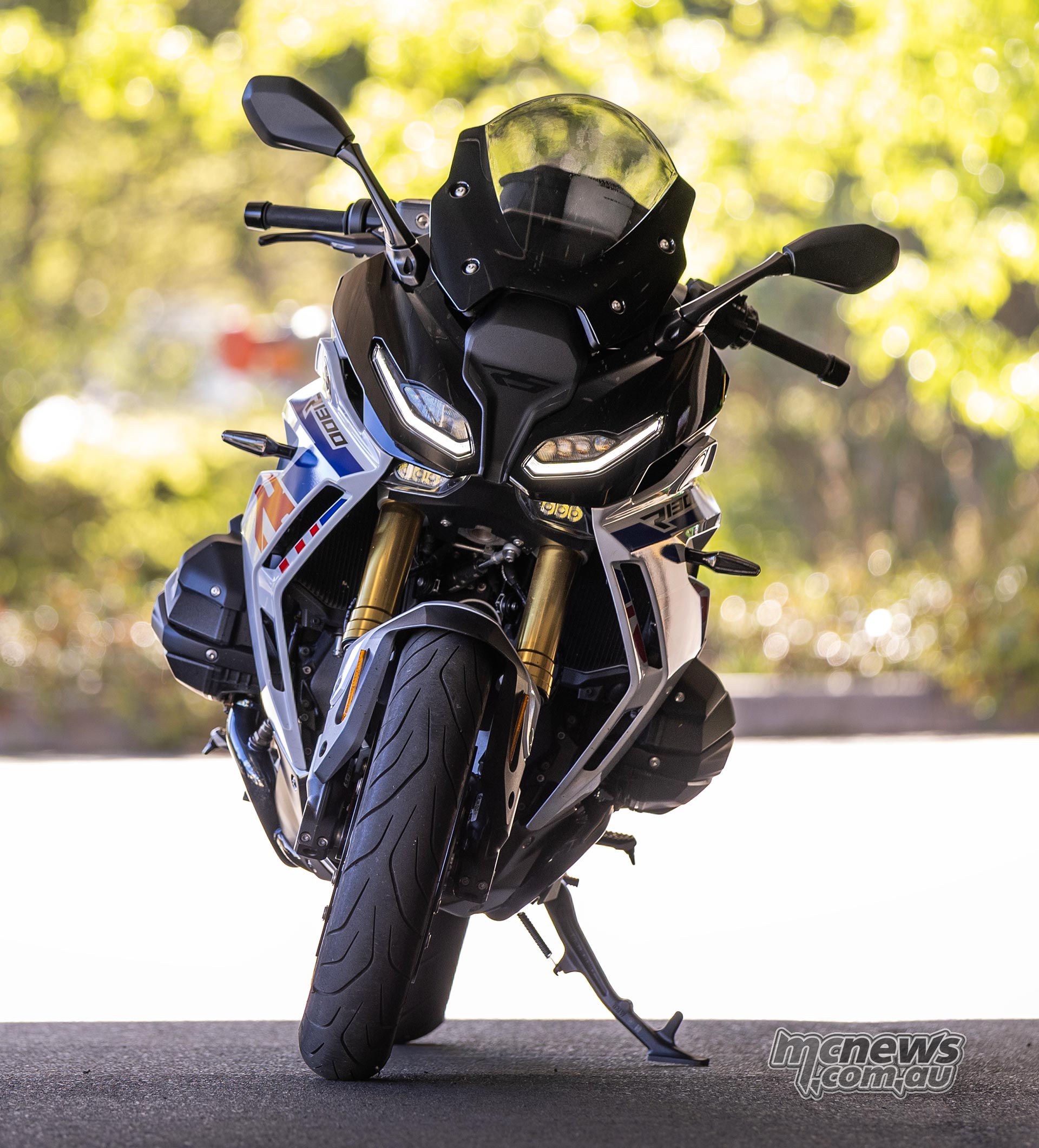 RS strikes a pose between the R and the RT
The three models in question
For the uninitiated, the three models can be summarised as follows:
The R model. The naked roadster sports bike. A little bit of boxer-powered streetfighter. Wide bars in a lower position (compared to the other two) make this the sportiest ride of the three.
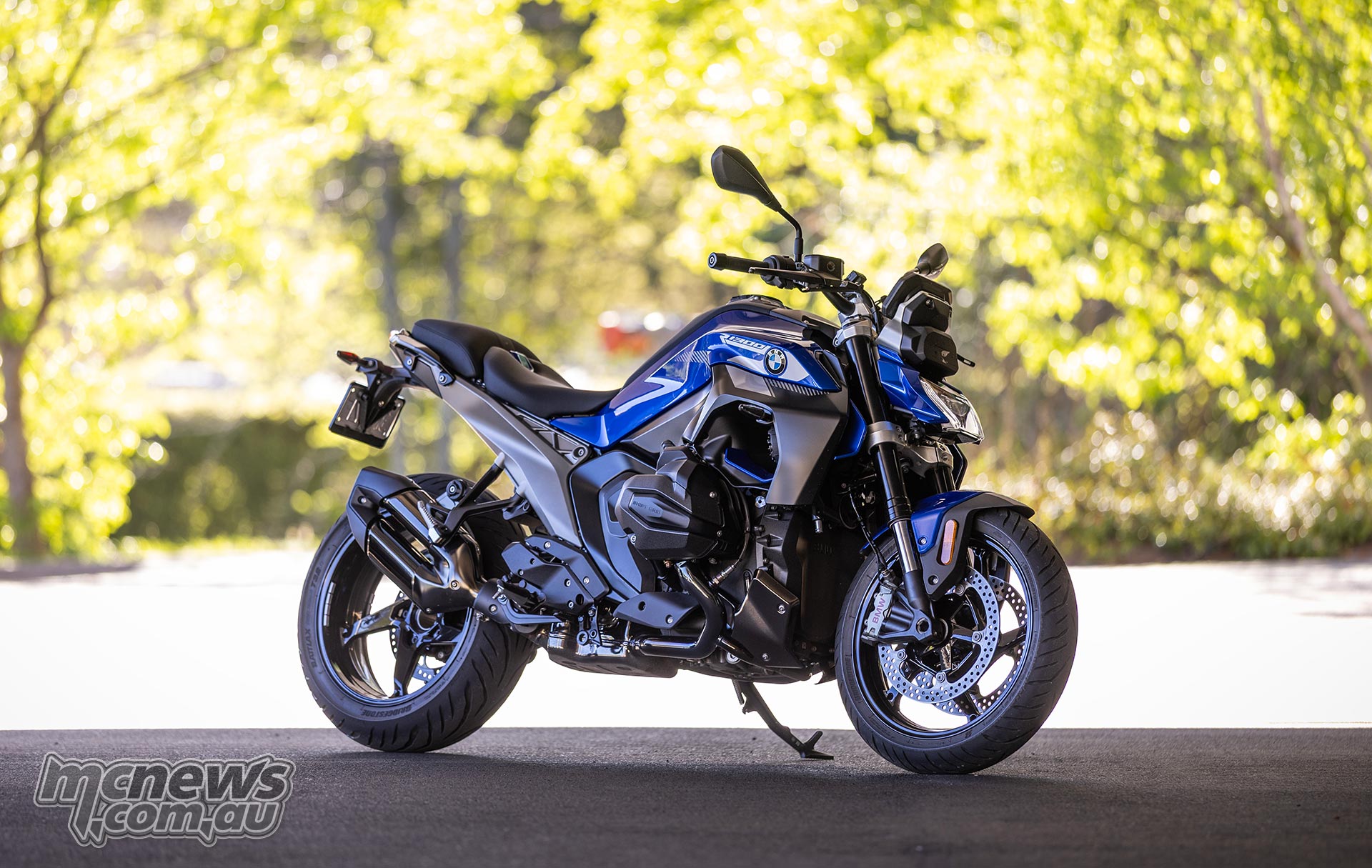 R 1300 R is 227 kg dry and by far the most affordable
The RS model. The Sports Tourer. Slightly more relaxed riding position compared to the R – with some fairings thrown in for even more comfort. If the much-loved Honda VFR of old was reincarnated as a BMW boxer, it would be this.
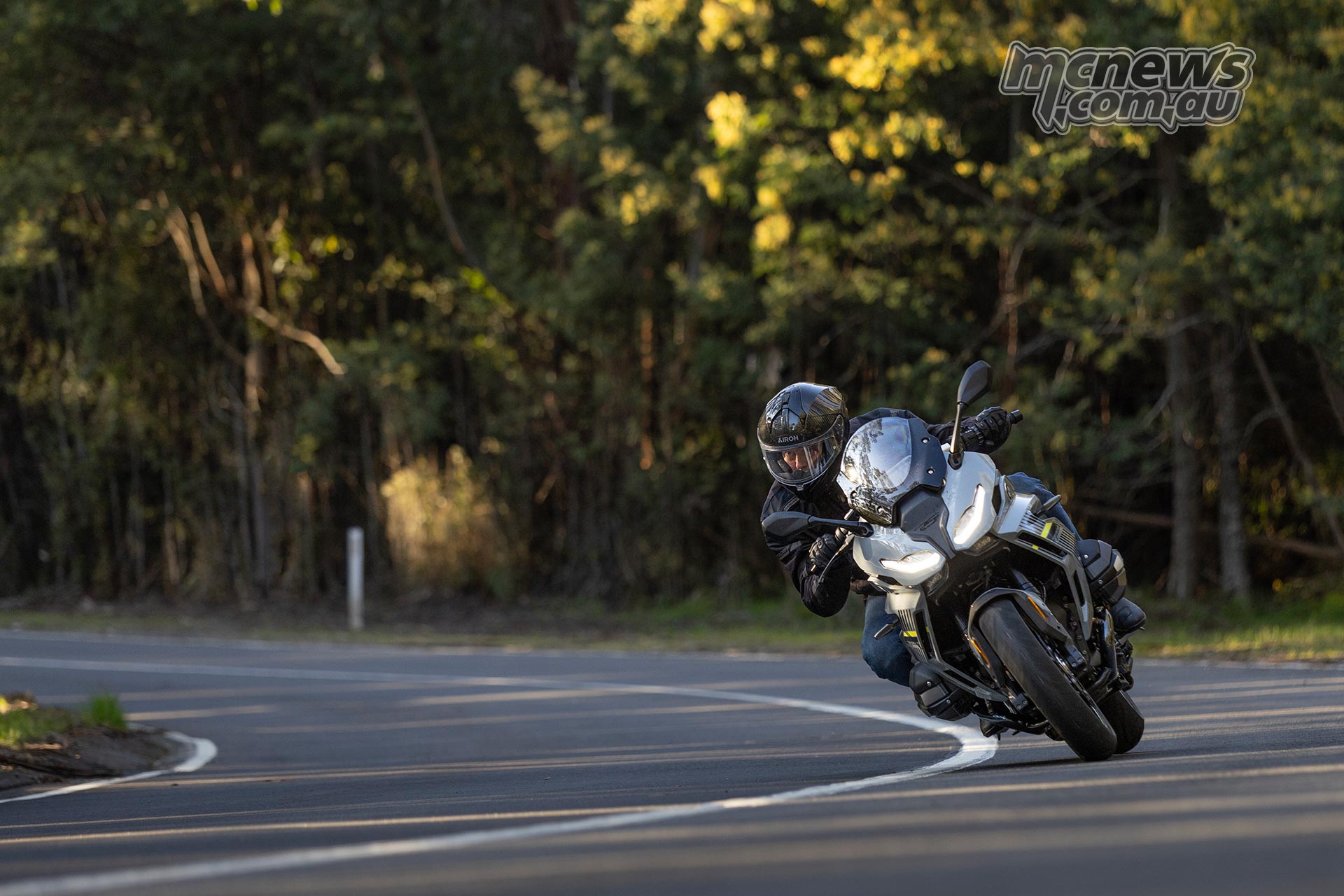 BMW R 1300 RS
The RT model. The Tourer. The most relaxed riding position with all the touring trimmings, including but not limited to that obvious big screen and fairing. Don’t think for a minute that it can’t be hustled along though…
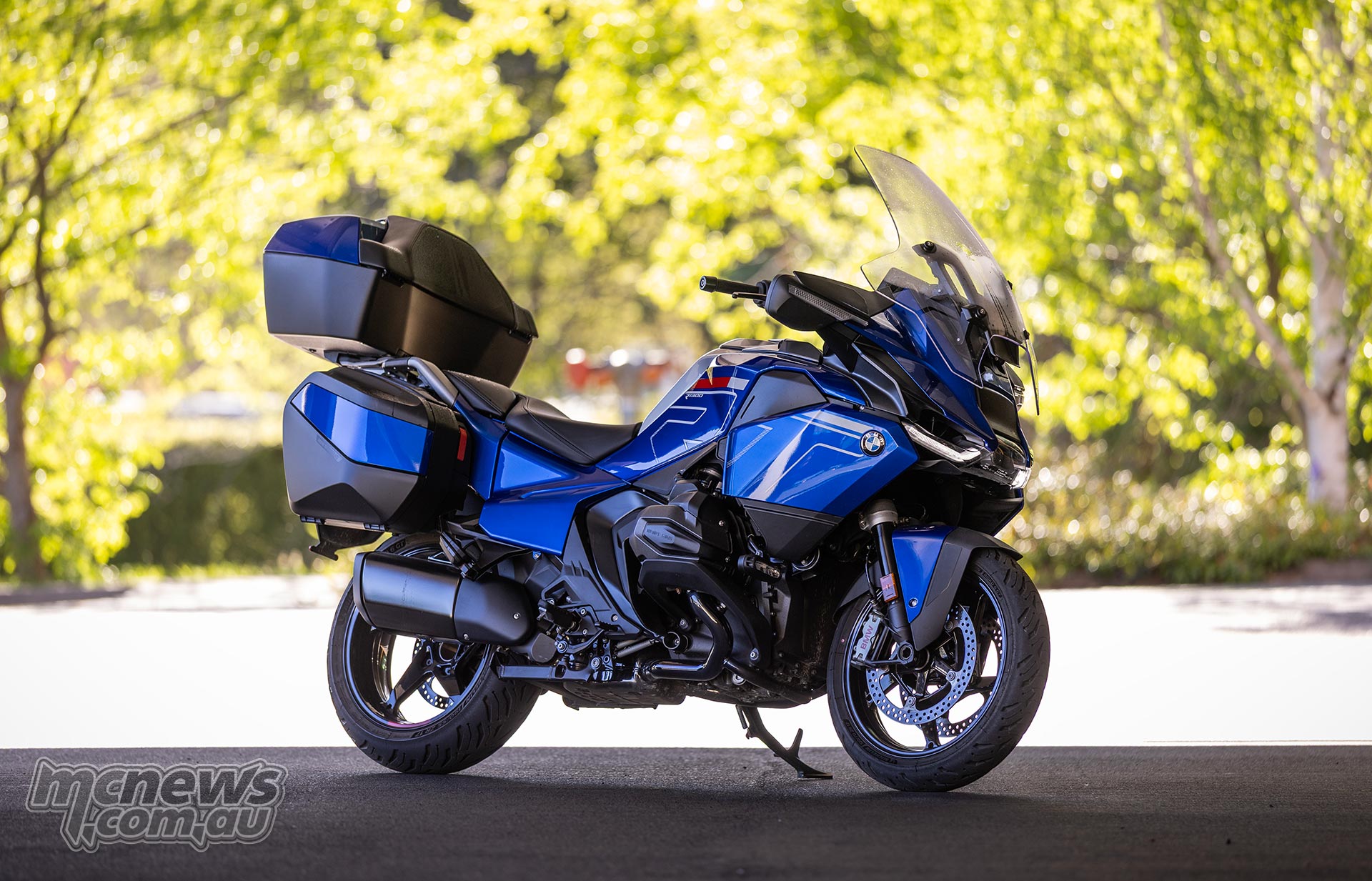 The RT is 265 kg dry but carries that bulk well. Topbox is not standard with the $43,020 ride-away price
Same, same. But different.
As I mentioned in the introduction, all three models share the engine and gearbox with the GS. As well as the main chassis and swing-arm from what I could tell (and what we were told). But despite sharing a central core, each model rides noticeably differently.
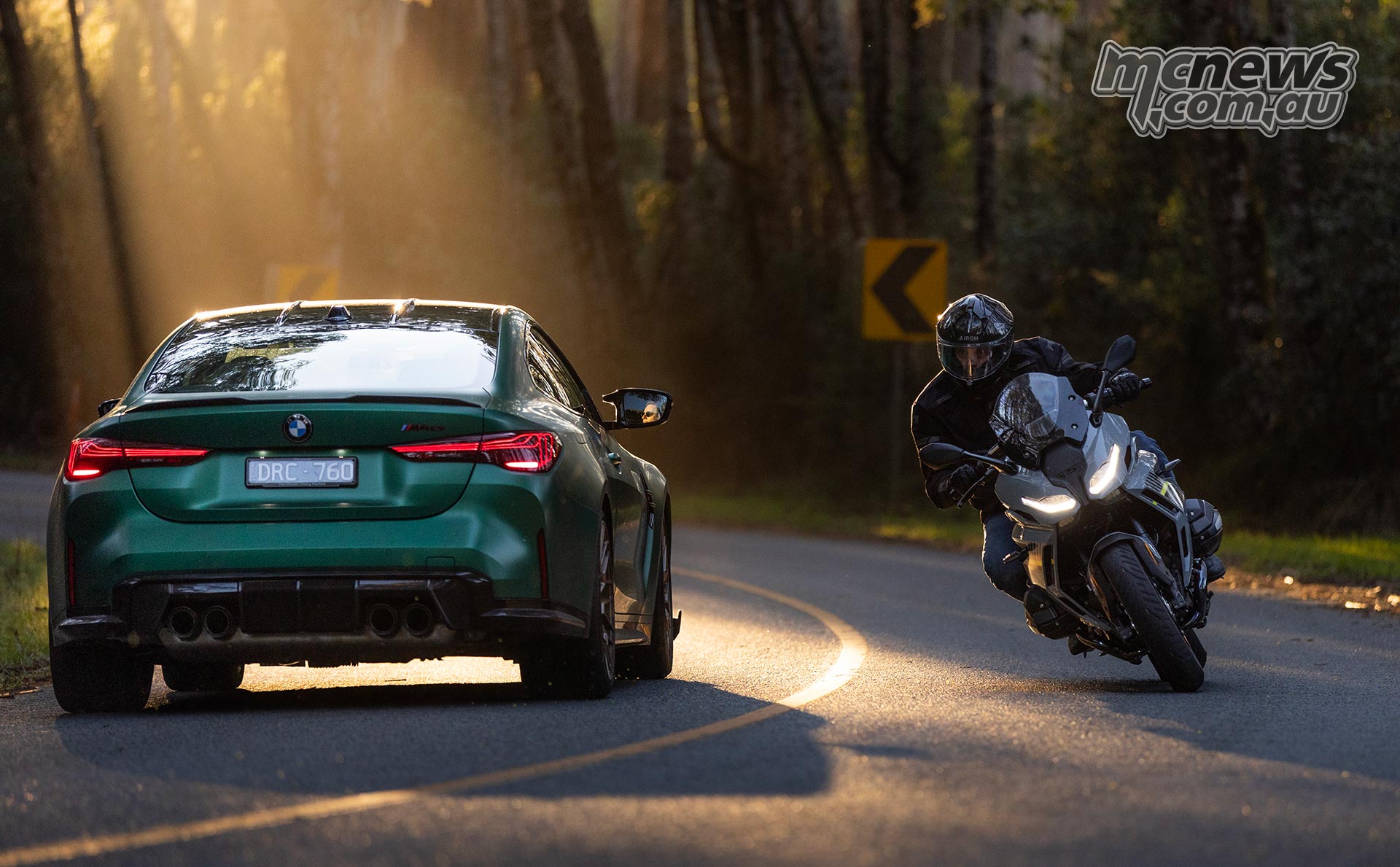 BMW R 1300 RS and the snappers shuttle car for the launch…
That engine, for what it’s worth, remains an absolute powerhouse. 145 hp tells only a small part of the story; it’s the colossal 149 Nm of torque that completes the picture. It is just so incredibly grunty, practically from just above idle.
Beautifully fuelled too. On the road, it’s a joy to twist open the taps and get into that outstanding midrange.
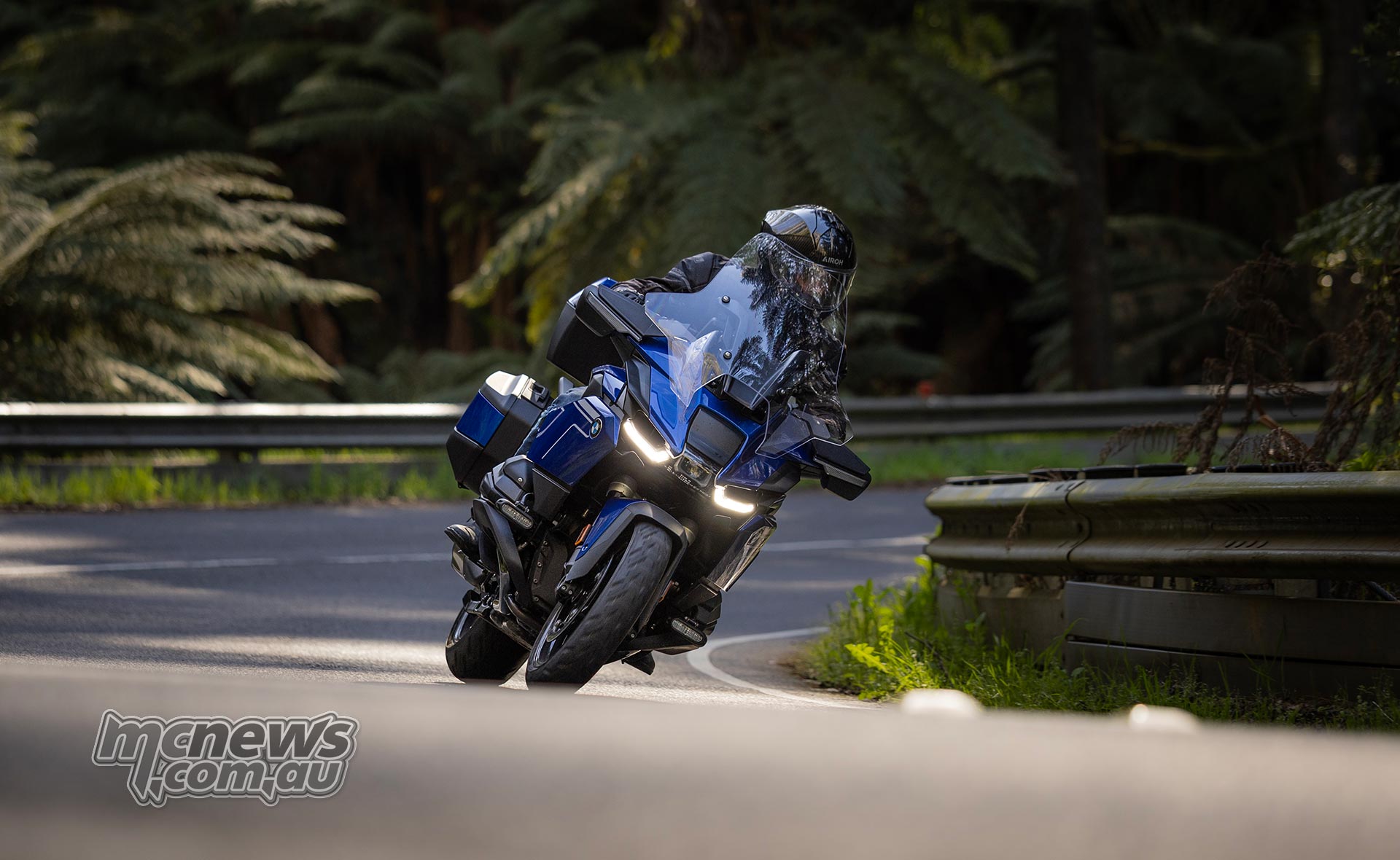 BMW R 1300 RT
While I’ve never been a massive fan of the boxer exhaust note (they’re historically a little underwhelming), I have to admit that even with the standard muffler, both the R and RS models sounded surprisingly good. More than once, when doing photo runs and waiting our turn, some of us were looking at each other in surprise asking ‘is that one of our bikes?’
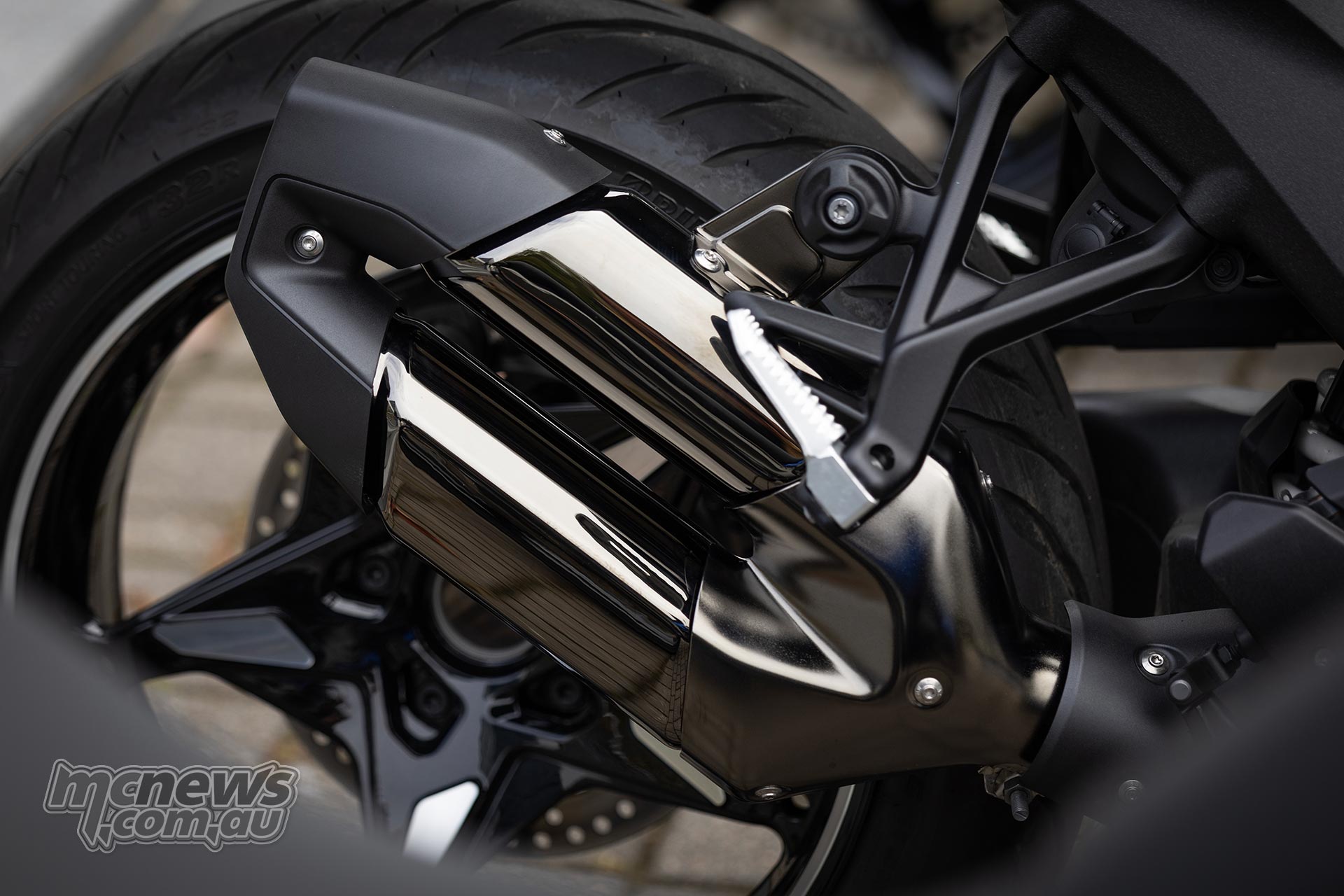 Best sounding Boxers yet to Wayne’s ear
This boxer’s ‘box finds its mark.
It hasn’t all been smooth sailing for the new 1300, though. I’ve been critical of the new gearbox in the past, especially in the lower gears. Shifting between the first three cogs via BMW’s quick-shifter (BMW shift assist) isn’t exceptionally smooth. Far from it, I found it to be quite a blunt instrument in that regard. The latest GSA seemed to improve things a little, but you still end up using the clutch for those gears instead of just relying on the quick-shifter.
Well, there’s a solution for that: the ASA clutchless option. You can run it in full auto mode (D), where it shifts for you, or in manual mode (M), where you still shift the cogs. And I’m here to tell you that the manual mode is nothing short of superb on the road.
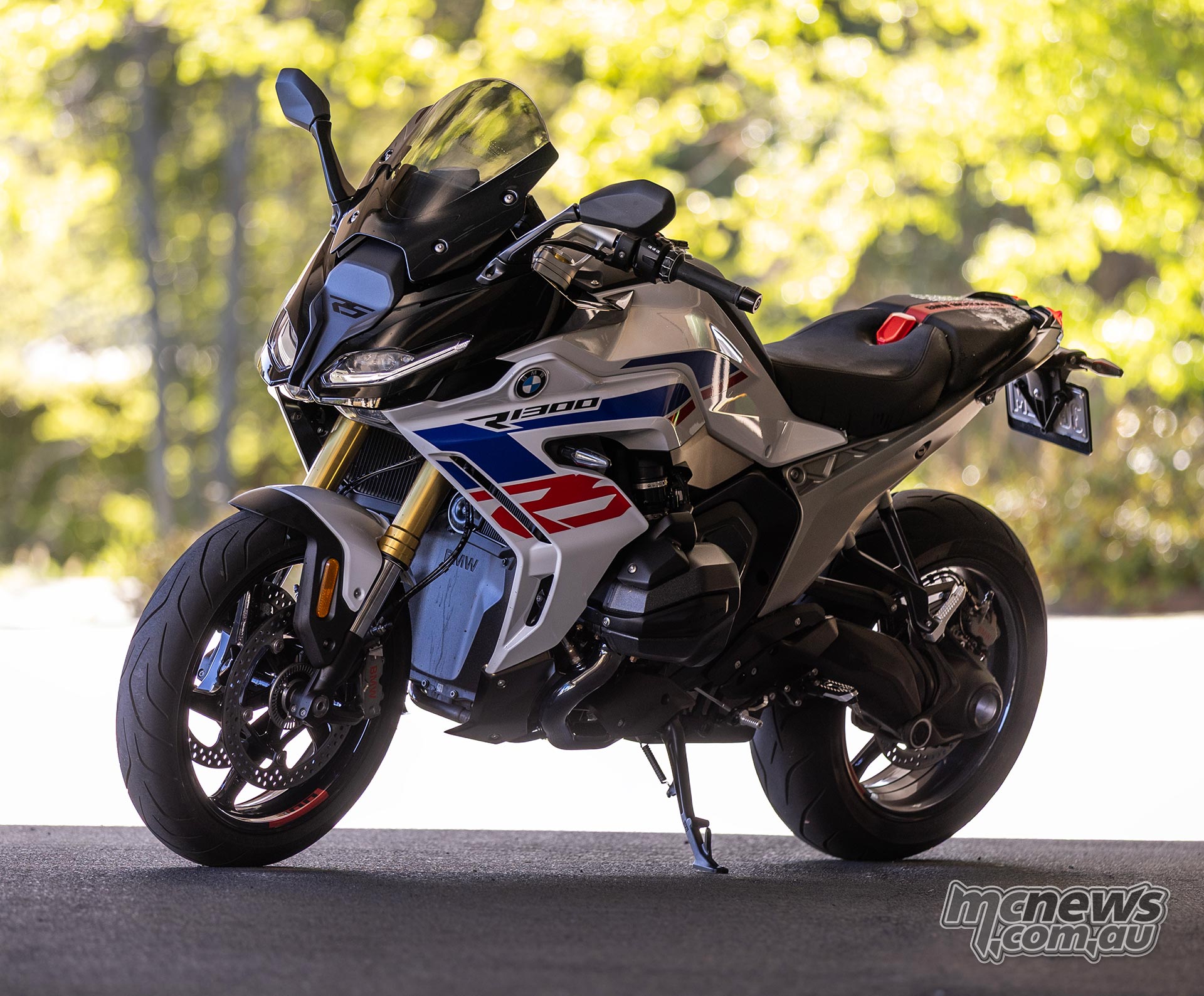 RS is 233 kg dry and starts from $25,160 ride away
While there will be many who are reluctant to go that path on their GS – and that’s fair enough for those riders who rely heavily on clutch technique offroad – on tarmac it’s brilliant. Up. Down. Any revs. Just glorious. Smoother than teflon-coated butter.
How good? I’d put it up there in my top three gearboxes I’ve ever ridden, joining the other benchmarks being BMW’s own M1000R and Ducati’s brilliant Multistrada V4 box. The lever feel is very different, but once you’re used to it… what a thing.
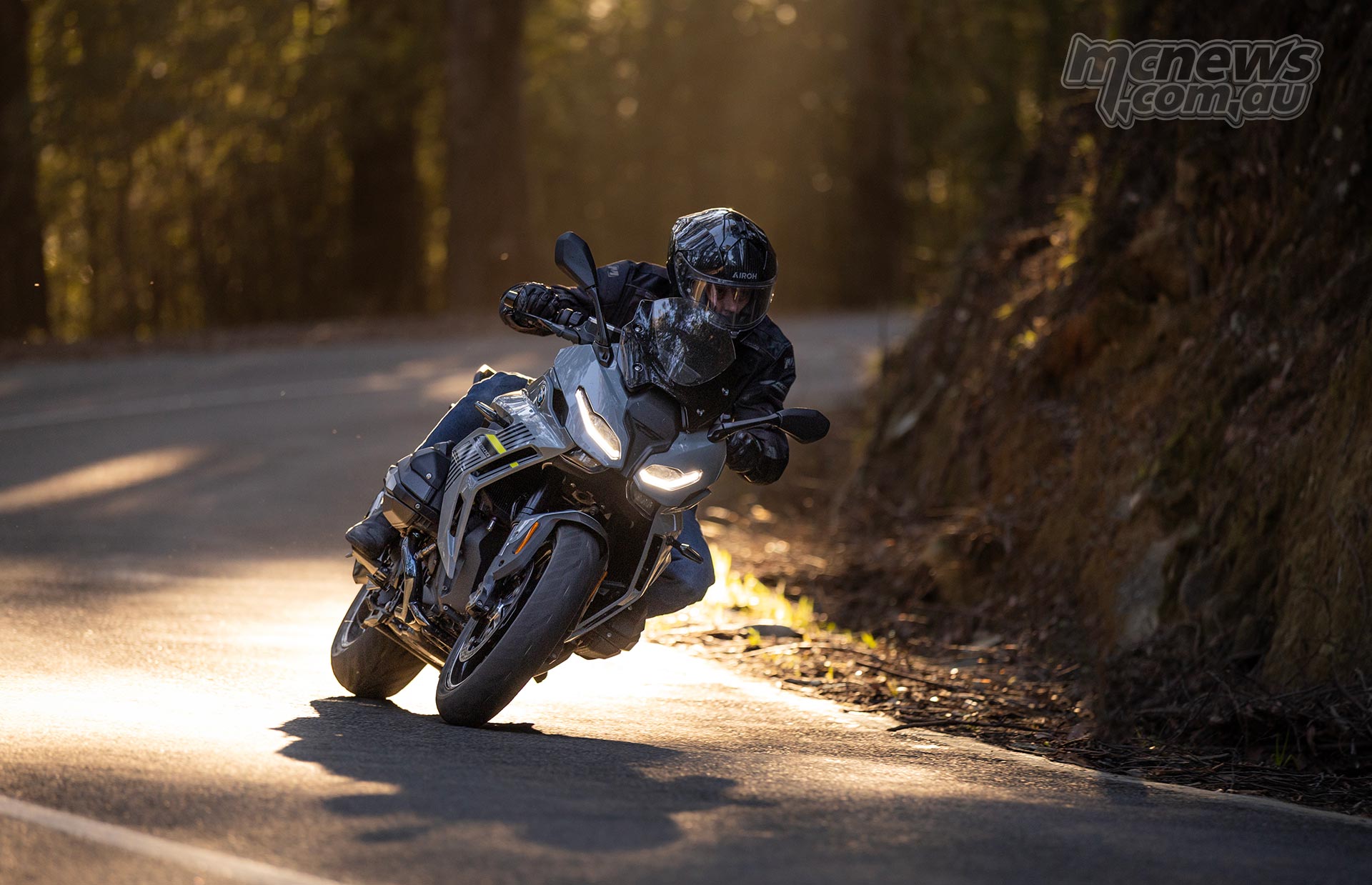 BMW R 1300 RS
The ASA (Automated Shift Assistant) uses two actuators to control the clutch and gearshift, and offers noticeably improved rev-matching compared to the standard quickshifter.
BMW expects the overwhelming majority of the R, RS, and RT to be fitted with the option, as in nearly all. Yes, you can opt for a regular gearbox, but you’ll be in the minority.
There’s a Variant for all
I’ll also admit to being a little cynical in the past about BMW’s plethora of spec ‘variants’ within models. But as was pointed out at the launch, with so many customisation options, BMW has found it simpler to tailor packages of options for specific customer needs and then let those customers fine-tune them as they want.
Take the R, for example. Base model comes in at 22 thousand, but the list of recommended options that most punters will opt for brings that up to nearly 28k.
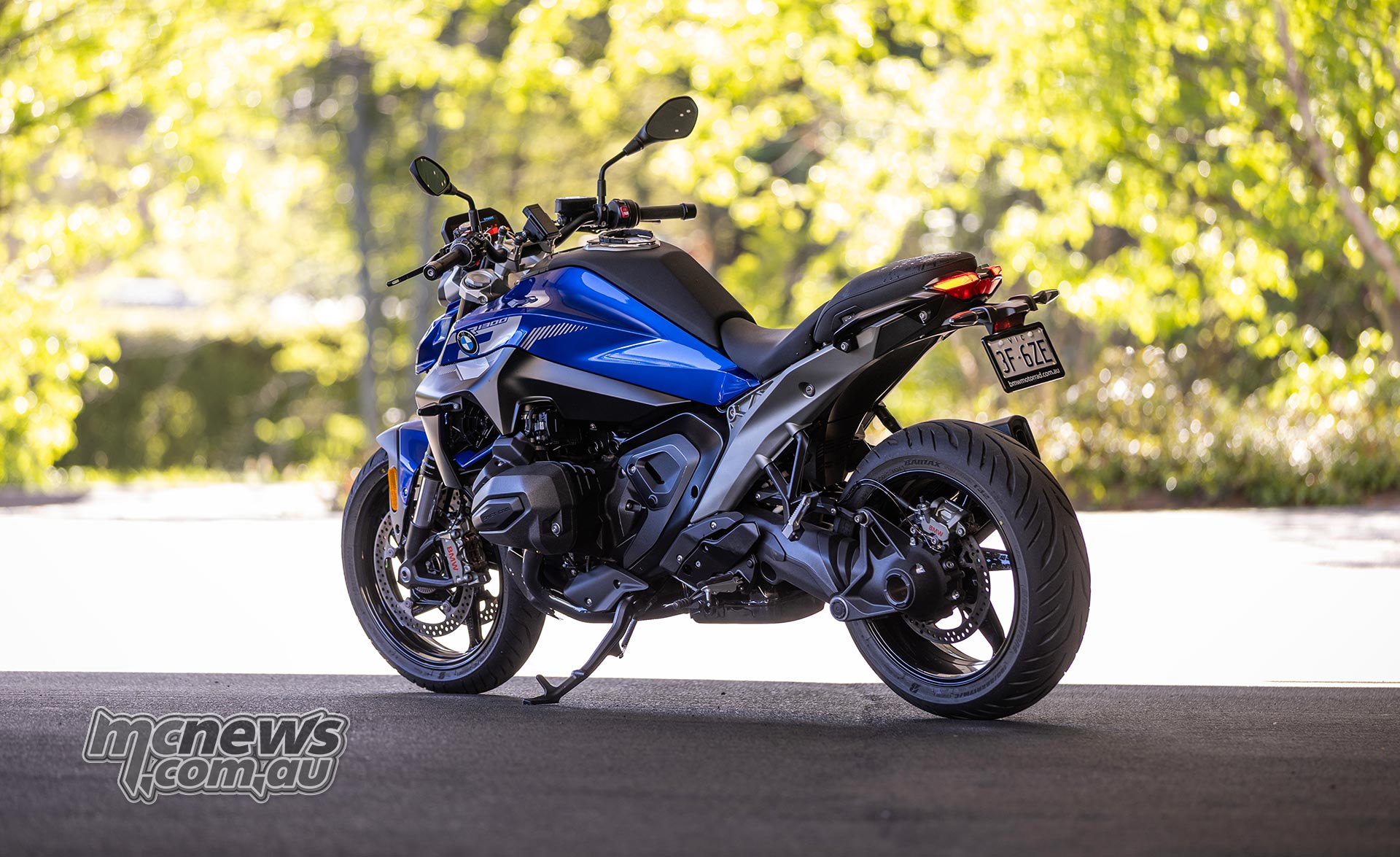 BMW R 1300 R
You can opt for the ‘Exclusive’ variant that adds comfort and dynamic tech packs and some specific styling options for 28.5k, or the ‘Performance’ variant, which adds the sport suspension and sports seat options, amongst others, for 28.2k.
Or go for the top dog, the ‘Option 719’ variant for 31k that adds a bunch of styling options but skips the sports suspension.
Sport Suspension option does take things up a level
That sports suspension certainly makes a difference. If you’re the sort of rider who might want to play around at a track day or two, or your favourite piece of road is nice and smooth, I’d give it some serious thought.
It is electronically adjustable, with settings for road mode and dynamic (sport) mode. However, I found it noticeably less compliant over bumpier sections of road than the standard suspension, even when softened back as far as it would allow.
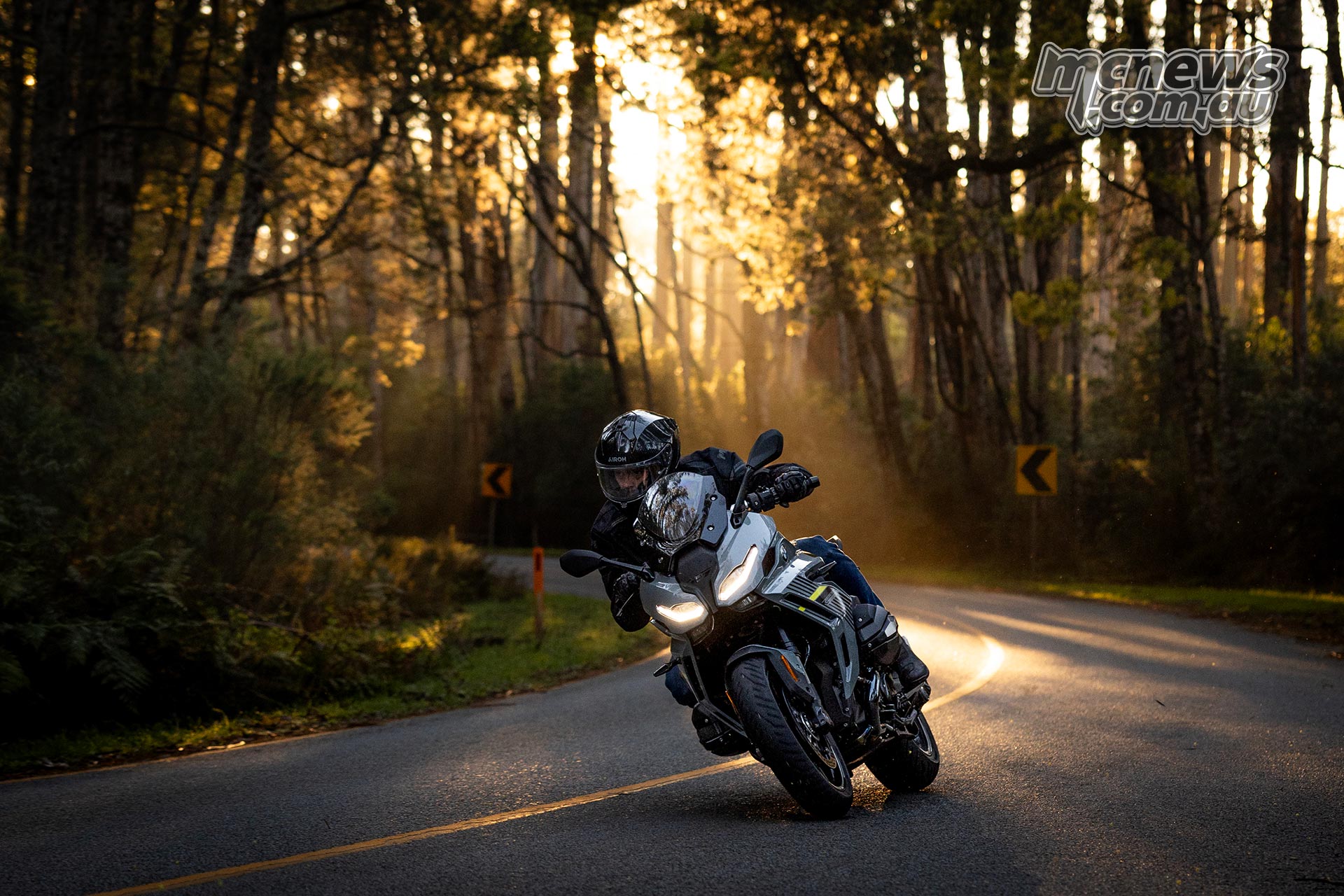 BMW R 1300 RS in the glorious morning light. Cracking shots. Glad we got up early!
The RS too has the sports suspension option via a ‘performance’ variant, but here again I’d personally stick with the standard suspension unless your roads are nice and smooth… The standard suspension does a great job of bump control while offering plenty of feel.
I found both the R and RS to be more than comfortable and to handle in a familiar, relatively conventional way in the twisties (that’d be the ‘normal’ front suspension). You can roll through the bends, and they’re more than happy doing their thing.
Or if you want to get the best out of them, both bikes respond well to shifting your weight around and getting more involved. Get your butt sideways and your body on the inside of the centre line, and they’ll both rail a corner better than you might think for 239 kg (R) and 245 kg (RS) bikes. That weight translates to terrific stability and on-road composure at even highly spirited road speeds, and there was no issue in the braking department either.
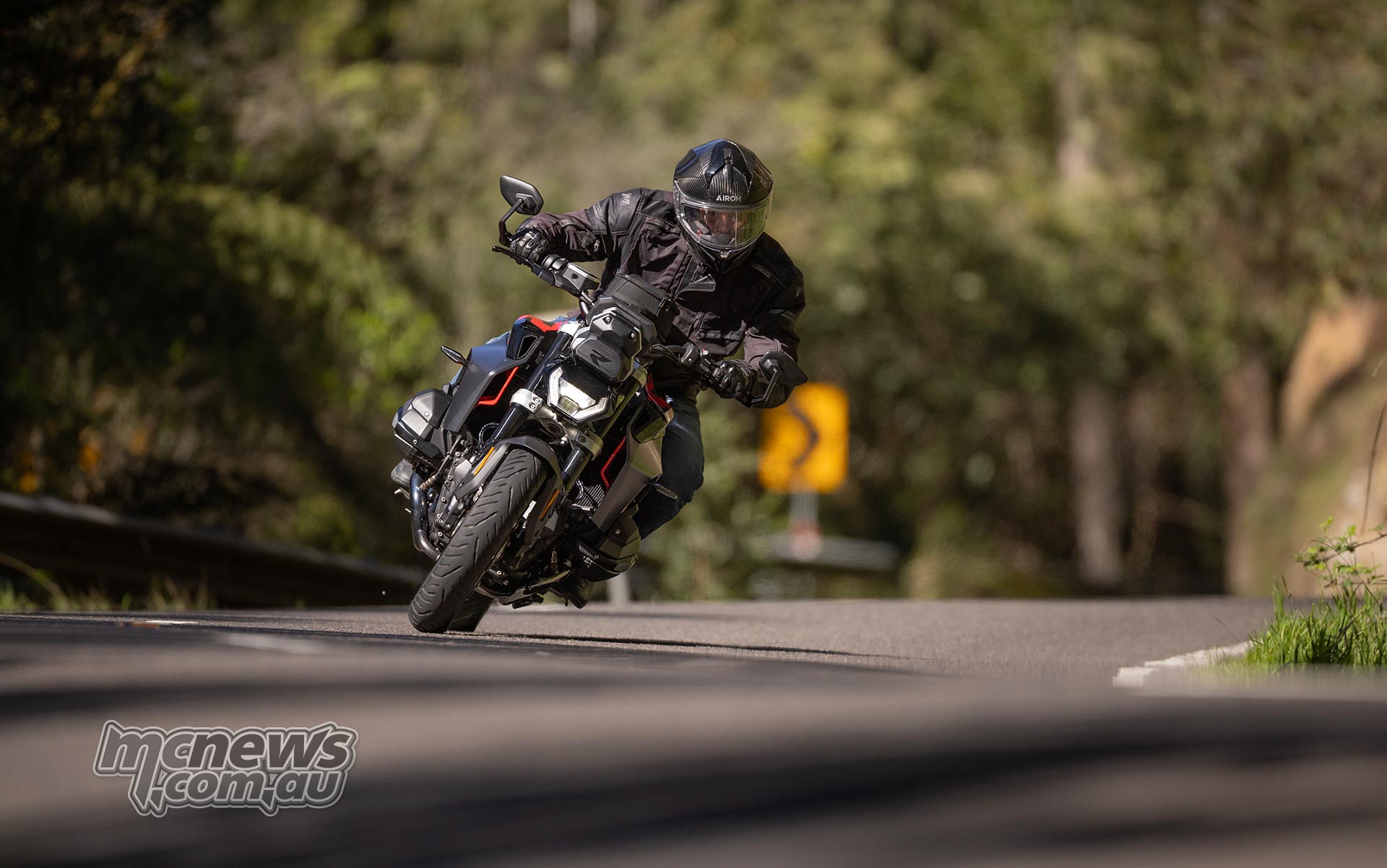 BMW R 1300 R
One bike liked to be ridden differently from the other two
The RT is unique amongst the three, though. With its 24 L tank compared to the 17 L unit shared by the other two models, it’s clearly made with the long haul in mind. Combined with the additional fairing work, tall screen, and colour-coded side panniers, it sees the weight bump up to a not-insubstantial 281 kg when fully fuelled.
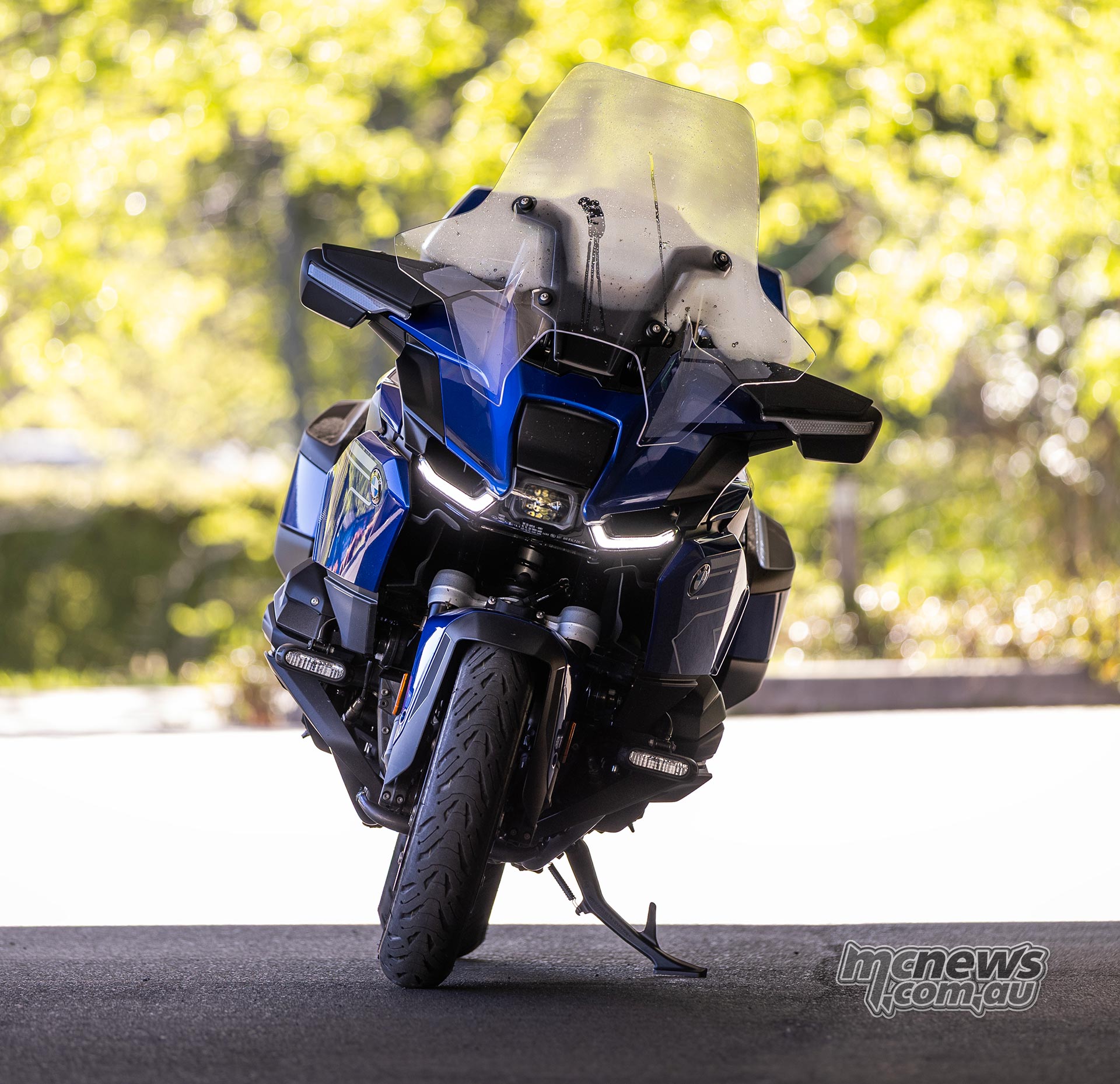 BMW R 1300 RT
It’s the only bike of the three that uses BMW’s Telelever front suspension, which is set up to handle the extra 40 kg over the other two models.
When walking the bike around at a standstill, it is noticeably more top-heavy than the other models. However, once on the move, there’s some German engineering wizardry at play here. Not only does that weight disappear, but the more top-heavy nature of it actually translates to a bike that requires next to no body movement at all to hustle along.
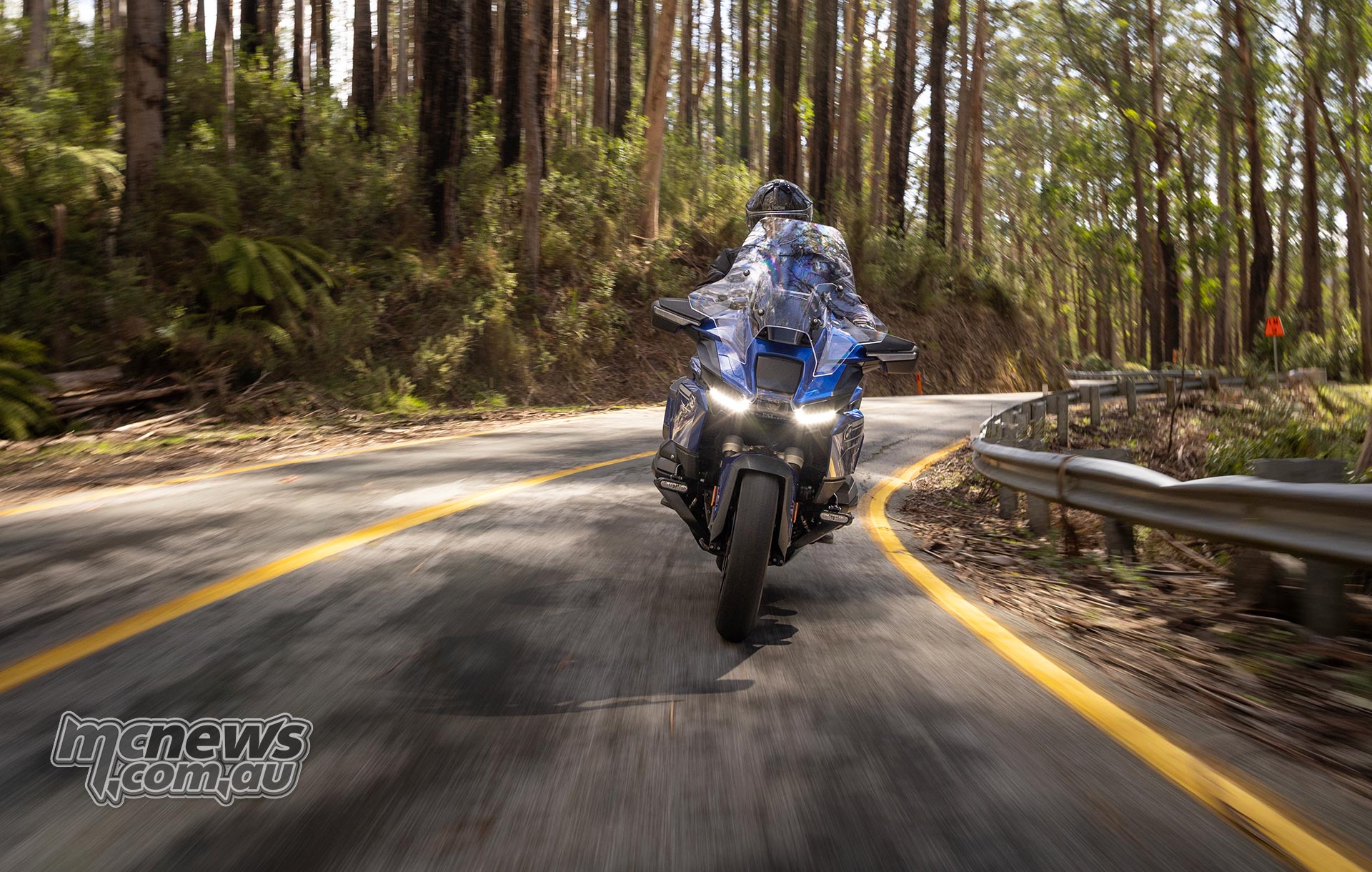 BMW R 1300 RT
If you let the bike pivot beneath you while you stay relatively upright (rather than leaning off) it’s an absolute doddle to punt along. Especially when you move it into one of the sport modes (Dynamic or Dynamic Pro), which firms up the suspension and sharpens the geometry by bumping up rear preload…
I may or may not have been giggling as I pushed some of the other journos who were on board the R and RS. I can’t imagine what that would have looked like filling their mirrors.
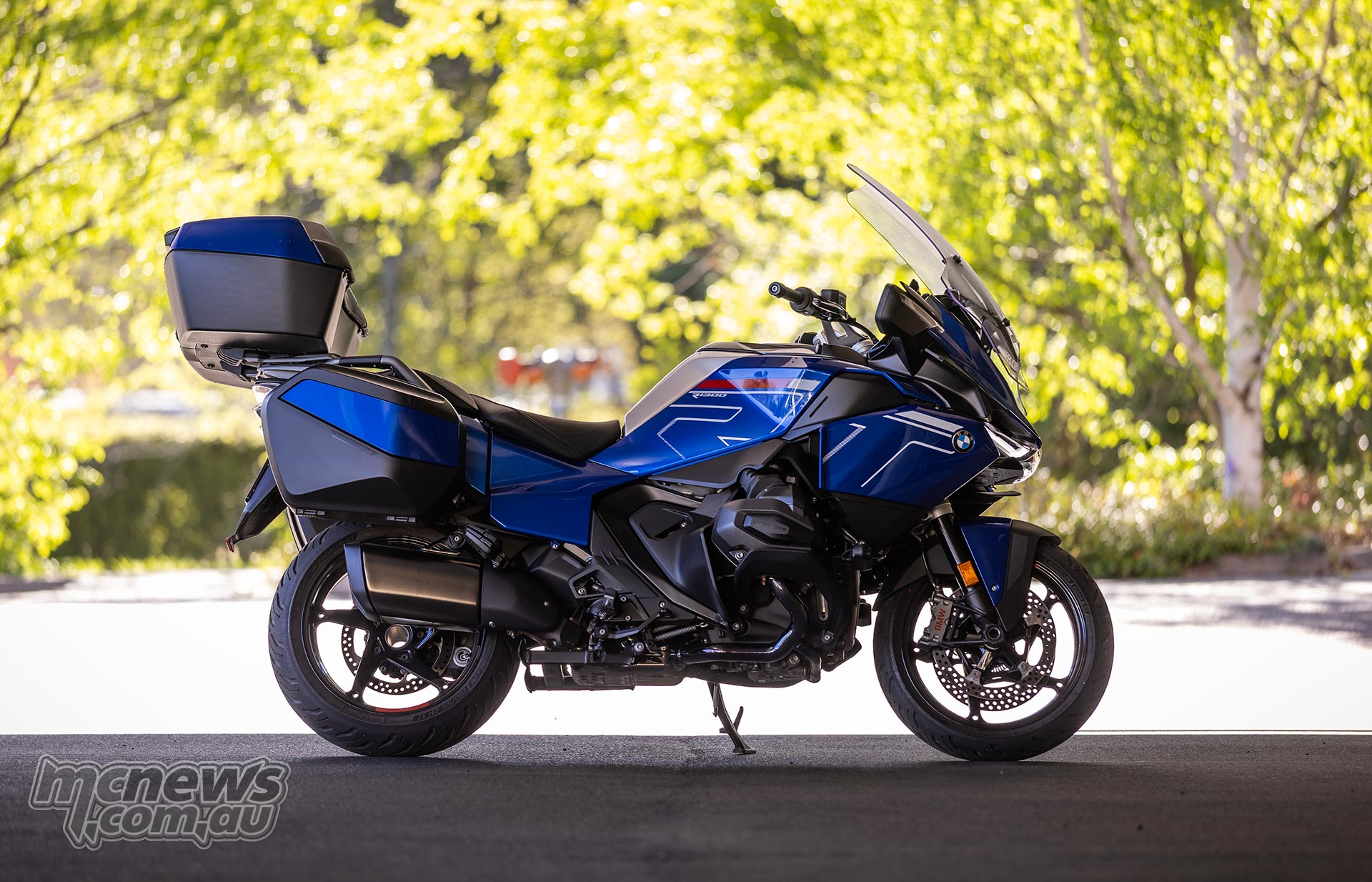 BMW R 1300 RT
You can see how they make such an excellent base for police bikes loaded with even more gear, and I now understand how said police riders can hustle them along at surprisingly high speeds… Super comfortable, great pillion and luggage options and that terrific torquey boxer engine. It’s touring made easy.
One of them hits the sweet spot
But for me, the pick of the bunch is the RS. It’s such a handsome-looking bike, especially in that Brooklyn Grey ‘Option 719’ trim. I was the moth to its naked flame as soon as I saw it. I’m convinced that if more manufacturers made Sport Tourers that looked and performed like this, that segment would come to life again. I know Trev lusts after a long, low twin-piped sports-tourer powered by the engine from Yamaha’s MT-10 or from Ducati’s Multistrada V4.
 2026 BMW R 1300 RS in Brooklyn Grey Metallic is right up Wayne’s alley.
The RS is stylish, smooth, stable, comfortable, easy to ride, has all the tech you want and can be punted along more than quickly enough. And with 145 hp, it’s super manageable without being overpowered, unlike some of the 180+ hp monsters on the market. Throw a sports muffler on there for extra aural goodness, give me some even stickier tyres and I’d be as happy as a clam.
 BMW R 1300 RS in Performance trim.
I’m aiming to grab one of those for a few weeks to live with and try and pick it apart. Because, frankly, I couldn’t find any meaningful faults in my quick impression, though I did wonder what it would be like with the lower bar risers fitted to the ‘Performance’ variant. Not even sure if that’s a possibility in terms of speccing them up (I don’t think it is).
The ASA option has cured the gearbox issues, and with that option, I’ll go so far as to say the R 1300 RS is the best boxer-engined BMW I’ve ever ridden. Big statement indeed.
 BMW R 1300 RS
If you are one of the 50 per cent of BMW buyers who’ve opted for a GS but you only ride on the road… I reckon you might just be missing out…
BMW R 1300 R / RS / RT Specifications
|
Details |
R 1300 RS |
R 1300 RT |
R 1300 R |
|
Engine |
|||
|
Type |
Air/liquid-cooled four-stroke flat twin engine with double overhead and chain driven camshafts and balance gear wheels | ||
|
Bore x stroke |
106.5 mm x 73 mm |
||
|
Capacity |
1,300 cc |
||
|
Rated output |
107 kW at 7,750 rpm |
||
|
Max. torque |
149 Nm at 6,500 rpm |
||
|
Compression ratio |
13.3 : 1 |
||
|
Mixture control |
Electronic intake pipe injection / digital engine management system with throttle-by-wire |
||
|
Emission control |
Closed-loop 3-way catalytic converter |
||
|
Exhaust emission standards |
EU 5+ |
||
|
Performance/Fuel Consumption |
|||
|
Claimed Max speed |
240 km/h |
Over 200 km/h |
|
|
Fuel Consumption/100 km |
4.8 l |
4.9 l |
4.8 l |
|
CO2 emission based on WMTC |
110 g/km |
113 g/km |
110 g/km |
|
Fuel type |
Super unleaded (max. 15 % Ethanol, E15), 95 ROZ/RON, 90 AKI; adaptive fuel quality regulation (91-98 ROZ/RON) |
||
|
Electrical System |
|||
|
Battery |
12 V / 14 Ah, maintenance-free |
||
|
Power Transmission |
|||
|
Clutch |
Multiplate clutch in oil bath, anti-hopping clutch, hydraulically operated |
||
|
Gearbox |
Claw-shifted 6-speed gearbox |
||
|
Drive |
Cardan |
||
|
Chassis / Brakes |
|||
|
Frame |
Two-part frame concept consisting of main frame and rear frame bolted to it, co-supporting engine |
||
|
Suspension F |
Upside-down telescopic fork |
BMW Motorrad EVO-Telelever, handlebar tilting decoupled via flex element, central shock absorber |
Upside-down telescopic fork |
|
Suspension R |
BMW Motorrad EVO-Paralever, cast aluminium single-sided swingarm, continuous swingarm bearing axle, central suspension strut |
||
|
Suspension Travel |
140 mm / 130 mm |
149 mm / 158 mm |
140 mm / 130 mm |
|
Wheelbase |
1,517 mm |
1,500 mm |
1,511 mm |
|
Castor |
122.5 mm |
121.5 mm |
/ |
|
Steering Head Angle |
62° |
64.2° |
/ |
|
Wheels |
Aluminium cast wheels |
||
|
F Wheel |
3.50 x 17″ |
3.50 x 17″ |
3.50 x 17″ |
|
R Wheel |
6.00 x 17″ |
6.00 x 17″ |
6.00 x 17″ |
|
F Trye |
120/70 ZR17 |
120/70 ZR17 |
120/70 ZR17 |
|
R Tyre |
190/55 ZR17 |
190/55 ZR17 |
190/55 ZR17 |
|
F Brake |
Twin disc brake, diameter 310 mm, 4-piston radial brake caliper |
||
|
R Brake |
Single disc brake, diameter 285 mm, 2-piston floating caliper |
Single disc brake, diameter 285 mm, 2-piston floating caliper |
Single disc brake, diameter 285 mm, 2-piston floating caliper |
|
ABS |
BMW Motorrad Full Integral ABS Pro (fully integral braking function, lean angle optimised) |
||
|
Dimensions/Weights |
|||
|
Seat height at unladen weight |
815 mm (seat low: 790 mm; seat high: 845 mm) |
Comfort seat low: 780 / 800 mm; comfort seat: 825 / 845 mm; comfort seat high: 840 / 860 mm |
810 mm (seat low: 785 mm; seat high: 840 mm) |
|
Inner leg curve at unladen weight |
1,810 mm (seat low: 1,775 mm; seat high: 1,860 mm) |
Comfort bench seat low: 1,780 / 1,820 mm; comfort bench seat: 1,860 / 1,900 mm; comfort bench seat high: 1,890 / 1,930 mm |
1,800 mm (seat low: 1,765 mm; seat high: 1,850 mm) |
|
Usable tank volume |
17 l |
24 l |
17 l |
|
Reserve |
Approx. 4 l | ||
|
Length |
2,138 mm |
2,229 mm |
2,126 mm |
|
Height |
1,349 mm |
1,387 mm (above windshield) |
1,112 mm (without mirror, at DIN unladen weight) |
|
Width |
846 mm (above mirror) |
971 mm (with mirror) |
864 mm (above mirror) |
|
Dry weight |
233 kg |
265 kg |
227 kg |
|
Unladen weight, road-ready, fully fuelled |
245 kg¹ |
281 kg¹ |
239 kg¹ |
|
Permitted total weight |
460 kg |
510 kg |
460 kg |
|
Payload (with standard equipment) |
215 kg |
229 kg |
221 kg |
BMW R 1300 R / RS / RT Images

2026-BMW-R-1300-RT-6

2026-BMW-R-1300-RS-16

2026-BMW-R-1300-R-10

2026-BMW-R-1300-RS-8

2026-BMW-R-1300-RT-14

2026-BMW-R-1300-R-14

2026-BMW-R-1300-RT-4

2026-BMW-R-1300-Brakes

2026-BMW-R-1300-RT-21

2026-BMW-R-1300-RT-20

2026-BMW-R-1300-RT-15

2026-BMW-R-1300-RT-13

2026-BMW-R-1300-RT-12

2026-BMW-R-1300-RT-11

2026-BMW-R-1300-RT-10

2026-BMW-R-1300-RT-7

2026-BMW-R-1300-RT-5

2026-BMW-R-1300-RT-3

2026-BMW-R-1300-RT-1

2026-BMW-R-1300-RS-Lights

2026-BMW-R-1300-RS-19

2026-BMW-R-1300-RS-18

2026-BMW-R-1300-RS-15

2026-BMW-R-1300-RS-14

2026-BMW-R-1300-RS-13

2026-BMW-R-1300-RS-12

2026-BMW-R-1300-RS-11

2026-BMW-R-1300-RS-10

2026-BMW-R-1300-RS-7

2026-BMW-R-1300-RS-6

2026-BMW-R-1300-RS-4

2026-BMW-R-1300-RS-3

2026-BMW-R-1300-R-13

2026-BMW-R-1300-R-12

2026-BMW-R-1300-R-11

2026-BMW-R-1300-R-9

2026-BMW-R-1300-R-7

2026-BMW-R-1300-R-6

2026-BMW-R-1300-R-5

2026-BMW-R-1300-R-3

2026-BMW-R-1300-R-1

2026-BMW-R-1300-Muffler

2026-BMW-R-1300-Engine



 English (US) ·