
.png) 5 months ago
141
5 months ago
141
ARTICLE AD BOX
BMW R 1300 RS Review
Sports Tourers; Proper Sports Tourers, are a rare thing these days. I’m not talking about Adventure Tourers that have become the go-to category for expected sales in recent times. Not the upright crossover things that, while they ride quite well, are always going to be slightly compromised from an involvement perspective and let’s be honest, they can look a little… confused. Many are somewhat uninspiring. No one walks into their garage and stops to admire the lines of their Rav 4…
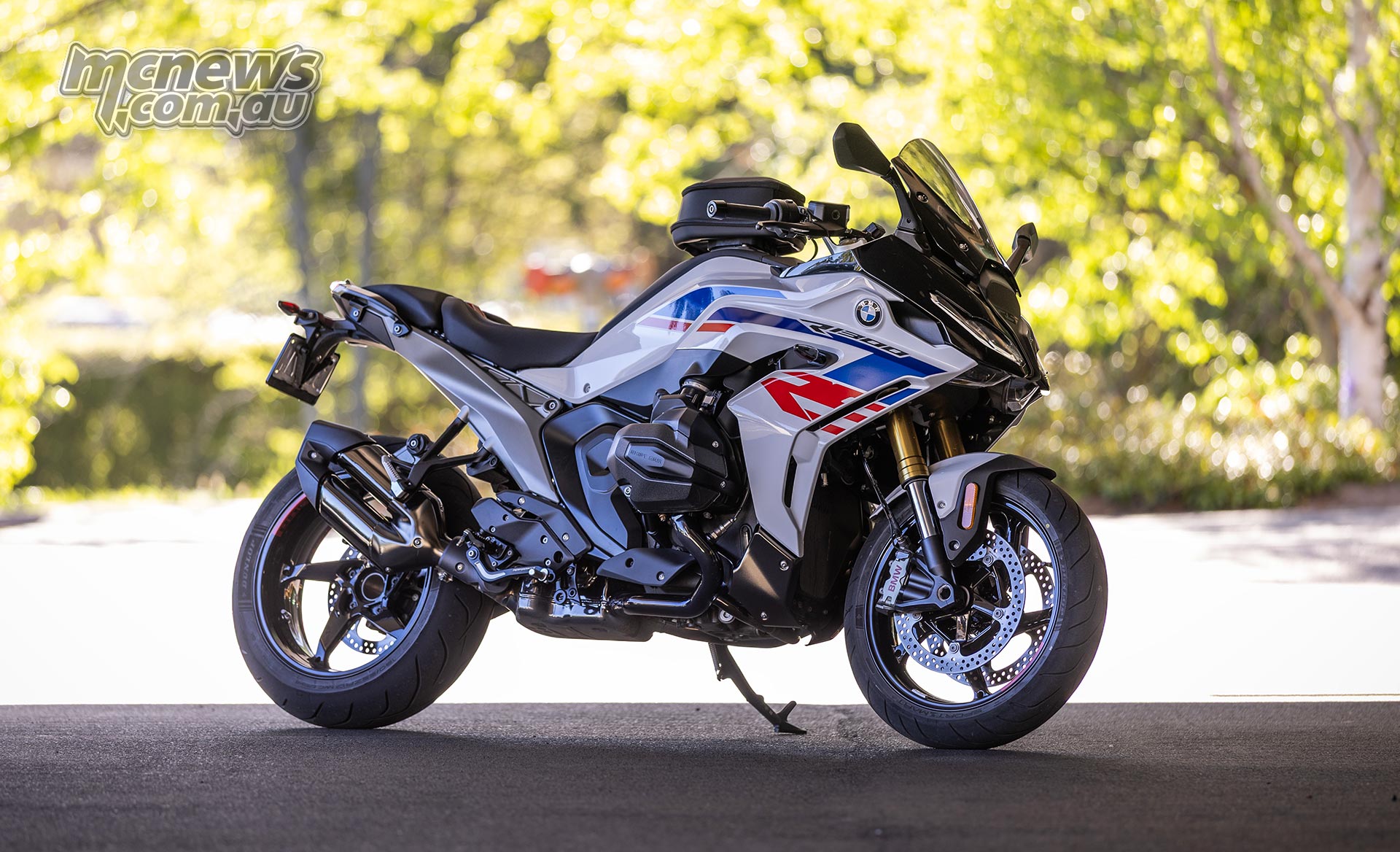 The RS is the sporty sports-touring option in the Boxer range
No, I’m talking, elegant lines. ‘Squint your eyes, and it could be a sports bike. ’ Proper dynamics. Engaging, involving, inspiring bikes. Bikes that are fun and really capable, when you feel up for it, yet comfortable enough to do big days at a more relaxed pace when you’re in that mindset too.
The type of bikes that can still make you smile to look at after a charge up your favourite back road, as the brakes and exhaust clink and tink on cool-down, quietly confirming that you’ve just had a good time. The motorcycling equivalent of the post romp cigarette.
So in acknowledging that they’re rare, it’s all the more encouraging to know that there are still manufacturers out there who, like me, see the value in the sports-touring format. In that regard, BMW deserve credit. And not just credit for ticking a box and delivering something acceptable, but for knocking it out of the park.
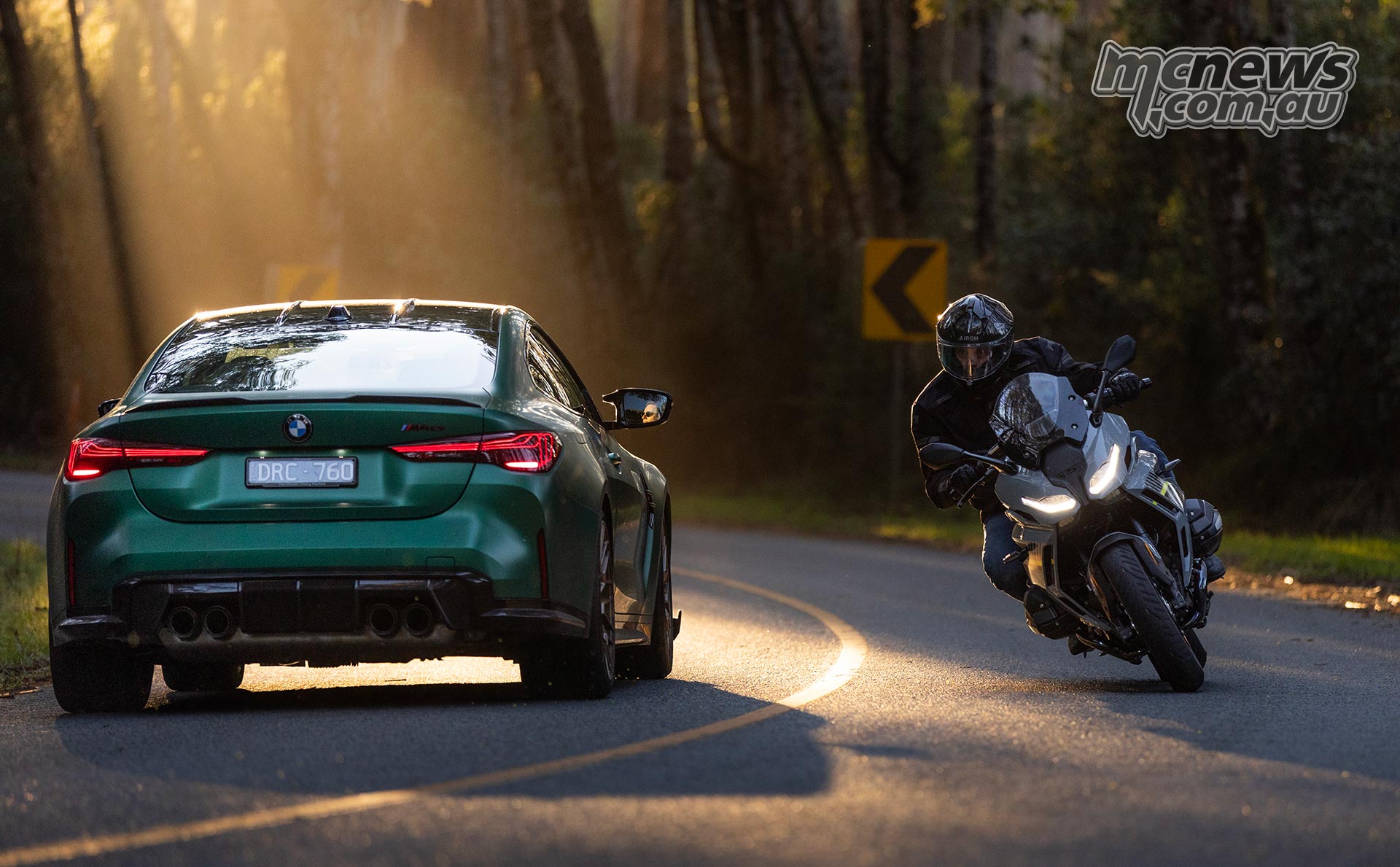 BMW R 1300 RS
The best boxer-engined BMW ever?
I said at the recent Australian launch of the R 1300 road variants that the RS was not only the best variant of the 1300 made by the folks at BMW Motorrad, but also the best boxer-engined BMW I’d ever ridden.
I ruffled a few feathers by saying I thought there would be a fair chunk of riders aboard GSs who’d be better off on the RS, too. And after a couple of weeks living with one, I stand by those comments. This bike is exceptional.
It shares the same 1300 cc shift-cam boxer engine first seen in the latest GS. A veritable torque monster that churns out 145 hp and 149 Nm. While 145 hp might not seem high by today’s 220 hp race rep rocketships, those numbers are not to be sneezed at. Especially the torque figure. It’s an absolute tractor.
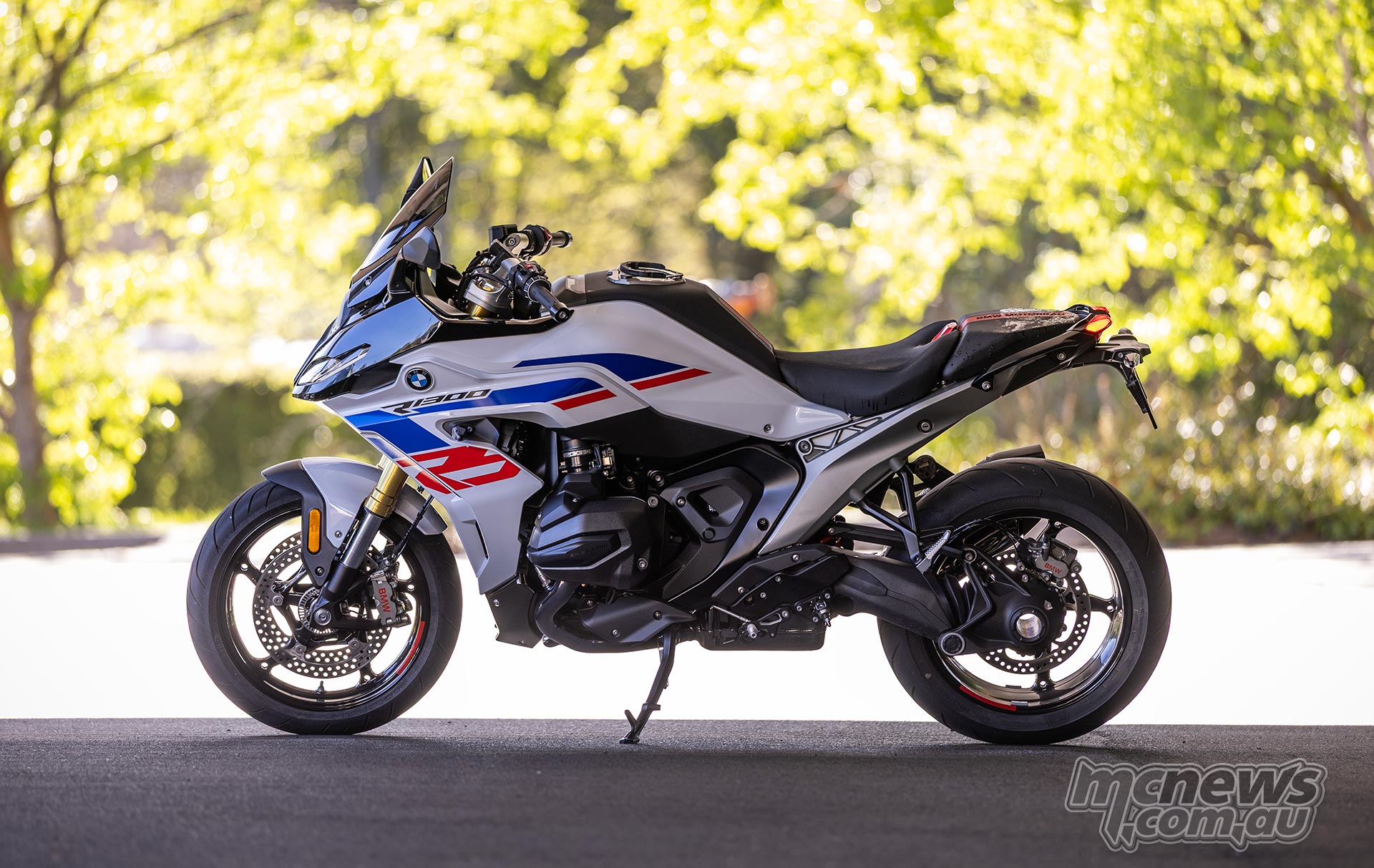 BMW R 1300 RS
The cam shift technology allows it to breathe beautifully down low and then, near seamlessly, change profile through the mid-range, where it really starts to come into its own. That’s the point where it eases out of the low-down boxer’s rattle, smooths out and hits its stride.
The chassis and paralever swingarm are also largely shared with the GS, and while I felt on that bike it led to there being a little too much mechanical grip off-road (which made it more of a challenge to slide nicely) – there are no such issues on tarmac for either that bike or this RS.
Get involved
Dynamically, the big difference between the GS and RS is, of course, the slightly less relaxed, less upright riding position. While still being more than comfortable, the knee bend is noticeably more than on the Adventure bike. I have one troublesome knee, but I could happily still manage big days in the saddle on the RS.
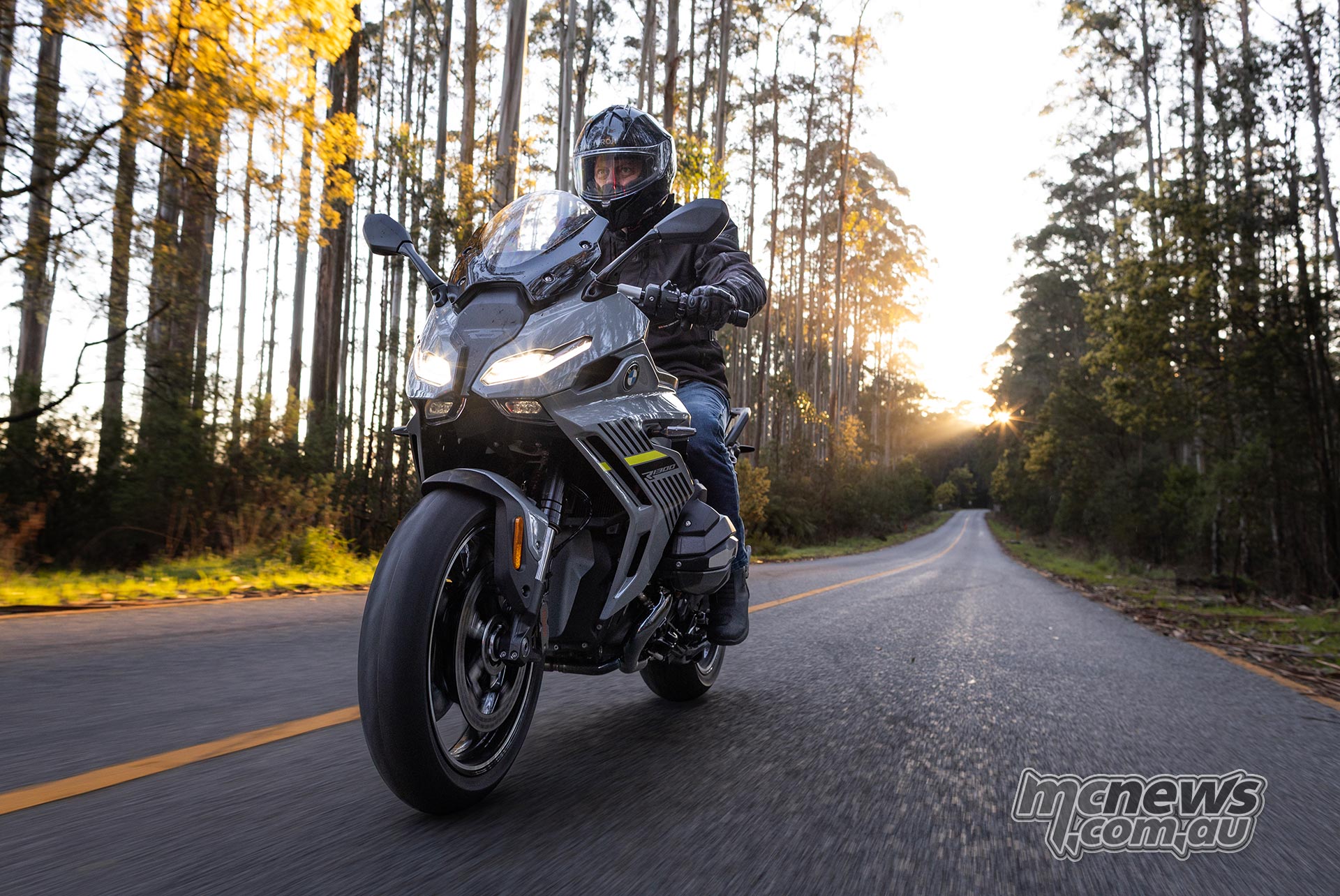 BMW R 1300 RS
By comparison with the GS, the lower-travel road suspension and the return to a telescopic fork (rather than a telelever setup) have not only reduced weight and complexity but also provided additional rider feedback. From a rider’s perspective, it’s much more involving. So easy to feel what’s happening underneath your hands rather than having to trust the front of the GS.
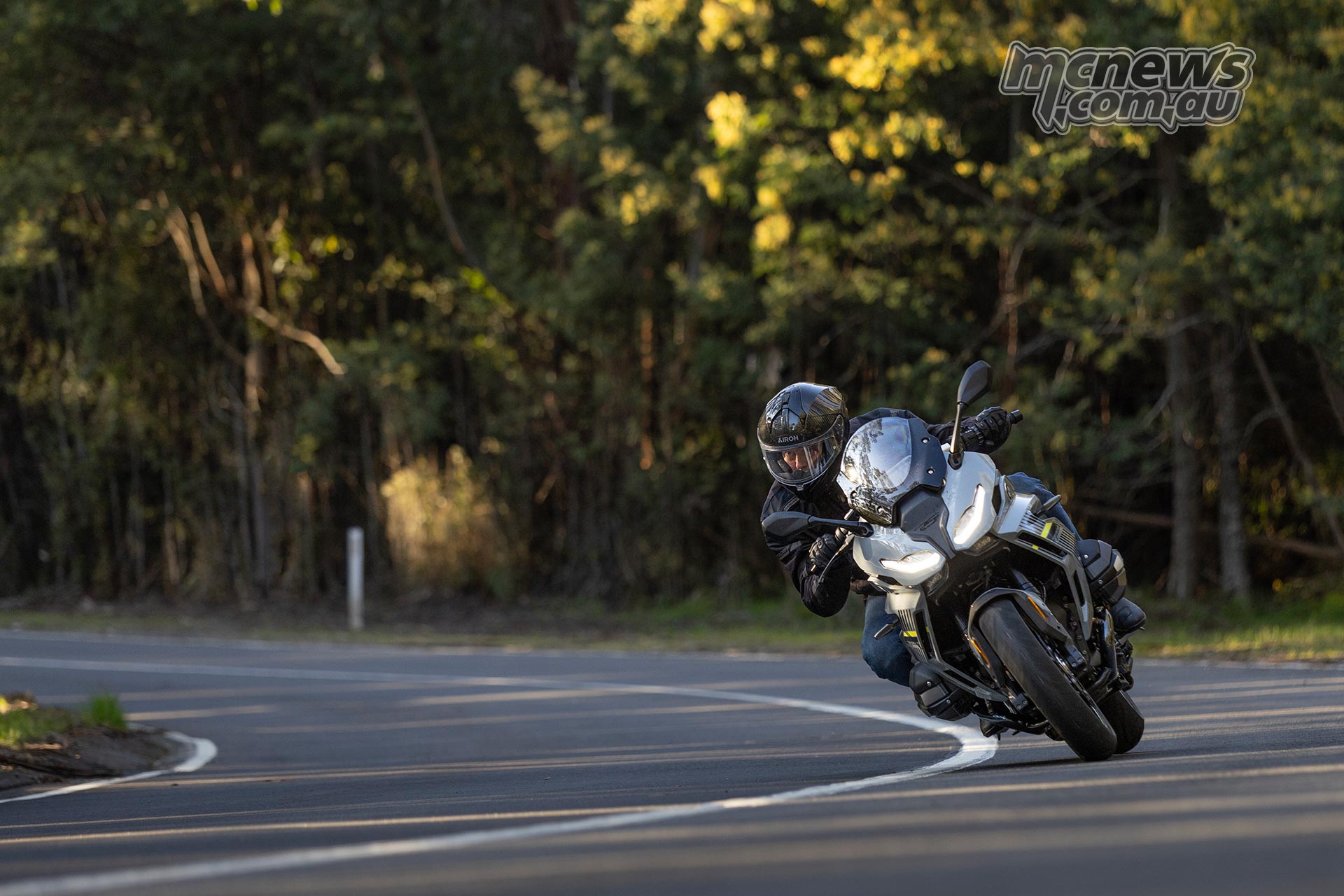
The flow-on effect is a bike that responds much more like a traditional sports bike when you start shifting your weight. Lead that inside knee and shoulder, and suddenly the bike transforms into a planted, corner carver. Yes, it’s still 245 odd kilos to hustle around. But at nine tenths, which is about as quick as you’d ever want to be pedalling on the road, it’s bloody enjoyable.
My only gripe, from an ergonomics perspective, was that my left heel would occasionally touch the centre stand. But I don’t like centre-stands anyway. So that wouldn’t be on mine…
 BMW R 1300 RS
Note that you can opt for even sportier suspension in the performance variant. This also features a different seat shape and slightly lower bar height for an even sportier riding position. Usually, I’d be all over that option. But I found the standard suspension to be a better compromise on our ever-worsening roads when I rode that model on the launch.
(Semi) Automatic for the people
And the other massive tick for me is the ASA (Automatic) gearbox option, which pretty much resolves my criticisms of what can be a rather clunky gearshift in the 1300s’ lower gears. The ASA is barely short of a revelation.
It is essentially a clutchless auto shift setup that retains a gear lever. You can ride in full auto mode, or flick it into M for manual mode and be in complete control of the shifting. I found the full-auto mode shifted too early in the rev range for my liking (as I did with Honda’s DCT), often shifting up and wanting to cruise at 2,000 rpm.
 BMW R 1300 RS
Now, while I’ve no doubt that is the most mathematically fuel-efficient setting, the motor felt happier being a little higher to my butt-ometer. And with the shift itself being otherworldly smooth, it’s an absolute joy to peddle the box yourself. This is one of the nicest gearboxes I’ve used.
At times, there is some not entirely pleasant mechanical noise that accompanies it, but somehow it doesn’t seem to translate into physical feedback or a blunt lurch. It’s just eerily smooth under almost any condition. Full noise, cruising, up, down, whatever you throw at it, it cares not. Silky rev-matched shifts are metered out one after another.
Choose your mood (mode)
It comes with all the usual BMW tech. The heated grips and seats are particularly good, but I’d like to discuss the ride modes. Specifically, the two ride modes I found myself using exclusively. BMW has a system where you can choose four modes to quickly toggle between from a longer list if you dive into the menu.
Usually, you’d choose something like Rain, Road, Dynamic, and Dynamic Pro (the latter lets you play with TC, suspension, and ABS settings). I find I don’t really ever use Rain mode on any bikes, so that’s largely ignored. And given that the Dynamic Pro lets you refine your settings for when you’re feeling frisky, I’d inevitably be toggling between that and the more relaxed Road mode.
 BMW R 1300 RS
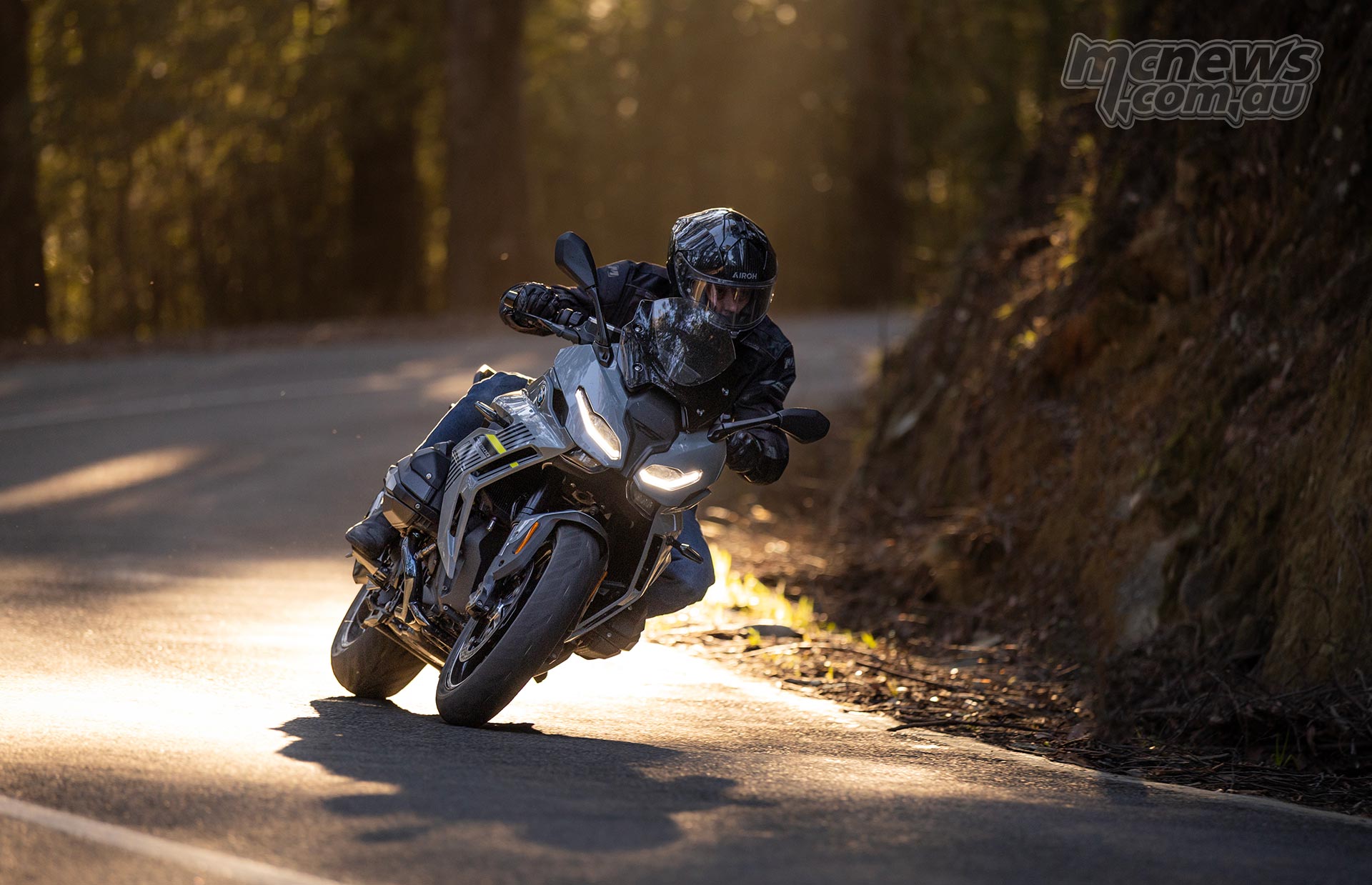
Both modes have the same power output, but Road has a softer throttle and map, more comfortable suspension settings (via electronic damping) and more conservative TC. Perfect for the touring side of Sports Touring.
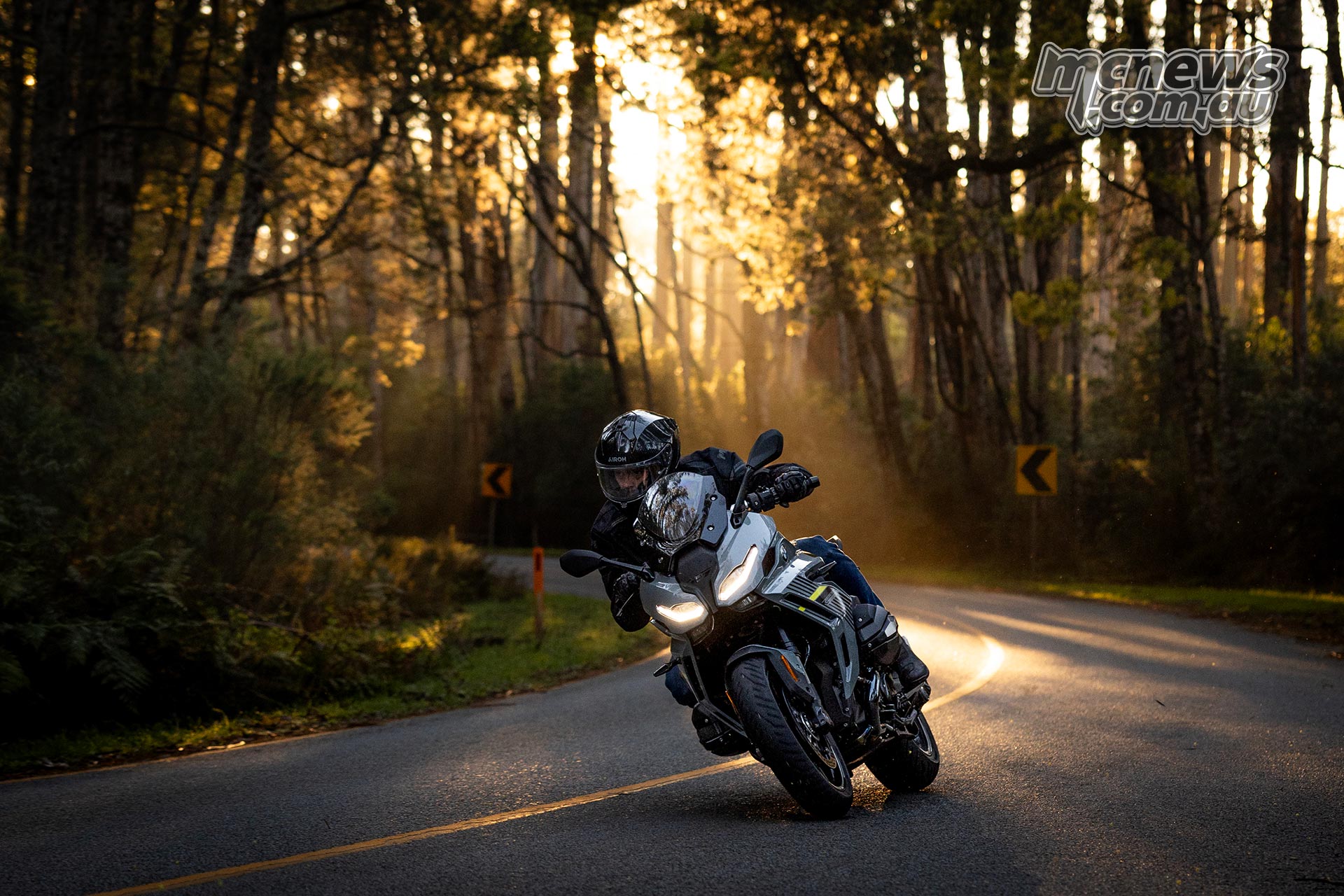
Flick it into Dynamic Pro, with the suspension set to as firm as it’ll go (which it remembers for you), and everything sharpens up noticeably for when you want to be a little more sports.
 BMW R 1300 RS
In that mode, throttle response is crisper without being too eager, and the suspension is firmer, more controlled, without being harsh. It’s just about perfect. TC can be turned off reasonably easily via the hamburger menu setup on the left switch-block to complete the picture, depending on how much you want to lay the ears back.
Which brings me to about the only other thing I can find fault with.
Switch it up
The switchgear layout and setup could be better. I’m still not a massive fan of the BMW hamburger button setup, which essentially allows you to choose the item you want to adjust via the secondary up-down toggle button.
I don’t mind the idea in theory, but I don’t think it works particularly well as executed. It becomes especially noticeable on the RS when the bike features the additional switch block module, which has just a single button to switch modes on the ASA gearbox. So there’s plenty of room.
 2026 BMW R 1300 RS
That means you could give TC, Suspension, and Heated Grips (and seats) their own dedicated buttons, instead of having to jump in and change your hamburger preset each time you want to change a setting. Dedicated buttons that you just press and cycle through the settings. No need to use multiple buttons when you don’t need to..
And I’ve always found BMW’s cruise control switch to feel awkward and fragile. It doesn’t need to. Triumph’s much simpler cruise control toggle shows how it can be done. There’s no unlocking or turning it ‘on’ before use. Just press to set, press to resume. Adjust up and down when it’s on. Easy.
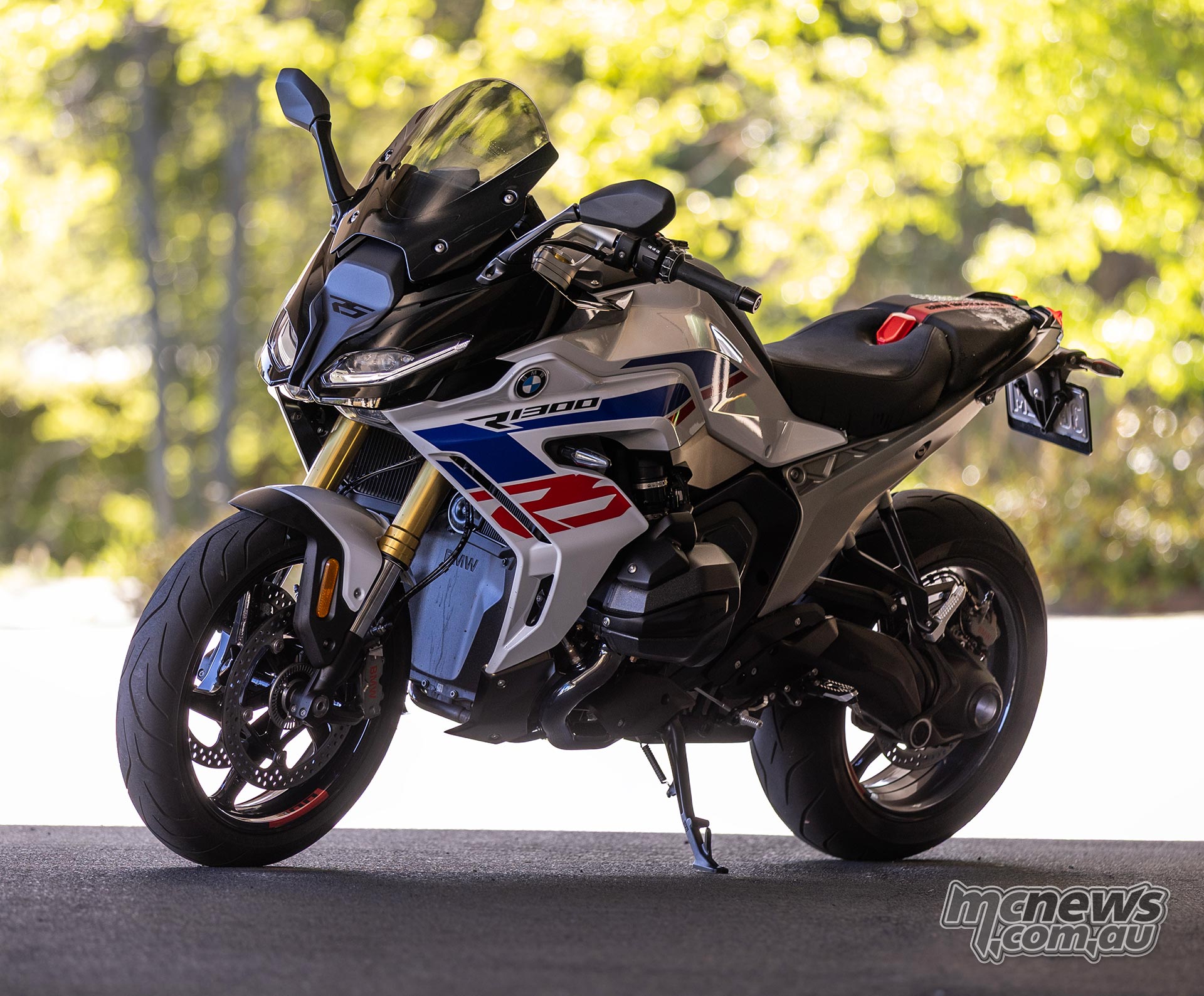 BMW R 1300 RS is 233 kg dry
In short?
All said and done, though, my gripes on the switchgear above are a minor niggle on what is otherwise a superb bike both dynamically and mechanically. Kudos to BMW for doing what more manufacturers should do: utilising an existing platform they already have to develop an excellent Sports Touring variant.
Others should take note. I’m specifically looking at you, Triumph, with your awesome T-plane 1200 triple from the Tiger. And you, Ducati, with your outstanding V4 in your Multistrada.
At just over thirty-four thousand dollars, it’s by no means cheap. But I’m not sure there’s a better sports tourer available? Certainly not one that looks as good as this.
I’d still opt for the 719 spec and order a set of the sportier, slightly lower clip-ons from the performance model. That’d be bloody near the perfect Sports Touring compromise between comfort and capability.
And that Brooklyn Grey looks just amazing.
-
R 1300 RS hits
- The perfect blend of comfort and performance?
- That ASA gearbox resolves the clunkiness of the 1300 box
- God damn, doesn’t it just look like a proper Sports Tourer
And misses…
- Switchgear could be better thought out
- Centre-stand kept being ‘felt’ by my left heel
- Ummmm?
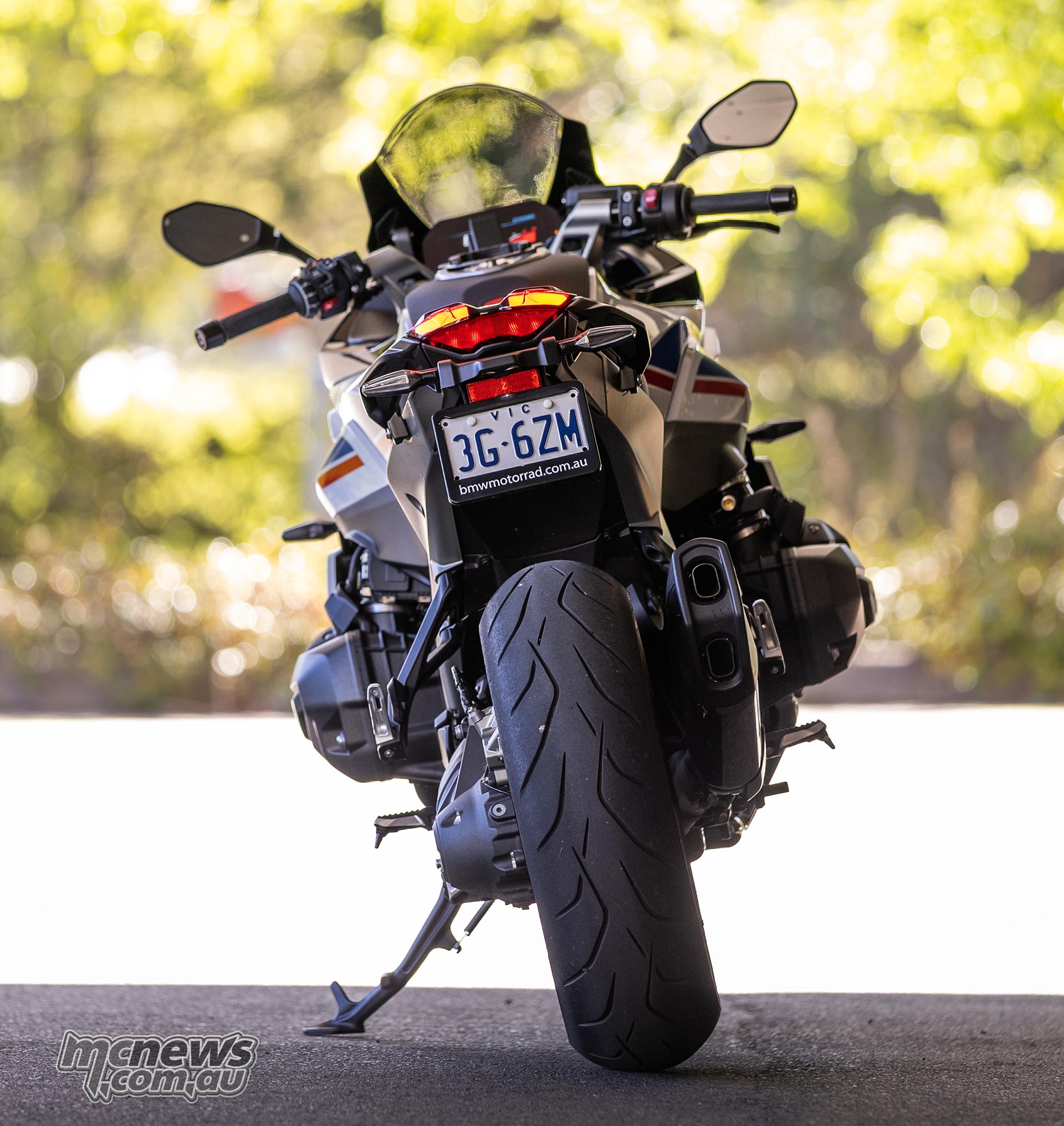 BMW R 1300 RS
BMW R 1300 RS Specifications
Compared to R 1300 RT and R 1300 R
|
Details |
R 1300 RS |
R 1300 RT |
R 1300 R |
|
Engine |
|||
|
Type |
Air/liquid-cooled four-stroke flat twin engine with double overhead and chain driven camshafts and balance gear wheels | ||
|
Bore x stroke |
106.5 mm x 73 mm |
||
|
Capacity |
1,300 cc |
||
|
Rated output |
107 kW at 7,750 rpm |
||
|
Max. torque |
149 Nm at 6,500 rpm |
||
|
Compression ratio |
13.3 : 1 |
||
|
Mixture control |
Electronic intake pipe injection / digital engine management system with throttle-by-wire |
||
|
Emission control |
Closed-loop 3-way catalytic converter |
||
|
Exhaust emission standards |
EU 5+ |
||
|
Performance/Fuel Consumption |
|||
|
Claimed Max speed |
240 km/h |
Over 200 km/h |
|
|
Fuel Consumption/100 km |
4.8 l |
4.9 l |
4.8 l |
|
CO2 emission based on WMTC |
110 g/km |
113 g/km |
110 g/km |
|
Fuel type |
Super unleaded (max. 15 % Ethanol, E15), 95 ROZ/RON, 90 AKI; adaptive fuel quality regulation (91-98 ROZ/RON) |
||
|
Electrical System |
|||
|
Battery |
12 V / 14 Ah, maintenance-free |
||
|
Power Transmission |
|||
|
Clutch |
Multiplate clutch in oil bath, anti-hopping clutch, hydraulically operated |
||
|
Gearbox |
Claw-shifted 6-speed gearbox |
||
|
Drive |
Cardan |
||
|
Chassis / Brakes |
|||
|
Frame |
Two-part frame concept consisting of main frame and rear frame bolted to it, co-supporting engine |
||
|
Suspension F |
Upside-down telescopic fork |
BMW Motorrad EVO-Telelever, handlebar tilting decoupled via flex element, central shock absorber |
Upside-down telescopic fork |
|
Suspension R |
BMW Motorrad EVO-Paralever, cast aluminium single-sided swingarm, continuous swingarm bearing axle, central suspension strut |
||
|
Suspension Travel |
140 mm / 130 mm |
149 mm / 158 mm |
140 mm / 130 mm |
|
Wheelbase |
1,517 mm |
1,500 mm |
1,511 mm |
|
Castor |
122.5 mm |
121.5 mm |
/ |
|
Steering Head Angle |
62° |
64.2° |
/ |
|
Wheels |
Aluminium cast wheels |
||
|
F Wheel |
3.50 x 17″ |
3.50 x 17″ |
3.50 x 17″ |
|
R Wheel |
6.00 x 17″ |
6.00 x 17″ |
6.00 x 17″ |
|
F Trye |
120/70 ZR17 |
120/70 ZR17 |
120/70 ZR17 |
|
R Tyre |
190/55 ZR17 |
190/55 ZR17 |
190/55 ZR17 |
|
F Brake |
Twin disc brake, diameter 310 mm, 4-piston radial brake caliper |
||
|
R Brake |
Single disc brake, diameter 285 mm, 2-piston floating caliper |
Single disc brake, diameter 285 mm, 2-piston floating caliper |
Single disc brake, diameter 285 mm, 2-piston floating caliper |
|
ABS |
BMW Motorrad Full Integral ABS Pro (fully integral braking function, lean angle optimised) |
||
|
Dimensions/Weights |
|||
|
Seat height at unladen weight |
815 mm (seat low: 790 mm; seat high: 845 mm) |
Comfort seat low: 780 / 800 mm; comfort seat: 825 / 845 mm; comfort seat high: 840 / 860 mm |
810 mm (seat low: 785 mm; seat high: 840 mm) |
|
Inner leg curve at unladen weight |
1,810 mm (seat low: 1,775 mm; seat high: 1,860 mm) |
Comfort bench seat low: 1,780 / 1,820 mm; comfort bench seat: 1,860 / 1,900 mm; comfort bench seat high: 1,890 / 1,930 mm |
1,800 mm (seat low: 1,765 mm; seat high: 1,850 mm) |
|
Usable tank volume |
17 l |
24 l |
17 l |
|
Reserve |
Approx. 4 l | ||
|
Length |
2,138 mm |
2,229 mm |
2,126 mm |
|
Height |
1,349 mm |
1,387 mm (above windshield) |
1,112 mm (without mirror, at DIN unladen weight) |
|
Width |
846 mm (above mirror) |
971 mm (with mirror) |
864 mm (above mirror) |
|
Dry weight |
233 kg |
265 kg |
227 kg |
|
Unladen weight, road-ready, fully fuelled |
245 kg¹ |
281 kg¹ |
239 kg¹ |
|
Permitted total weight |
460 kg |
510 kg |
460 kg |
|
Payload (with standard equipment) |
215 kg |
229 kg |
221 kg |



 English (US) ·