
.png) 4 months ago
87
4 months ago
87
ARTICLE AD BOX
2025 Honda Transalp XL750 Review
I first threw the leg over the ‘reintroduced’ Transalp back in September ‘23 and was immediately impressed with the bike overall. Nice size, good riding position, great finish, great on-road manners, and that terrific, modern 750 cc parallel-twin made for an excellent, all-roads Adventure Touring bike. At the time, I called it my road-focussed pick amongst Adventure bikes of that size.
No, it’s not a T7 alternative for those who want to focus more on serious off-roading. But it’s a noticeably better bike on the road. Far more dynamic, engaging and agile.
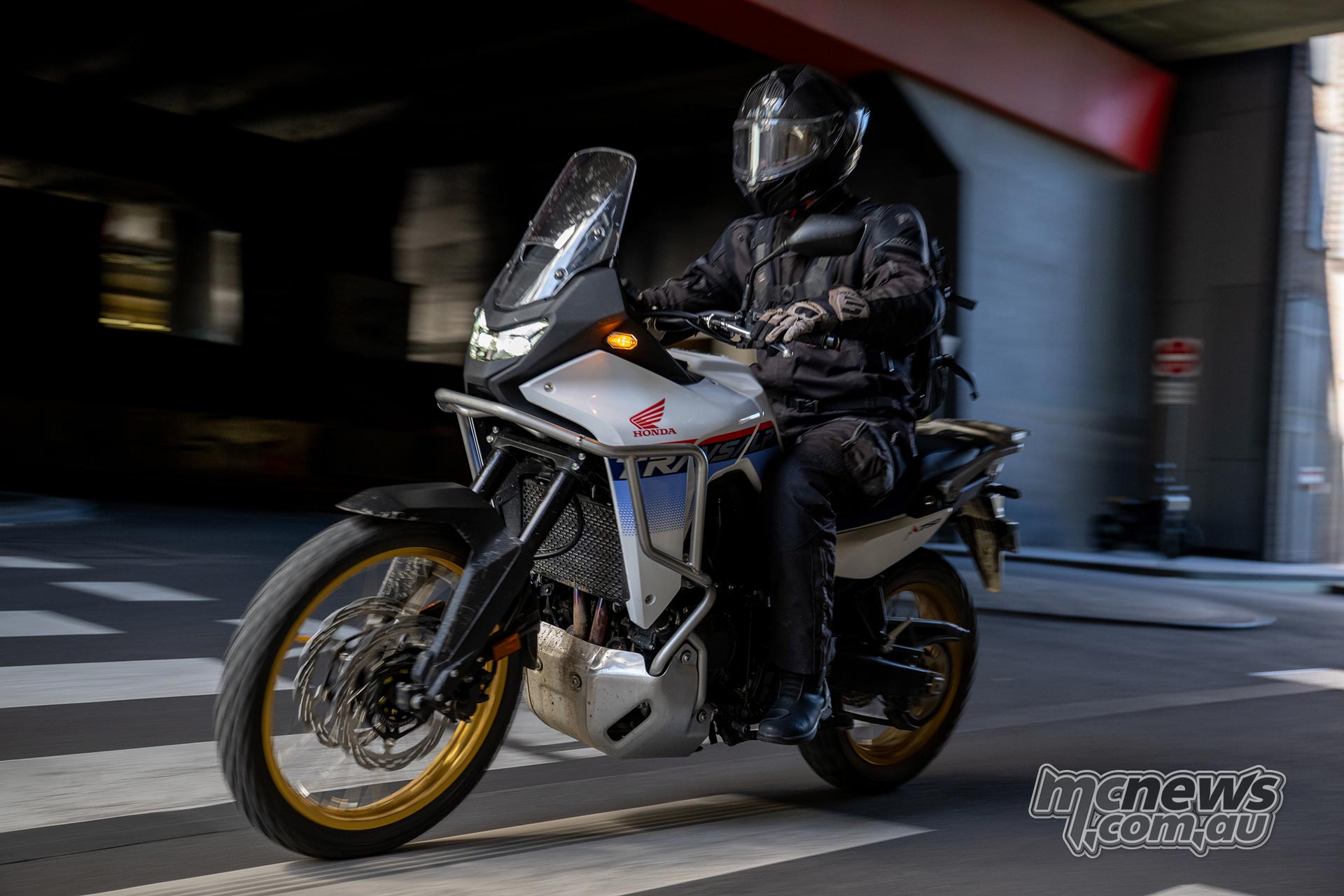 Honda Transalp XL750 retains its excellent on-road manners. Still the benchmark in the class in that regard.
There were some shortcomings, however, when it came to getting rowdy off-road. That suspension, while fine on road, was very much on the soft side of things once you got off sealed stuff and onto some of our great Aussie back roads and fire trails – I had it dialled up to pretty much max preload at both ends. And it was still pretty marginal. The rear shock was the primary issue.
And then there was the traction control. It was massively intrusive off-road, even in gravel mode, and switching it off was an exercise in patience. Particularly considering you had to do that every time you turned the key off.
The TC sent me into a bit of a dummy spit if I’m honest. It shouldn’t be that hard for manufacturers to include a dedicated TC button and remember the rider’s preference when the key is turned off. That bike was probably the one that kicked off what has been a bit of an ongoing mission to call it out every time I ride a bike that has similar issues. There have been more than a few…
So what’s new on the Transalp in ‘25?
Time has rolled on as it does, and we had a minor update for 2025 that brought with it some tweaks. Notably:
- Suspension tweaks, firmer rear shock and a plusher fork
- New 5-inch TFT with Smartphone integration
- New backlit switchgear for easier mode switching
- A second ‘User’ mode, now allowing two presets to your own liking
- Euro 5+ compliance, which comes via a new cat and updated fuel mapping
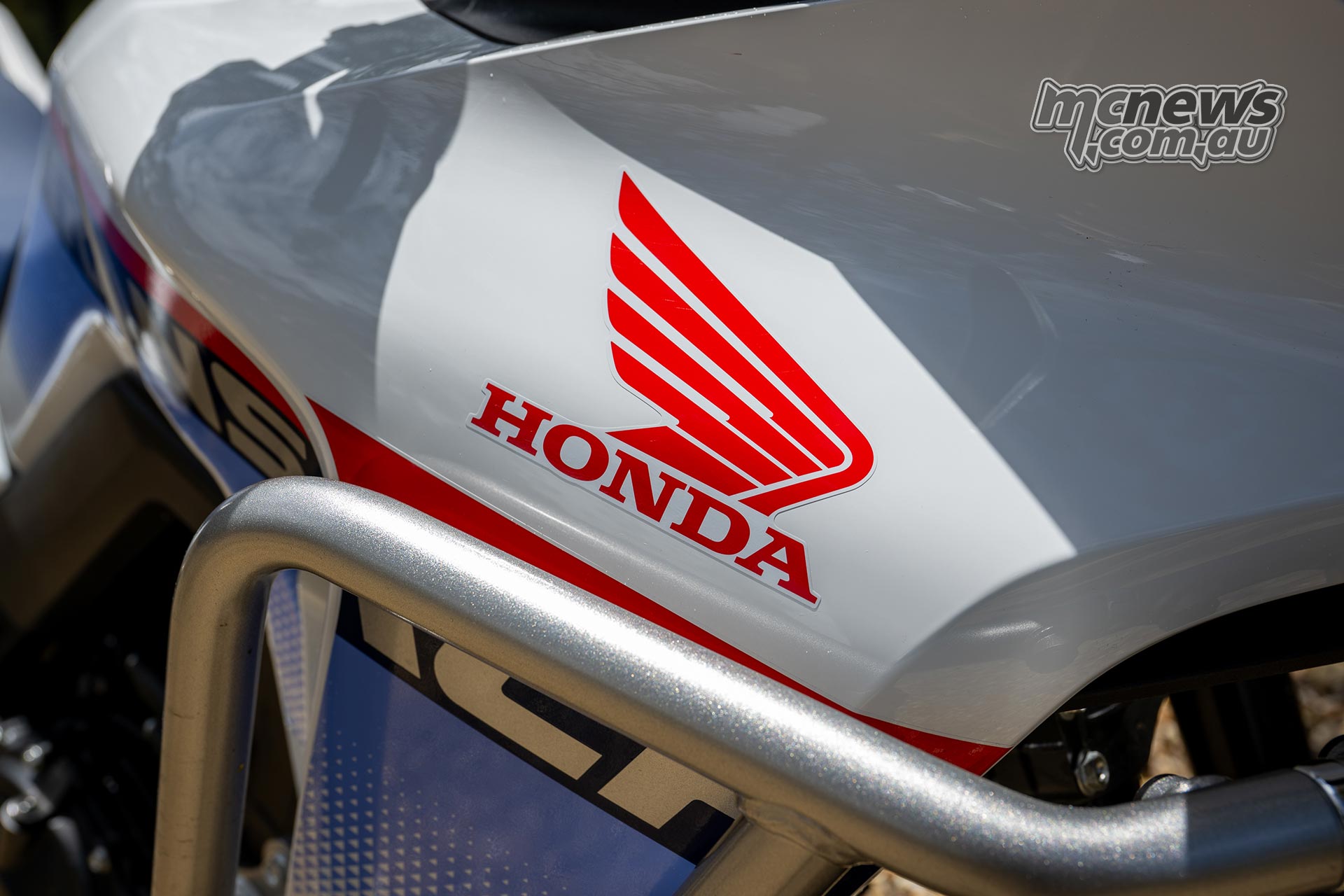
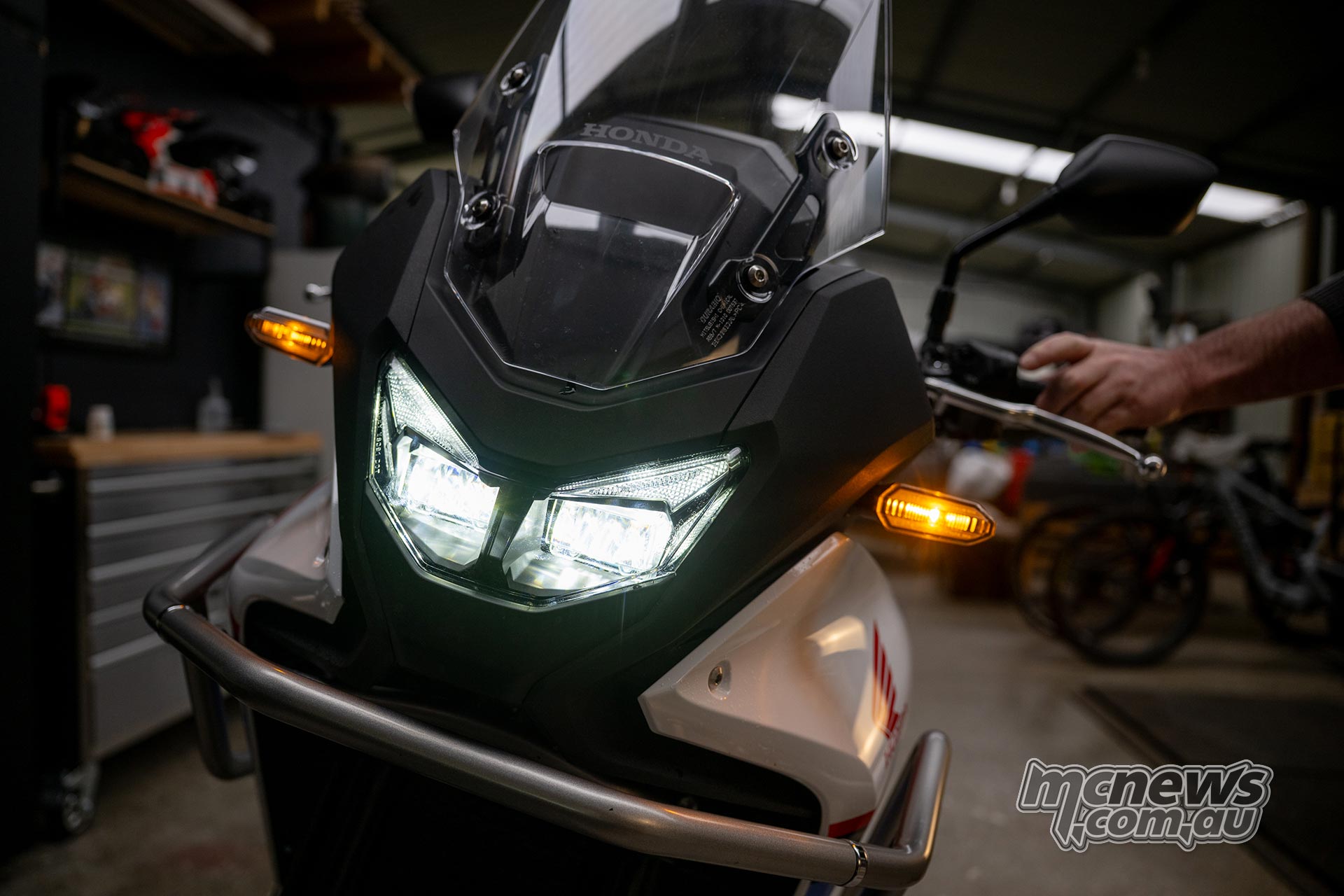
- Styling updates to the headlight and cowl, and new graphics
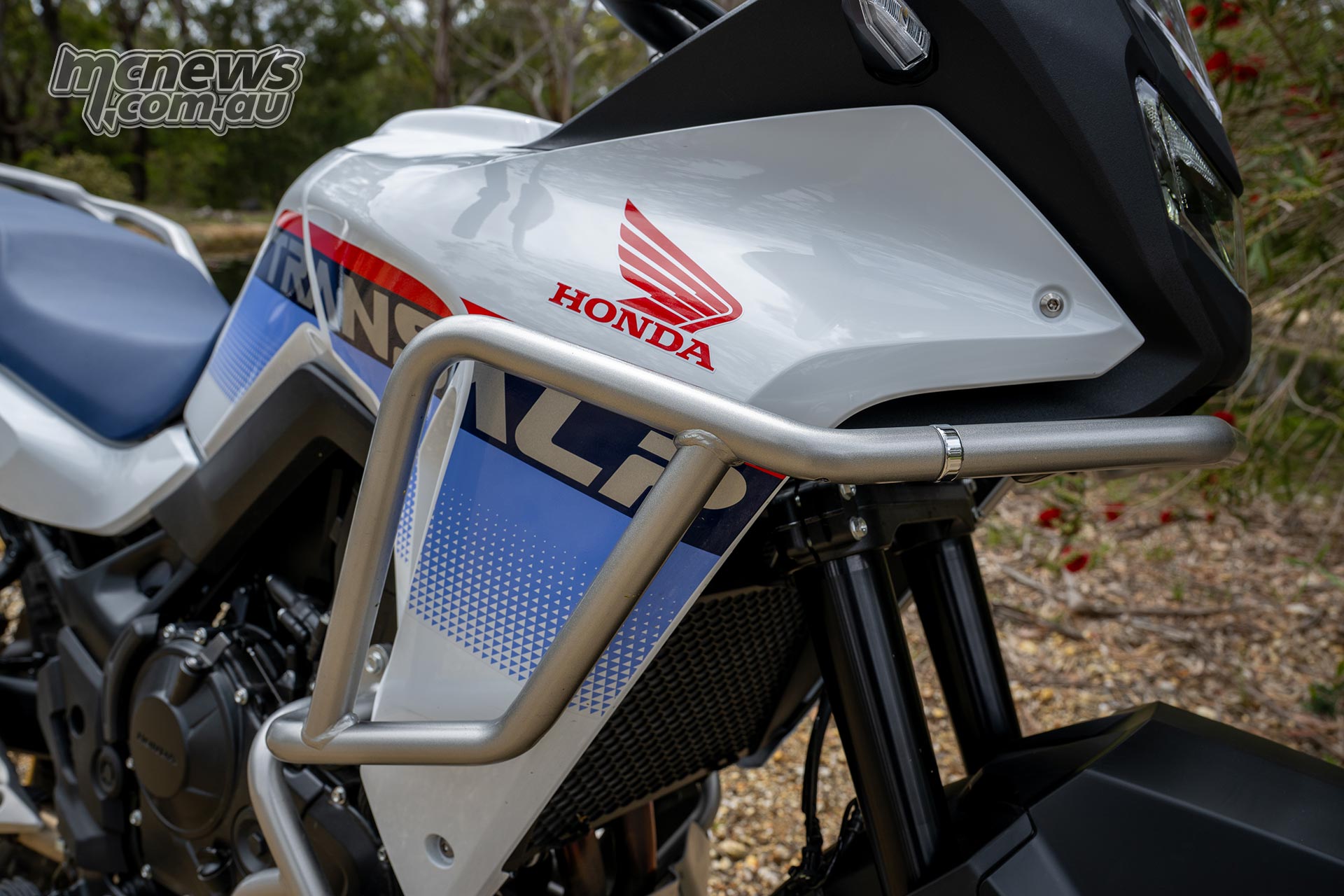
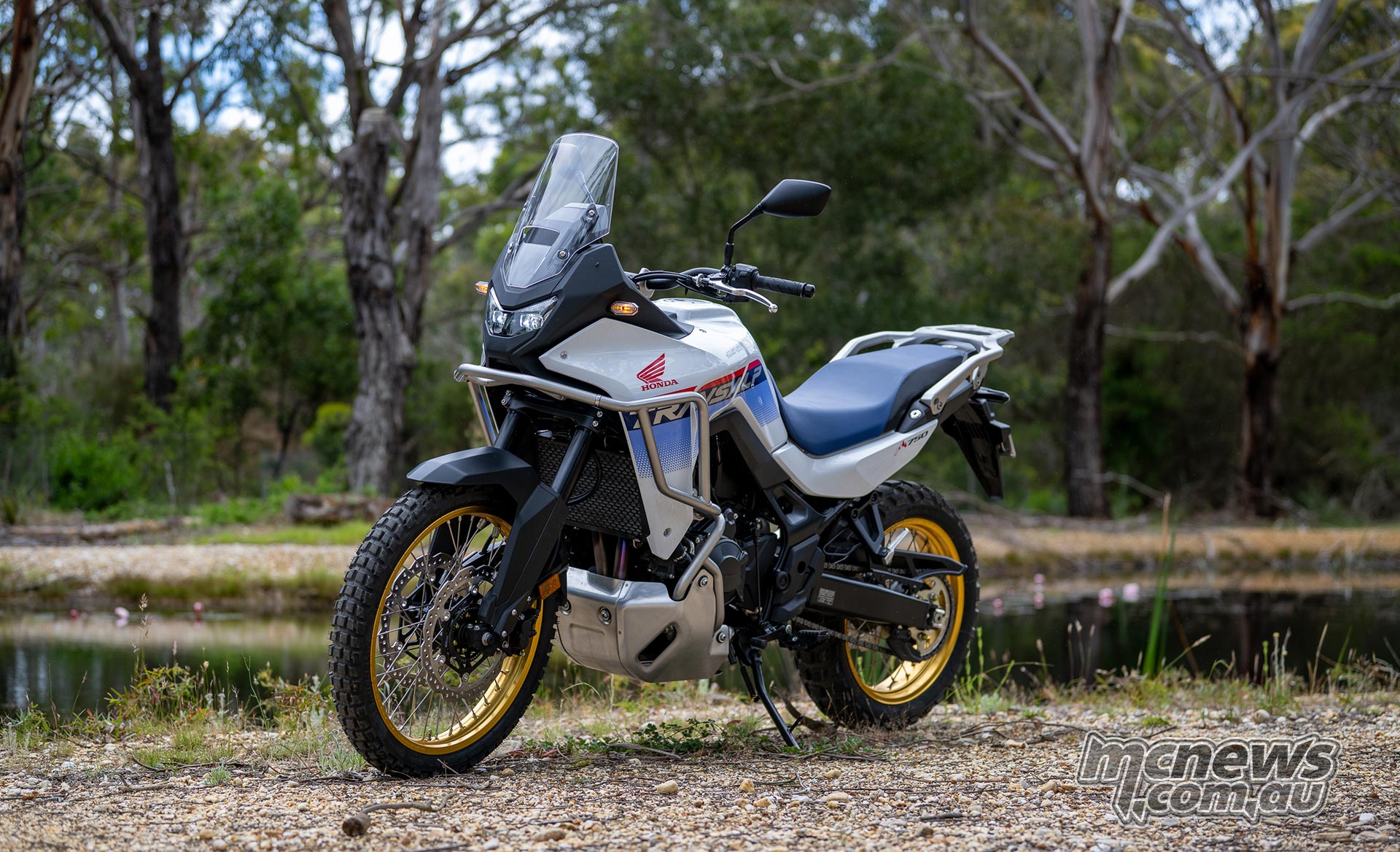 2025 gets an updated front cowl and styling as well as meaningful suspension and tech updates.
While they might not seem like massive updates individually, they’re meaningful changes that, combined, realise a solid overall step forward. They certainly make it an even better thing on the road – it already was a particularly good thing on tarmac (in fact, I favoured it over its most direct competitor in the V-Strom 800).
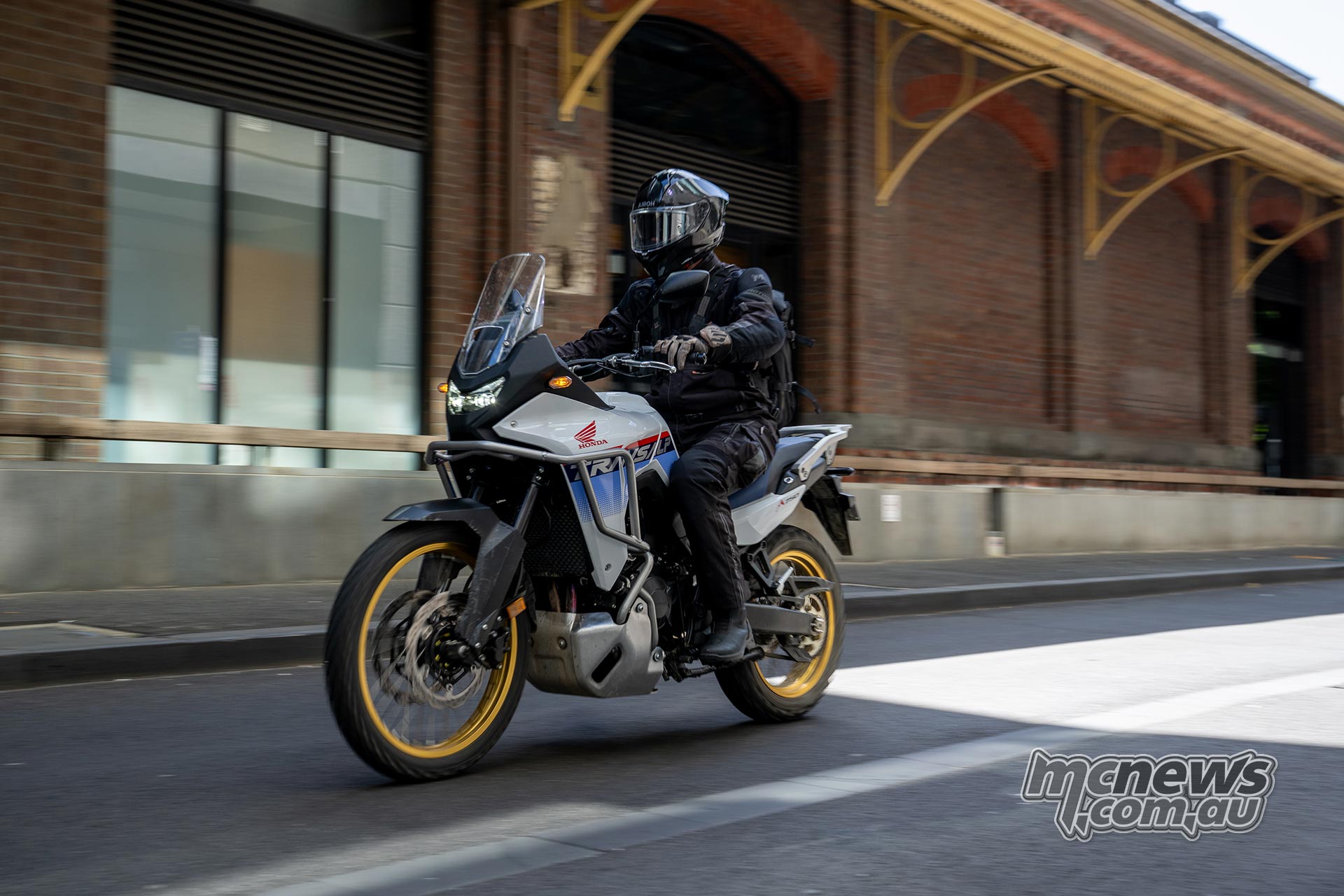 Honda Transalp XL750 Review
The styling updates look well executed. There is slightly better wind and weather protection from the revised cowl, which didn’t show any signs of buffeting on my ~6ft (181 cm) frame. I’d need to test them back-to-back to notice any differences, but I saw no problems.
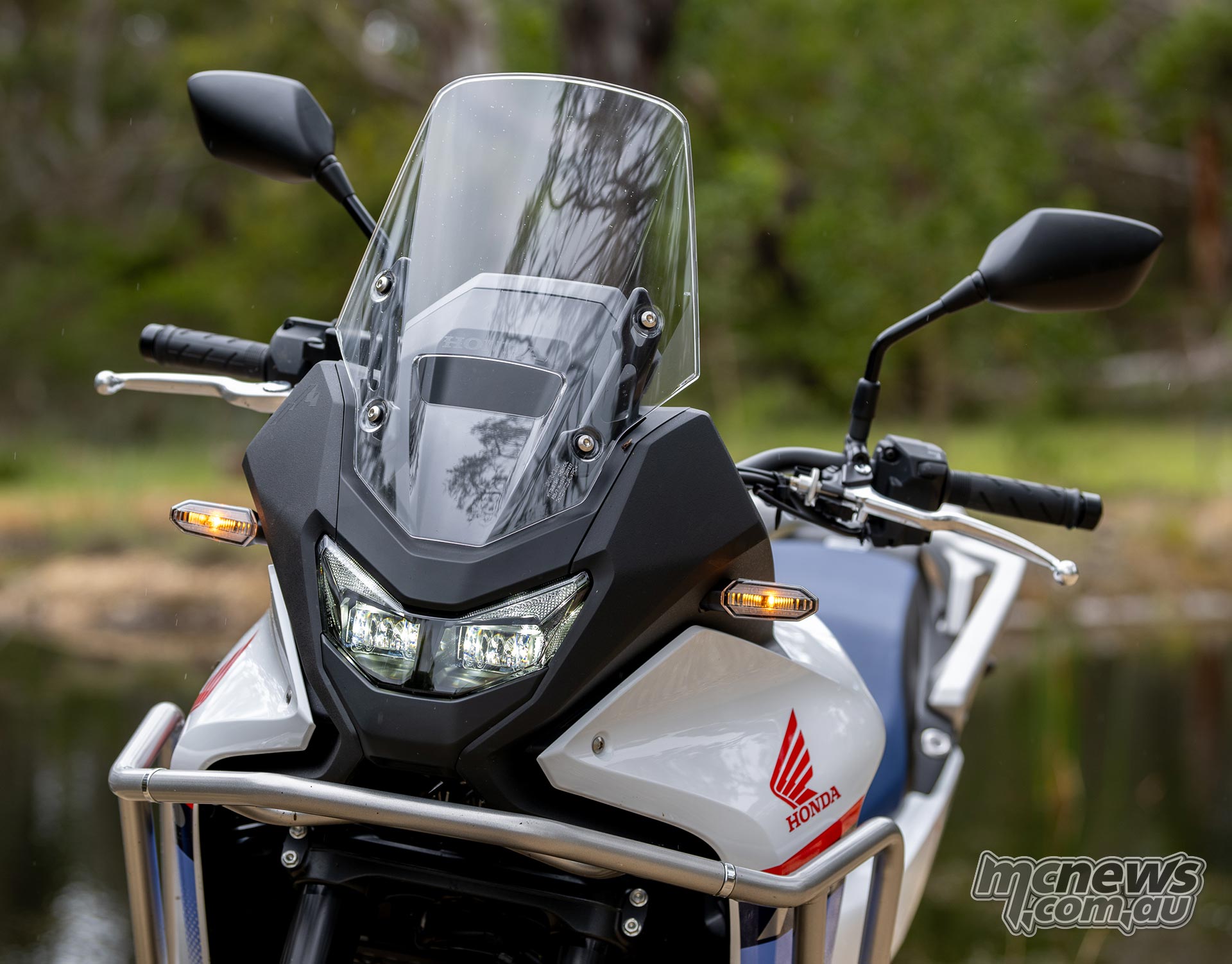 New cowl apparently offers better wind protection (hard to verify without a back-to-back test)
The updated fuelling remains spot on, which is impressive given they’ve managed to keep the Euro5+ emission boffins happy. And mechanically, it doesn’t feel any different (because essentially it isn’t), though I did notice the seat being firmer than I recall.
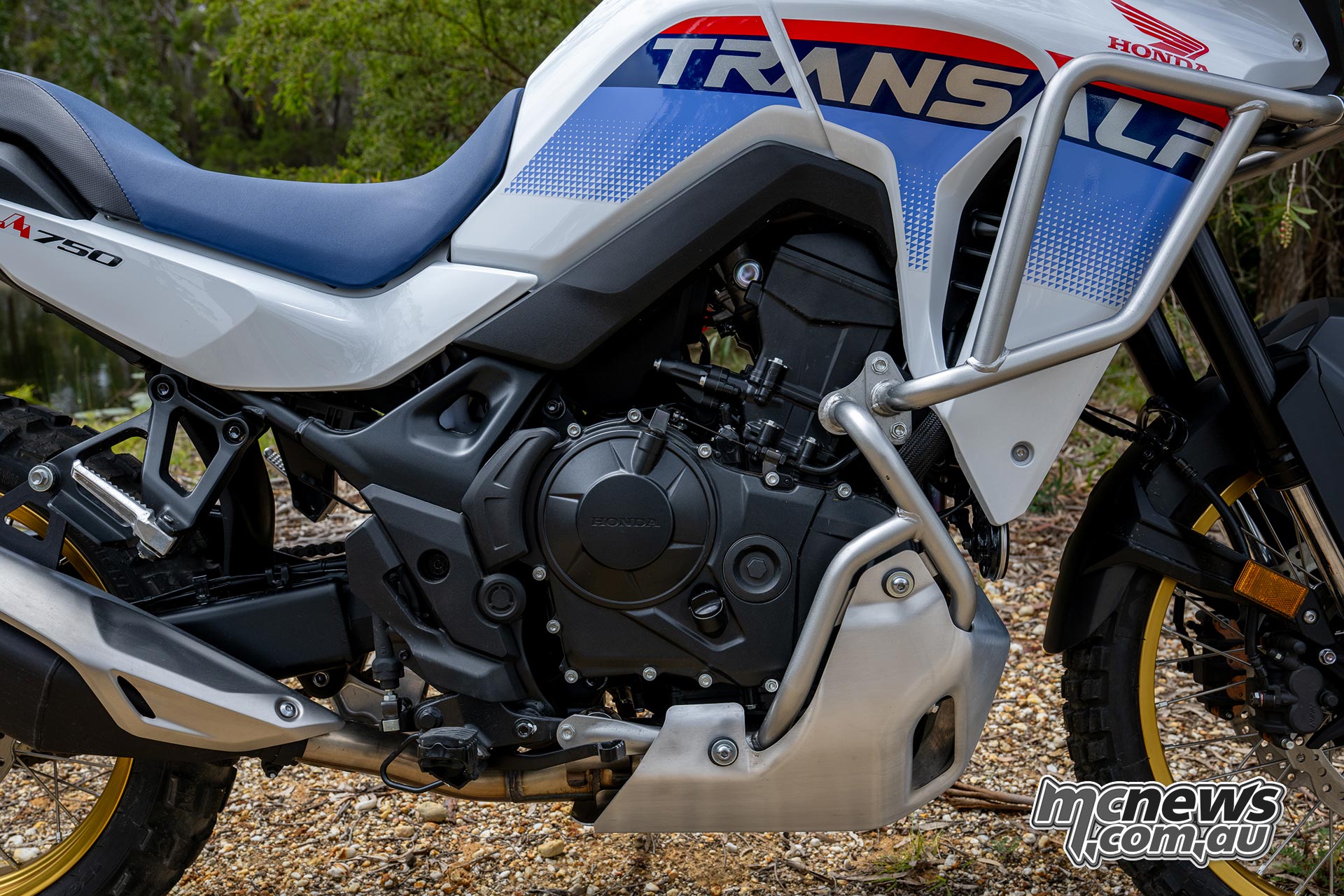 Honda Transalp XL750 engine remains a ripper. Torquey down low but very eager to rev.
That must be just me, because from what I can tell, it hasn’t changed. There is a ‘comfort seat’ available as an accessory, however, for those who’d like some more padding under their butt. It adds 20 mm to the 850 mm seat height, so it would still be nice and low. It might be worth a look at.
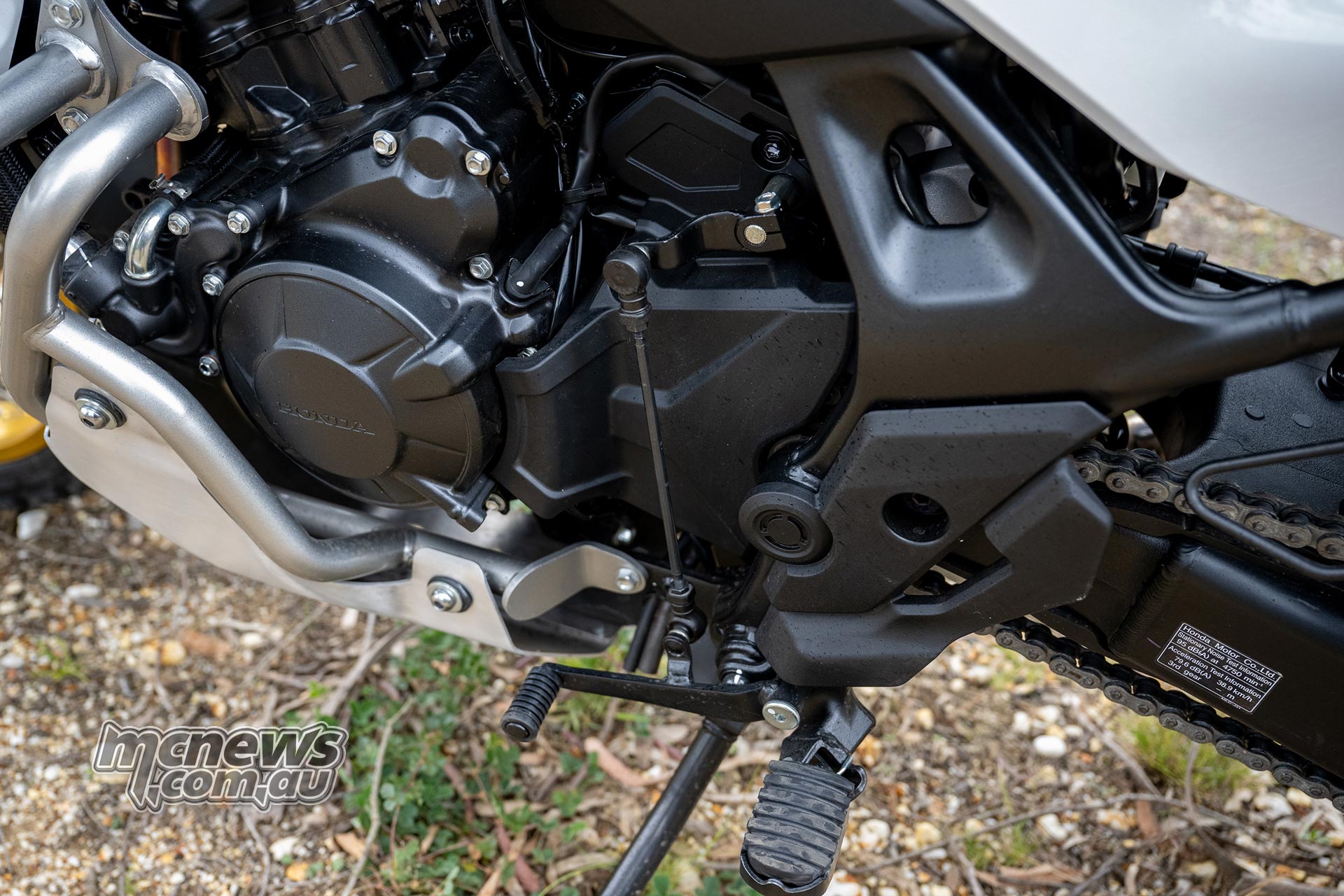
The other option I’d seriously consider is the quick-shifter, which isn’t standard. The box itself is typical Honda firm without being super-slick, and realistically doesn’t really need a quick-shifter, but I find them so pleasant to pedal these days that I think I’d tick that option regardless.
 Just as happy in and around town with that low seat height.
Tech has copped an update
Electronics-wise, the tweaks to the switchgear and new dash are a welcome step forward. While the TC still reverts to a switched-on state each time you turn the key off, I did find a setting and a workaround that would work for most riders, most of the time.
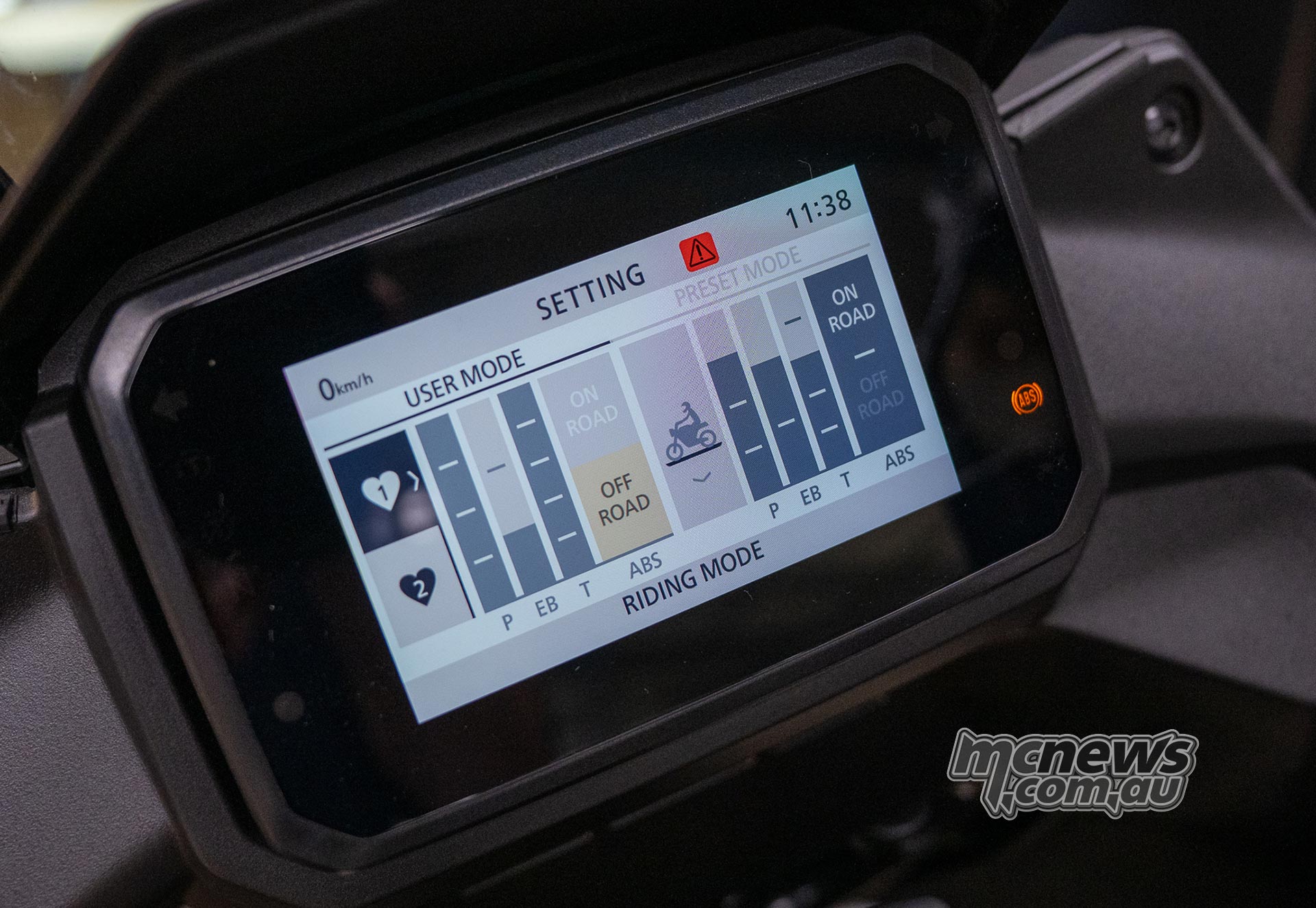 Now has two customisable user modes that will remember your settings (unless you turn the TC fully off)
Diving into User mode and dropping the TC to its lowest setting still allows a decent amount of slip. And as long as it’s not turned fully off, it will remember that setting even when the ignition is cycled. That’s a big win.
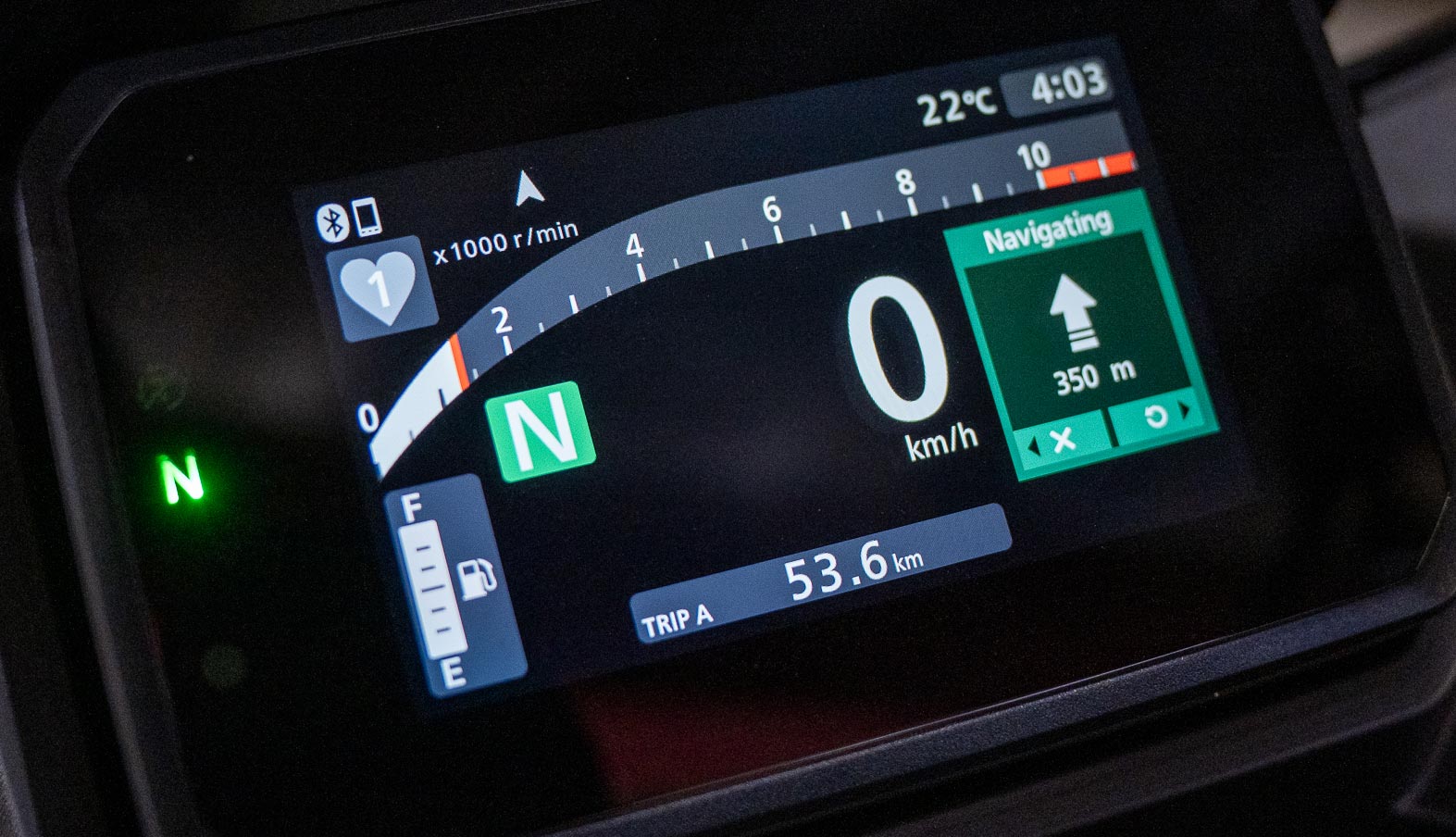 Instrumentation is improved for 2025
The other gem I found this time was that the multi-toggle button has a quick shortcut function to either reset the trip meter, or… turn the rear ABS off (which does reset on ignition off – there’s a theme here). Push and hold the button up, and you’ll be asked if you want to turn ABS off without diving into a menu, which is a win.
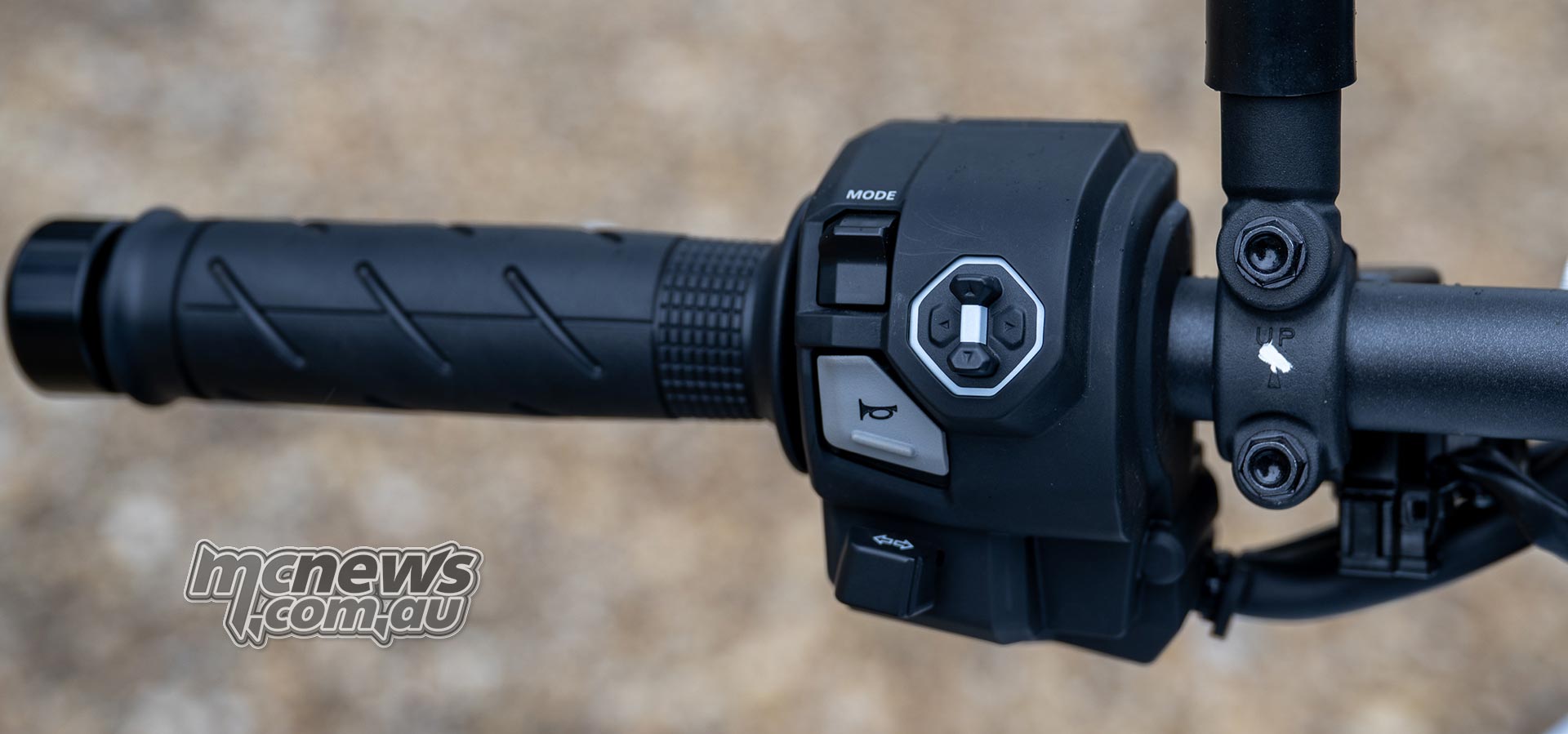 Honda Transalp XL750 gets updated backlit switchgear
With TC set to 1 out of 5 and ABS turned off on the rear, it’s going to work pretty well as long as you don’t want extended wheelies. It’ll let you steer with the rear, make decent drifts, and lift the front over little logs or small ledges, no problem. I’d imagine most riders would leave it in that setting and call it done.
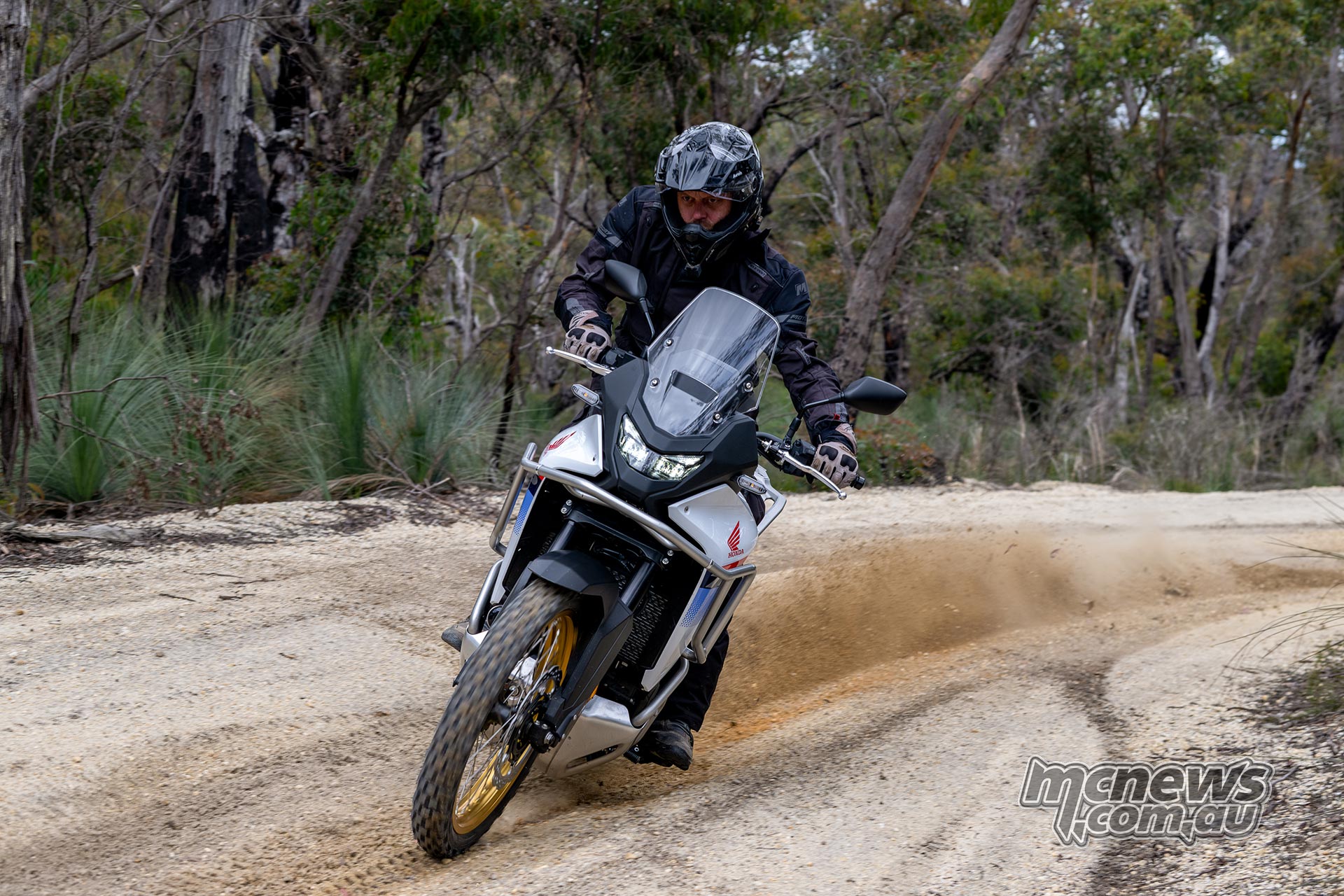 Even with TC still on (at its lowest setting), I found it would steer with the rear quite well.
But I still prefer an easier adjustment, including turning it off, which is remembered after the key is turned off. Am I the odd one out there? Let me know in the comments.
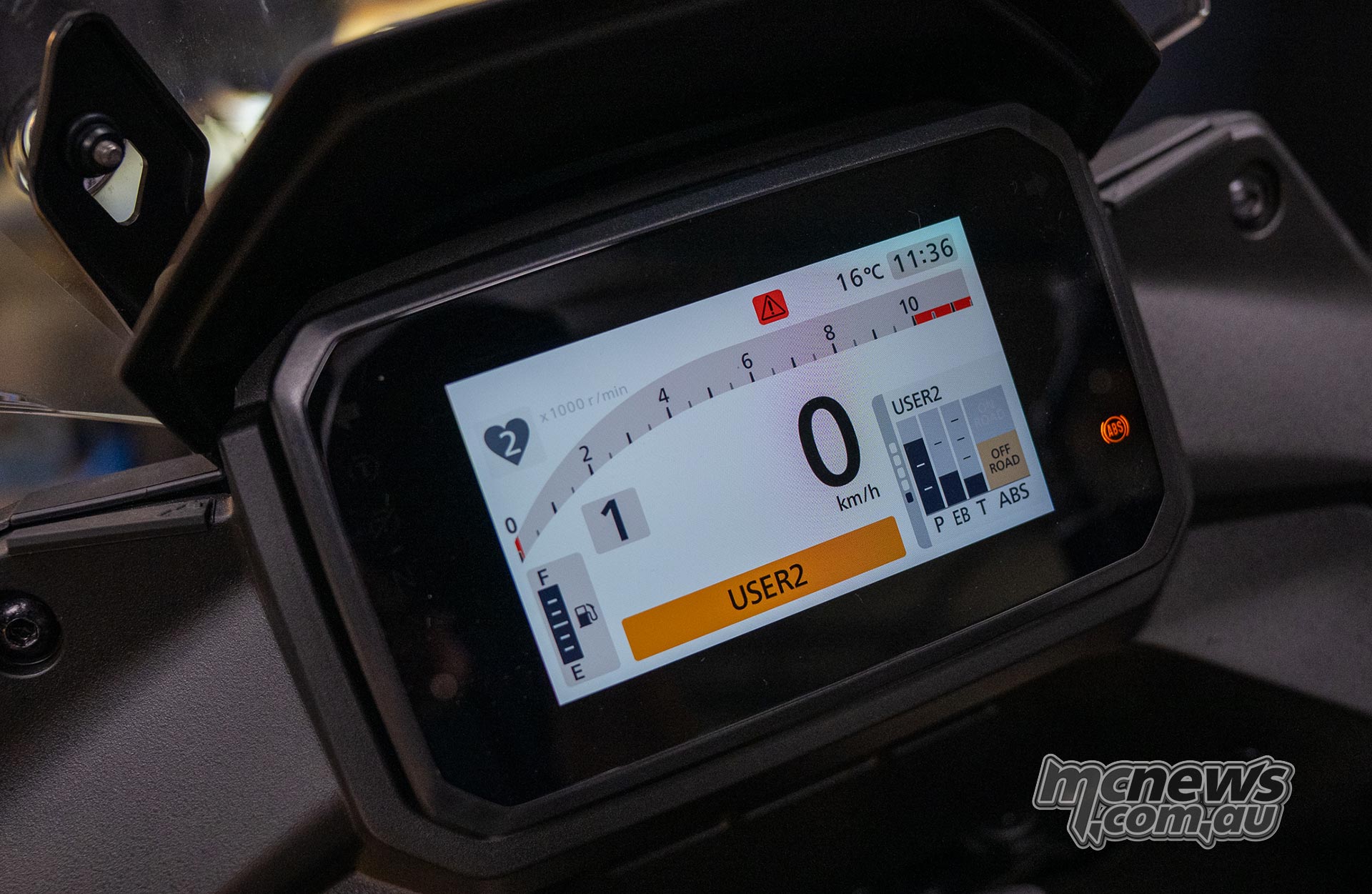 Honda Transalp XL750 gets an updated TFT that’s larger, brighter and shows less reflection.
One thing that remains suspiciously absent, given the Transalp’s Adventure Touring focus, is cruise control. Still not available as an accessory, which I have to admit I still can’t quite wrap my head around.
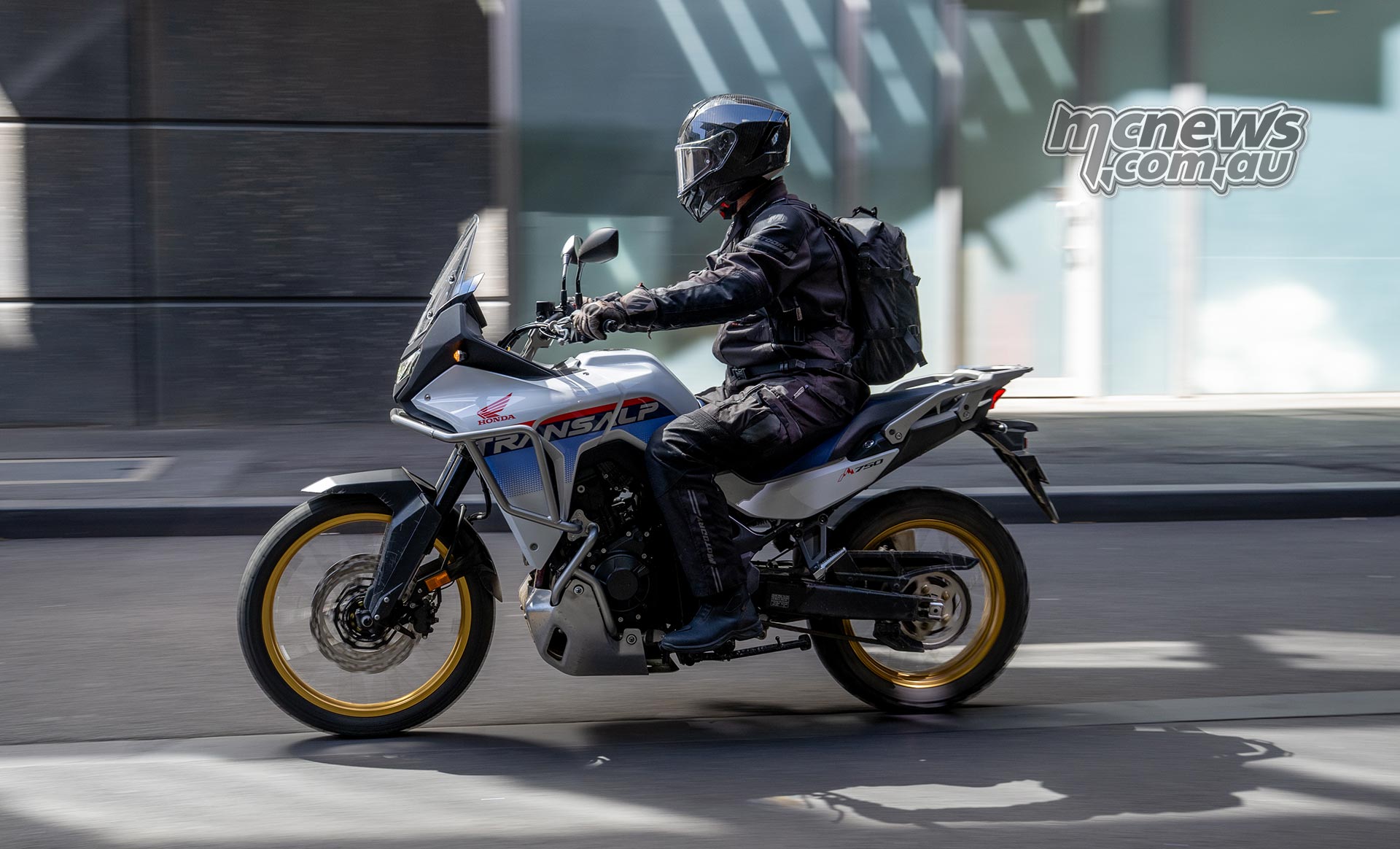 Honda Transalp XL750 Review – Cruise control would be handy for city and highway work
I also noticed that the USB charger is under the seat… with a spot for a 12v socket near the dash that’s available as an accessory (which you could use to plug in a USB adapter).
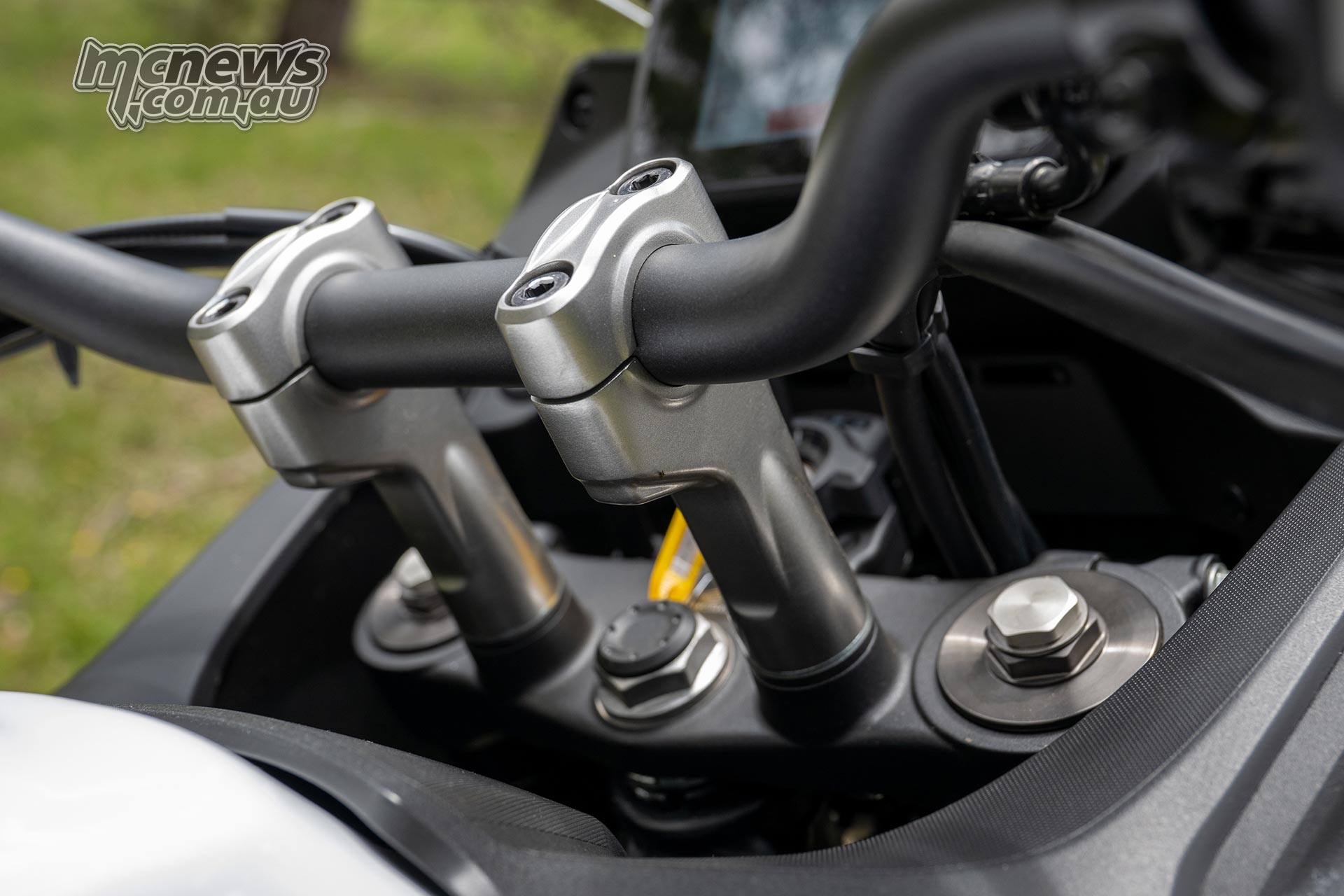
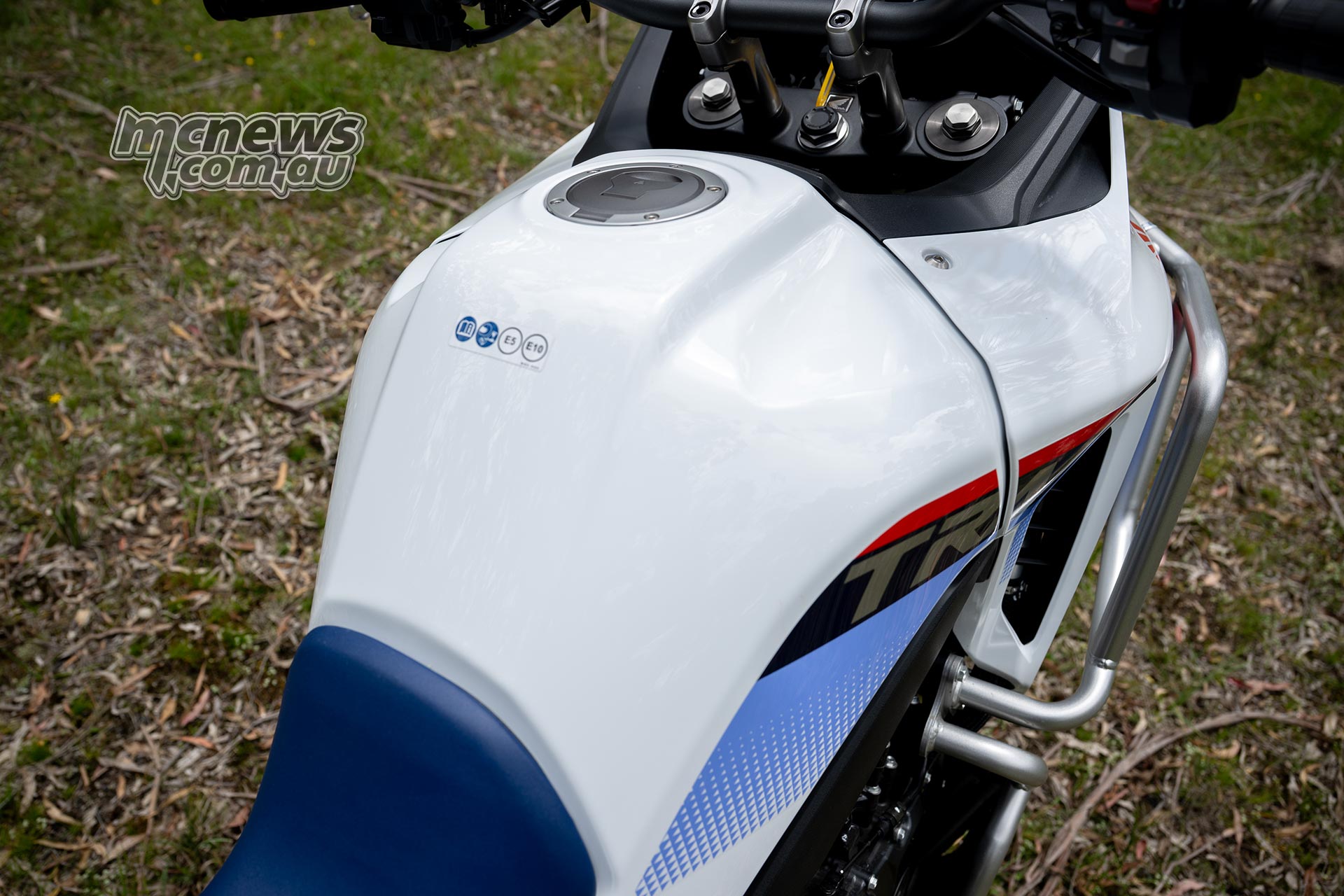
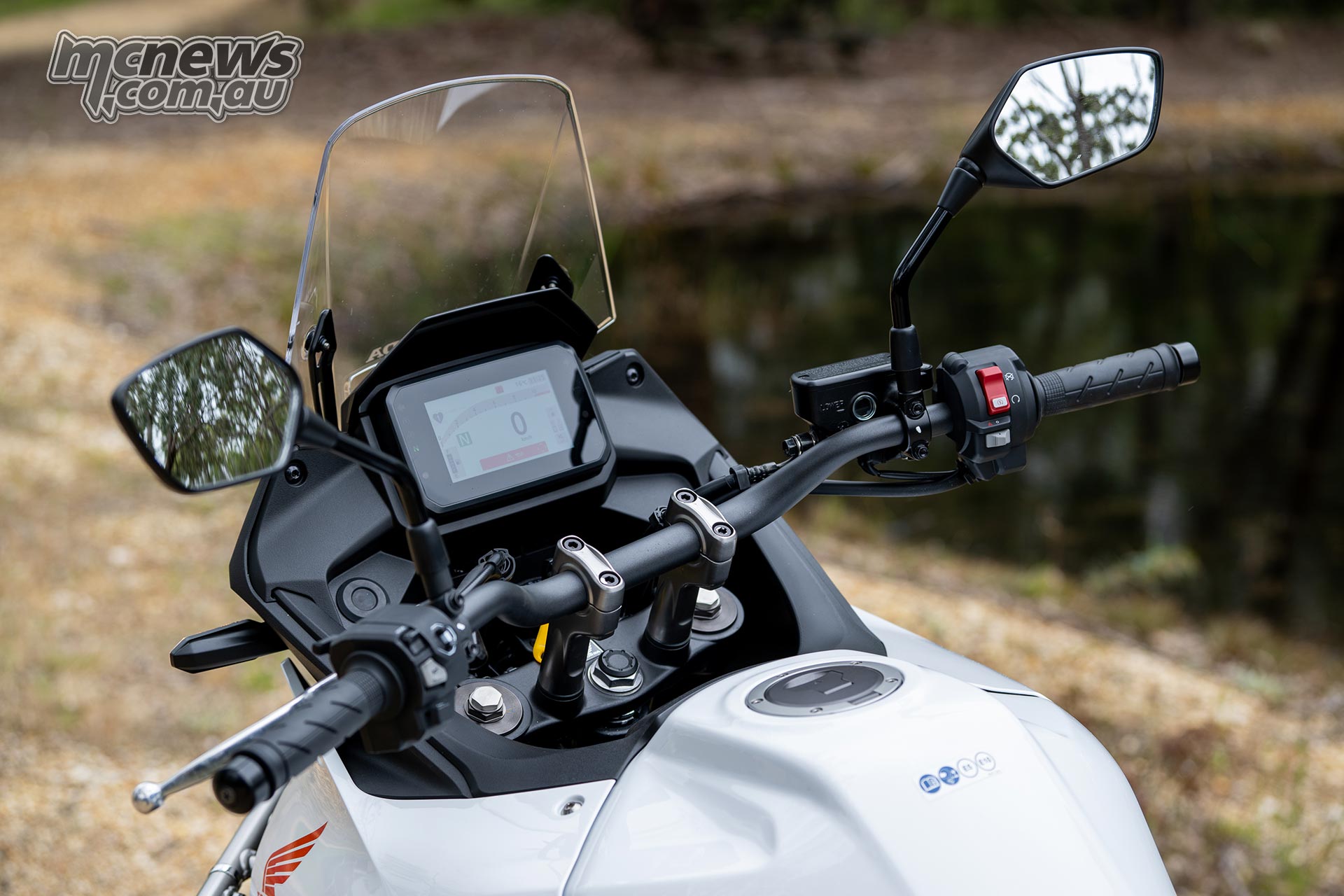 Honda Transalp XL750 – relatively high bars, as you can see by the risers here above the triple clamps
So the electronics are a step forward, though not fully sorted in my book, but I was most interested in how the suspension changes impacted off-road riding. The fork being plusher in particular caught me off guard, I must admit. Plusher? Hmm.
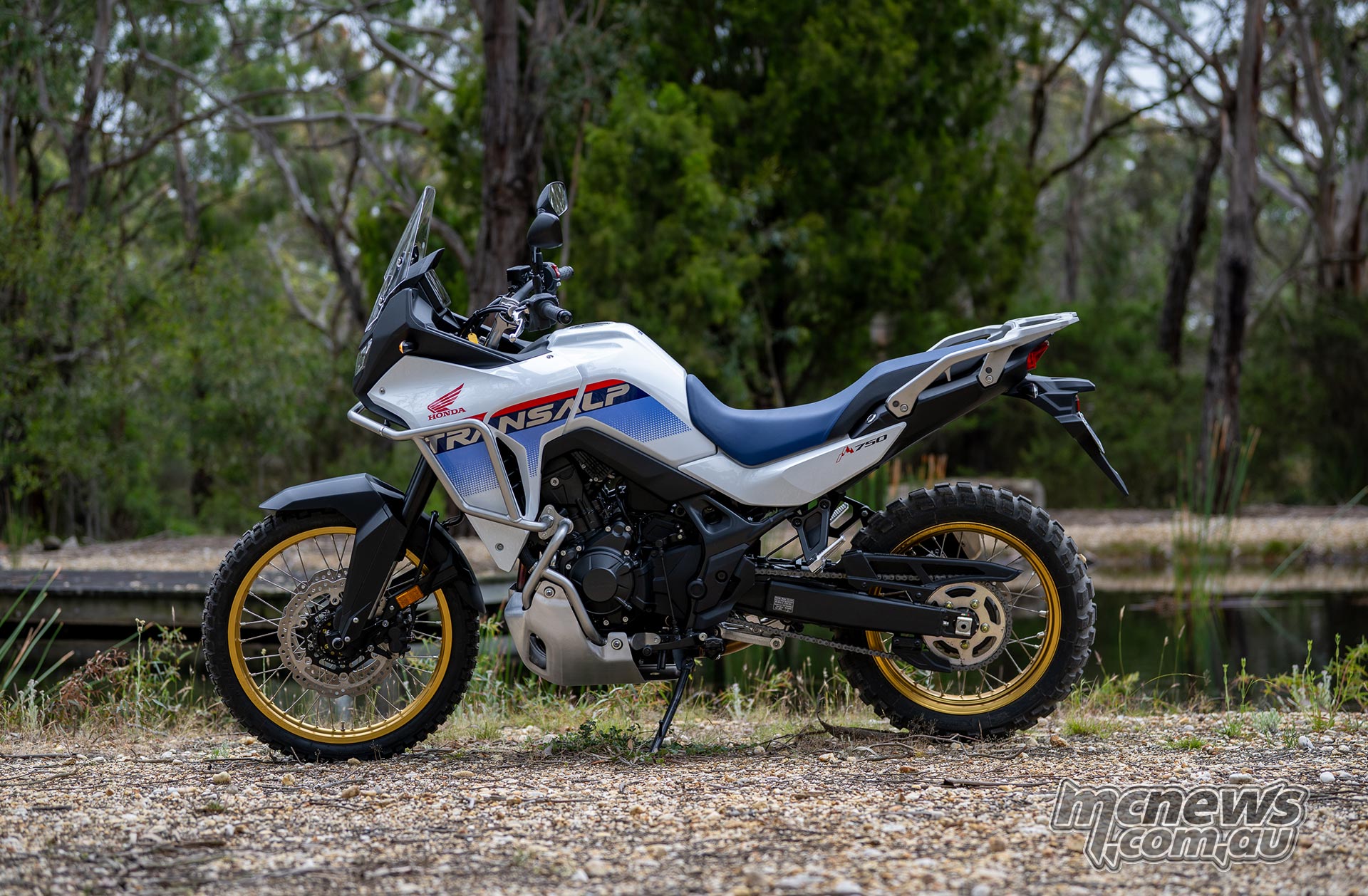 Honda Transalp XL750 – that seat sits quite low making you feel like you’re sitting IN the bike
New Suspension is a step forward on the trail
While the last iteration had superb on-road manners, I found its weak point to be off the sealed stuff. Working your way up a bumpy fire trail pushed the suspension past its capabilities.
 Honda Transalp XL750 – best to avoid this with the suspension on standard settings… it will bottom out.
The updated suspension has made quite an improvement in that regard. While at standard settings, I found the front still bottomed out too easily. When I wound up the preload front and rear, it started behaving with much more composure. I set it to about halfway in between standard settings and max preload at both ends; And even without further fine-tuning I was happy enough.
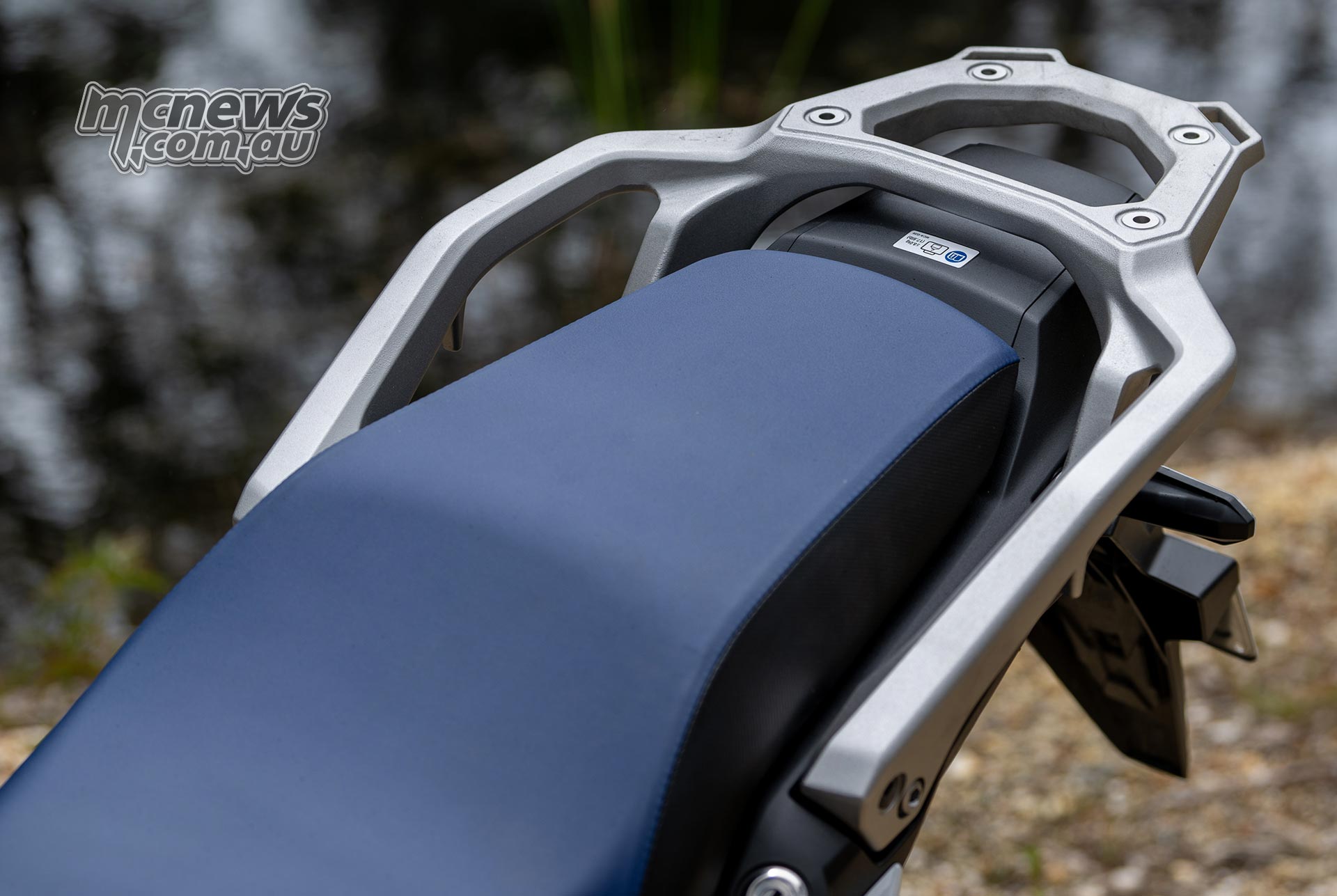 Solid grab rail with plenty of tie-down points for luggage
That still leaves plenty in reserve to dial up the rear further should you throw some luggage on there. Or if you’d had a few more pies than yours truly.
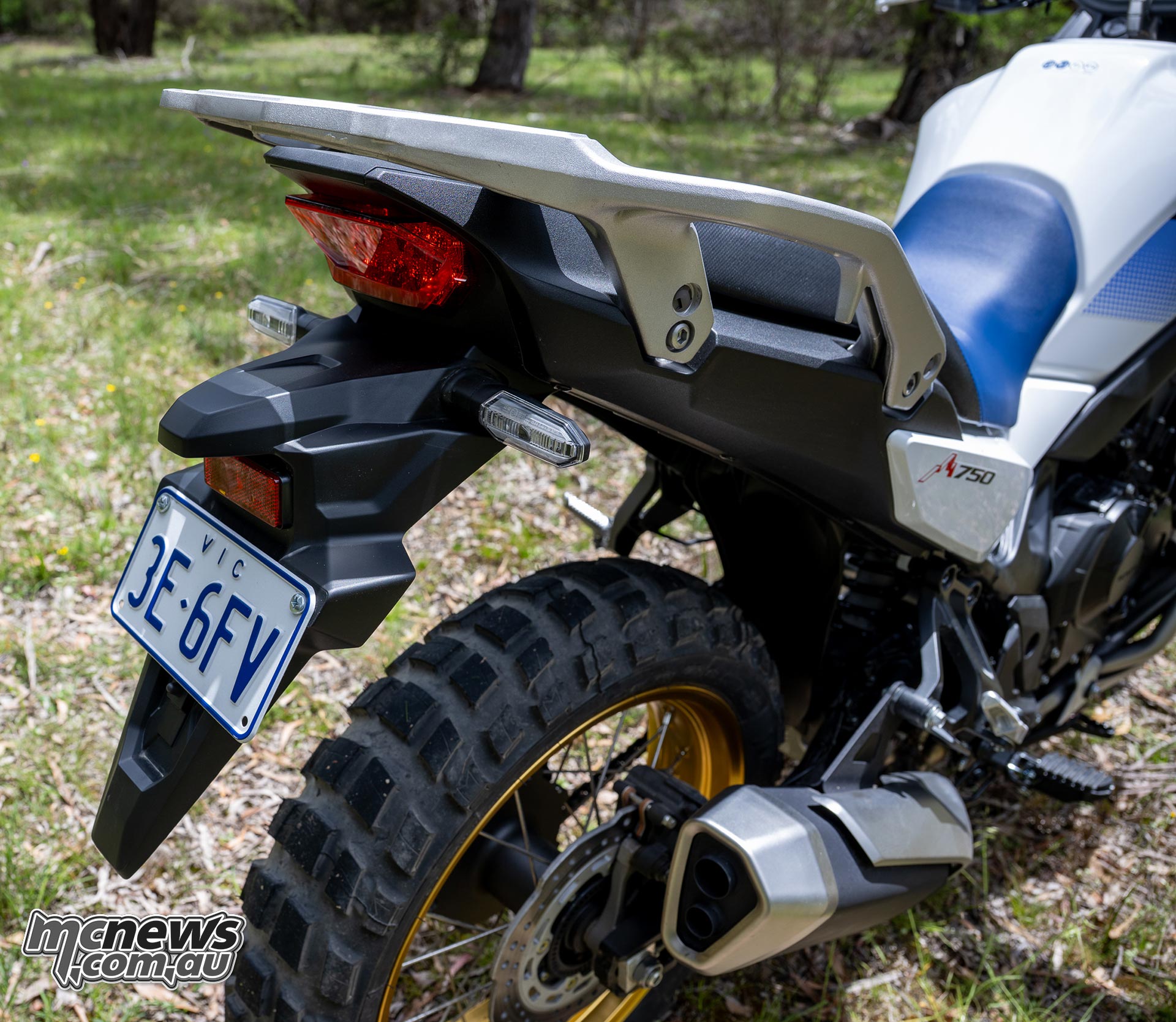 Honda Transalp XL750 – that rear shock nestled away in there is a massive step forward over the 24 bike
Final thoughts?
It appears that the big H has addressed my chief concerns with the last generation, which will be enough to keep most riders happy, most of the time (someone once said you can’t please everyone all the time). Suspension in particular is noticeably more composed when you venture a little off the beaten track, while remaining excellent on the road.
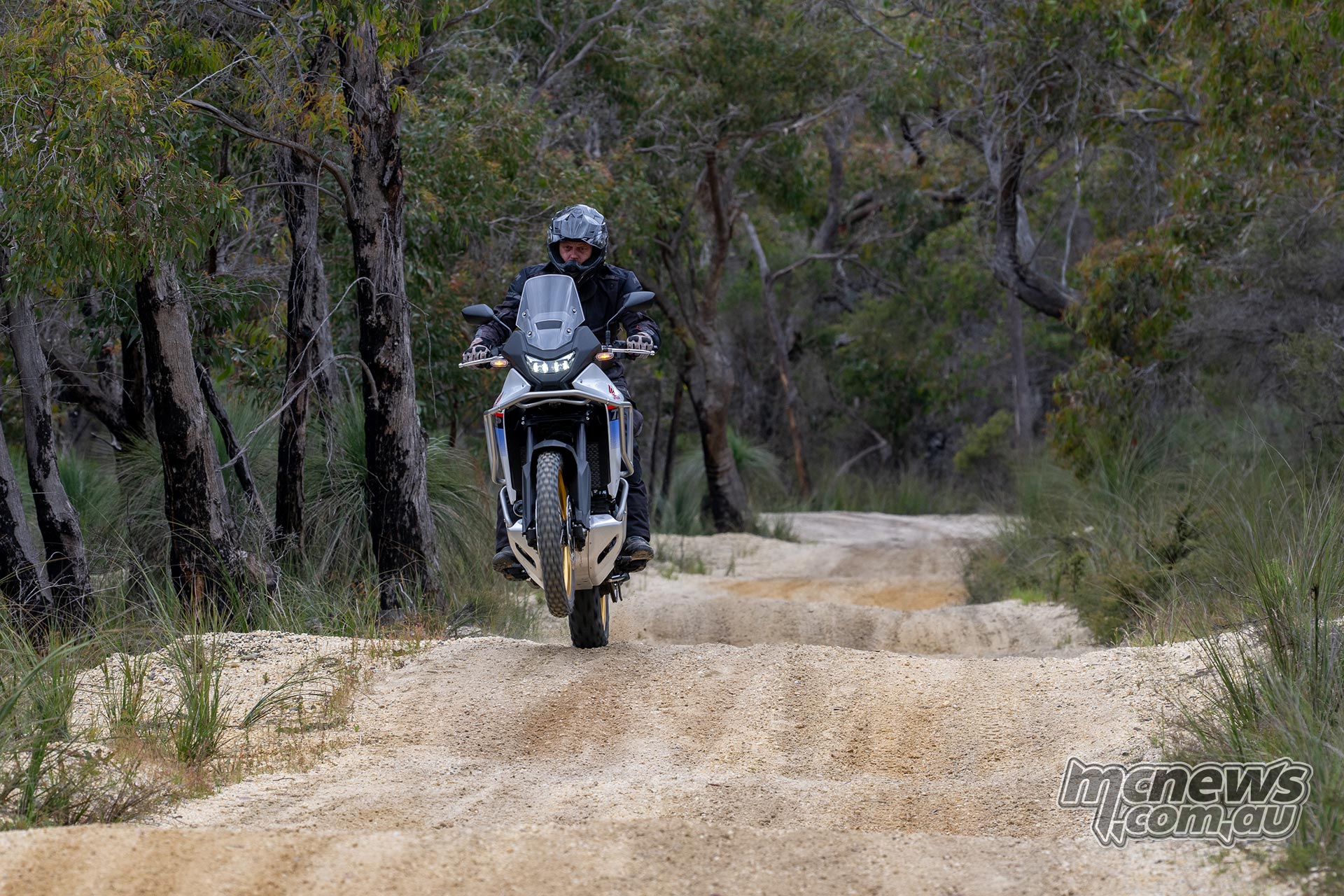 Even though it does its best work on sealed stuff, it’s now surprisingly adept on gravel tracks
If, like me, you’d want to get a little gravel under your tyres, I’d be sure to tick the option for the crash bars and bash plate as fitted to the bike I tested – without them, the sump looks a little exposed. I’d then throw on a set of Barkbusters and the quick-shifter mentioned above and be done.
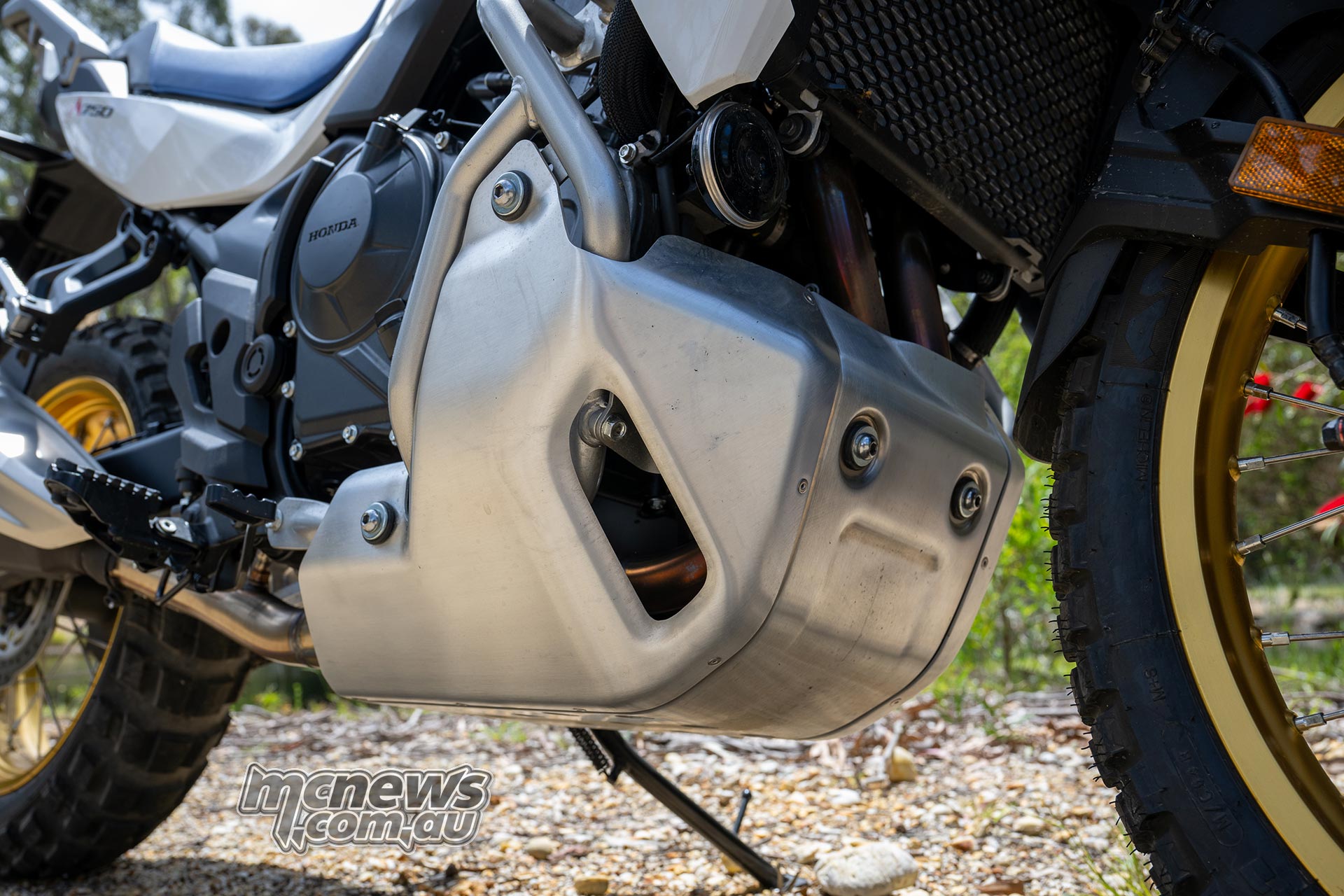 Honda Transalp XL750 – I would certainly tick the bash plate and lower crash bars option
And while most riders will be happy to live with TC set to 1, I’d still love a way to quickly turn it off when needed (for that sudden, sandy hill, for example), and for it to allow you to save your User modes with TC set to off; And not reset it back on when you cycle the ignition.
And I still think it should have cruise control, at least as an option.
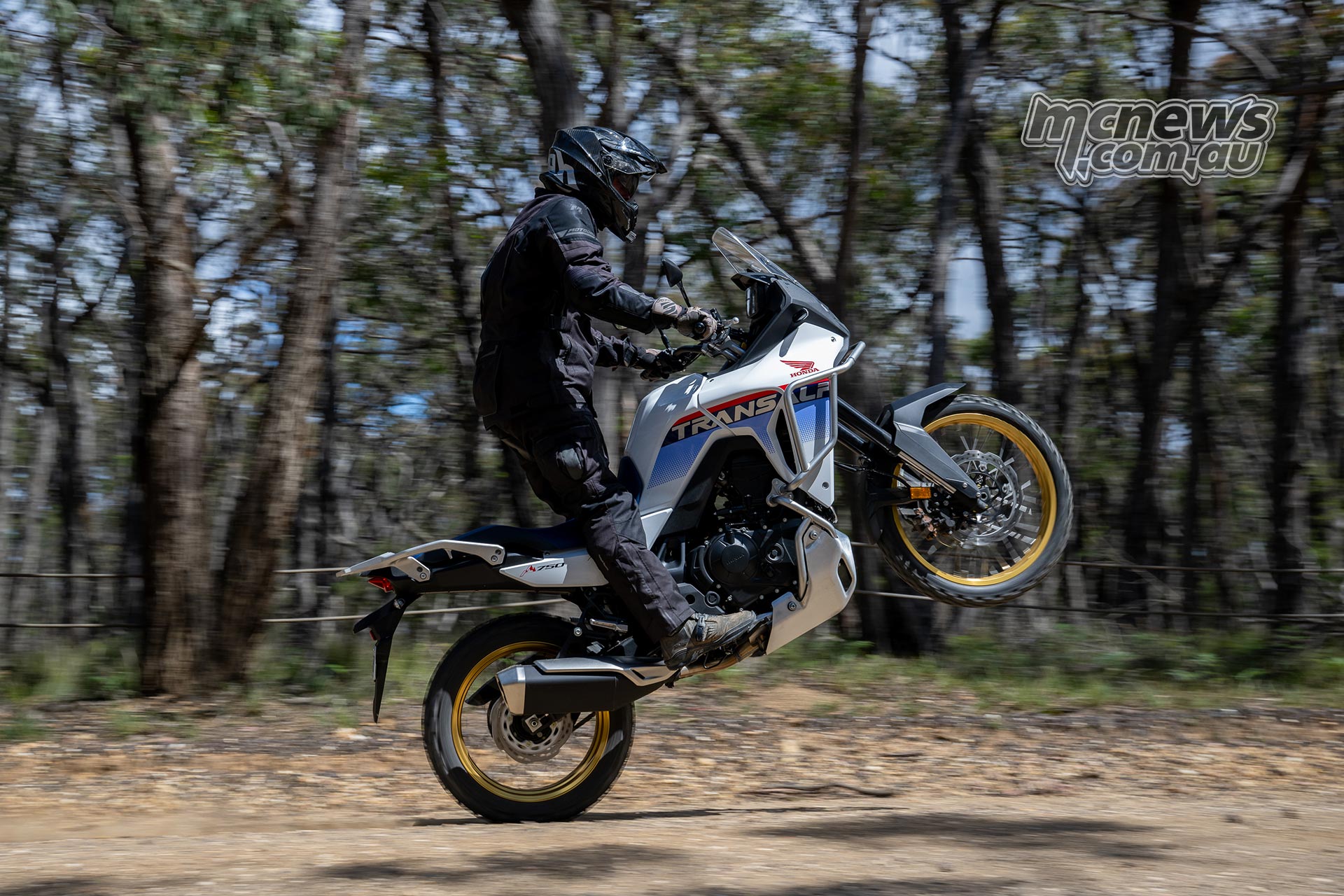 Honda Transalp XL750 – ok, so that one was with TC turned fully off…
Still, at under 17K ride away, it is a pretty compelling option in the value stakes.
2025 Transalp XL750 hits:
- Suspension updates are a decent step forward for proper all-roading.
- Still the benchmark agile handler on sealed roads in that three-quarter litre size.
- Most off-road riders will be happy with TC at setting 1 and quick ABS off.
2025 Transalp XL750 misses:
- Still no cruise control? Baffling.
- Make it remember the TC set to off so I can stop banging on about it.
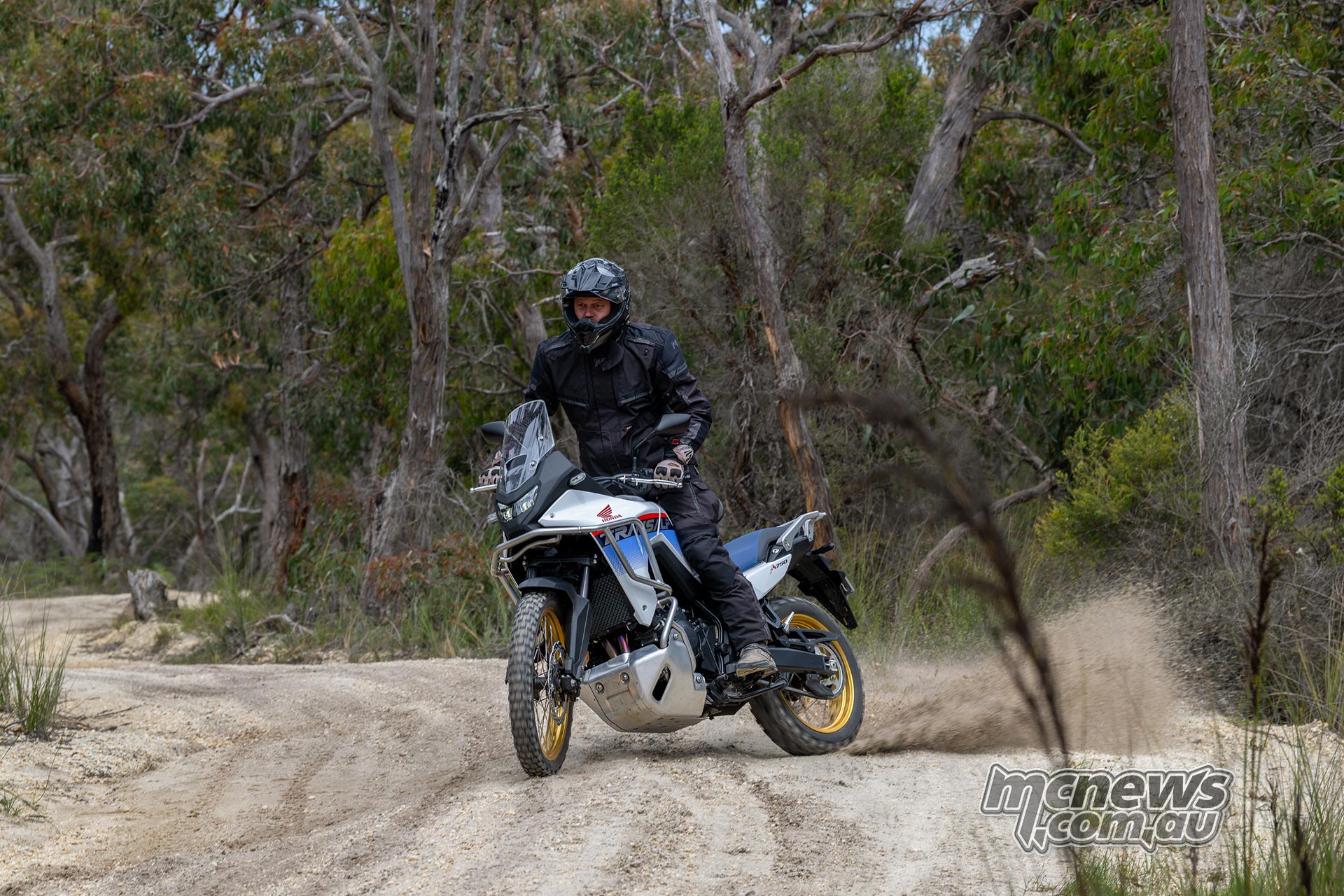 And so was that one…
Honda Transalp XL750 Specifications
| Honda Transalp Specifications XL750 | |
| Engine | Four-stroke parallel-twin |
| Capacity | 755 cc |
| Bore & Stroke (mm) | 87 x 63.5 |
| Phasing | 270-degree crank |
| Valvetrain | Eight-valve, Unicam |
| Compression Ratio | 11:01 |
| Power | 91 horsepower (67.5 kW) |
| Torque | 75 Nm at 7250 rpm |
| Fuel System | PGM-FI Electronic Fuel Injection |
| Cooling | Liquid |
| Oil capacity | 3.9 litres |
| Starter | Electric |
| Transmission | 6-speed |
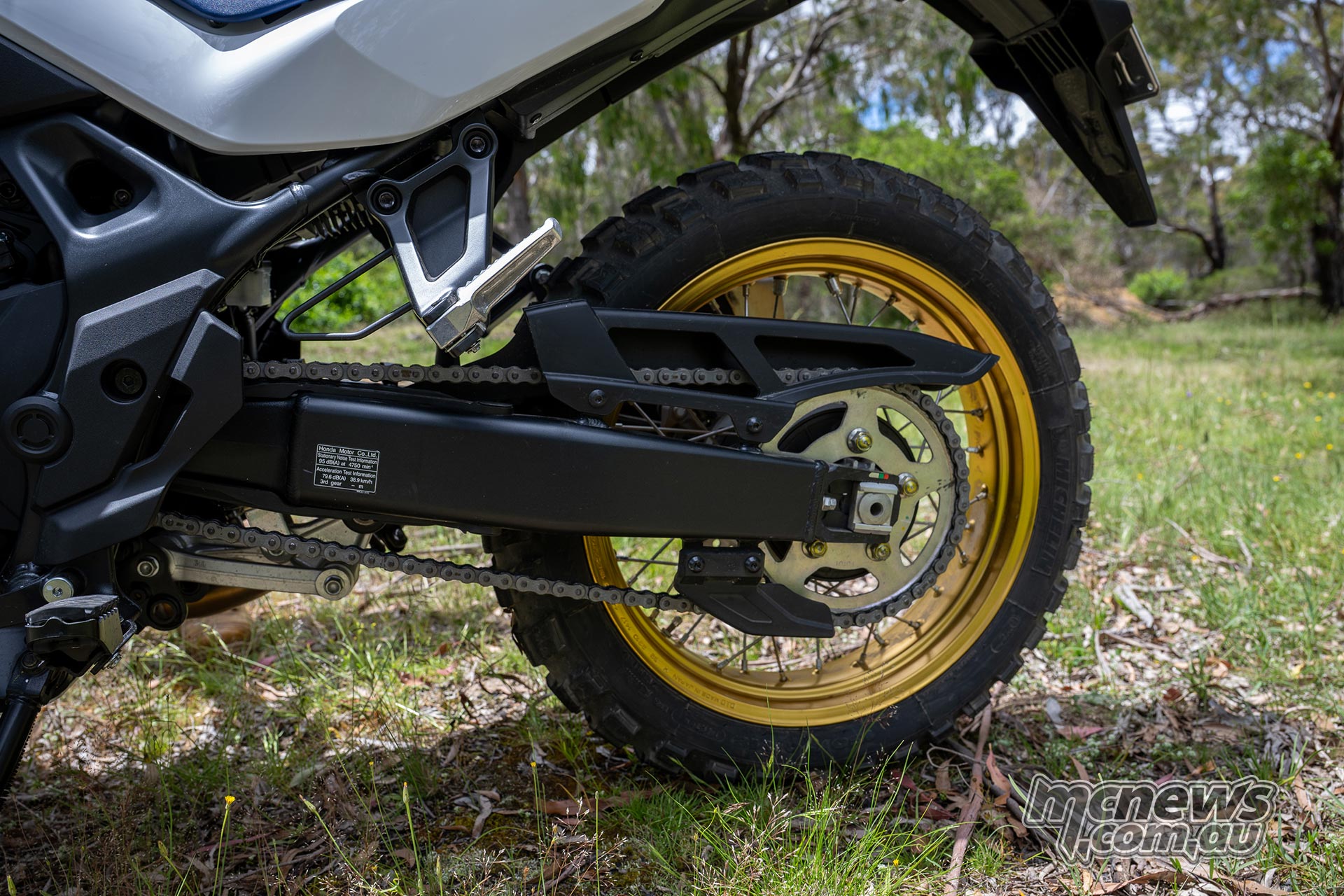
| Drive | Chain |
| Brakes (F) | 2 x 310mm discs, ABS, twin-piston calipers |
| Brakes (R) | 1 x 256mm disc, ABS, single-piston caliper |
| Front Suspension | 43mm inverted telescopic fork, pre-load adjustable |
| Rear Suspension | Monoshock, Pro-Link, pre-load adjustable |
| Fuel Capacity | 16.9 L |
| Wheelbase | 1,560 mm |
| Caster Angle | 27-degrees |
| Trail | 111 mm |
| Ground Clearance | 210 mm |
| Overall Height | 1,450 mm |
| Overall Length | 2,325 mm |
| Overall Width | 838 mm |
| Seat Height | 850 mm |
| Kerb Weight | 208 Kg |
| Tyres (F) | 90/90-21 |
| Tyres (R) | 150/70-18 |
| Warranty | 24 Months |
| Pricing | Between 16-17K ride away, depending on location |
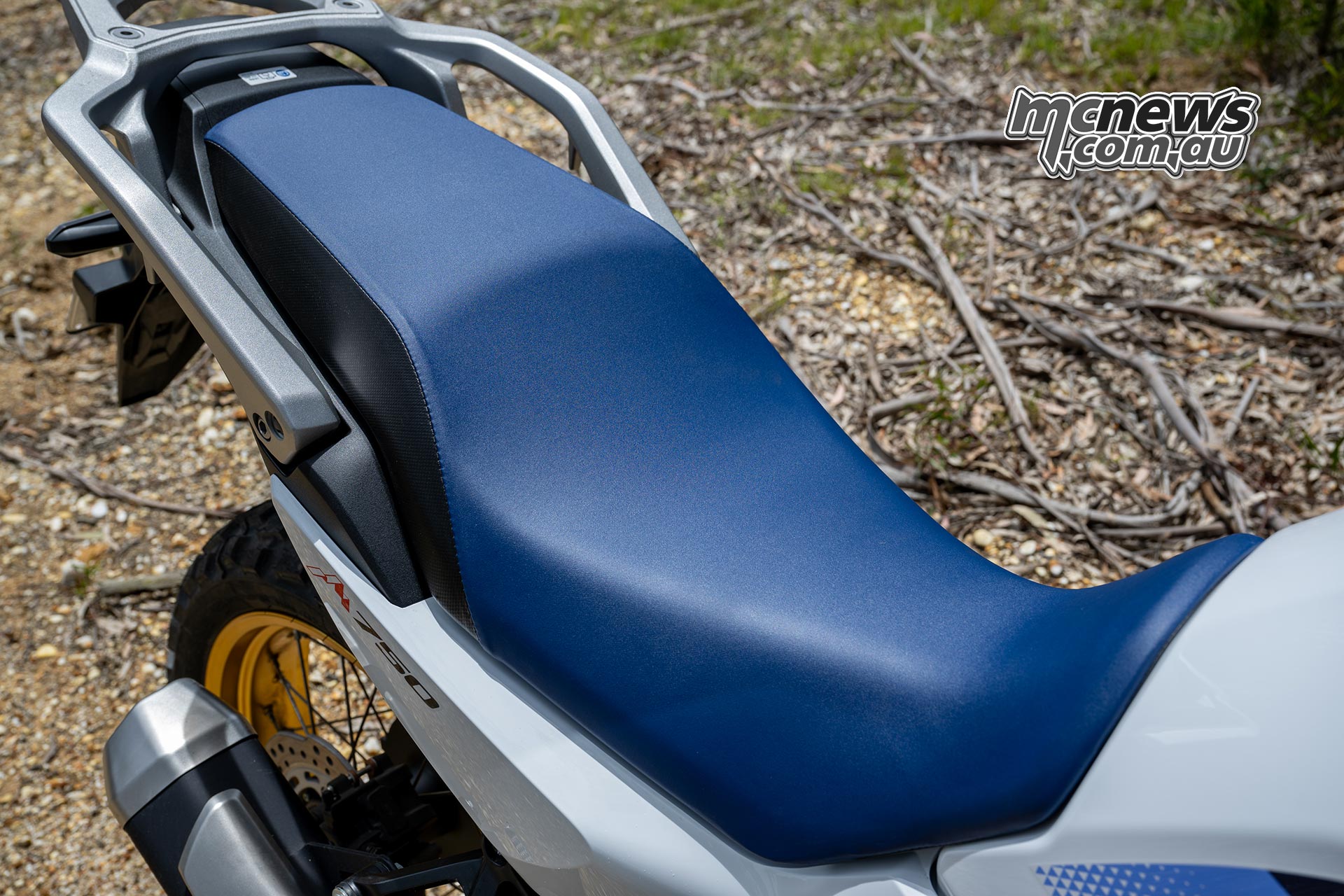 Honda Transalp XL750 Review
 Honda Transalp XL750 Review
 Honda Transalp XL750 Review
 Honda Transalp XL750 Review
 Honda Transalp XL750 Review
 Honda Transalp XL750 Review
 Honda Transalp XL750 Review
 Honda Transalp XL750 Review
Honda Australia Transalp 750 specifications and pricing link



 English (US) ·